

Electrical installation is a critical step in any construction project, whether residential, commercial, or industrial. To ensure user safety and system efficiency, it is necessary to choose the best materials and follow technical standards. For this reason, using corrugated pipes in electrical projects is a highly advantageous option compared to traditional rigid conduit.
In this article, we explain all the benefits of using HDPE corrugated pipes in electrical projects and how they can help optimize installation time, reduce waste, and increase job site safety.
Corrugated pipes in electrical projects: benefits and advantages
HDPE (High-Density Polyethylene) corrugated pipes are highly efficient in electrical projects. They offer a number of benefits over other materials, such as rigid PVC conduits, for example.
Some of the main advantages of using corrugated pipes in electrical installations are:
- Safety: corrugated pipes are made from High-Density Polyethylene (HDPE), which gives the material greater mechanical strength. This means they are more resistant to impacts, crushing, and deformation, ensuring greater stability and safety for the electrical installation.
- Waste reduction: because they are flexible, corrugated pipes can be cut to the exact size needed for each section of the installation. This reduces material waste and, consequently, the cost of the project.
- Ease of transport and storage: Lightweight and compact, HDPE corrugated pipes are easily transported and stored. This contributes to organization and efficiency in the execution of the electrical installation.
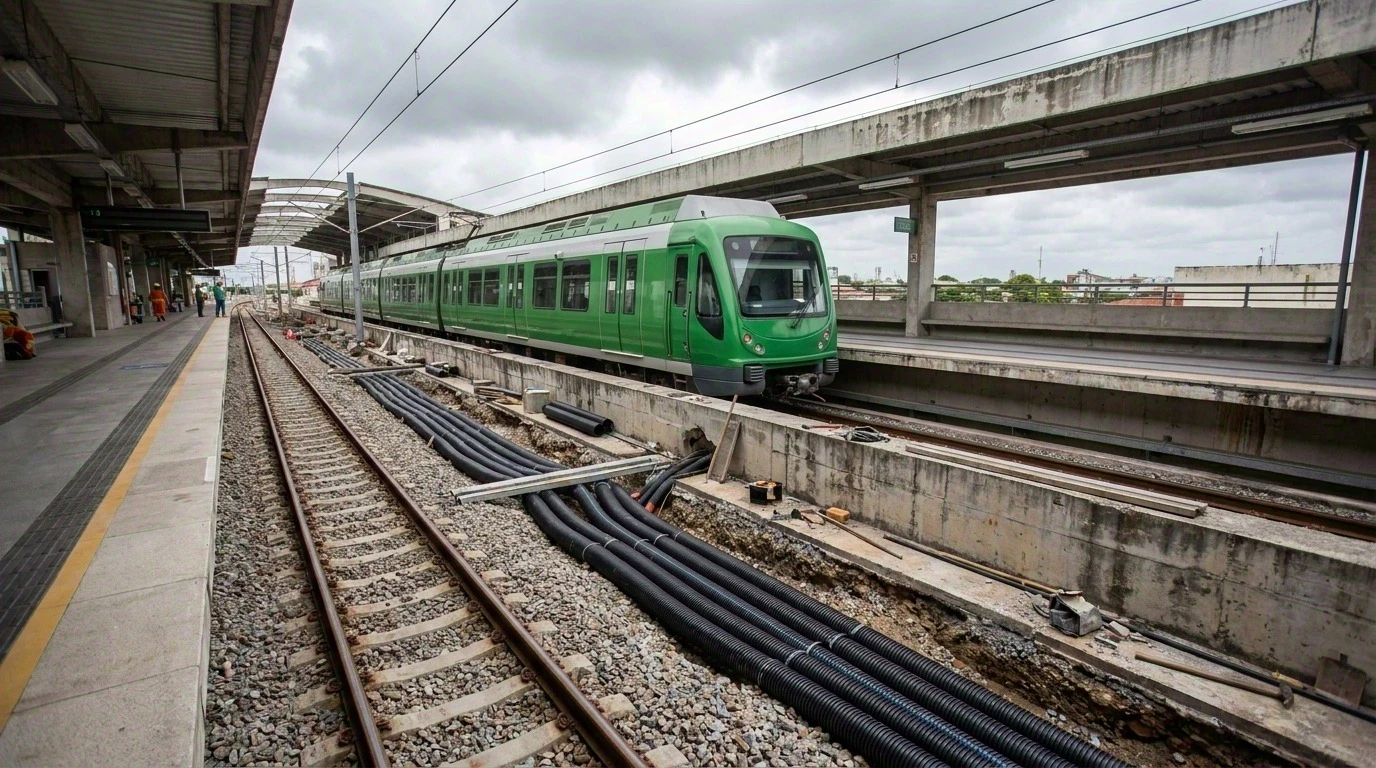
- Reduced installation time: the flexibility of corrugated pipes allows for installation around curves and obstacles without the need for as many connectors and bends, which streamlines the process and reduces installation time.
HDPE Corrugated vs. Rigid Conduit: Comparison
| Criterion | HDPE Corrugated | Rigid Conduit (PVC) |
|---|---|---|
| Flexibility | High — bends without fittings | Rigid — requires bends and couplings |
| Impact/crush resistance | High | Lower |
| Installation time | Fast (long runs) | Slower (multiple fittings) |
| Material waste | Low (cut to size) | Higher |
| Ideal use | Underground and long sections | Recessed in wall/slab |
Applications of corrugated conduits in electrical installations: where can they be used?
Corrugated pipes in electrical installations are versatile and can be used in a variety of situations, such as:
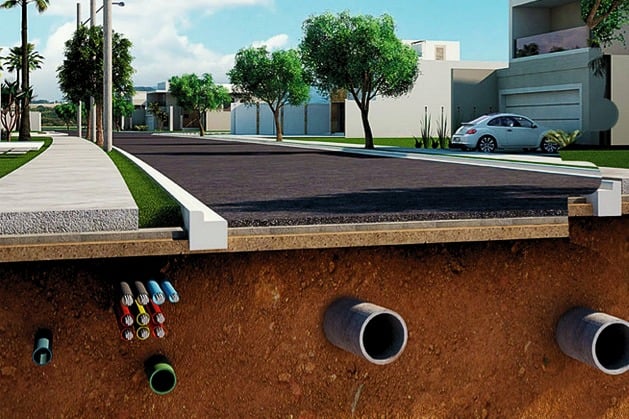
- Underground installations: due to their remarkable strength and flexibility, corrugated pipes are perfectly suited for underground installations or in hard-to-reach areas.
- Exposed installations: as a cost-effective and quick-to-install alternative to rigid conduits, corrugated conduits are a viable option for exposed installations.
- Installations in environments subject to vibrations: their resistance to vibration makes corrugated pipes an ideal choice for installations in environments subject to this type of disturbance, such as in industrial settings or areas with heavy vehicle traffic.
Standards and installation: what to consider
For a safe and code-compliant electrical installation, certain technical points are essential:
- Applicable standard: plastic conduits for electrical installations comply with ABNT NBR 15465; for telecommunications, NBR 15715 applies;
- Rigidity class: for buried sections, specify the appropriate ring stiffness (SN 4 or SN 8) based on the load on the trench. Double-wall models also offer watertightness (protection rating up to IP 67);
- Depth by voltage: observe the minimum depth—generally 0.5 m for low voltage and 0.8 m for medium voltage—always in accordance with the local utility’s standards;
- Backfill and protection: surround the conduits with sand (no stones) to prevent damage and compact in layers;
- Signage: Install warning tape approximately 20 cm above the conduits to alert workers to the presence of the electrical network during future excavations.
Techduto: excellence in corrugated pipes for electrical projects!
The safety and efficiency of corrugated pipes in electrical projects are crucial factors and must be ensured through installation in compliance with current standards and regulations. This installation, which includes selecting the appropriate diameter for each application, proper underground placement at the correct depth, and adequate protection against mechanical damage and adverse weather conditions, ensures the durability and optimal performance of the electrical system.
At Techduto, we specialize in providing customized solutions for your electrical installation needs. We offer lines of corrugated conduits specifically designed for such applications.
Our flagship product is Techduto DW, an innovative solution consisting of two distinct layers. The outer, corrugated layer provides a structure that is highly resistant to crushing and impact. On the other hand, the inner layer, which is smooth and soft, facilitates cable installation. We manufacture this conduit using HDPE (High-Density Polyethylene), a completely non-toxic and environmentally friendly material.
Techduto DW is the ideal choice for underground electrical cable installations, as it offers adequate protection against any damage that could compromise the integrity and operation of the system. This ensures a safe and efficient electrical system, combined with respect for our planet.
Our commitment to quality is reflected in the Techduto line. In its NBR version, it fully complies with the ABNT NBR 15715 standard. This corrugated conduit, made of HDPE, is highly resistant to crushing and impacts resulting from the installation process. In addition, its extreme flexibility allows for the creation of bends without the need for additional connections.
We are available to provide customized solutions for your electrical installation needs. Contact us and discover how our innovations can be the key to the success of your projects!
Techduto: synonymous with quality and efficiency in corrugated conduits for electrical projects.