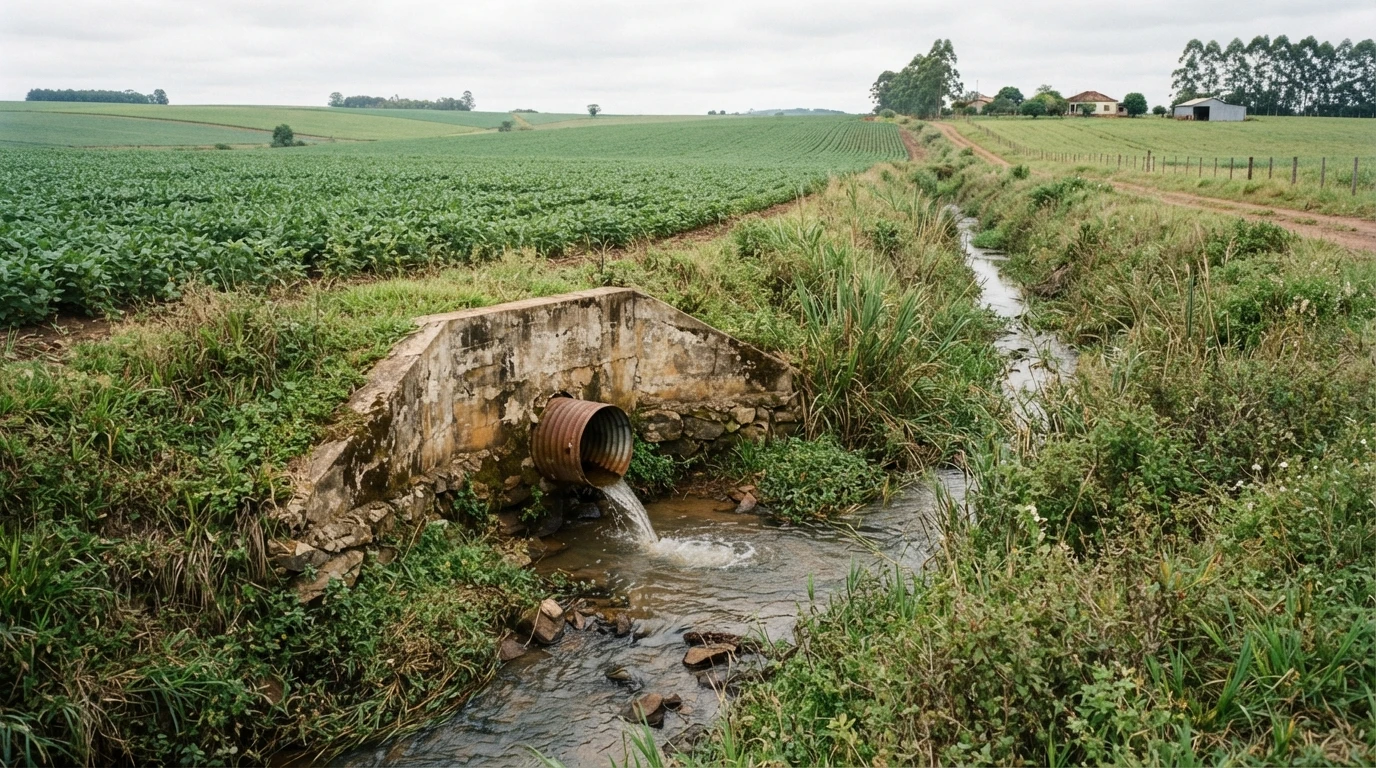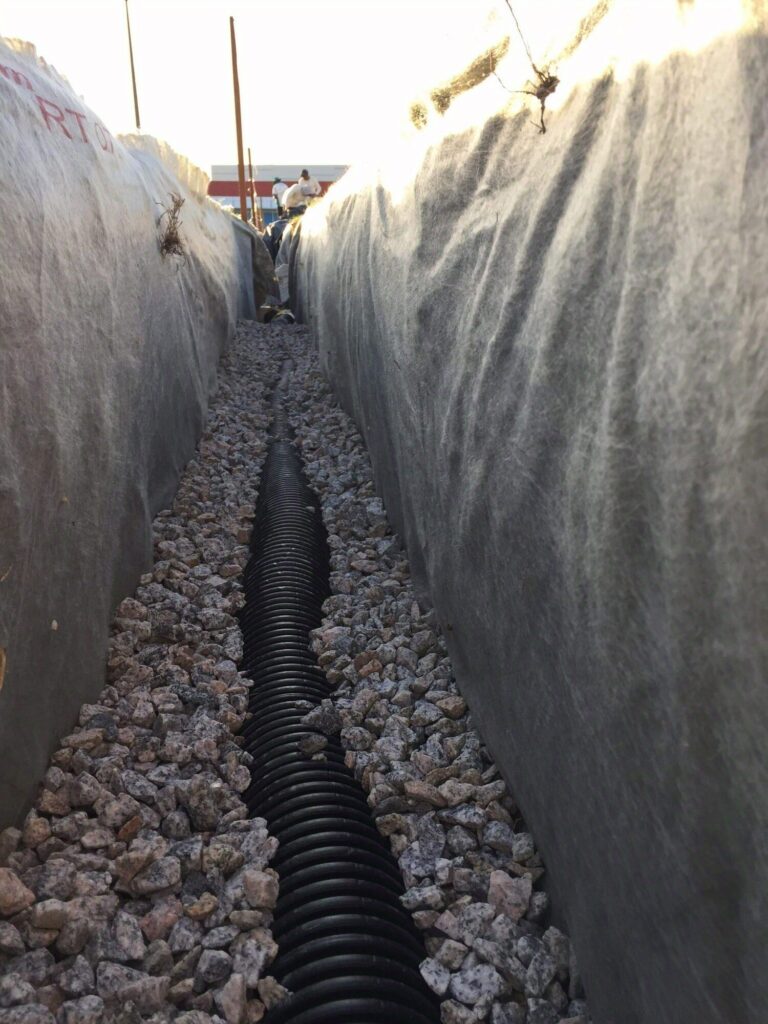


The decision between corrugated HDPE pipe and concrete pipe impacts project cost, timeline, and durability. Below are the criteria that truly matter — with data from studies and Brazilian standards.
HDPE or Concrete for Drainage? The Comparison Engineers Need to See
| Criterion | HDPE — Techdreno DW (double wall) | Concrete — BSTC/NBR 8890 |
|---|---|---|
| Weight (Ø 400 mm, per meter) | ~5–8 kg/m | ~70–90 kg/m |
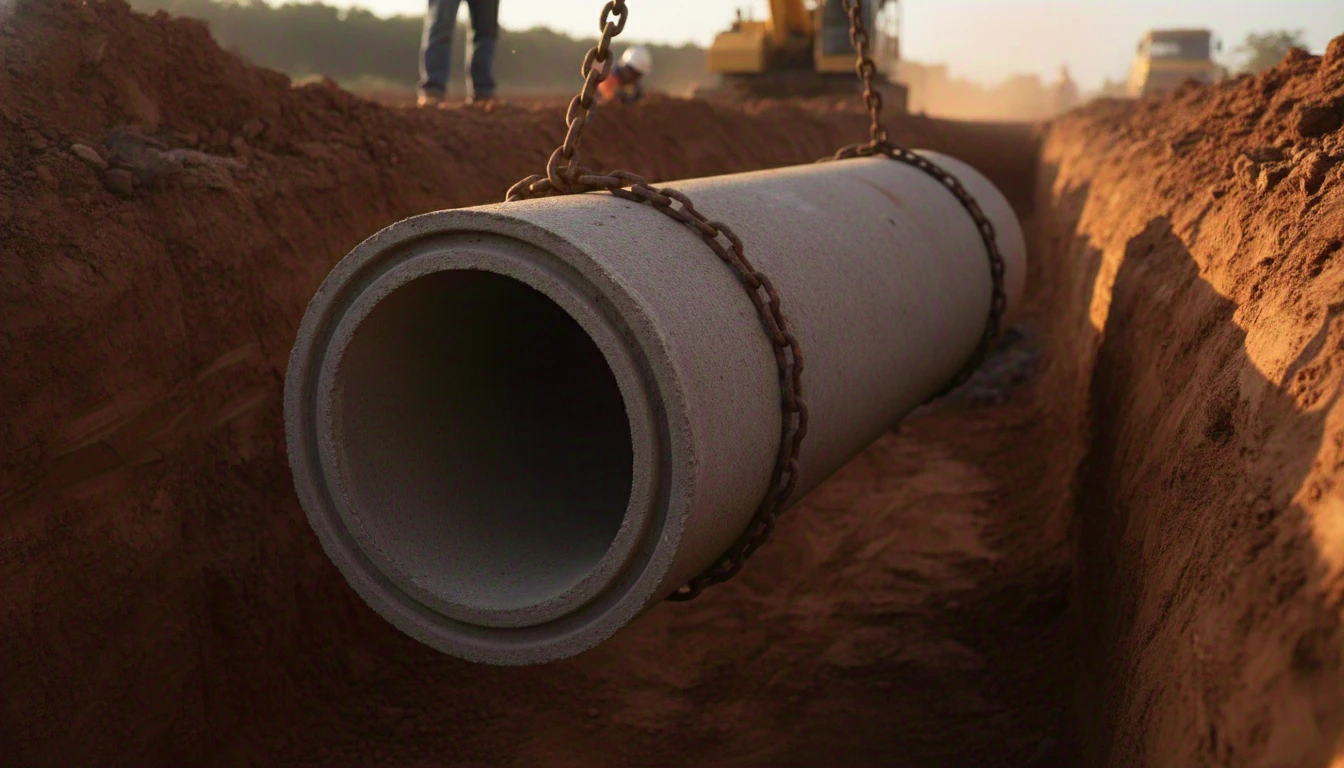
| Logistical Cost | Low — manual handling, no crane, lower freight cost per installed meter | High — requires crane, bulky freight, higher handling cost |
| Installation Speed | High — spigot and socket with backhoe; fewer joints (coils up to 300 m) | Slow — joint by joint, more labor, longer traffic closure |
| Internal Roughness (Manning’s n) | n ≈ 0.009–0.011 (smooth internal wall) | n ≈ 0.013 (rough surface) |
| Hydraulic Efficiency | Higher — same flow rate with smaller diameter | Lower |
| Resistance to Corrosion and Aggressive Soils | Inert — no attack from sulfates, chlorides, acidity (ferruginous soils in Brazil) | Subject to attack by sulfates and acidic soils; degradation in pH < 5 |
| Abrasion Resistance | High (HDPE is flexible, absorbs impact) | Susceptible to cracking from impact and differential settlement |
| Structural Rigidity (Traffic Load) | SN8 ≥ 800 N/m² — supports cover depths of 0.8–6.0 m with heavy traffic (according to DNIT 093/2016-EM) | Depends on class (check NBR 8890); pre-designed in catalog |
| Road Load (Highways) | Class 45 — check Techduto catalog for each cover depth and overlay | Class defined by manufacturer according to NBR 8890 |
| Railway Load (TB-360) | DW with verification for TB-360 (consult engineer); ISF-210 allows “pipe + manufacturer’s blanket” | Check by type and dimension; ISF-210 standard allows both |
| Documented Service Life | ≥ 50 years (international literature; Brazilian conditions still lack 50 years of field data) | Good in neutral soils; depends on chemical aggressiveness |
| Option with Integrated Filter Envelope | Yes — Techdreno KC: eliminates the need for separate geotextile and sand layer in the field | Not available |
| UV Radiation Resistance (Above-ground use) | Black HDPE with 2–3% carbon black — UV stabilization (solar power plant environment) | Inert to UV radiation |
| Environmental Impact (Manufacturing) | Lower weight → lower transportation emissions; recyclable | Higher weight → higher transportation emissions |
| Savings vs. Concrete/Metal | 7% to 58% in a 34 m, Ø 1.80 m culvert project (ENACOR 2025 case study) | Base cost reference |
| Reference Brazilian Standard | DNIT 093/2016-EM (corrugated HDPE drainage pipe); ABNT NBR 15073 (drainage) | ABNT NBR 8890 (concrete pipes); DNIT 025/2025-ES (cell culverts) |
Sources: ENACOR 2025 — Case study on HDPE pipes compared to other solutions (enacorrapv.com.br/anais/2025/EC845.pdf); DNIT 093/2016-EM; ABNT NBR 8890; Techdreno DW technical catalog.
⚠️ Verify specific SN stiffness values and traffic classes in the current Techduto catalog before publishing.
When Concrete is Still the Right Choice
- Large diameters (> 1,200 mm): HDPE has limited availability in very large diameters; concrete may be more readily available locally.
- Visible retention structures/reservoirs: concrete is standard for detention reservoir walls (not for the conveyance pipe).
- Intense fire exposure: HDPE is not recommended in galleries with fire risk.
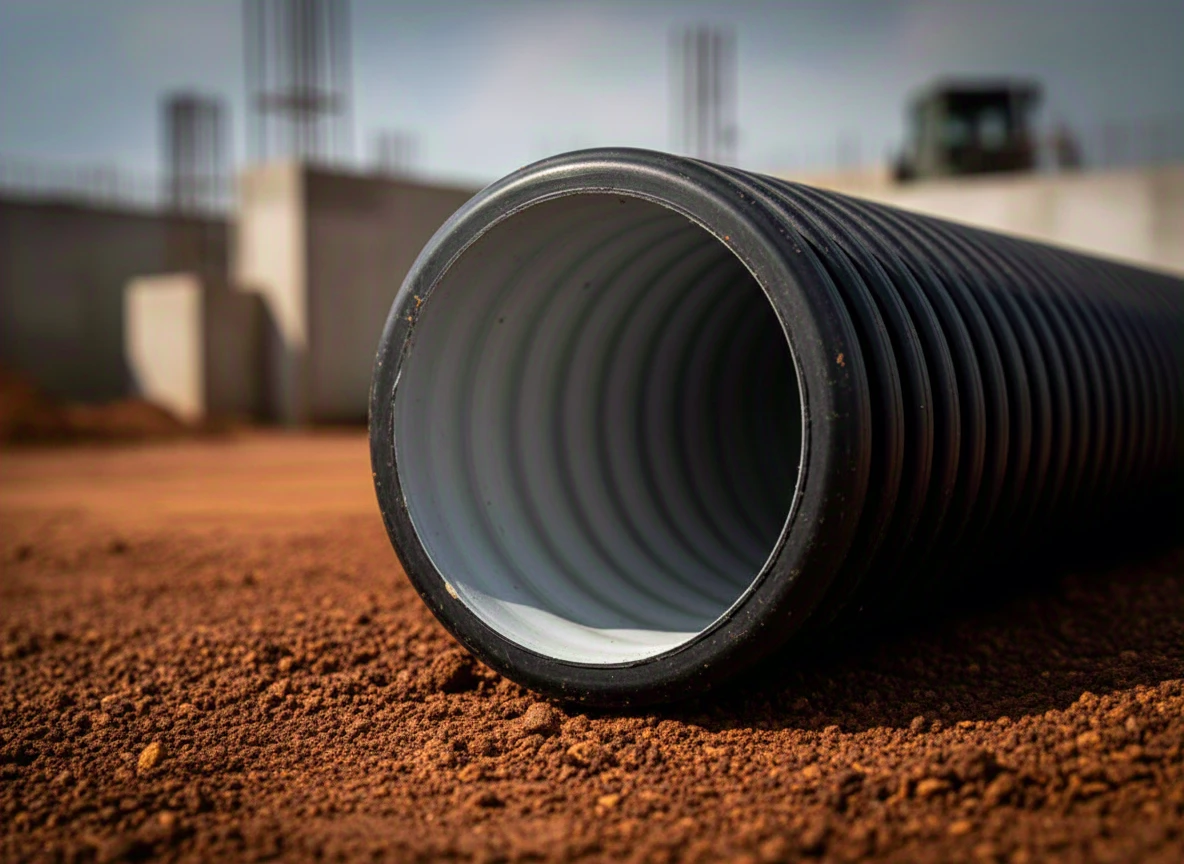
When HDPE is the Right Choice
- Aggressive soils (acidic, sulfated, ferruginous — typical of the Cerrado and Atlantic Forest biomes).
- Projects in hard-to-reach areas (solar power plants, remote railways) — weight and logistics make a real difference.
- Projects with tight deadlines — fewer joints and manual installation speed up the process.
- Fine clay soil — use Techdreno KC (integrated filter envelope): prevents clogging without additional geotextile.
- Sections exposed to direct solar radiation — black HDPE with carbon black.