


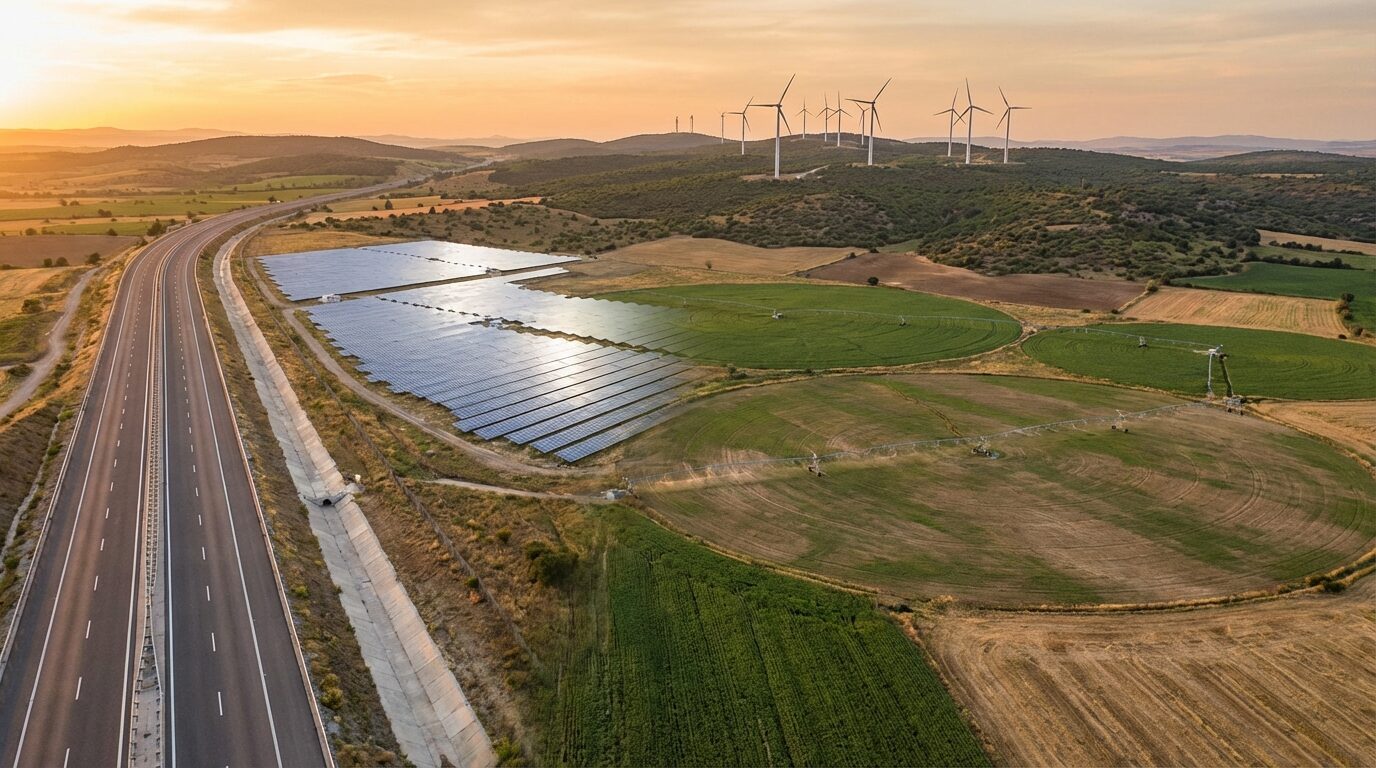
Yes — DNIT has regulated the use of HDPE corrugated drainage pipes in sub-surface highway drainage since 2016, covering shoulders, base, sub-base, and slopes. It is the technical standard behind drains that lower the water table and drain excess pavement water, preventing problems such as mud pumping and loss of subgrade bearing capacity.
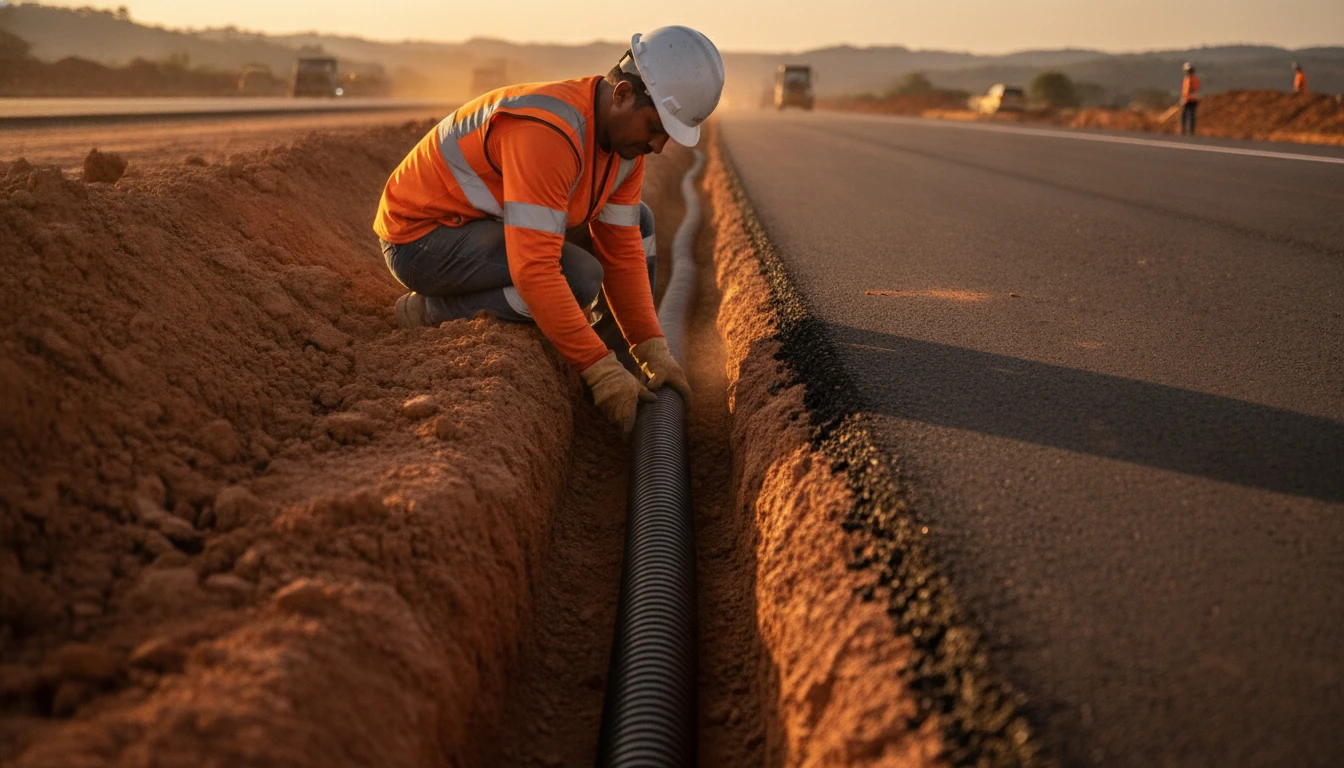
What does DNIT 093/2016-EM say about HDPE pipes on highways?
DNIT 093/2016-EM is the DNIT material specification for “high-density polyethylene (HDPE) corrugated drainage pipe” applied to highway drainage — specifically, the sub-surface drainage of shoulders, base, sub-base, and slopes. The standard defines the requirements for ring stiffness (SN), external/internal diameter, and the criteria for inspection and sampling of the material.
This is a different application from a culvert (the structure that crosses under the roadway to convey a watercourse): the side drain is embedded in the side of the road, collecting and draining water that infiltrates the pavement structure — which prevents fine pumping and the progressive loss of subgrade bearing capacity.
What HDPE pipe diameters does Techduto offer for this application?
For sub-surface highway drainage, the Techdreno line (single wall, perforated) covers diameters from 50 to 250mm, and Techdreno DW (double wall, smooth interior) covers 110, 160, and 200mm with SN8 stiffness — in accordance with ISO 21138-3 and ABNT NBR 15.073, exceeding the standard’s ring compression requirement by more than 2x.
This diameter range is what actually applies to highway side drains: the objective is to drain water infiltrated into the pavement structure, not to convey a large flow watercourse under the roadway (the function of a culvert, a different product category).
Why use corrugated HDPE instead of traditional methods?
Historically, sub-surface highway drainage was done with gravel trenches or concrete/ceramic pipes. The perforated corrugated HDPE pipe has brought significant practical advantages to highway construction:
- Weight and installation: HDPE pipe is significantly lighter than concrete of the same diameter, allowing manual installation without heavy equipment — relevant in extensive linear projects where the highway extends for tens of kilometers.
- Long coils: supplied in coils up to 100m (Techdreno) or 6-12m lengths, reducing the number of joints and connections along the shoulder.
- Chemical resistance: HDPE does not corrode and resists acidic or sulfate-containing soils — relevant in lateritic soil or Cerrado regions, where metal or concrete pipes degrade faster.
- Hydraulic efficiency: the lower Manning’s coefficient for HDPE (≈ 0.009–0.011, compared to ≈ 0.013 for concrete) favors drainage with a smaller diameter for the same design flow rate.
How to size an HDPE highway side drain?
Technical checklist for specification:
- Standard: reference DNIT 093/2016-EM as the pipe material specification.
- Diameter: calculated using the Rational Method (DNIT IPR-724 — Manual de Hidrologia Aplicada), with Manning’s n ≈ 0.009–0.011 for HDPE.
- Stiffness: SN8 (Techdreno DW) meets most shoulder/base applications — confirm with engineering for the specific project’s cover and load case.
- Filter wrap: specify geotextile around the perforated pipe to prevent soil fines from being carried into the drain.
- Outlet: size the discharge point (ditch, outlet culvert, or drainage channel) according to the calculated flow rate.

The Techduto engineering team can assist with technical verification for each project’s diameter and flow rate combination. For technical terms, the Drainage Technical Glossary provides definitions for ring stiffness SN and the Manning equation.
Frequently asked questions
Yes. DNIT 093/2016-EM is the DNIT material specification for corrugated HDPE drainage pipe applied to the sub-surface drainage of highway shoulders, base, sub-base, and slopes.
A side drain is embedded in the pavement structure (shoulder, base, sub-base) and drains water infiltrated into the soil. A culvert is a much larger diameter structure that crosses under the roadway to convey a watercourse — it is a different category of work and product.
The Techdreno line covers 50 to 250mm, and Techdreno DW (double wall, SN8 stiffness) covers 110, 160, and 200mm — the typical diameter range for sub-surface drainage of shoulders, base, and sub-base.
HDPE is lighter (manual installation, no crane needed), comes in long coils (fewer joints along the shoulder), resists acidic or sulfate soils better, and has a lower Manning’s coefficient — allowing for smaller diameters for the same flow rate.