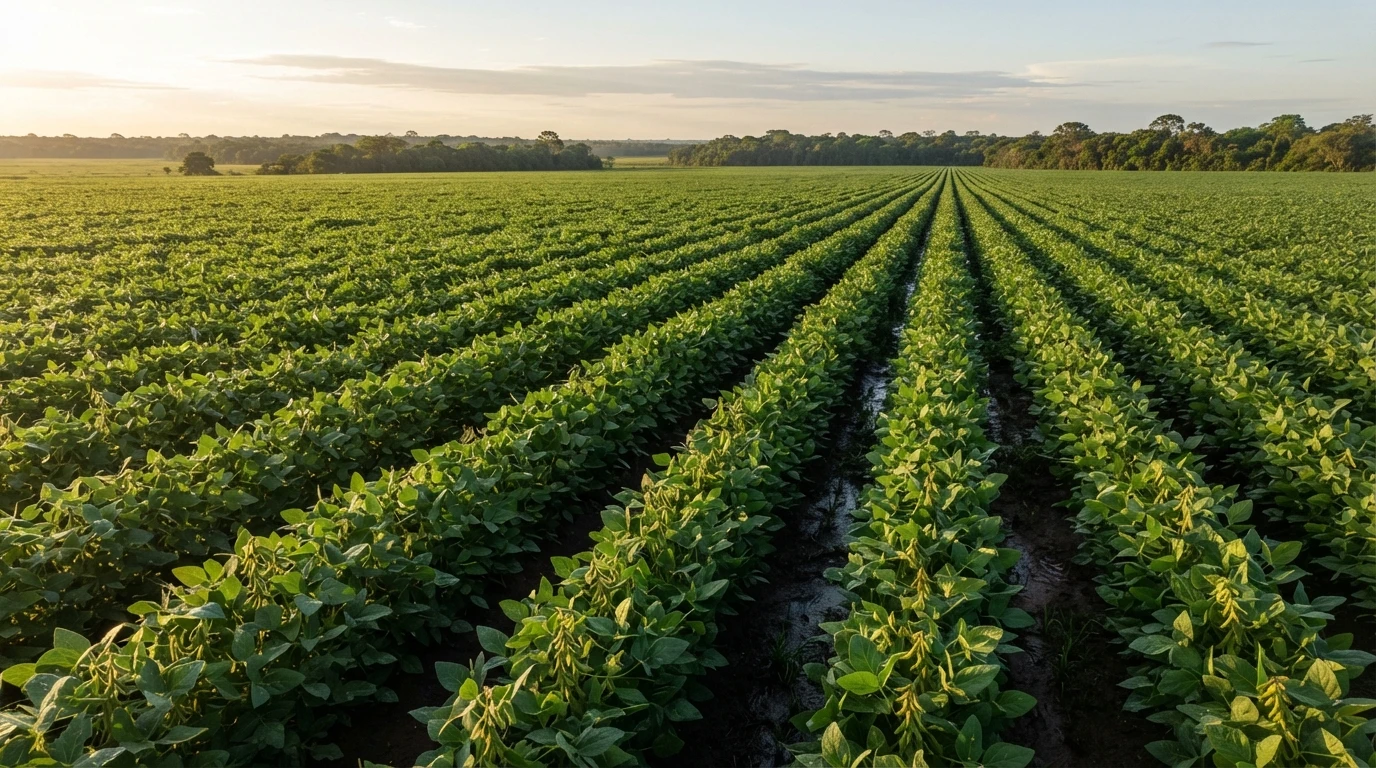


You installed the drain, the depth was correct, the slope was correct — and the water remains stagnant. The pipe is not defective. The installation was well done. But the system doesn't work. This is one of the most expensive drainage mistakes in agricultural drainage: investing in drainage when the real problem is a compacted layer that prevents water from reaching it. Before any pipe, you need to understand what's happening beneath your feet.
The drain doesn’t pull water — it only receives it
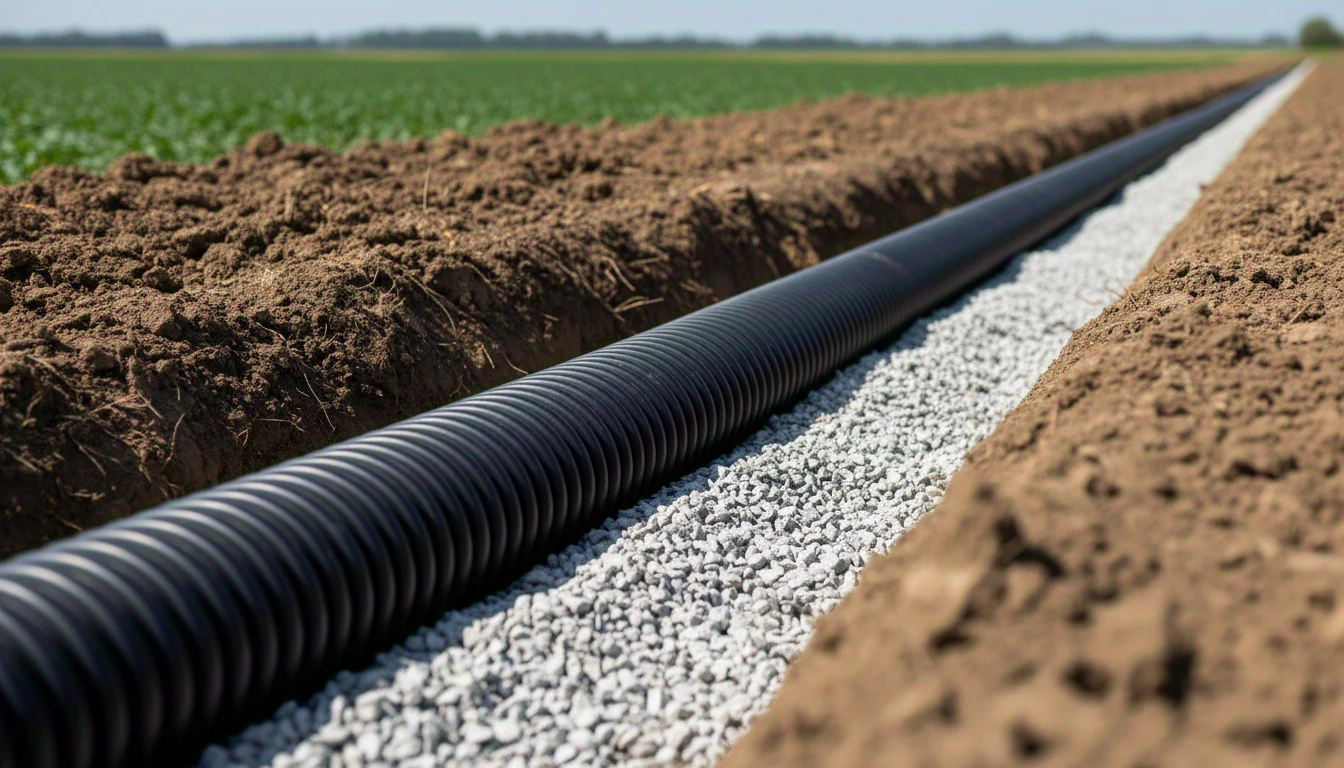
This is the point that changes everything. A drainage pipe works by gravity: it receives the water that manages to reach it through the soil profile. There is no suction, no “attraction” — if the water cannot descend to the drain’s depth, the pipe remains dry while the soil above becomes waterlogged.
Therefore, when the crop continues to flood even with a drain installed, the first question is not “is the pipe working?”, but rather: “is the water managing to reach the pipe?”
The plow pan: the layer that blocks the path
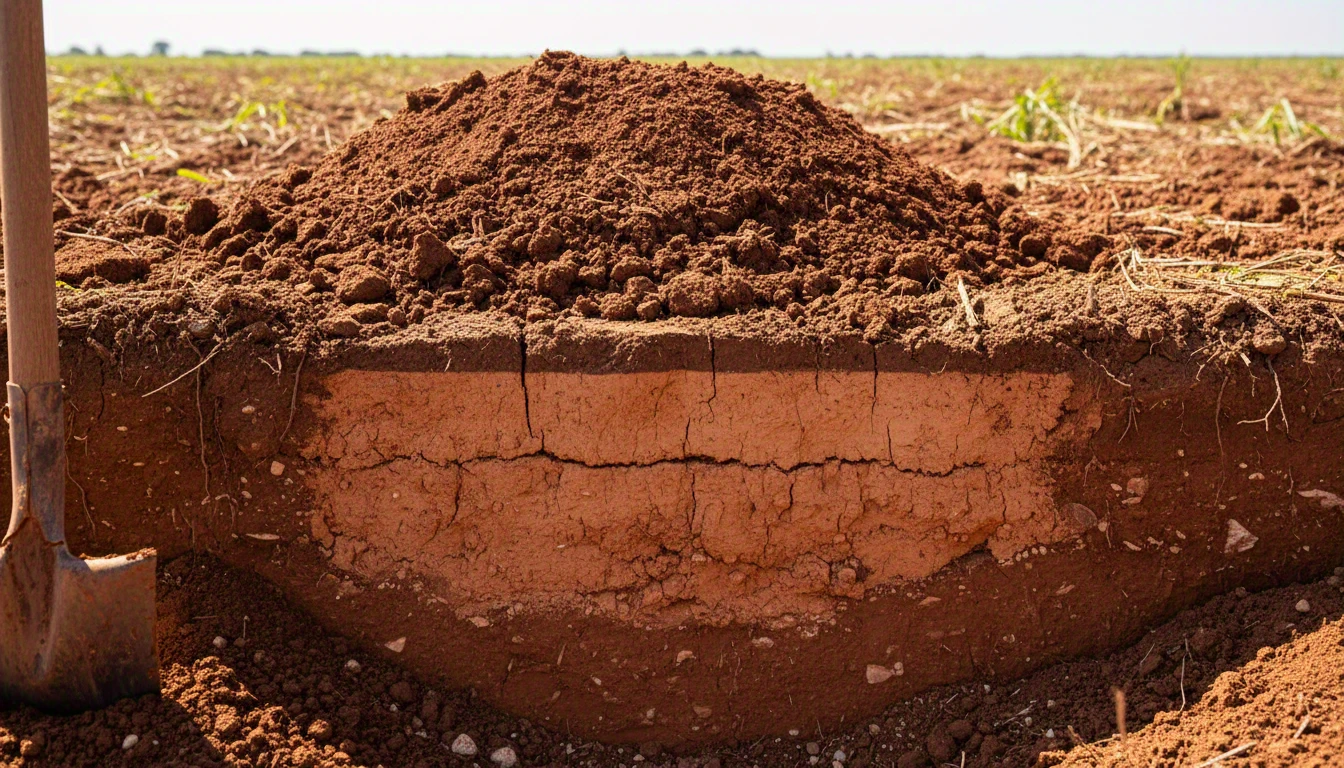
The plow pan is a compacted layer that forms just below the working depth of implements — generally between 20 and 40 cm. Each pass of machinery on wet soil presses this zone, and over time it becomes a dense barrier with very little porosity. Rainwater infiltrates normally in the first few centimeters, encounters this layer, and stops. It doesn’t go down anymore. It accumulates exactly where it harms the roots and operations.
The problem is that the plow pan is invisible from above. The field surface may look normal, the soil may even be dry on top — and underneath there is a water table held back by compaction. Only by opening an inspection trench can you see it.
How compaction deceives diagnosis
The confusion is understandable: the crop gets waterlogged, the producer associates it with excess water, and decides to install subsurface drainage. The pipe goes into the soil at the correct depth — usually below the plow pan. But the water above the plow pan cannot cross the compacted layer to reach the drain. Result: the drain is dry, the area continues to flood, and the incorrect conclusion is that “the drainage doesn’t work.”
Drainage works — but it cannot replace the function that subsoiling should have performed first.
Field test: how to identify before investing
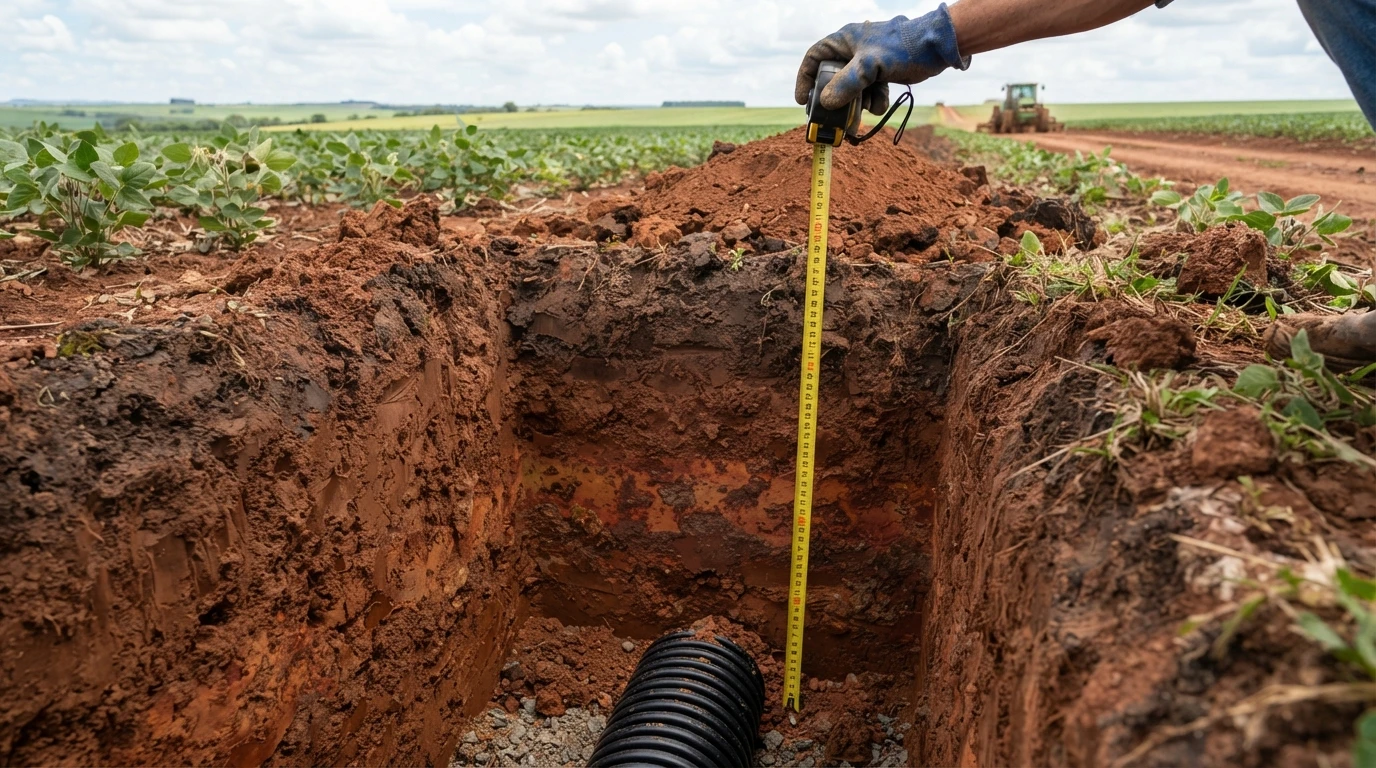
Before any decision, it’s worth opening an inspection trench in the problem areas — something simple, with a shovel or backhoe. What to observe:
- Resistance to shovel penetration: the compacted layer offers clearly greater resistance than the soil above and below.
- Color and texture: the plow pan is usually darker, denser, sometimes with visible horizontal lamination.
- Water position: if water is retained *above* the layer and the soil below is dry or normally moist, the blockage is compaction — not lack of drainage.
- Layer depth: generally between 20 and 40 cm, but can vary depending on the traffic history and implements used in the area.
This simple field diagnosis defines the correct path — and avoids investing in the wrong place.
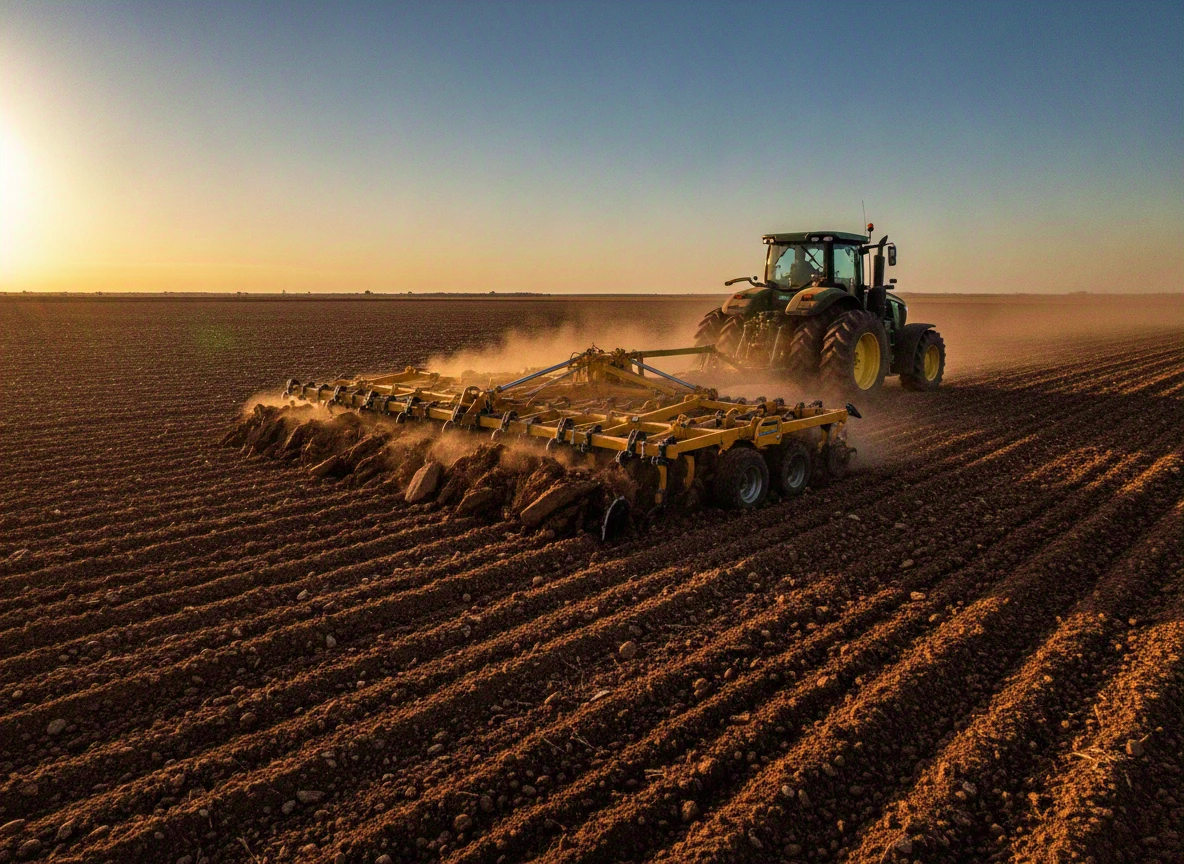
The correct sequence: first open the path, then drain
When the diagnosis confirms a plow pan, the order of operations matters:
1. Subsoiling or scarification — to break the compacted layer and reopen soil porosity. The work is done with the soil in adequate condition (neither too dry nor too wet) and should reach at least 5 to 10 cm below the compacted layer to be effective. The depth and correct implement depend on the area’s situation.
2. Subsurface drainage — after the profile is opened, the drain can do its job: collect water descending through the soil and conduct it out of the area. This is where Techdreno KC for fine-textured soils (with an integrated filter that prevents silting) or Techdreno DW where higher flow rate and resistance are needed, comes into play. Without prior subsoiling, the pipe remains isolated from the area that needs draining.
Skipping the first step is the most common — and most expensive — mistake, because a drainage system installed before subsoiling does not deliver the expected results and will need to be supplemented later anyway.
Subsurface drainage reduces the problem long-term
There is a silent cycle that occurs in poorly drained areas: the soil becomes waterlogged → the working window shortens → the producer needs to enter with machinery before the soil is firm → each pass on wet soil compacts it further → the plow pan becomes thicker → the soil becomes more waterlogged. Year after year, the problem deepens.
Subsurface drainage interrupts this cycle. By lowering the water table and removing excess water from the profile, the soil regains its bearing capacity more quickly after rain. The working window increases, machinery enters in better condition, and traffic-induced compaction decreases. Over time, the tendency for plow pan formation is enormously reduced — in many areas, practically eliminated when the system is well-designed and operating.
In other words: subsoiling solves the existing problem, and drainage prevents it from returning. It is this combination — a profile opened by subsoiling and a controlled water table by the Techduto subsurface drainage system — that definitively transforms the trafficability and productivity of the area.
When the drain solves it alone
Not all waterlogging is caused by compaction. In naturally clayey soils or soils with low permeability, water takes time to infiltrate not because of a plow pan, but due to the soil’s own texture — and in these cases, subsurface drainage solves the problem without prior subsoiling. The same applies to areas with a high water table, where saturation comes from the bottom up.
The difference between cases only appears in the diagnosis. That’s why the inspection trench — or a technical assessment of the area — is the step that defines the path forward and avoids investing in the wrong sequence. If the cause is soil texture, the Techdreno KC with integrated filter is particularly recommended to block fine particles and ensure the system’s lifespan.
What to do from here
If your area floods and you’ve already tried drainage without success, or if you’re planning to install a system and want to be sure it will work, the first step is to understand what’s happening in the soil profile. The Techduto engineering team assesses the area’s situation and indicates whether the path is drainage, subsoiling, or both — and in what order.
To identify signs of waterlogging before reaching this stage, see the article 7 Signs Your Crop Needs Drainage. Unsure if your case involves compaction, drainage, or both? The 4-question diagnosis points the way. Technical terms can be found in the Drainage Glossary: plow pan, subsoiling, and impeding layer.