

"Drainage is just burying a pipe, isn't it?" This is the most common phrase when someone outside the sector tries to understand why an agricultural drainage project, a road project, and a logistics warehouse project don't use the same solution — and sometimes not even the same pipe. The short answer is: no. The water that needs to drain is always H2O, but what it encounters along the way — load on the pipe, arrival speed, soil type, applicable standard — changes completely from one context to another.
The Same Pipe, Four Different Problems
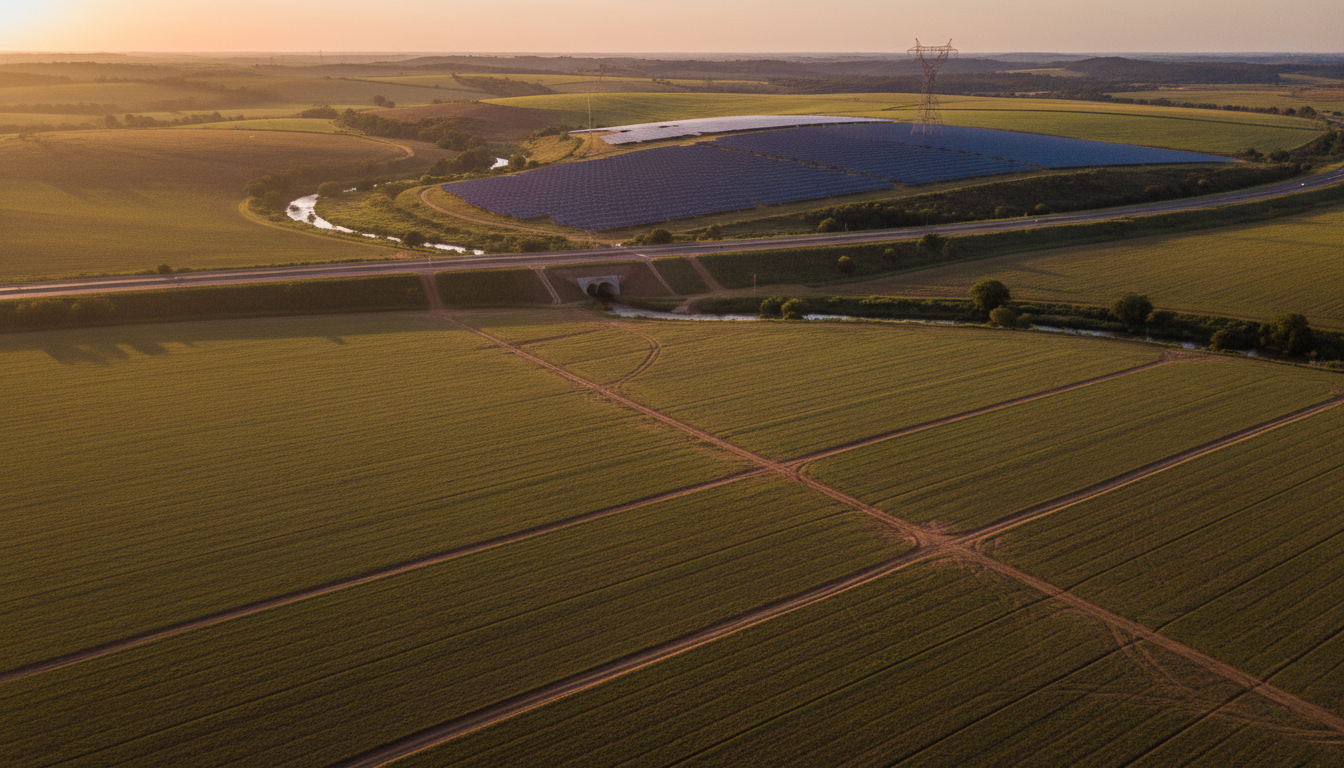
Techduto operates in four major areas — agricultural, infrastructure (roads and railways), energy (solar and wind farms), and industrial (warehouses, mining) — and the most frequent question is why the specifications change so much between them. The answer lies in three variables that define any drainage project: the load the pipe must withstand, the speed at which water arrives, and the standard governing that type of work. Changing any of these three changes the diameter, stiffness, wrapping material, and sometimes the entire product.
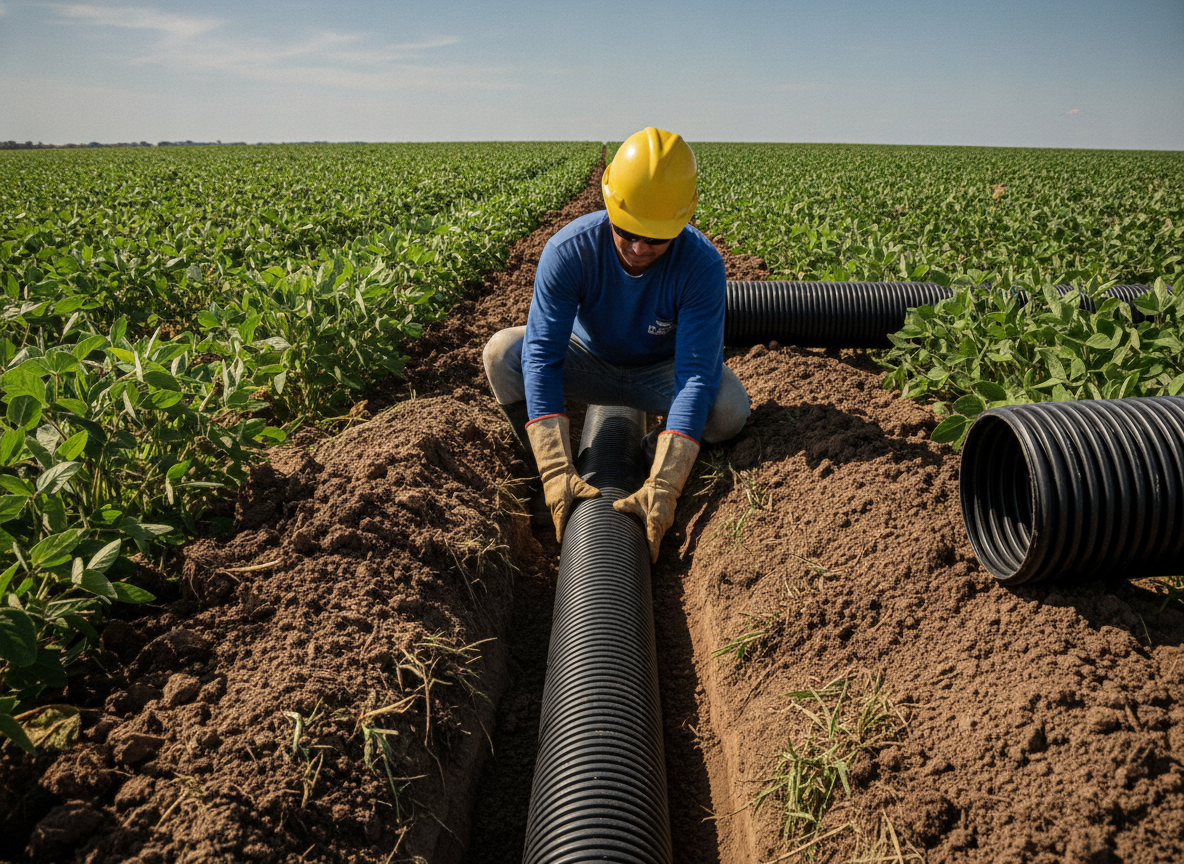
Agricultural Drainage: Lowering the Water Table Without Suffocating Roots
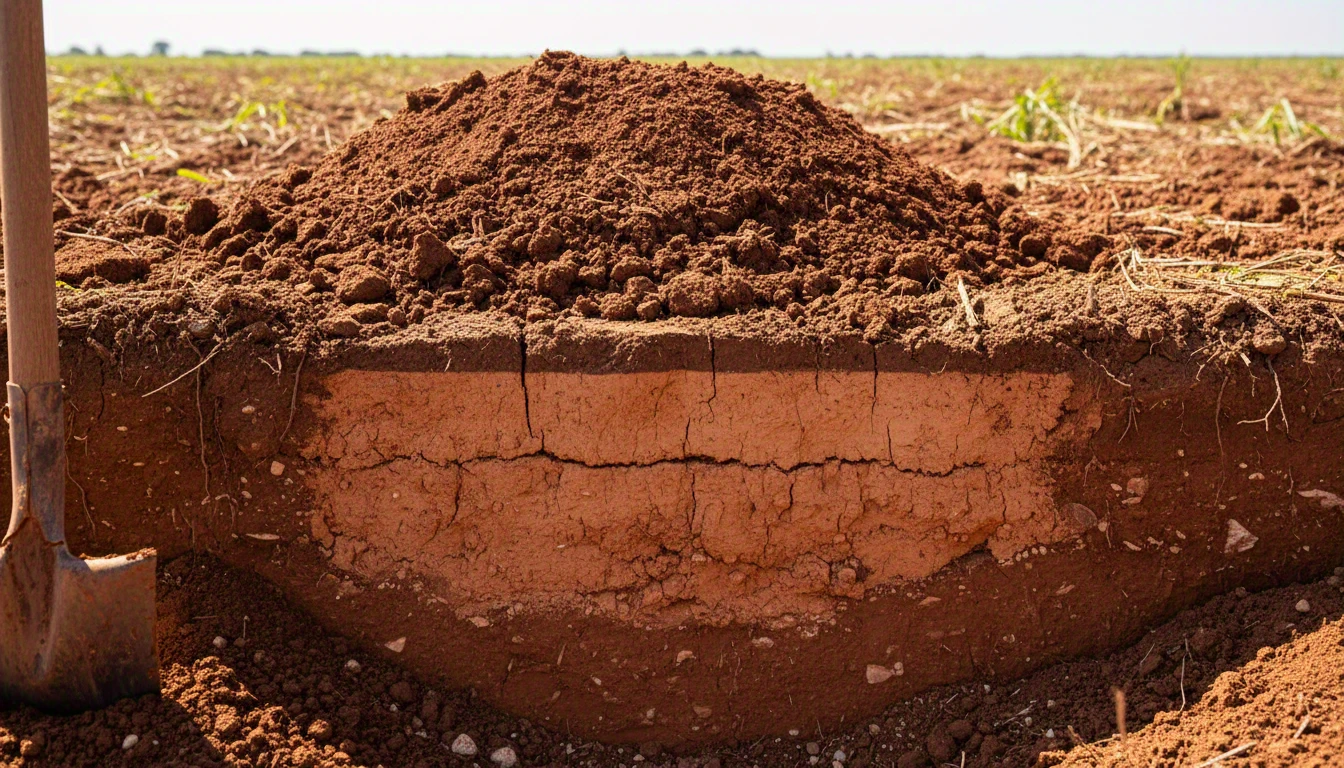
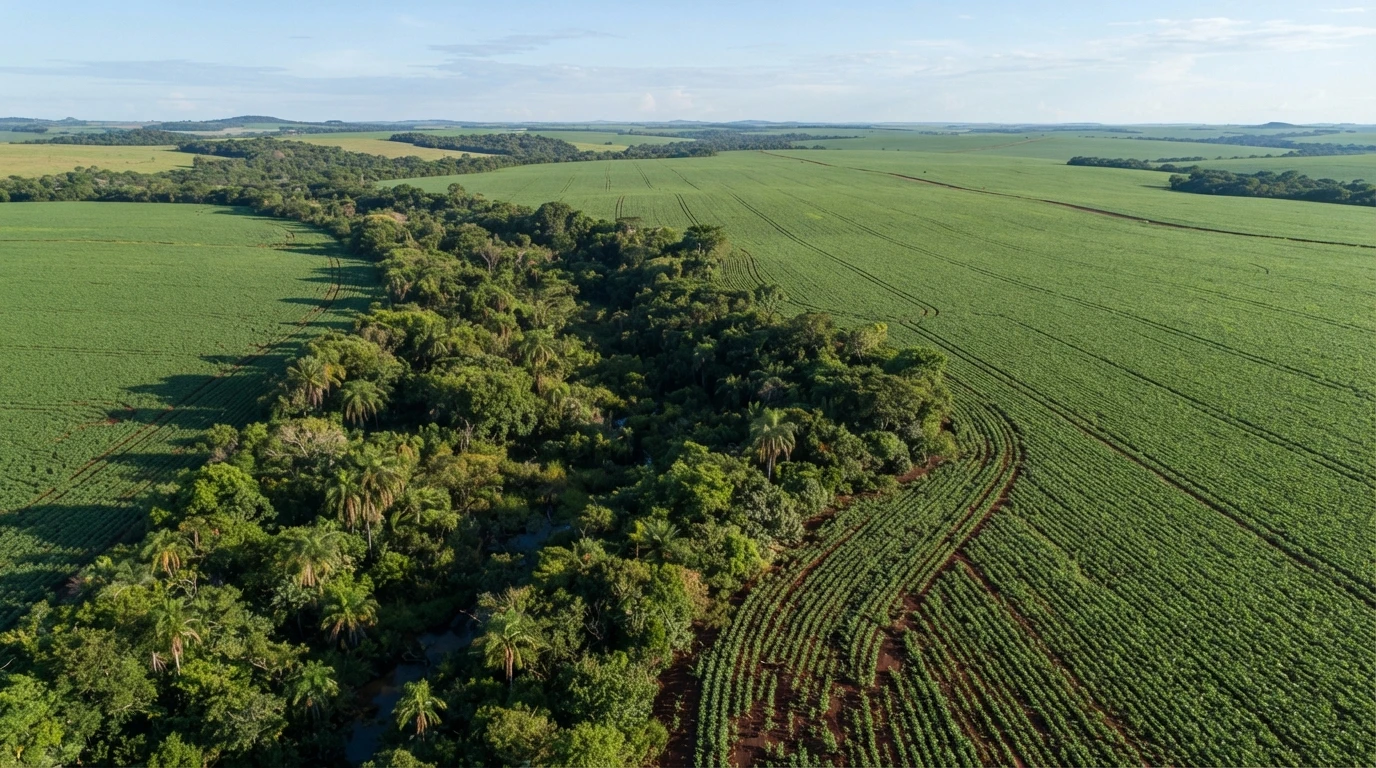
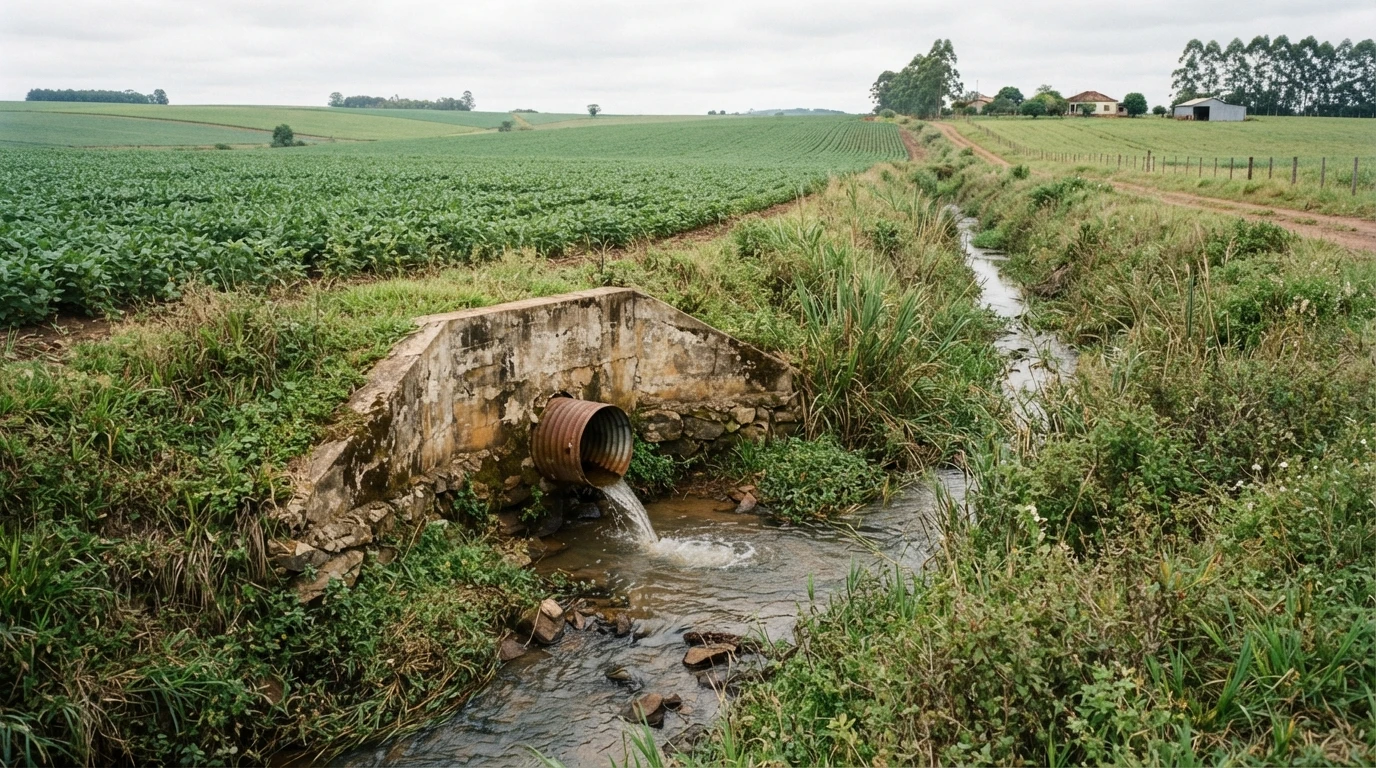
In the field, the problem is rarely a downpour — it’s water standing for days in the soil profile, suffocating the roots. The system’s objective is to lower the water table in a controlled and constant manner, not to quickly drain a rain peak. This means perforated pipes (according to ABNT NBR 15073), installed at depths and spacing calculated by soil and crop type, almost always wrapped in a filtering material that prevents silting without blocking water entry. The load on the pipe is low — just the weight of the cover soil itself — but the demand for longevity is very high, because reopening a field to repair a drain is expensive and time-consuming.
Road and Railway Drainage: Withstanding Traffic Load, Not Just Draining Water
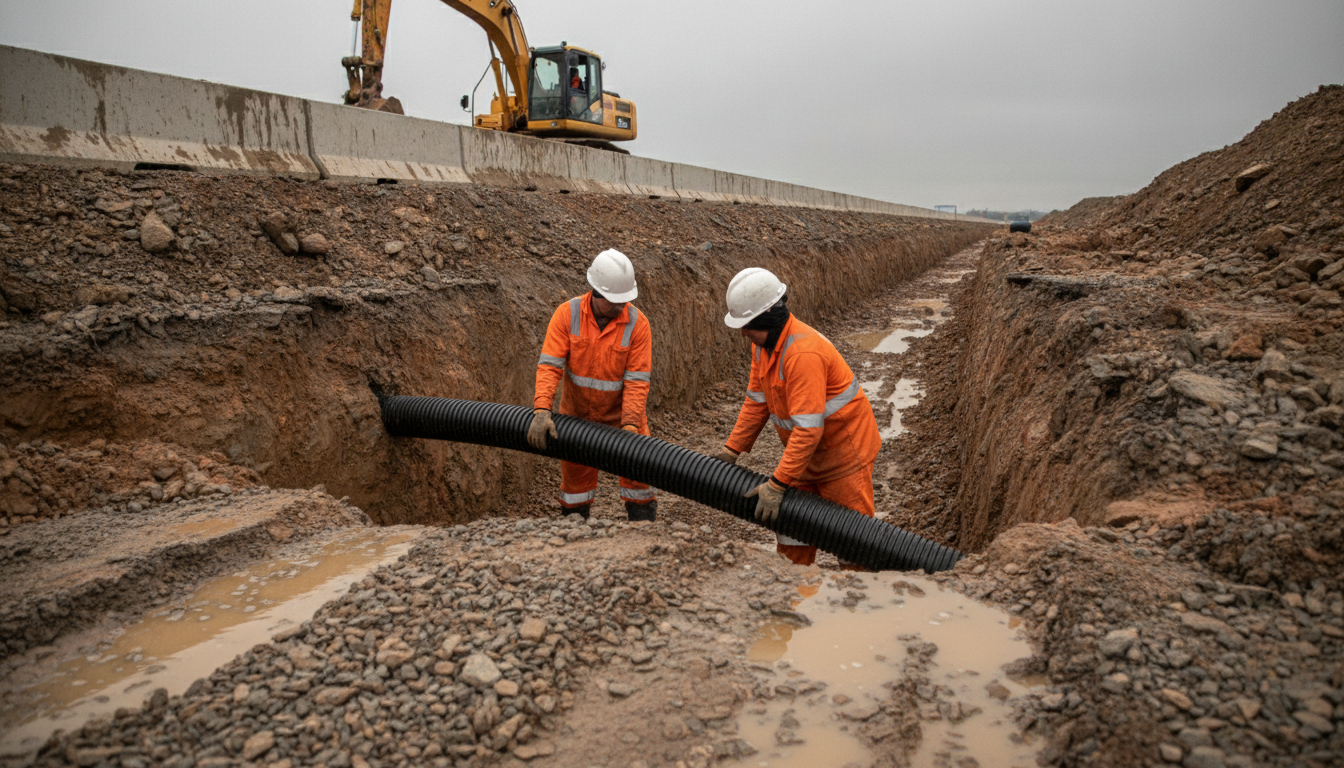
Under a highway or railway track, the pipe faces a problem that fields don’t have: repeated dynamic load. Every truck axle, every train composition, compresses the soil around the drain thousands of times throughout the work’s lifespan. Standard DNIT 093/2016-EM deals with road sub-surface drainage, and service instruction ISF-210 from DNIT governs railway track drainage — both require pipes with proven structural stiffness, not just hydraulic capacity. This is why projects of this type resort to double-wall solutions like Techduto DW, designed for loads like TB-360 (Brazilian railway design load), and not the simpler pipe that would suffice in a field.
Urban and Stormwater Drainage: Flow Peaks in Minutes, Not Days
In the city — or in a condominium, subdivision, logistics warehouse — the challenge is inverted. Water doesn’t stay stagnant for days like in the countryside; it arrives all at once, in a few minutes of heavy rain, over a predominantly impermeable surface (roof, yard, asphalt). Sizing here follows NBR 10844 (stormwater installations) and, in many municipalities, requires detention reservoirs — the so-called “Little Pools Law” — to contain the peak before releasing the water into the public network, preventing overload of the entire city’s system. The focus shifts from “slowly lowering the water table” to “quickly draining a large volume without flooding the street or adjacent yard.”
Industrial Drainage: Farms, Warehouses, and Mining Have Their Own Rules
Solar farms on clay soil, logistics warehouses with large roofs, and mining operations add another layer: in addition to load and flow rate, there are specific environmental and regulatory risks of the undertaking — erosion on farm slopes, restriction of impermeable area in warehouses above a certain size, or sediment containment in waste piles in mining. Each of these contexts has its own combination of solutions: drainage geocomposite on slopes, detention systems on warehouse roofs, deep drains on mining platforms. There is no generic “industrial drainage” specification — each segment has its own.
What Changes in Practice, Summarized
- Agricultural — low load, long duration (lowering water table for days/weeks), perforated pipe + filter wrap, NBR 15073 standard.
- Road/Railway — very high dynamic load, double-wall pipe with high stiffness, DNIT 093/2016-EM and ISF-210 standards.
- Urban/Stormwater — concentrated flow in minutes, sizing by NBR 10844 and municipal detention legislation.
- Industrial/Energy/Mining — combination of load, flow rate, and specific environmental risk of the undertaking, no single standard.
This variation explains why Techduto doesn’t sell “a pipe” — it sells a product line (Techdreno, Techduto DW, Geocomposite, Bidim geotextile, among others) sized on a case-by-case basis by the engineering team, for each of these contexts.
Why This Matters to Those Researching a Solution
If you’ve reached this point looking for a generic “which pipe to use,” the honest answer is: it depends on the context you are addressing. A railway drainage project is not specified like a road drainage project, which in turn is not specified like a solar farm drainage project — and none of the three resemble agricultural drainage. Correctly identifying your context is the first step in sizing, and this is precisely where Techduto’s engineering team comes in: cross-referencing the type of load, the water regime, and the applicable standard to recommend the right solution — not the most generic one.
Frequently Asked Questions
Because the requirements are different. An agricultural drainage pipe only needs to withstand the weight of the cover soil and slowly capture water over time. Under a highway, the same pipe would face repeated dynamic loads from heavy traffic — for this, double-wall pipes with much higher structural stiffness are used, sized according to specific standards like DNIT 093/2016-EM.
No. Each context has its own standard or reference instruction: NBR 15073 for agricultural sub-surface drainage, DNIT 093/2016-EM and ISF-210 for road and railway drainage, and NBR 10844 for urban stormwater installations, in addition to specific municipal legislation for detention reservoirs.
In a warehouse, water arrives concentrated in a few minutes of heavy rain over an impermeable surface, requiring rapid drainage and, in many municipalities, a detention reservoir. In a field, the problem is water standing in the soil profile for days — the goal is to lower the water table in a controlled and constant manner, not to drain a rapid peak.
Yes. Techduto manufactures solutions for all four contexts — agricultural, infrastructure (roads and railways), energy (solar and wind farms), and industrial (warehouses and mining) — each with its own products and sizing, evaluated on a case-by-case basis by the engineering team.
The starting point is to identify the context: is it an agricultural area with a high water table, a heavy traffic route, an urban/industrial area with rain peaks, or an operation with specific environmental risks (farm, mining)? From there, Techduto’s engineering team cross-references the type of load, the water regime, and the applicable standard to indicate the solution — sizing should not be done generically.