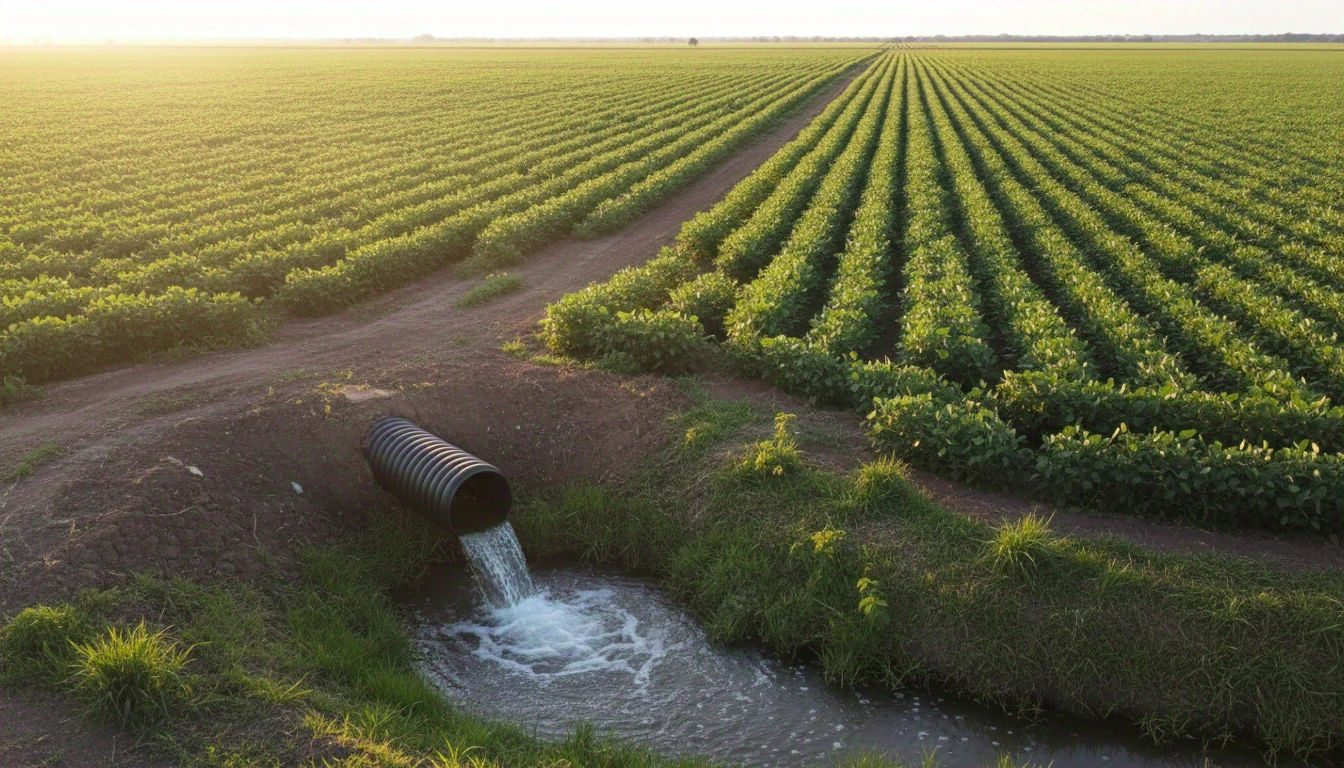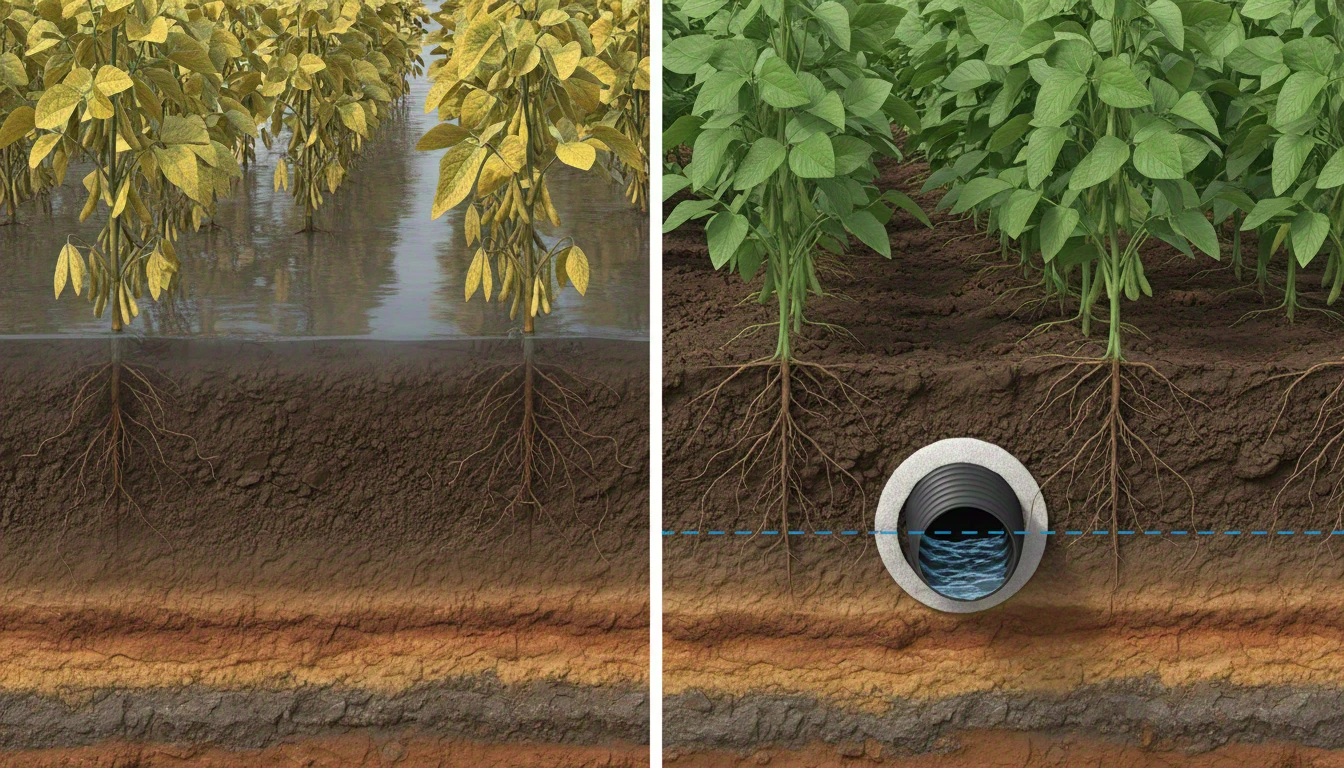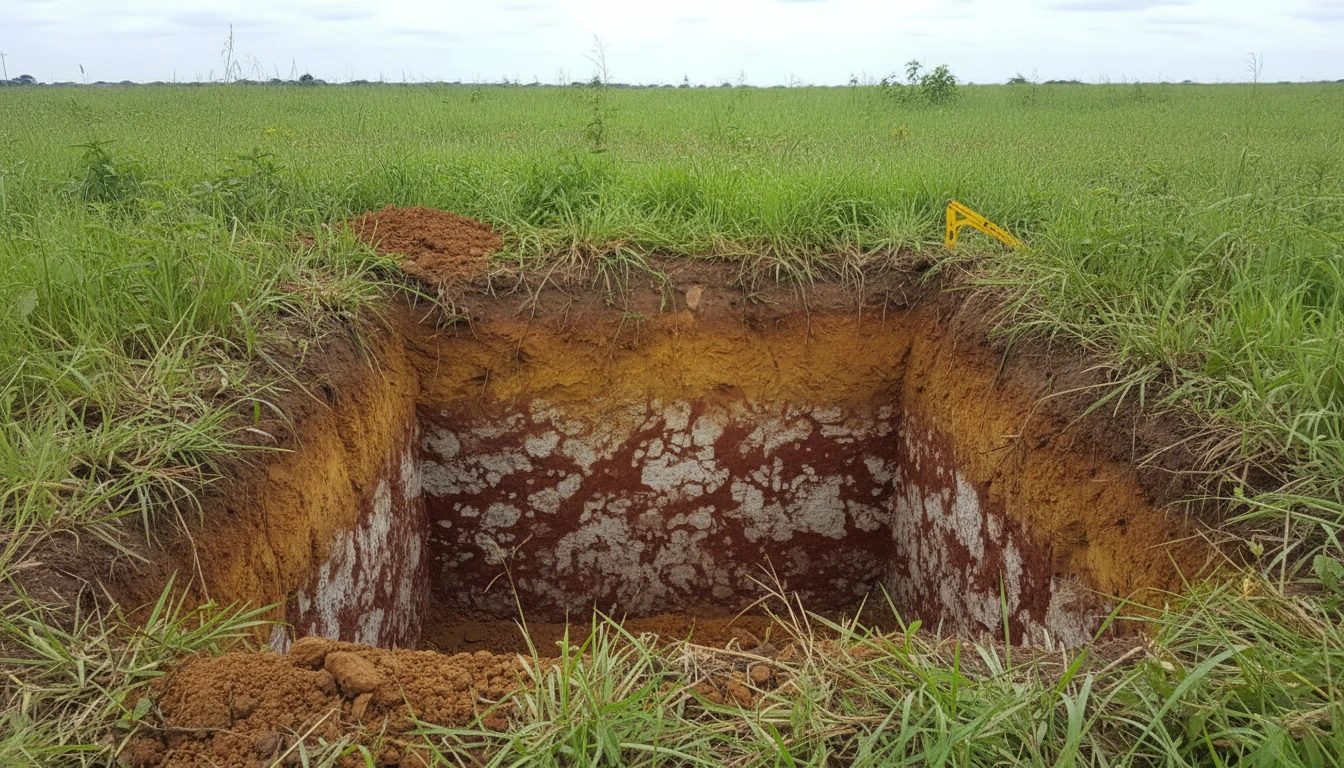


There is an objection that always arises when discussing land drainage: "isn't that bad for the environment?" The correct answer is counterintuitive. A well-designed drainage system reduces erosion and soil loss — it does not increase it. But there is a real nuance to the story that is worth knowing before designing, especially when deciding where the water will exit.
Why drainage reduces erosion, in most cases
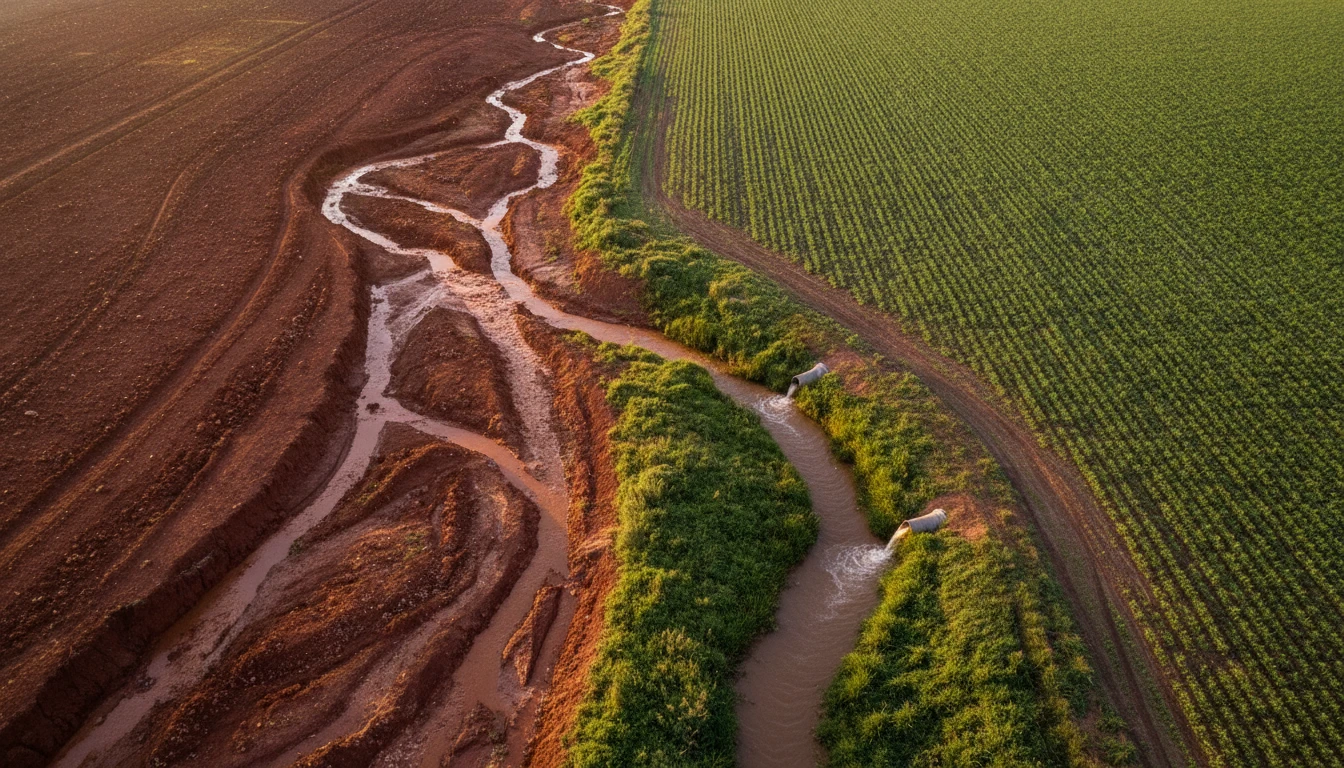
Waterlogged soil has little infiltration capacity — excess water flows over the surface as surface runoff. This runoff is the main driver of water erosion: the impact of rain loosens soil particles, and the running water carries this sediment — along with the nutrients attached to it.
Embrapa data on soil management show the scale of the problem: in conventional tillage systems using plows — which leave the soil more exposed and more prone to runoff — average annual phosphorus losses in runoff can be three times higher, and potassium and magnesium losses four times higher, than in no-till farming. Phosphorus, in particular, has low mobility in the soil profile — it practically only leaves the property attached to eroded soil particles.
A well-designed subsurface drainage system addresses the cause: by lowering the water table and draining excess water through the soil profile instead of over the surface, it reduces the time the soil remains saturated and, consequently, reduces the volume of surface runoff available to carry sediment. Less surface runoff means less soil — and less phosphorus, potassium, and organic matter — leaving the field.
The aspect that requires attention: dissolved nitrate and phosphorus
Technical honesty requires a caveat. Reducing the loss of nutrients *attached to sediment* is not the same as eliminating all nutrient loss. Nitrate, unlike phosphorus, does not bind to soil particles — it dissolves in water and moves with it. A drainage system that drains water faster through the soil profile can, in some scenarios, increase the loss of dissolved nitrate through the drainage network compared to soil without any system.
The same applies, to a lesser extent, to a fraction of phosphorus: most of it is lost attached to sediment (and this portion drops significantly with drainage), but there is a soluble fraction that can be drained through the system itself if fertilization and management are not well calibrated.
This does not invalidate drainage — it merely inverts a simplistic belief. The practical conclusion is not “drainage pollutes” nor “drainage always helps the environment”: it is that design and management determine the outcome. A properly sized system, combined with good fertilization practices and a well-located outlet, delivers a net positive environmental gain (much less erosion and sediment) without neglecting dissolved nutrients.
Where the water exits: APPs and riparian forests are not optional
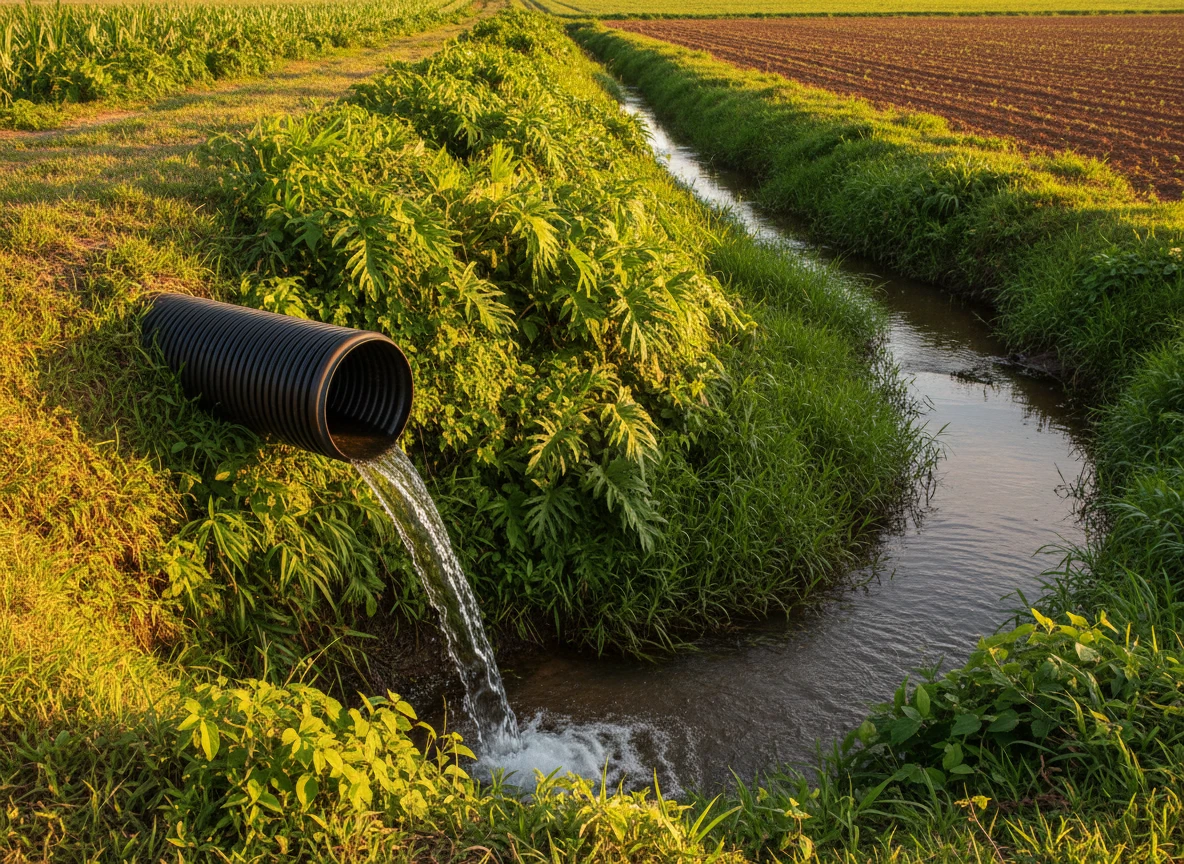
The Forest Code (Law 12.651/2012, art. 4) requires strips of Permanent Preservation Area (APP) along any natural watercourse, perennial or intermittent, measured from the bank: 30 m for courses less than 10 m wide, 50 m for those 10 to 50 m wide, and 100 m for those 50 to 200 m wide. This vegetation strip — the riparian forest — is not an isolated bureaucracy of the drainage project: it is a functional part of the system. It is the last filter before the water reaches the river, retaining residual sediment and absorbing some of the dissolved nutrients.
A drainage project that respects the APP and directs the outlet into it — never discharging directly and unprotected into the watercourse — practically reduces the environmental risk that the initial objection imagines. It is also the type of decision that separates an engineering project from an improvised installation.
Best practices that make an environmental difference
- Locate the outlet within or at the end of the APP strip, never discharging directly into the watercourse bed.
- Size the system for the actual flow rate of the area — an undersized system overloads the outlet and increases local erosion speed; an energy dissipator at the outlet prevents the drain flow itself from creating new point erosion.
- Calibrate fertilization along with the drainage project, to avoid pushing excess soluble nitrate through the system.
- Preserve or restore the vegetation of the riparian strip, which continues to function as a filter even after the drain is installed.
This logic directly connects with green infrastructure and sustainable drainage, a topic we have already covered for urban condominiums and subdivisions: retention basins, vegetated strips, and geosynthetics that separate and filter soil layers serve the same environmental role in the city as riparian forests do in agriculture.
Environmental gain is not automatic — it is designed
Agricultural drainage, when well-designed, tends to be an ally of the environment, not a threat: less eroded soil, less sediment carried away, less phosphorus and potassium lost in runoff. But this result depends on design decisions — outlet location, respect for APPs, correct sizing, and calibrated fertilization — which are part of the work of the Techduto engineering team in each area.
For the technical terms in this article, the Drainage Glossary provides complete definitions of erosion, surface runoff, and infiltration. If you are still identifying signs that your crop needs drainage, see the 7 field signs and the 4-question diagnosis.