

Designing a drainage system in clay soils is one of the biggest challenges in civil and agronomic engineering. Unlike sandy soils, clay has very fine particles that result in low permeability and, consequently, high water retention.
When the design does not consider the physical characteristics of this type of terrain, the result is almost always the same: accumulated water on the surface, waterlogged soil for long periods, and loss of productive or structural efficiency.
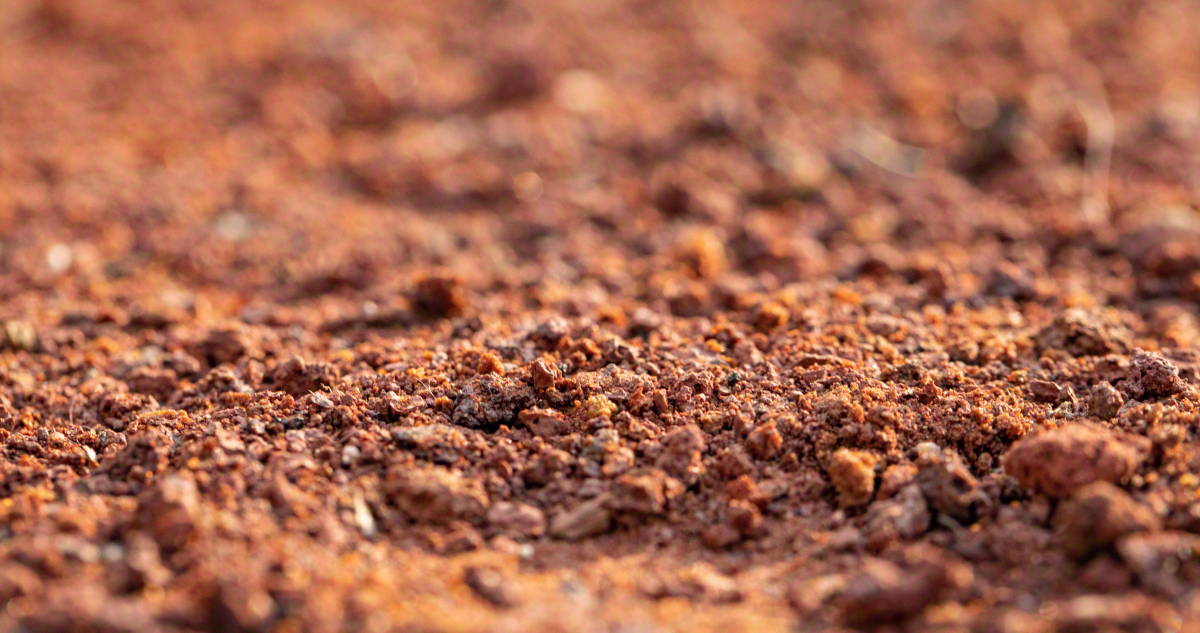
In this article, we will show the fundamental precautions for designing drainage systems in clay soils without compromising operational efficiency.
The challenges of low permeability and high water retention
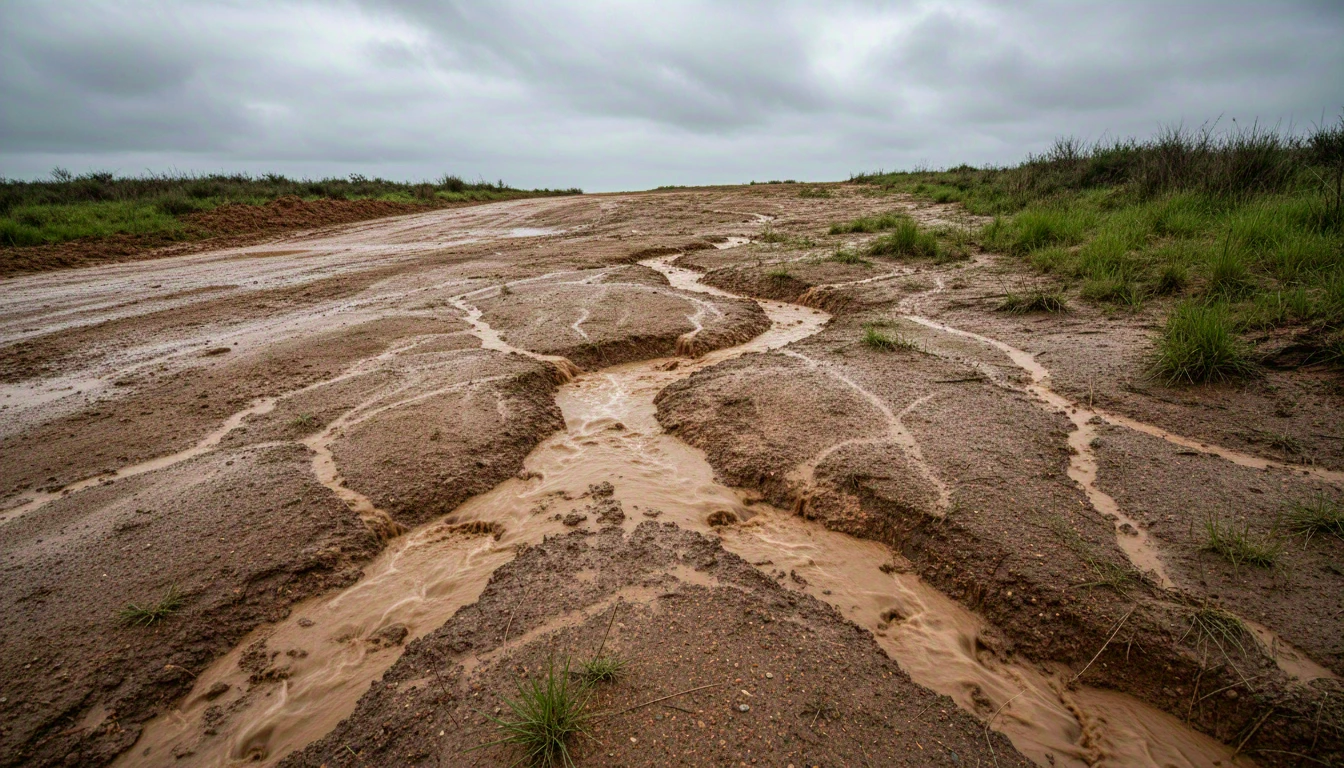
Clay soil acts like a sponge that retains moisture, but with extremely slow water movement. The infiltration capacity is reduced, which favors surface runoff and the formation of puddles.
Furthermore, soil compaction — very common in areas with heavy machinery traffic — further aggravates the problem, sealing the surface and preventing water infiltration into the soil. If the drainage system is not properly sized, the water table can rise rapidly, compromising crop roots or foundation stability.
To understand the consequences of a poorly executed project, read our article on the 7 common drainage problems.
Strategies for designing drainage in clay soils
To overcome the resistance of clay soil, the drainage design needs to be more intensive than in other types of terrain. Check out the essential points:
- Reduced spacing between drains
As water moves slowly in clay, drainage pipes need to be closer to each other. While in loamy soils the spacing can be wider, in clay it is necessary to reduce this distance to ensure that water travels a shorter path to the pipe. - Use of drainage envelopes (Gravel and Geotextile)
In soils with low permeability, the drainage pipe needs a facilitation zone. The use of gravel around the pipe, protected by a geotextile fabric, creates a path of least resistance, accelerating water capture. - Integration with stormwater drainage
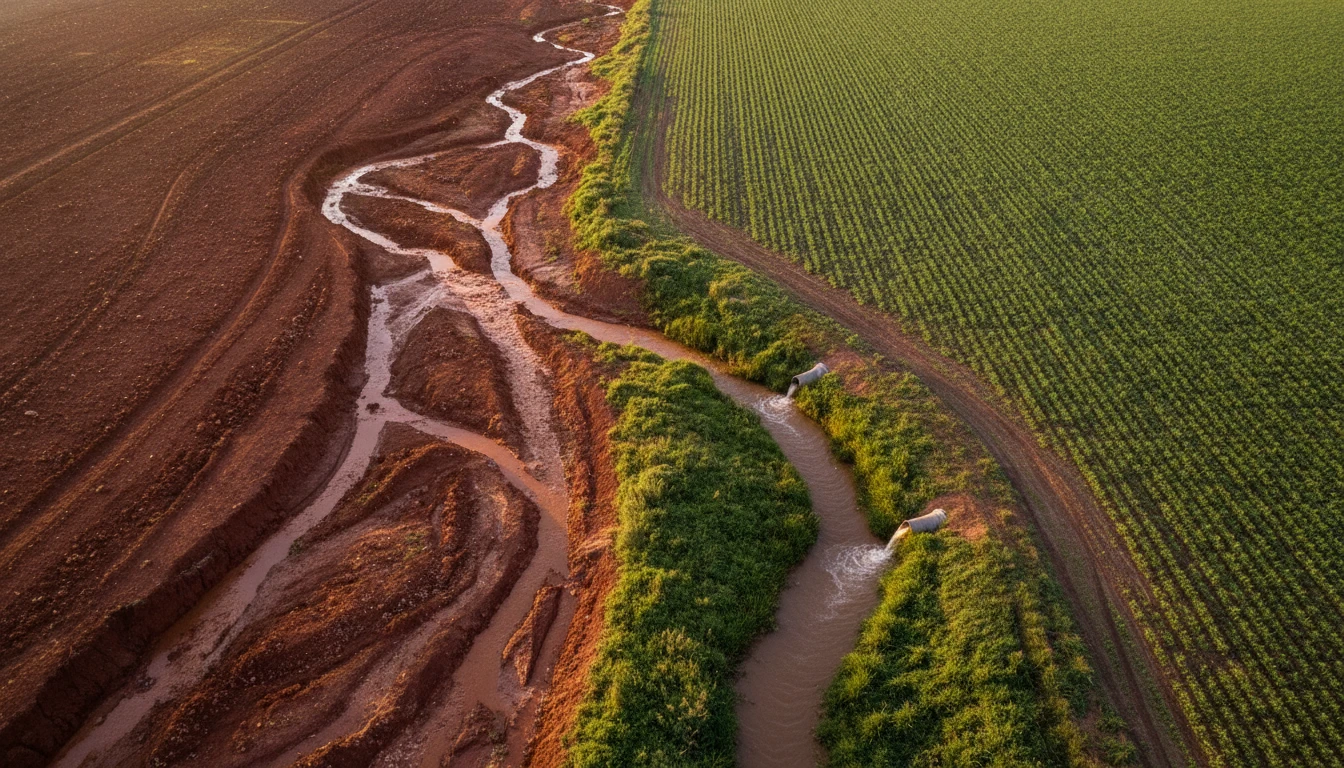
Surface runoff in clay soils is very intense. Therefore, subsurface drainage must work together with an efficient surface collection system. Learn more in our guide on stormwater drainage: everything you need to know.
Choosing the ideal system for waterlogged soils
There are several technical solutions, but in clay soils, underground systems (herringbone or parallel) usually show better results for controlling waterlogged soil.
Learn about the 6 most used drainage systems here and identify which one best suits your property’s topography.
Conclusion: Efficiency depends on technical specification
Draining clay soil requires more than just installing pipes; it requires understanding the dynamics of infiltration capacity and water behavior beneath the soil profile. Ignoring soil compaction or underestimating water retention time can lead to premature system failure.
Techduto offers high-performance HDPE solutions, designed to withstand soil pressures and ensure the necessary flow, even in the most challenging terrains.
Need technical assistance to specify drainage in clay soil? Talk to Techduto’s specialists and ensure the longevity of your project.
FAQ:
- Is it possible to drain a soil with very low permeability?
Yes. In clay soils, the strategy is to reduce the spacing between drains and use “envelopes” (layers of gravel and geotextile fabric) that facilitate water reaching the drainage pipe. - What is the impact of soil compaction on drainage?
Compaction reduces soil pores, drastically decreasing water infiltration capacity. This causes the soil to remain waterlogged for longer and water to accumulate on the surface (surface runoff). - How do I know if my clay area needs drainage?
If after rain the soil takes 24h to 48h to reach workable “point” or if there is constant formation of puddles and plant death due to lack of oxygen in the roots, a drainage system is essential.