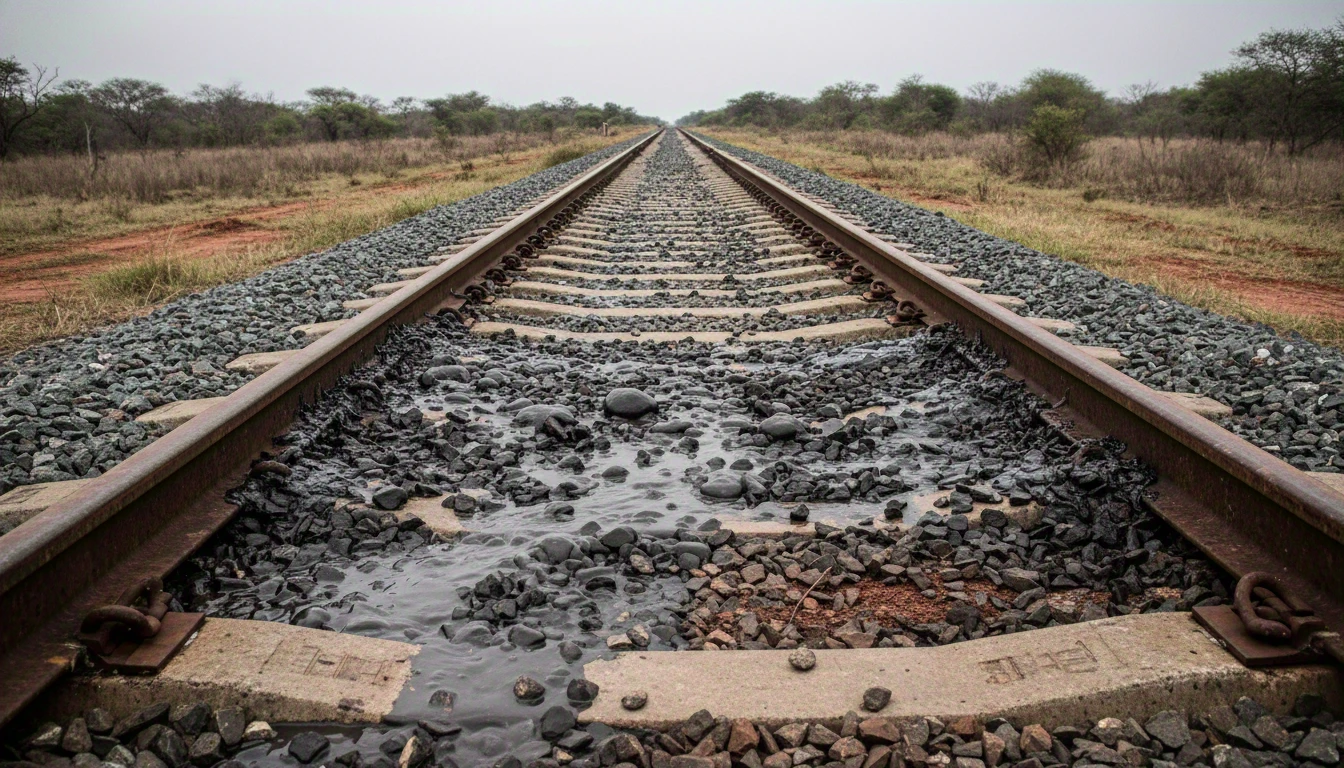


Yes — in São Paulo, any impervious area over 500 m² is legally required to have a rainwater retention or detention system. Most new and renovated logistics warehouses fall under this rule. The point that few projects detail correctly: how to size it, what can be used for conveyance, and what happens when the reservoir becomes a problem.
Does the “Little Pools Law” really apply to private warehouses?
Yes. State Decree SP 41.814/2002 and State Law SP 12.526/2007 require any owner — individual or legal entity — who impermeabilizes more than 500 m² of area in the State of São Paulo to implement a retention or detention structure. It’s not just a municipal law for São Paulo City — it applies to the entire State.
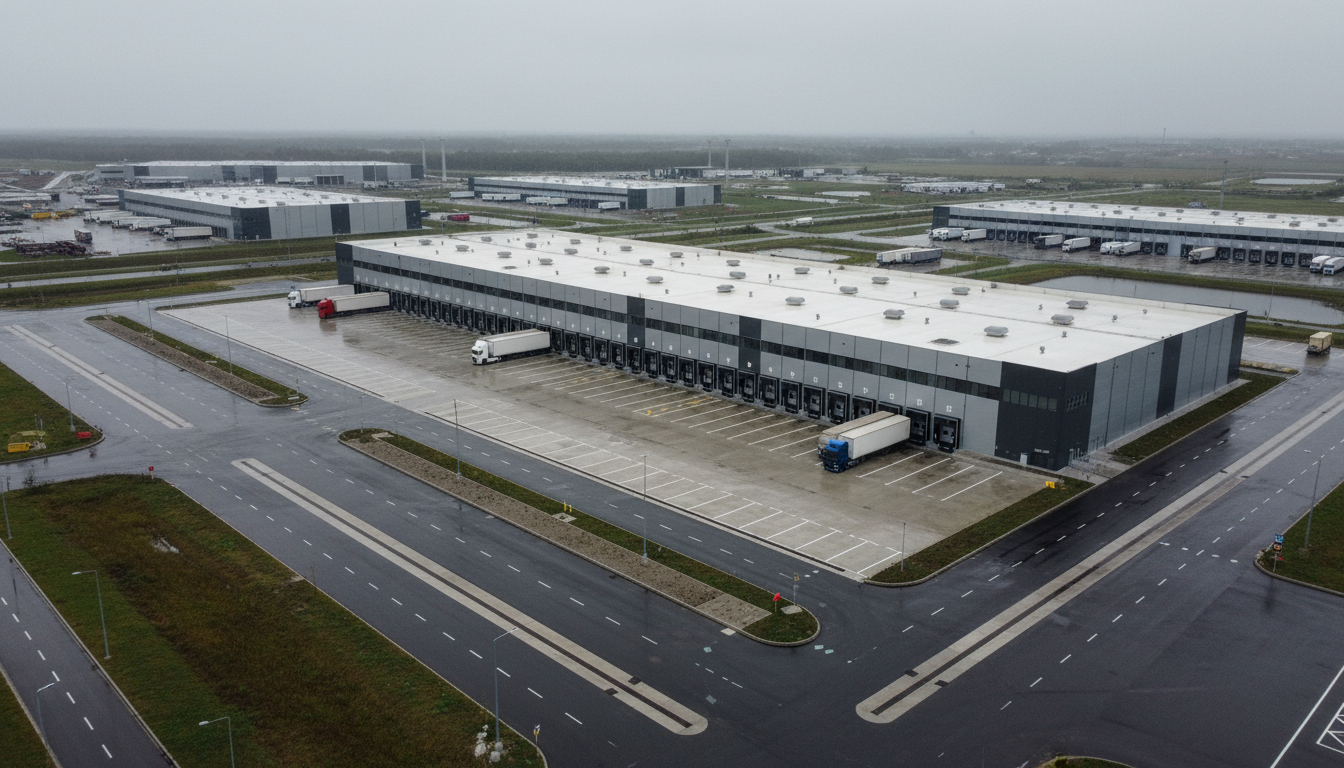
The 500 m² impervious area limit is reached by practically any logistics warehouse. A warehouse with 5,000 m² of built area has, on its own, much more than 500 m² of impervious roof. With the maneuvering yard, the number rises to 30,000–100,000 m² of impervious area in medium-sized developments.
Enforcement varies by municipality. In São Paulo City, Municipal Law 15.509/2011 reinforced the requirement with fines of up to R$ 65,000. In other cities in the interior of São Paulo and in other states, enforcement is less systematic — but the legal requirement exists in all municipalities that have adopted similar legislation (and there are many, especially in the metropolitan regions of Campinas, São Paulo, and Santos).
How is the mandatory reservoir calculated?
The minimum volume of the detention reservoir is calculated by the formula defined in Decree 41.814/2002:
V = 0.15 × Aimp × h / 1000
where: V = volume in m³ | Aimp = impervious area in m² | h = reference rainfall depth (mm)
The Decree defines h = 60 mm for the State of SP (1-hour rainfall with a 5-year return period). In practice, for a warehouse with 20,000 m² of impervious area (roof + yard):
V = 0.15 × 20,000 × 60 / 1000 = 180 m³
For 50,000 m² of impervious area (large CD): V = 450 m³. For 100,000 m²: V = 900 m³. These volumes are sized to be emptied within 24 hours (restriction flow rate defined by the municipality).
Detention or retention reservoir — what’s the difference?
The law allows both, but in practice for logistics warehouses, a detention reservoir is almost always the most suitable:
- Detention: operates empty between rain events. It stores the peak flow and releases it slowly into the network. It occupies land area but does not create a permanent water body — it doesn’t require aquatic fauna maintenance, doesn’t need pumping, and doesn’t pose a risk of mosquito breeding.
- Retention: maintains a permanent water body. It is only feasible when there is available space and when the landscape design allows it — more common in residential condominiums and logistics parks that want the water resource as a differentiator.
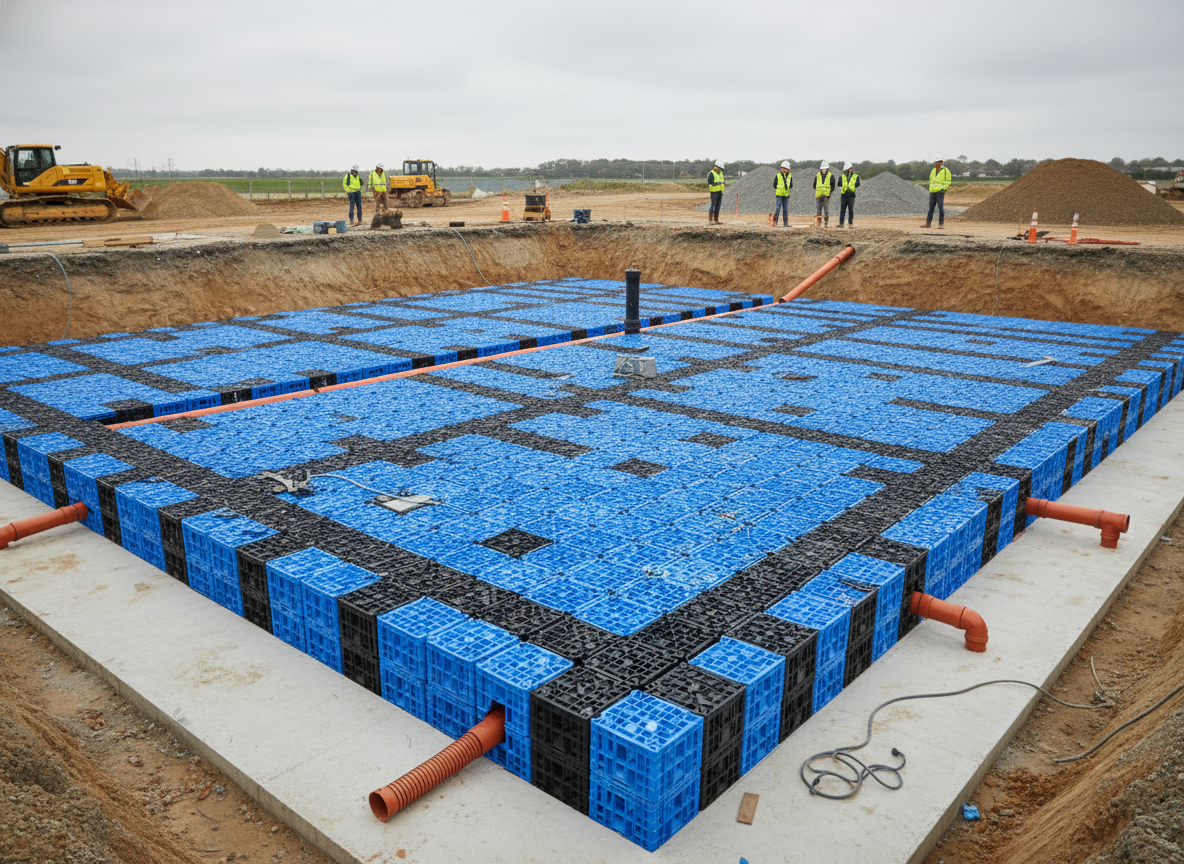
For distribution centers (CDs) and warehouses with high land occupancy pressure, an underground or semi-underground detention reservoir (large cistern, cell culvert, modular boxes) is the most common solution — it doesn’t subtract from the maneuvering yard and can be installed in an area that would otherwise be unusable.
What pipe should be used to convey water to the reservoir?
The stormwater conveyance system for a logistics warehouse has two parts with different requirements:
Roof collection and conveyance to the reservoir
For conveying stormwater collected from roofs and yards, large-diameter double-wall corrugated HDPE pipes (400 mm to 800 mm, depending on flow rate) are the most efficient solution — lower roughness than PVC (Manning n ≈ 0.009–0.011 vs. n ≈ 0.010 for smooth PVC, but with much higher resistance to deformation) and reduced weight for installation.
Perimeter drain and under the industrial floor
For the perimeter drain and any deep drain that runs under the truck traffic area, the requirement is annular stiffness SN8 — the minimum to withstand the weight of a truck (tare weight + load: up to 74 tons). Techdreno DW with SN8 meets this requirement with cover depths from 0.8 m.
In fine soil around the warehouse (clay or silt), where there is a risk of perimeter drain clogging, Techdreno KC with an integrated envelope is the correct specification — no need for separate geotextile and no additional installation step in the field.
What happens if the warehouse doesn’t have the reservoir?
In addition to the fines stipulated by law (in São Paulo City, progressive fines up to R$ 65,000 + work embargo), the absence of a detention system has practical consequences:
- Work embargo: the certificate of occupancy (Habite-se) may be denied without an approved drainage project.
- Civil liability: if the lack of a detention system contributes to flooding in neighboring properties or public roads, the owner is civilly liable for the damage.
- LEED/certification issues: logistics warehouses seeking sustainability certifications (LEED, AQUA) have drainage criteria that go beyond the law — the absence of the reservoir blocks critical points.
What to check before designing
Each municipality has flexibility to regulate the “Little Pools Law” beyond the state minimum — or adopt its own parameters. Before designing:
- Check the municipal legislation of the municipality where the warehouse will be built (it may be more restrictive than the state decree).
- Confirm the municipal restriction flow rate — the speed at which the reservoir can be emptied varies by local public network.
- Verify if the municipality requires a volume calculated by lot area (more conservative) or only by impervious area.
- Check ABNT NBR 10844 standard for sizing roof gutters and downspouts — often undersized in industrial warehouses that expand roof area over time.
The Techduto engineering team can assist with the technical specification of drains and conveyance pipes for the warehouse’s stormwater system. For the technical terms on this page, the Technical Glossary of Drainage has definitions for detention vs. retention reservoir, restriction flow rate, and annular stiffness SN.
Frequently asked questions
Yes. State Decree 41.814/2002 and State Law 12.526/2007 require any impervious area > 500 m² to have a detention or retention reservoir throughout the State of SP, not just in the Capital. Municipalities outside of SP have similar legislation in various metropolitan regions — check the municipal law before designing.
Using the formula from Decree 41.814/2002: V = 0.15 × Impervious Area (m²) × 60 mm / 1000. For a warehouse with 20,000 m² of total impervious area: V = 0.15 × 20,000 × 60 / 1000 = 180 m³. The volume is sized for a 60 mm rainfall in 1 hour and must be emptied within 24 hours (municipal restriction flow rate).
Deep drains under truck traffic areas require a minimum annular stiffness of SN8 to withstand the vehicle’s axle load (up to 74 t tare + load). Techdreno DW (double wall, SN8) meets this requirement with cover depths from 0.8 to 6.0 m. In fine soil around the warehouse, use Techdreno KC (with integrated filter envelope) to prevent clogging of the perimeter drain.
Yes. In logistics warehouses with high yard occupancy pressure, a buried reservoir (cistern, cell culvert, modular boxes) is the most common solution — it does not subtract maneuvering area and operates by gravity, without pumping. The regulated outlet piping limits discharge to the municipal restriction flow rate. It requires access for cleaning and inspection.
Yes. Decree 41.814/2002 stipulates the owner’s responsibility for system maintenance. Buried reservoirs require annual cleaning to remove accumulated sediment (mainly sand and organic matter carried by rain). Negligence in maintenance gradually reduces the reservoir’s effective capacity — within 5 to 10 years without cleaning, some systems operate at less than 50% of their nominal capacity.