


Biological wastewater treatment uses microorganisms such as bacteria, algae, and protozoa to help break down organic matter. Learn more.
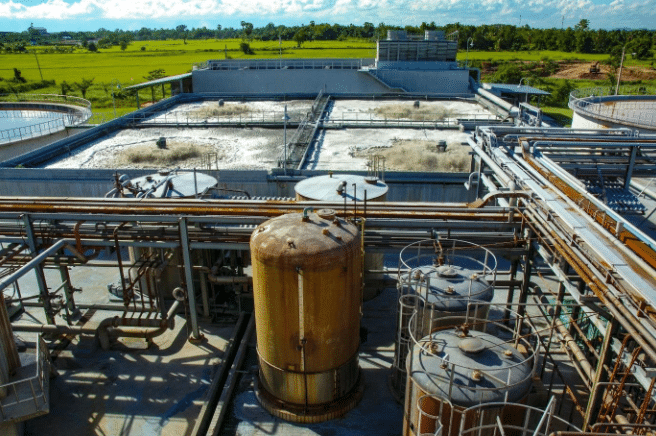
Biological wastewater treatment involves making the most of natural processes to clean water. Although it may not seem complex at first glance, it involves a balance between biology and biochemistry, which is why it requires the right equipment and steps.
There are also different methods for performing biological sewage treatment, depending on local needs. The types of waste treated range from heavy metals to organic matter. Therefore, biological wastewater treatment ensures the proper disposal of these substances, provided the necessary processing steps are followed.
What is biological wastewater treatment?
Biological sewage treatment, also known as biological effluent treatment, uses the natural processes of bacteria and other microorganisms to break down the organic matter present in industrial and domestic effluents.
In a wastewater treatment plant (WWTP), it corresponds to secondary treatment—the stage that follows preliminary and primary treatment (which remove solids and part of the physical load) and precedes any tertiary polishing stages.
We refer to effluents as all waste resulting from industrial and domestic activities, such as wash water, organic and inorganic compounds, landfill leachate, discharge water, grease trap water, and various other types. When untreated, they have a negative impact on the environment, causing pollution, the death of marine animals, and various diseases.
Through biological treatment, organic substances are broken down by normal cellular processes, making it a more cost-effective treatment compared to other methods. In addition to its cost-effectiveness, biological wastewater treatment also offers versatility. The process is capable of breaking down materials such as waste and food as well as toxins. For this, two distinct techniques can be used: aerobic or anaerobic.
Aerobic Treatment
In the case of biological wastewater treatment through the aerobic process, we are referring to the presence of oxygen. Among the methods and resources, such as septic tanks or oxidation ditches, there are some that are more important and essential:
- Spray aeration;
- Activated sludge;
- Trickling filters;
- Treatment in tanks and ponds;
- Aerobic digestion.
It is worth noting that constructed wetlands built for the purpose of treating sewage can also be included here. Activated sludge is one of the oldest aerobic examples, used even for industrial wastewater treatment. Pulp and paper mills, for example, produce effluents that can be treated using the aerobic biological method.
Anaerobic treatment
Regarding the biological treatment of sewage in the anaerobic mode, the main characteristic is the absence of oxygen during decomposition. Therefore, it is the opposite of the previous method. In this process, bacteria are the primary agents, carrying out the breakdown of the material.
One of the best-known uses of biological sewage treatment is anaerobic digestion for energy recovery. What does this mean? It means that the waste is converted into energy, as is the case with methane for biogas production.
In Brazil, one of the most widely used anaerobic systems is the UASB reactor (upflow anaerobic sludge blanket reactor), which is very common in treatment plants because it is compact, has low operating costs, and produces biogas.
Aerobic vs. Anaerobic: Key Differences
| Criterion | Aerobic treatment | Anaerobic treatment |
|---|---|---|
| Oxygen | Present (requires aeration) | Absent |
| Speed | Faster | Slower |
| Power | Consumes energy during aeration | Can generate energy (biogas) |
| Sludge generation | Higher | Lower |
| Odor | Lower | Higher (requires control) |
| Examples | Activated sludge, aerated ponds | UASB reactor, biodigesters |
MABR Treatment
Among the types of biological wastewater treatment, some new techniques and technological processes are also emerging. One of them is the Aerated Membrane Biofilm Reactor (MABR), which reduces energy consumption by up to 90%.
Currently, this biological wastewater treatment technique is already used in countries such as China and the United States. In addition to optimizing the process, it also allows for the creation of remote monitoring systems and improves effluent quality.
Additional Treatment
There is one final option for biological wastewater treatment that we will discuss here. To ensure compliance with environmental regulations and adherence to all guidelines, the methods mentioned above may typically require supplementary measures.
In this regard, we are referring to additional steps such as UV treatment, other filtration options (reverse osmosis, ultrafiltration, etc.), and chlorination. Furthermore, researchers around the world frequently develop alternatives to save energy and increase treatment efficiency.
Stages of Biological Sewage Treatment
In a biological wastewater treatment process, there are several well-known stages that can be detailed here as an example of what you have just read. Learn a little more below!
1) Screening
After the wastewater arrives by tanker truck, the biological sewage treatment process begins with screening. In this stage, solids—whether large or small—are removed.
This prevents problems in the subsequent stages, where pumps and piping are used. Generally, pieces of wood, plastics, and other materials that could be harmful to the process are removed.
2) Pumping Station
At the pumping station, the tank must be equipped with pumps and valves that are efficiently connected. This allows the system to overcome topographical barriers and proceed with proper treatment.
3) Sand Trap
Although the first stage removes solids, some of them still manage to get through. However, they will be removed in the sand trap stage, as it has a low flow rate to settle the particles and “scrape” the bottom. The residues must be properly sent to the landfill.
4) Aerated ponds
When the waste reaches the aerated ponds, a diffuser “blows” air to maintain the necessary oxygen level. Thus, microorganisms carry out their work of digesting and consuming the organic matter. Additionally, this is a more time-consuming stage, taking up to three days to complete.
5) Settling ponds
After the previous stage, smaller flocs form and proceed to the settling process, which takes up to one day. This creates a type of sludge.
6) Dredging
Generally, the ponds from the previous stage undergo dredging to prevent sludge buildup. This ensures that sludge does not mix with the treated water and guarantees the quality of the entire biological sewage treatment process.
7) Sludge drying and treatment
After being dredged, the sludge must complete its drying process, as it is not yet 100% solid. To do this, larger flocs are added to separate the remainder in centrifuges, resulting in a paste-like sludge.
8) Composting
To complete the treatment, there may be a composting stage to ensure environmental sustainability. This stage, however, will depend on each company’s system.
How can we help with biological wastewater treatment?
We already have the know-how to produce specialized lines designed specifically for this type of application, such as the TechBIO line: biological media in the form of "tubes" (32, 50, or 63 mm in diameter and 50 mm in length), as well as other products that provide a larger surface area for microorganism attachment and accelerate treatment, reducing the number of steps. This increased contact is precisely what enhances the action of the bacteria in the biofilm. Furthermore, we do not use products derived from the reprocessing of pesticide containers, which could kill the bacteria and compromise the entire process.
Biological wastewater treatment also depends directly on the quality of the installed infrastructure, including the material that allows for the flow of wastewater. The piping, for example, must facilitate the best possible process for any of the methods employed.
Techduto is a Brazilian company specializing in high-density polyethylene (HDPE) corrugated pipes. Manufactured from High-Density Polyethylene, Techduto’s pipes are eco-friendly and resistant to diametric compression and chemical attack.
Visit the Techduto website and explore all product lines for various construction projects!