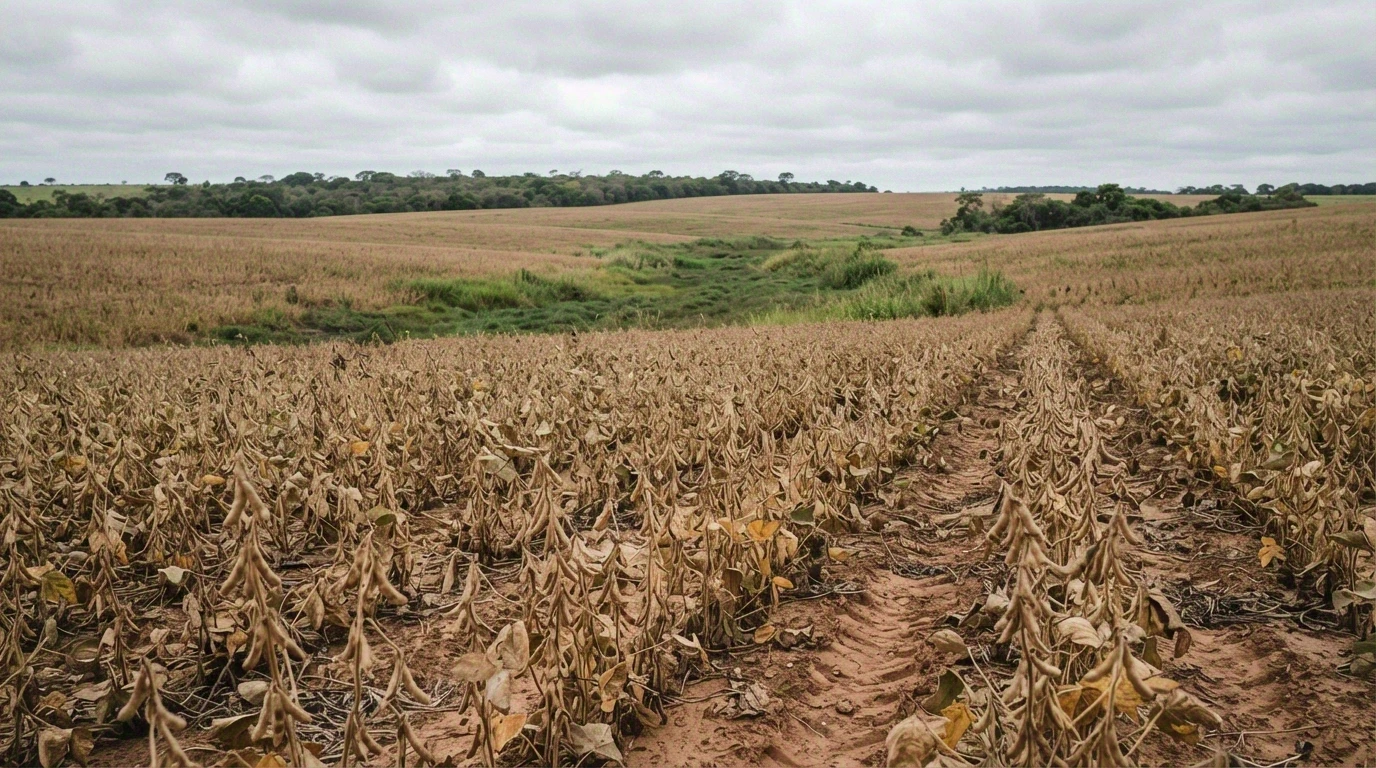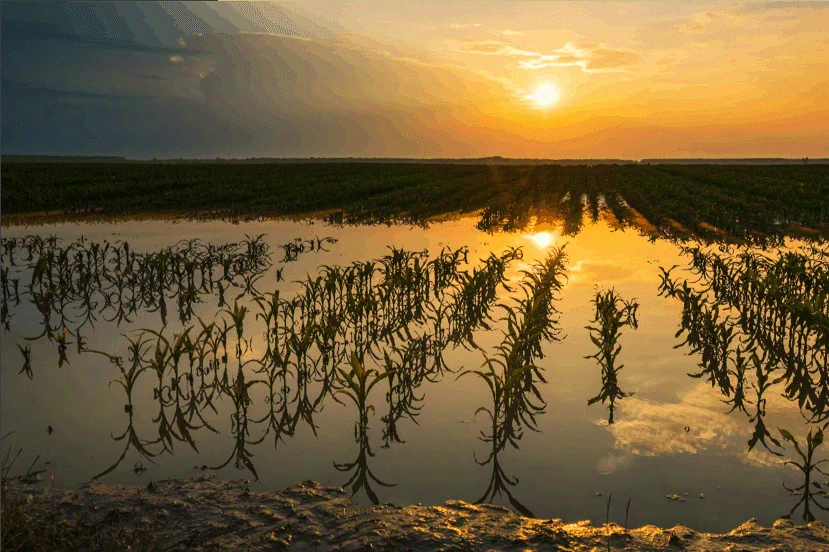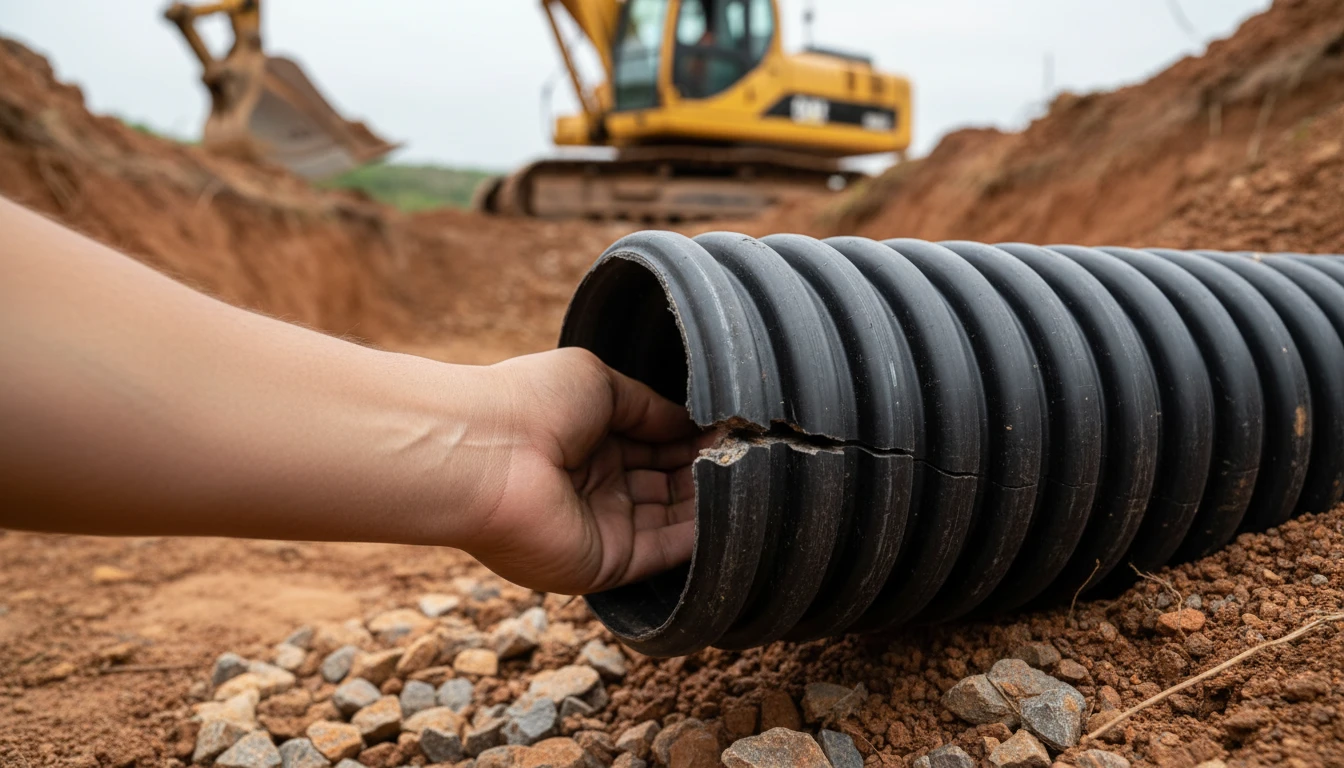


Two puddles of water on the same property can have completely different causes — and each requires a different solution. Confusing the two is the #1 reason for "I already drained it and it's still flooding": the producer installs a system designed for one problem when they actually had the other. Before investing, it's worth understanding where the water in your area comes from.
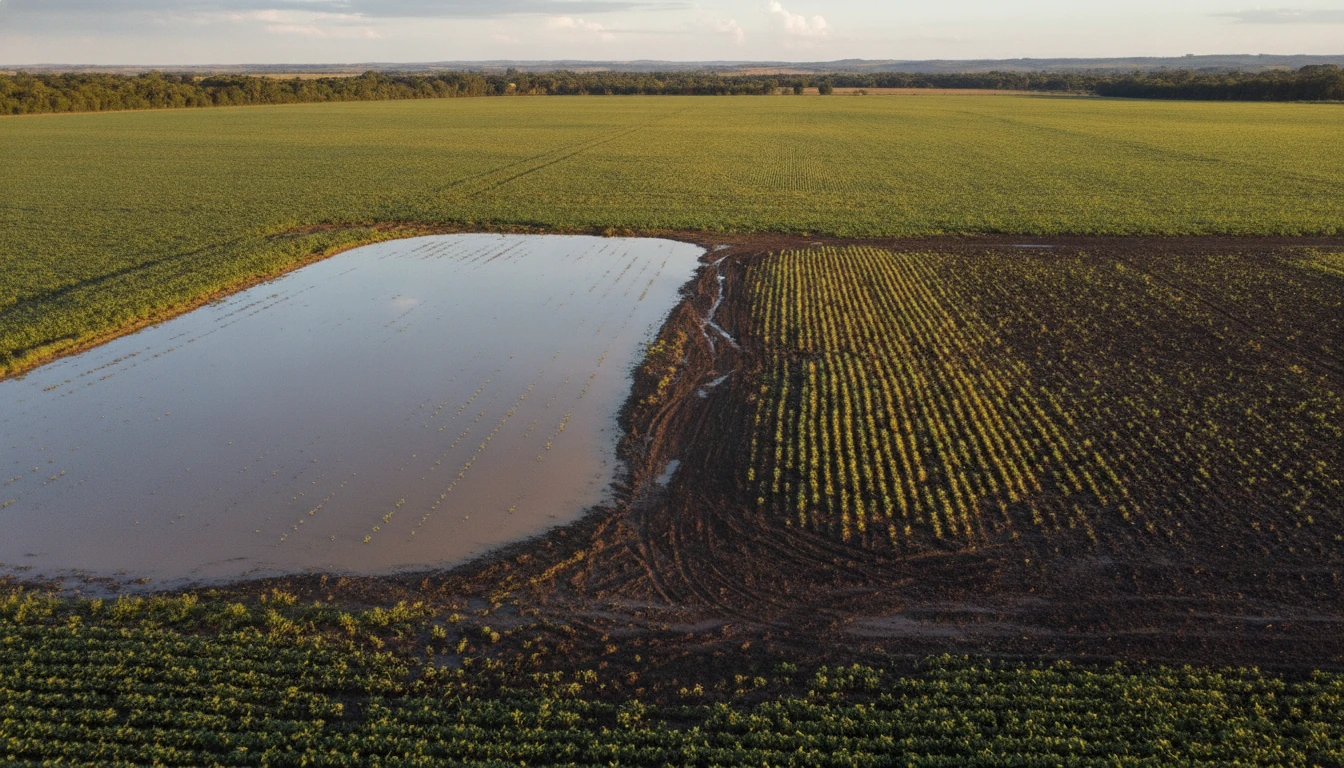
Not sure which case applies to you? Answer 4 simple questions and find out in less than a minute.
The same symptom, two different origins
“My area floods” is the most common — and the most incomplete — complaint. Standing water can come from above (rain that fell and couldn’t drain or infiltrate) or from below (the water table that rises close to the surface and saturates the soil from within). These are surface drainage and subsurface drainage — two distinct engineering problems with distinct solutions. Installing buried pipes when the problem is just poor land grading won’t solve it; leveling the land when the problem is a high water table also won’t solve it. The first step is to diagnose correctly.
Signs that the problem is underground
Here, the water comes from the bottom up. The most reliable signs:
- The soil stays moist even without recent rain. If there’s been a week of sunshine and the area remains “soft,” the water isn’t coming from the last rain — it’s being replenished from below.
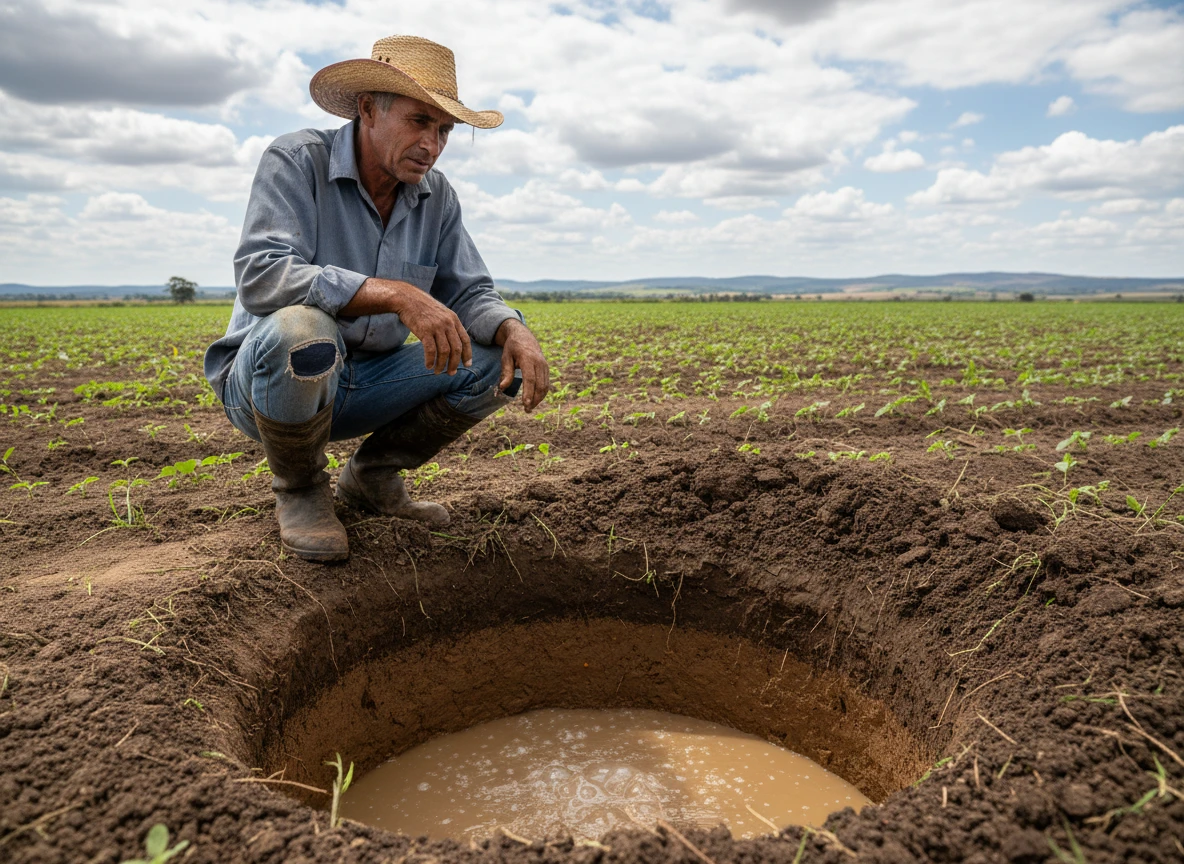
- Dig an inspection pit 60-80 cm deep. If water starts appearing on the pit walls or accumulates at the bottom within minutes, the water table is high at that point.
- The soil profile changes color with depth — gray, bluish, or with orange mottling. This indicates that water has been stagnant down there for too long, even when the surface appears dry.
- Low-lying areas, the foot of a slope, or areas near a watercourse tend to have a shallower water table — the topography pushes groundwater up in these spots.
Signs that the problem is superficial
Here, the water comes from above and cannot drain or infiltrate. The signs:
- The puddle only appears after rain — and in dry land for days, the area returns to normal (unlike the underground case, which remains moist even without rain).
- The inspection pit is dry at the bottom, even with the surface flooded — the water doesn’t go down, it just accumulates on top.
- The terrain is flat or has insufficient slope, without enough gradient for water to drain to a natural outlet — so-called inadequate land grading.
- A significant amount of water runs over the surface instead of infiltrating ( surface runoff) — often due to a crust or compacted layer just below the surface that impedes infiltration.
And when both happen together?
In practice, it’s common to find both causes in the same area — and this is the most misleading case. Land with a relatively high water table *and* poor surface slope will continue to be waterlogged even after a buried drain is installed, because the falling rain still has nowhere to drain off the surface. In these cases, the solution combines both approaches: subsurface drainage to lower the water table + correction of the terrain/shallow ditches to remove standing surface water. Solving only half the problem is expensive and still leaves the area flooding.
Why confusing the two is costly
Each diagnostic error has a specific price:
- Installing a buried drain for a purely superficial problem is investing in depth when what was lacking was slope — the pipe sits there doing nothing, because the water never reaches it.
- Only leveling the land for a high water table problem resolves the visible puddle, but the roots continue to suffocate from below — productivity doesn’t return, only the surface appearance improves.
- Ignoring that the two coexist is the most common mistake: the producer solves one cause, sees partial improvement, and incorrectly concludes that “it didn’t work” — when in reality, only half the problem was solved.
The right diagnosis first, then the project
Before any investment, it’s worth doing the simple exercise: observe if the area stays moist even without recent rain (sign of underground issue), dig a quick inspection pit, and check the land’s slope. For no-nonsense technical terms, the Drainage Glossary has everything detailed. And when the diagnosis points to subsurface drainage, Techdreno KC — with an integrated filter, validated by UFLA — is the solution Techduto most recommends for fine-textured soils in Brazil. The correct sizing for your area (depth, spacing, and diameter) is done by Techduto’s engineering team — talk to us before deciding.