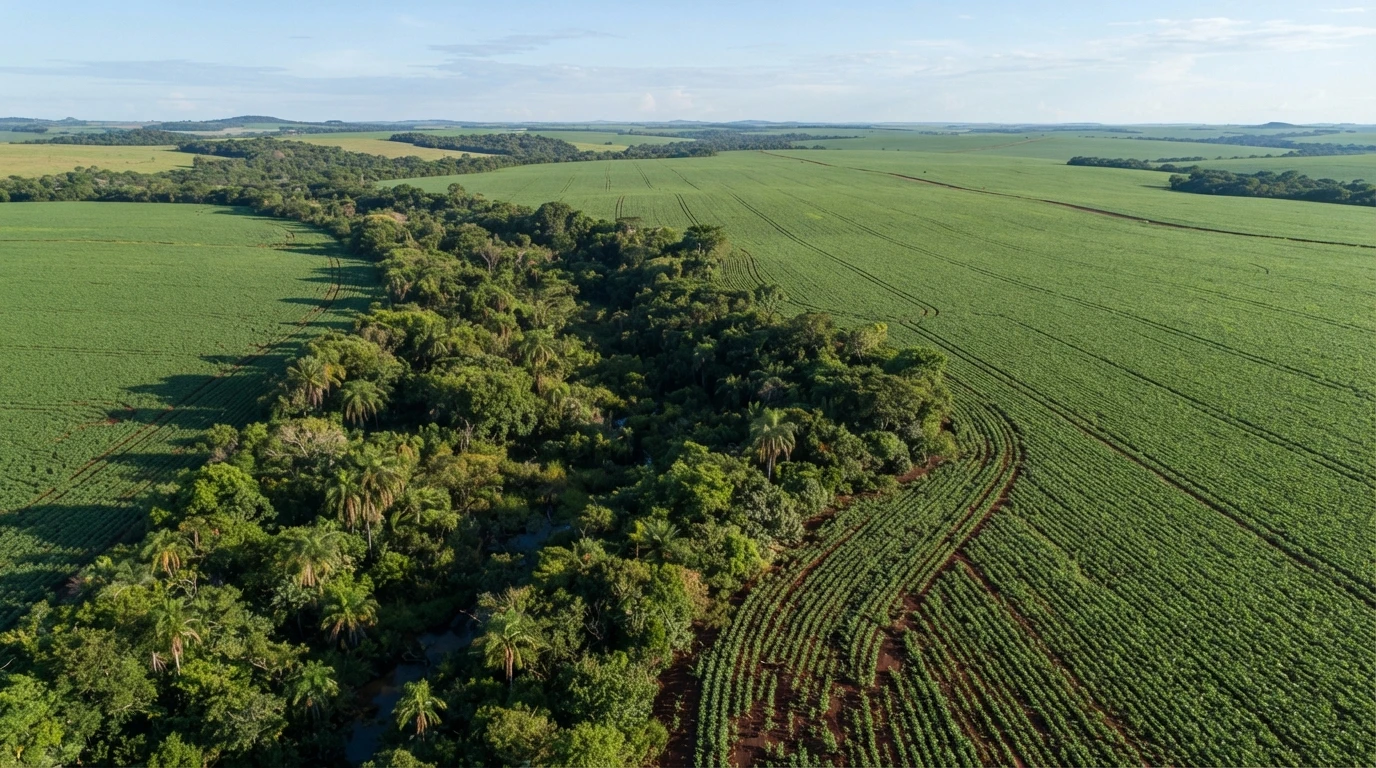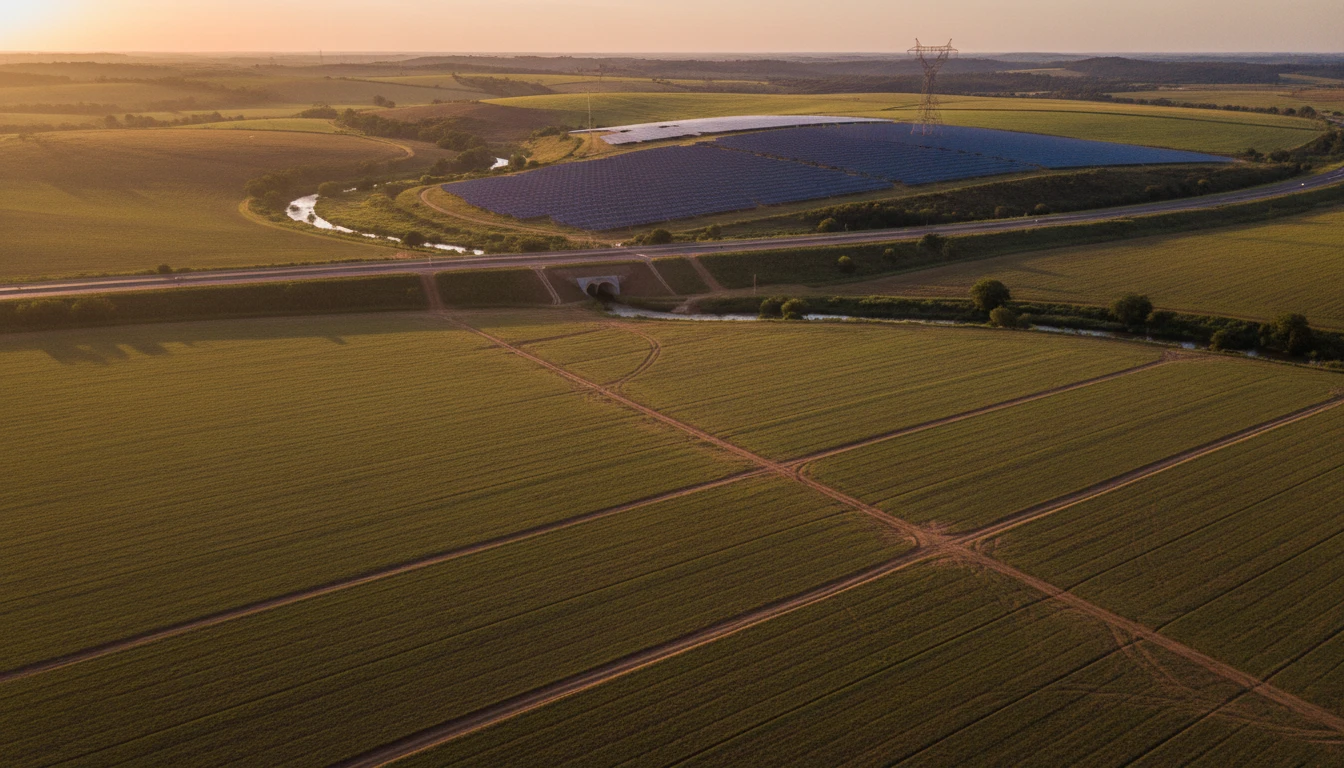


Drainage delivers the promised results in the first few months — the area is dry, machinery can enter without getting stuck, and harvesting normalizes. The problem with a poorly designed system doesn't show up at inauguration. It appears one, two, or three years later, when the defect, which was invisible during installation, has already cost double to fix.
Why the Error Takes Time to Appear
Unlike common civil works, the drainage system is buried. There is no visual inspection after the trench is closed. A design with undersizing or an installation with shortcuts during execution passes the “test” of the first heavy rain — the water flows, the soil drains, and everyone moves on. The defect only manifests when the condition that exposes the error repeats itself: heavier machinery traffic, a more intense rainy season, or a few years of accumulated stress in the right spot. At that point, the repair already requires reopening the trench, and sometimes replacing entire sections of the system — a much higher cost than it would have been to design it correctly the first time.
Error 1 — Pipe Lacking Stiffness for the Fill It Will Receive
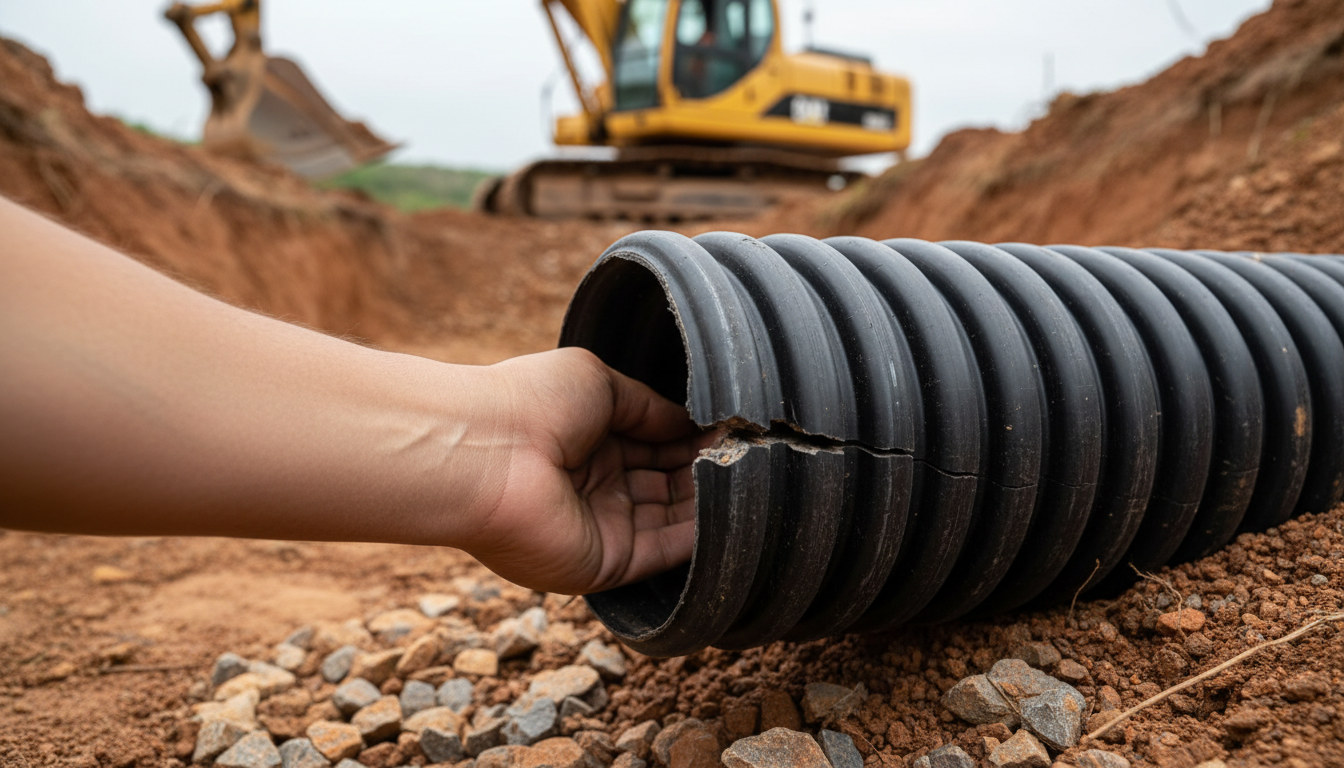
Not all corrugated pipes can withstand the same load. The pipe’s **annular stiffness (SN class)** must be compatible with the cover depth and the machinery traffic that will pass over it — tractors, harvesters, trucks in maneuvering areas. Specifying a single-wall pipe where the design called for a double-wall pipe saves on purchase cost but is expensive later: the pipe ovalizes under load, reducing the flow section and, in extreme cases, crushing and completely interrupting the system.
This is precisely why a double-wall line like Techduto DW exists, with SN8 stiffness — for situations where traffic or deep cover require more than a standard pipe can deliver.
Error 2 — Poorly Positioned or Unprotected Outlet
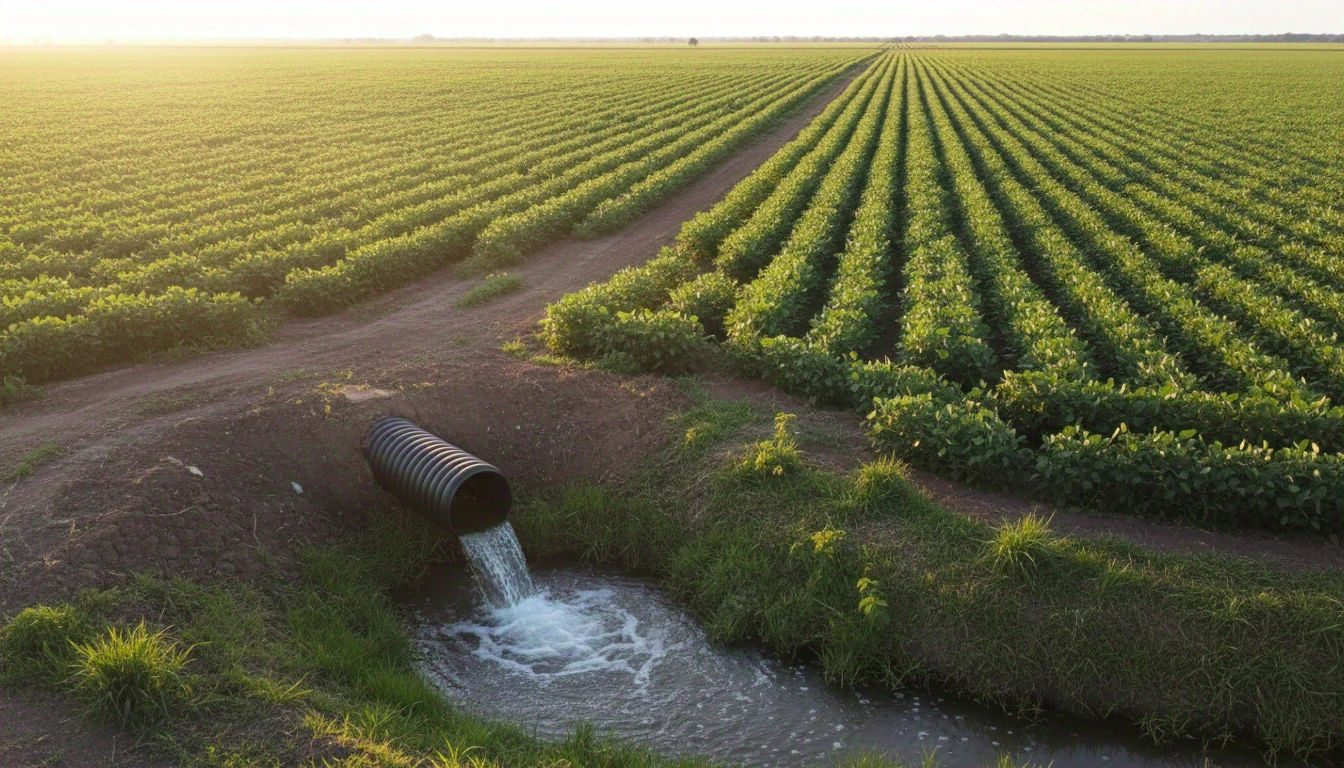
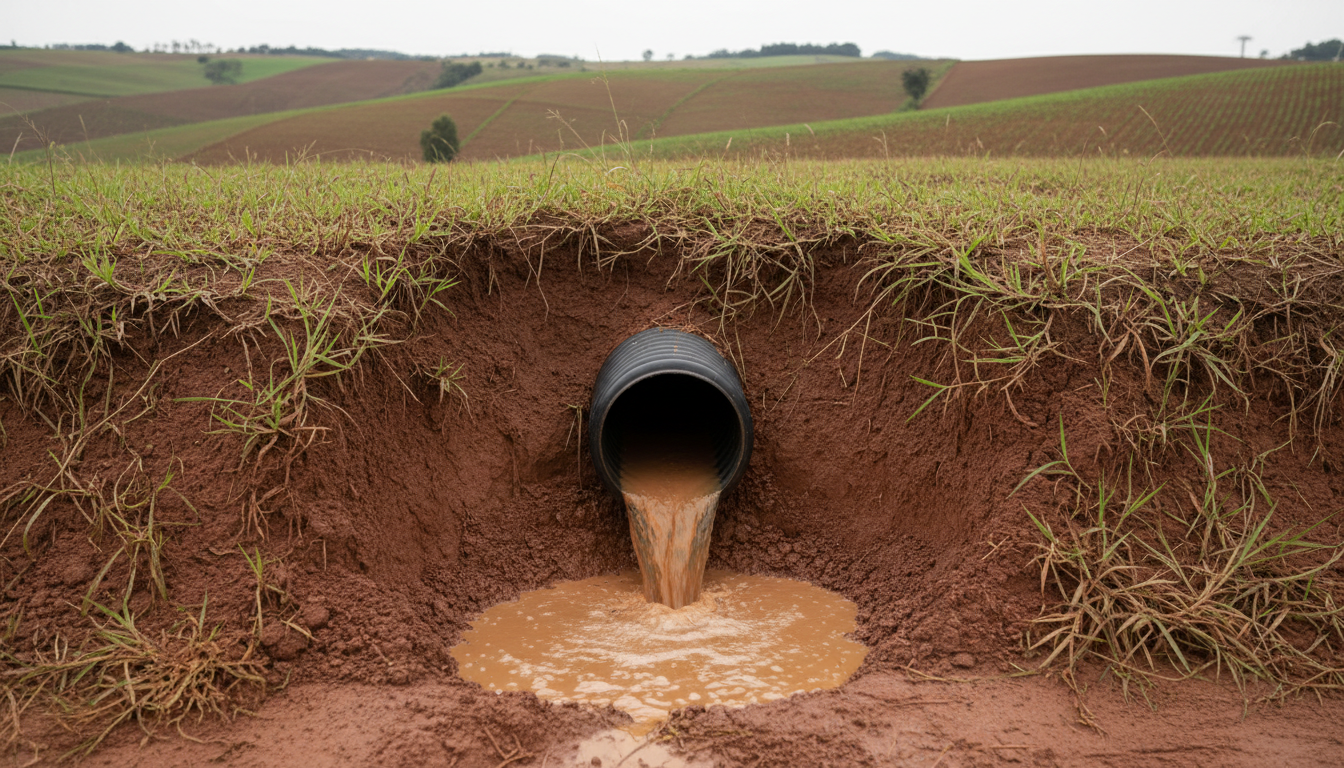
The outlet is the most exposed point of the system — and the most common to go wrong. An outlet without erosion protection, an incorrectly calculated elevation relative to the receiving body, or a position that leaves the terminal pipe exposed to livestock or traffic: any of these errors compromises the entire system, even if the rest of the network is correct. This is a point that needs to be defined in the design, not resolved on the fly on installation day.
Error 3 — Installing Without a Filter Envelope Where the Soil Required It
Not all soils require a **filter envelope** — but in fine soils (fine sands and silts), the absence of protection allows particles to migrate into the pipe until the perforations are silted up from the inside. The most expensive design error here is not using an envelope unnecessarily — it’s deciding this based on guesswork, without characterizing the soil beforehand. Techduto resolves this decision differently: the Techdreno KC is manufactured with micro-slots that drain and filter simultaneously, eliminating the need for a separate envelope and removing the binary decision of “use or not use” from the design.
Error 4 — Depth and Spacing Determined by Guesswork
**Depth** and spacing between drain lines are not standard numbers that fit any soil — they depend on the layer’s permeability, crop type, and the area’s groundwater table condition. Copying the spacing from a neighboring farm, or applying a generic rule without understanding the specific soil, leads to two equally bad scenarios: an undersized system that doesn’t drain enough, or an oversized system that cost more than necessary.
The Pattern Behind the Four Errors
None of these errors appear in isolation on a bill of materials — they all stem from the same cause: design decisions made without a complete diagnosis of the soil, topography, and land use. This is why sizing (depth, spacing, diameter, material selection) is always a design task, never an off-the-shelf calculation. Techduto’s drainage cost calculator helps understand the financial return of the decision — but the technical sizing itself is a conversation with those who will execute the work.
Before Installing, Design
The cheapest path remains the same: bring the area’s diagnosis — soil type, use, waterlogging history — to the system designer before purchasing materials. The Techduto engineering team evaluates these four points (pipe stiffness, outlet position, need for an envelope, depth/spacing) as part of the same project, preventing any of them from becoming a costly problem decided too late.
To understand if your area is already showing signs of needing drainage, the 4-question diagnosis is the first step. And the technical terms mentioned here — **SN stiffness**, **outlet**, **envelope**, and **drain depth** — are detailed in the Drainage Glossary.