

When the project requires multiple parallel drains—a common scenario in agricultural drainage—two parameters are critical:

Corrugated drain pipe is a great asset to an efficient drainage system, as it is durable, flexible, recyclable, non-toxic, and easy to install. Learn more
Corrugated drain pipe is one of the most efficient solutions available today in the construction industry. It is an excellent option for urban stormwater drainage, as well as for road, rail, and agricultural applications, and various other uses. In addition to being more flexible, it is also more durable, has a longer lifespan, is environmentally friendly, and offers great value for money. There is yet another very welcome advantage for optimizing construction projects: easy installation. In fact, installing corrugated pipes for urban drainage or agricultural soil drainage is not complex and further reduces installation costs. This, in turn, enables the construction of efficient and inexpensive drainage systems, as it reduces costs for materials and professional labor. In this article, you’ll learn how to install corrugated drainage pipes and discover a little more about the material and its uses!
Why use corrugated drain pipe for drainage?
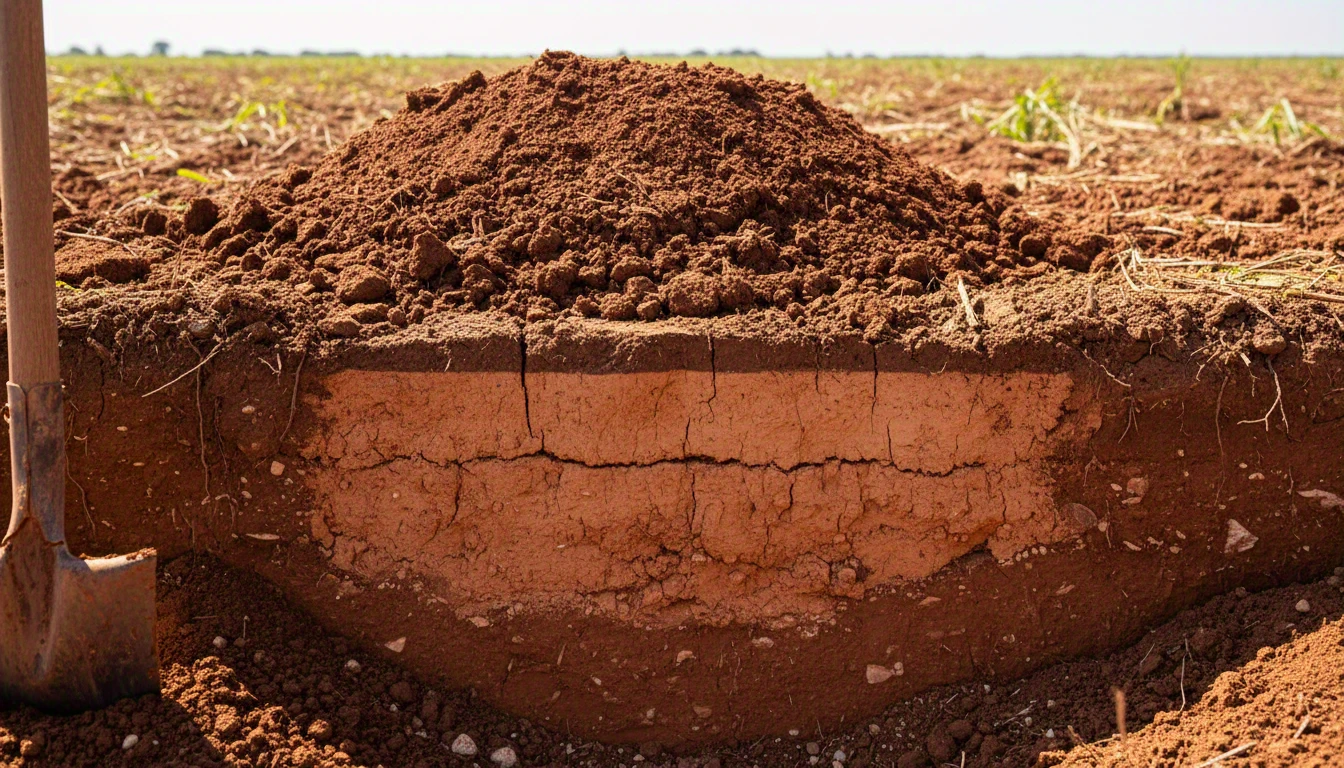
Soil drainage is a very important step in civil construction, as its main purpose is to control excess moisture in the soil by directing water from one area to another. This technique helps stabilize slopes, prevent flooding on highways, avoid structural damage to buildings, and, in agriculture, removes excess moisture from the soil and controls salinity, improving productivity. Drainage using HDPE corrugated drain pipe is efficient, eco-friendly, and simple. Just to give you an idea, High-Density Polyethylene is an environmentally friendly material, as it is non-toxic (only when manufactured from a controlled source, as is done at
Techduto, since there are products on the market that contain contaminants from the recycling of pesticide packaging), recyclable, and does not pollute the water table. In addition, it offers high durability and resistance to chemical and physical abrasion, making any drainage project safer and more efficient.
How do you install drainage using corrugated drain pipe?
Corrugated plastic drainage pipe is not difficult to install and does not even require specialized labor. Furthermore, installation is quick. However, it is important to pay attention to the steps that must be followed starting with soil preparation. The tools required for installation will depend on the type of project. However, no sophisticated or specialized machinery is needed to handle the pipes. Below, learn more about the step-by-step installation process!
Check for underground cables on-site
The first step in installing soil drainage with corrugated drain pipe is to check the site for underground electrical, telephone, or TV cables. If they are present, you have two options: change the drainage route or hire specialized professionals to relocate the cables. Of the two options, the first is more practical and cost-effective.
Determine the area
Next, determine the area where the drainage trench for the corrugated drain pipe will be dug. The route must be laid out at a minimum distance of 1 meter from walls and fences and must be clear of obstructions such as trees and utility poles.
Dig the trench
In this step, the drainage trench must be dug. Generally, trenches are about 30 cm wide [A] plus the pipe’s diameter (e.g., for a 100mm pipe, this would be 40 cm) and at least 40 cm deep [B] (for heavy loads, 50 cm is best), but this may vary depending on drainage needs and soil type. In addition, the trench should be dug at a slope of 1% to 2% to carry water from one location to another.
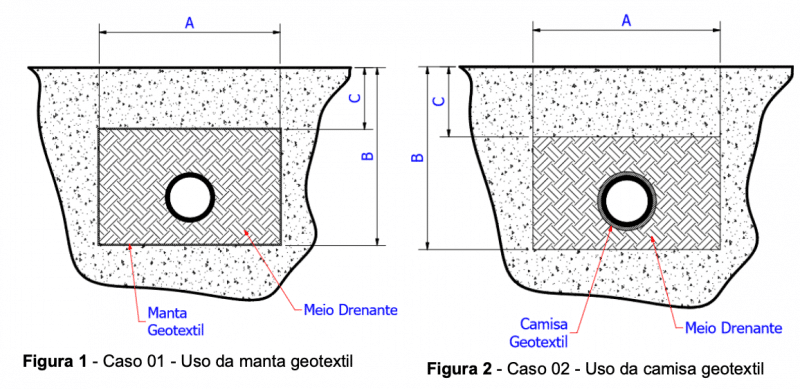
| Parameter | Recommendation |
|---|---|
| Trench width [A] | pipe diameter + 30 cm (e.g., 100 mm pipe → 40 cm) |
| Depth [B] | min. 40 cm (50 cm for heavy loads) — varies with soil and requirements |
| Slope | 1% to 2% per meter |
| Distance from walls/fences | min. 1 meter |
Install the dry well
The dry well or infiltration well is where water will accumulate and must be buried at the end of the drainage ditch. Its main function is to retain stormwater from ditches and trenches to mitigate the effects of excess water in the soil. It must be lined with a geotextile mat to retain particles that could clog the openings of the corrugated drain pipe. Discover the Bidim geotextile mat, 100% polyester and with guaranteed nominal strength.
Install the corrugated drain pipe
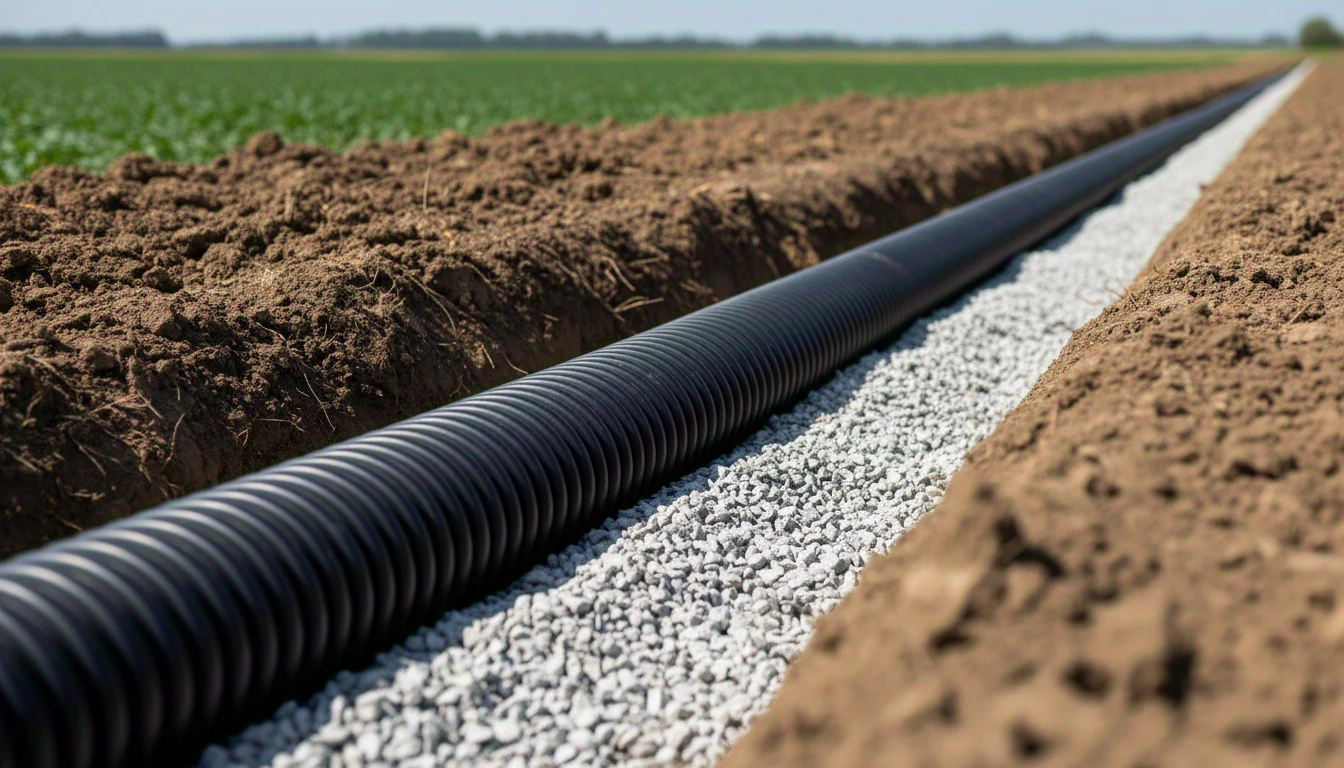
Once all the previous components are installed, it’s time to actually install the corrugated drain pipe. To do this, use crushed stone to line the bottom of the trench to promote better water absorption. The crushed stone here acts as the "drainage medium," which will serve as an additional filter, but above all, it will be another layer where water will accumulate, further increasing the project’s drainage capacity. Next, install the drainage pipe and cover it with a non-woven geotextile to prevent clogging. Depending on the size of the area to be drained, you may not even need to splice the corrugated pipes.
Techdreno pipes, for example, are made of HDPE (High-Density Polyethylene), a non-toxic material that is highly resistant and flexible, allowing them to bend without the need for connections. However, depending on the size of the area, you may need to splice the drainage pipes, and you’ll find that it’s very easy to fit one pipe into another. Simply use a Y-fitting and apply light pressure in the direction of the HDPE pipe to make the connection. We have a range of other specific drainage accessories; please contact us.
Don’t forget to check the pipe’s slope
Remember that to drain water, the corrugated drain pipe must be sloped. As we mentioned earlier, this slope may vary depending on the soil’s drainage needs, but ideally it should be 1% to 2% per meter. Checking whether the slope of your drainage system is correct is very simple, and you can do this with the help of a level. If you notice that the slope is not adequate, correct it before proceeding.
Install drain caps at the ends
An important precaution is to include a drain cap at the end of the pipe. It allows water to pass through but prevents insects from entering the system through the pipes.
Backfill the trench
After completing all these steps, the drainage system with the corrugated drain pipe will be ready for finalization. Fill the rest of the trench with crushed stone and cover it up to ground level.
Spacing and depth of drains
- Depth: varies greatly depending on the application. In shallow drainage (gardens, roads), it is around 40–50 cm; in agricultural drainage, it is usually between 0.9 and 1.5 m, and can reach 1.8 m or more in arid regions to control salinity;
- Spacing between drains: depends on soil texture and depth. Since water is collected in an “arc” around the pipe, deeper drains allow for greater spacing between lines. Clay soils (less permeable) require closer-spaced drains; sandy soils allow for wider spacing.
| Soil texture | Spacing between drains (reference) |
|---|---|
| Clay | narrower — 8 to 12 m |
| Medium | intermediate — 12 to 18 m |
| Sandy | — 15 to 20 m |
The ideal ratio between depth and spacing seeks a balance between drainage efficiency and cost (number of drains per hectare). In agricultural projects, it is advisable to seek technical support for sizing.
System maintenance
To maintain efficiency over the years:
- Periodically inspect the outlets and the dry well, removing sediment and debris;
- Check for roots invading the boreholes (the geotextile liner greatly reduces this risk);
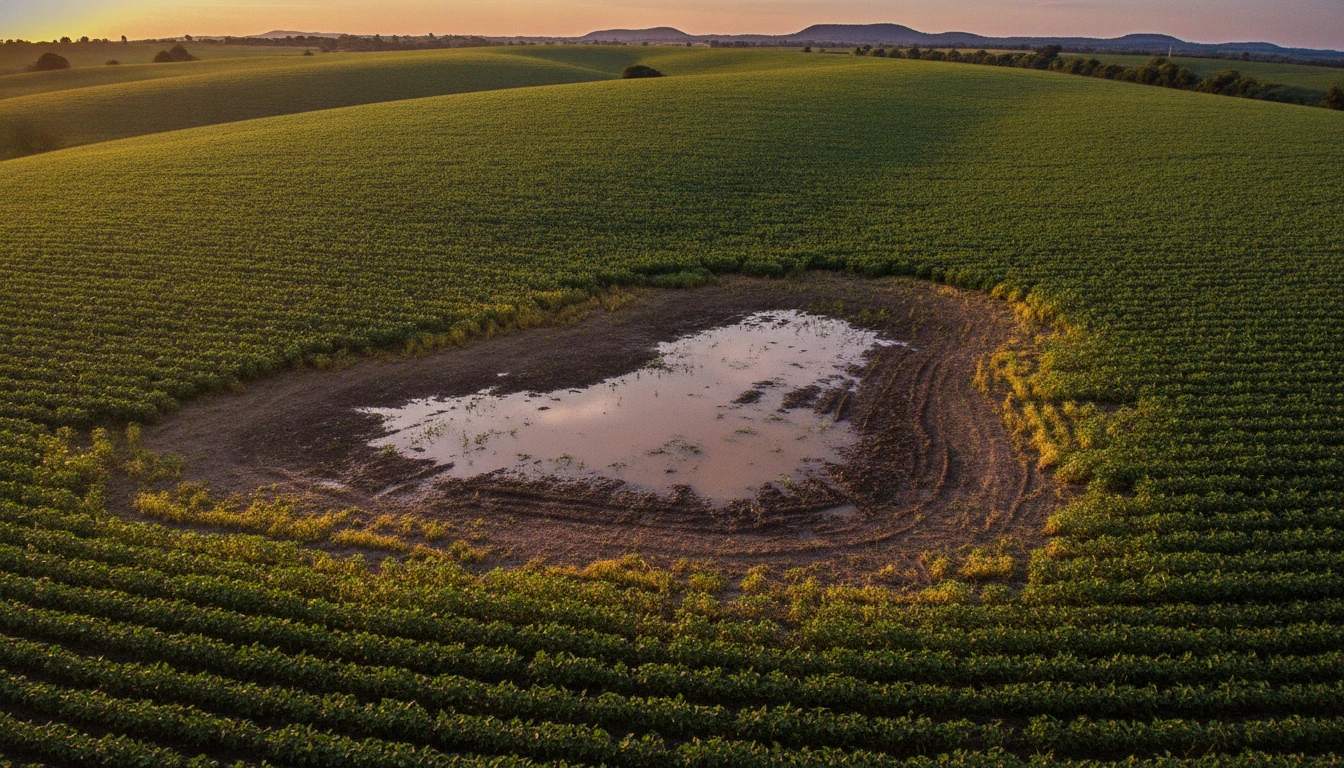
- After heavy rains, check that water is draining freely—persistent puddles indicate clogging or loss of slope.
Discover Techdreno corrugated drain pipes
Given everything discussed above, you are likely already convinced that HDPE corrugated pipes are the most cost-effective solutions for your drainage project. The good news is that Techduto, a Brazilian company with over 30 years in the market, offers the best pipes for drainage on highways, railways, airports, sports fields, plantations, photovoltaic plants, and various other applications. Techdreno drainage pipes feature side openings designed to absorb a greater volume of water from the soil, eliminating the risk of flooding and controlling the water table. Techdreno DW drainage pipes, on the other hand, feature a double wall and a smooth interior, which increases soil drainage capacity by 30%. Both are durable and easy to install, making the implementation of any drainage system more cost-effective and efficient.
Contact Techduto to learn about our innovative solutions in HDPE corrugated pipes for your project. We deliver throughout Brazil.