
Digital transformation has accelerated the construction of data centers in Brazil and worldwide. Companies from diverse sectors rely on these structures to store data, operate systems, host cloud applications, and ensure the continuity of essential services — and any interruption represents financial loss, operational risk, and loss of reliability.
Market attention usually focuses directly on servers, air conditioning, and power redundancy. But beneath all of that lies a layer of underground infrastructure that literally supports the operation: the conduits that protect power and fiber optic cables, and the drainage system that protects the physical structure against water. Of the two, the one with greater volume and criticality in a data center project is normally the former — a typical campus has kilometers of underground conduit banks solely for redundant power supply and fiber connectivity, a much larger extent than the drainage network on the same site.
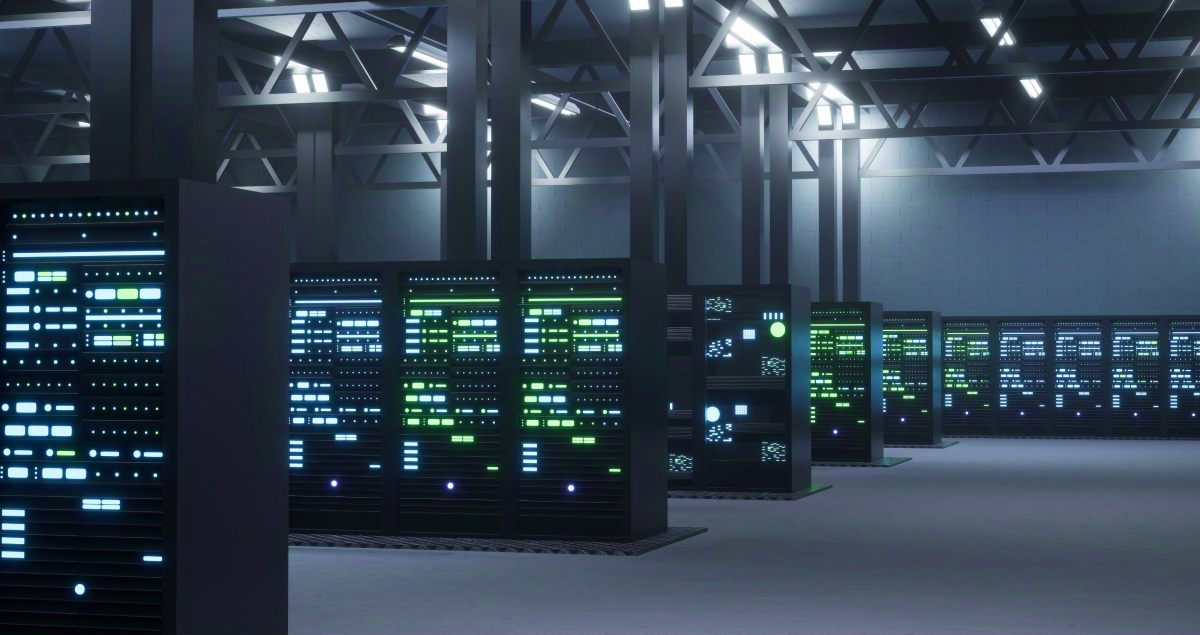
In this article, you will understand why HDPE corrugated conduits are central to a data center’s underground infrastructure, the complementary role of drainage, and what to consider when specifying each system.
Why Underground Conduits Are the Backbone of a Data Center
A data center depends on total redundancy: power supply from at least two independent routes (utility, generators, UPS), connectivity with multiple telecom carriers, and structured cabling between buildings on larger campuses. All this cabling — power, data, and fiber optic — must be physically protected underground against impact, abrasion, moisture, and soil movement.
It is this demand that makes HDPE corrugated conduit one of the most used materials in the underground infrastructure of these developments: it allows for future cable installation or replacement without new excavation (the cable is pulled through the already installed conduit), resists soil compression, and maintains network integrity even with multiple parallel routes.
The international reference standard for this type of infrastructure is ANSI/TIA-942 (Telecommunications Infrastructure Standard for Data Centers), which dedicates a relevant part of its scope precisely to pathways — underground routes and conduits for cabling — as one of the pillars of installation reliability, alongside power and air conditioning.
In Brazil, HDPE corrugated conduit for this application is certified by ABNT NBR 15715 (corrugated HDPE conduit systems for power and telecommunications cable infrastructure). Market practice in Brazil also follows a color standard by network type — orange for electrical power, gray for telecom/data, and green for fiber optics — which facilitates the identification and maintenance of the technical gallery over the years.
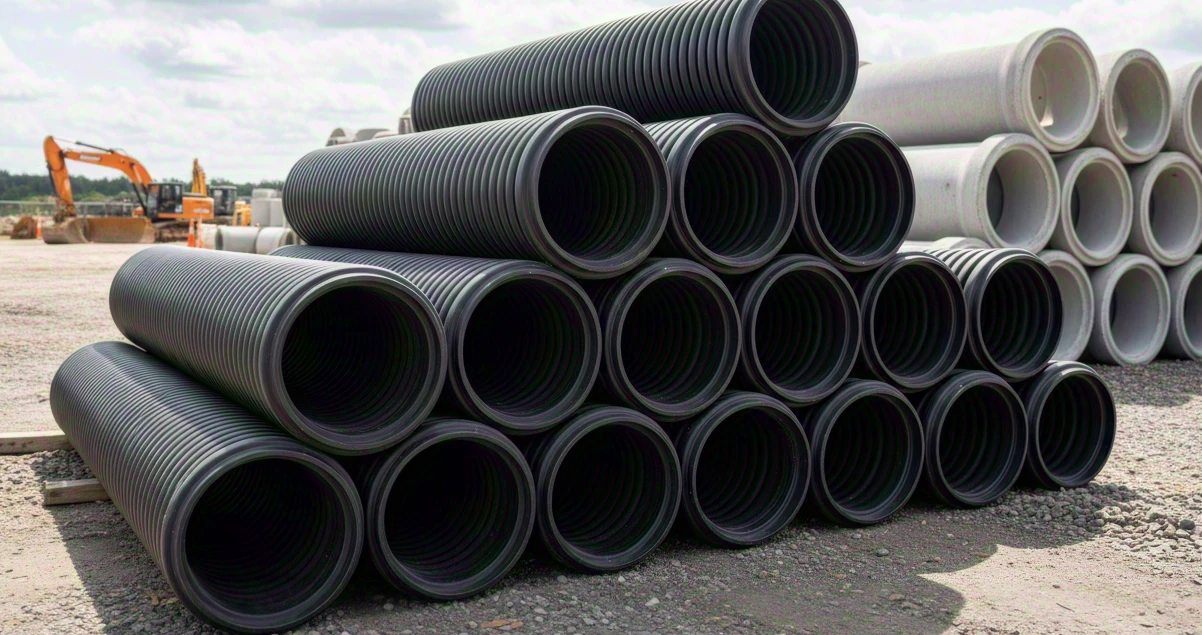
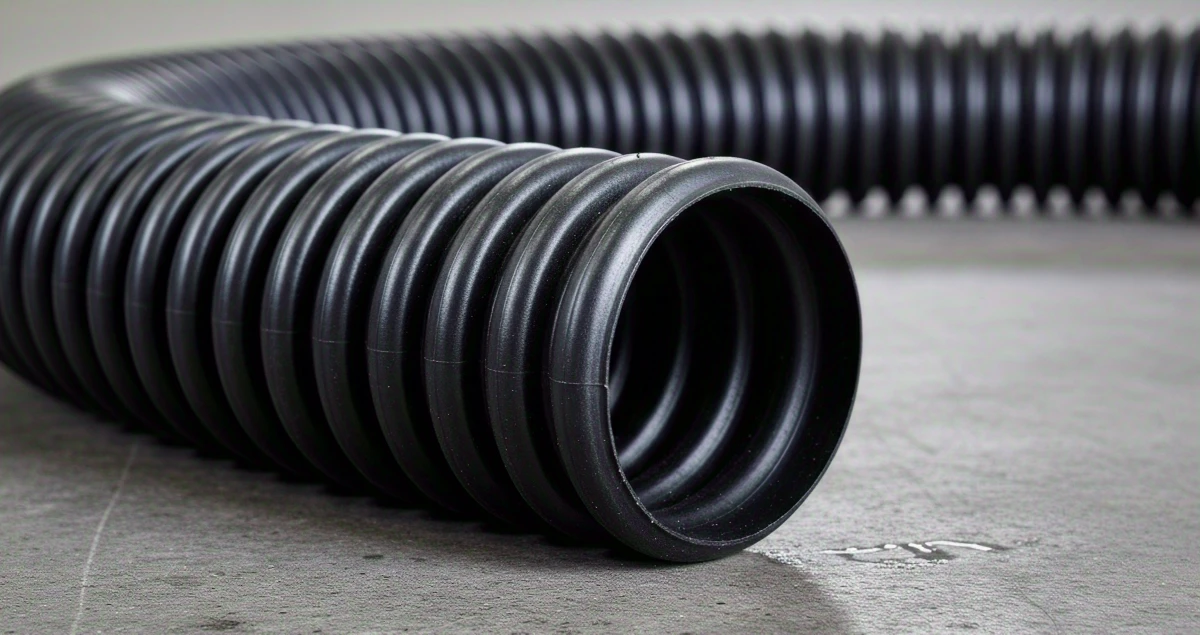
The Techduto DW double-wall conduit line was specifically developed for protecting underground electrical and fiber optic cables, offering high mechanical and abrasion resistance — the product with the strongest adherence to this type of project. The HDPE corrugated conduit (Techduto NBR), certified according to NBR 15715, also serves this application in smaller-scale projects or with tighter budgets.
Underground Drainage: Complementary Protection for Physical Infrastructure
Nevertheless, drainage remains important — it protects the physical structure that supports all this cabling and equipment infrastructure. Even small infiltrations can cause damage to electronic equipment, structural compromise, and operational shutdowns — risks that, in a data center, translate directly into financial loss.
A data center project typically distributes drainage in specific points:
Perimeter Drainage — installed around buildings, it reduces water accumulation near foundations and the pressure of saturated soil on the structure.
Drainage Under Technical Floors — collects potential infiltrations before they reach sensitive equipment installed under raised floors.
Outdoor Areas and Parking Lots — internal roads and the campus’s impervious areas produce a large volume of rainwater; without adequate drainage, this flow can migrate to critical areas of the facility.
For this application, the Techdreno (perforated single wall) and Techdreno DW (double wall, greater rigidity) lines, certified according to NBR 15073, are the reference material.
Where the Two Systems Intersect: The Technical Gallery
In many projects, cabling conduits and drainage coexist in the same technical gallery — the underground space through which electrical cables, fiber optics, and piping pass. The presence of water in this gallery poses a risk to both the cables and the structure, making it common to design the gallery’s drainage as part of the same underground infrastructure package — even though they are two systems with different functions and products.
Why HDPE is the Reference Material for Both Systems
- High Mechanical Strength — both the cabling conduit and the drainage pipe withstand soil loads and maintenance vehicle traffic without compromising integrity;
- Chemical Resistance — relevant in both cases, as the subsoil may contain acidic, saline, or sulfate soils over decades of operation;
- Structural Flexibility — accommodates minor ground movements without rupture, reducing the risk of differential settlement, common in large-scale projects like a data center campus;
- Ease of Maintenance for Cabling Conduits — the smooth inner wall facilitates cable pulling and future replacement without the need for new excavation;
- Hydraulic Performance of Drainage — the smooth inner wall reduces flow friction, improves hydraulic efficiency, and reduces sediment buildup;
- Long Lifespan in both cases — decades of operation, aligned with the horizon of a data center project.
Planning: What to Consider for Each System
Cabling Conduit (Power, Telecom, Fiber):
- Route Redundancy — at least two independent routes for each network type;
- Future Expansion Capacity — diameter and quantity of conduits with margin for demand growth;
- Color Identification, according to market standard (orange/gray/green);
- Minimum Safety Distance between electrical and data/fiber networks, according to the electrical design.
Drainage:
- Regional Rainfall Data;
- Soil Type and Water Table Level;
- Topography and Predicted Flow Rate;
- Impervious Areas of the Campus;
- Future Infrastructure Expansions.
Projects without these analyses tend to be undersized as soon as the data center expands — a common scenario, as the demand for computational capacity only grows.
Sustainability is Also Part of the Project
HDPE is recyclable and has a long lifespan, which reduces the frequency of intervention and the volume of construction waste throughout the project’s lifecycle — relevant for both cabling and drainage.
Reliable Underground Infrastructure for Mission-Critical Operations
In critical infrastructure projects, each underground component must deliver performance compatible with the operation’s demanding requirements — and this applies to both the conduit protecting a power cable and the pipe protecting the foundation against water.
At Techduto, we serve both fronts of a data center’s underground infrastructure: conduits for protecting electrical and fiber optic cables ( Techduto DW line and HDPE corrugated conduit/Techduto NBR, according to NBR 15715) and drainage systems ( Techdreno and Techdreno DW lines, according to NBR 15073). Our technical team supports designers, contractors, and operations managers in specifying each system, including for mission-critical developments like data centers.