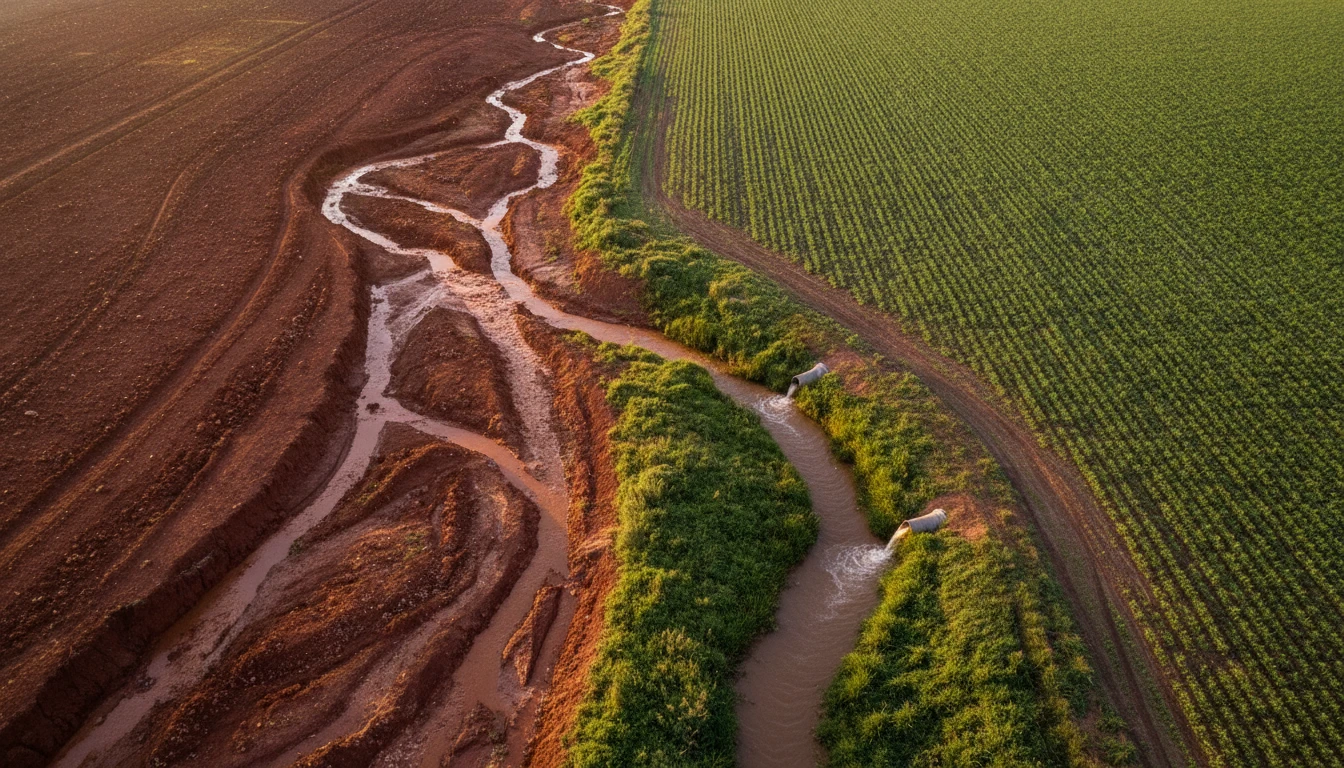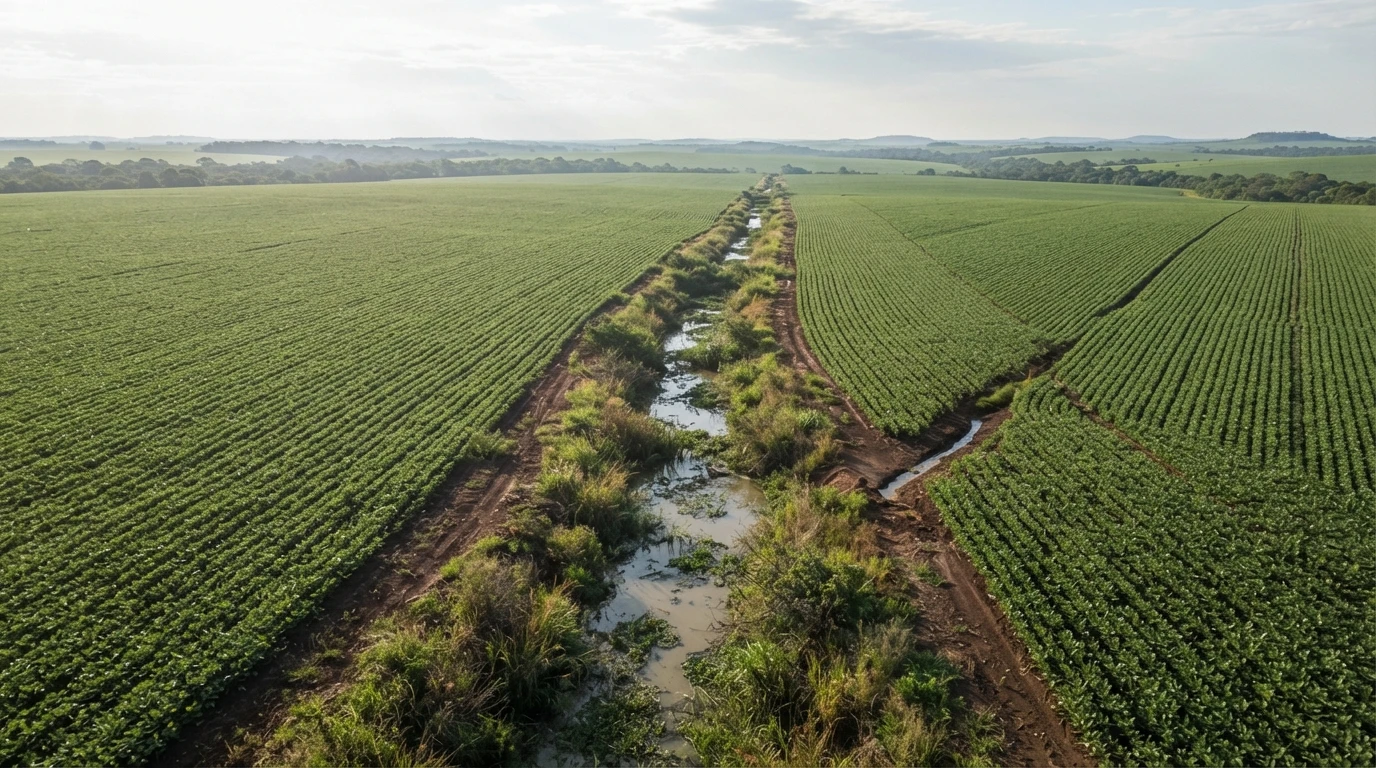


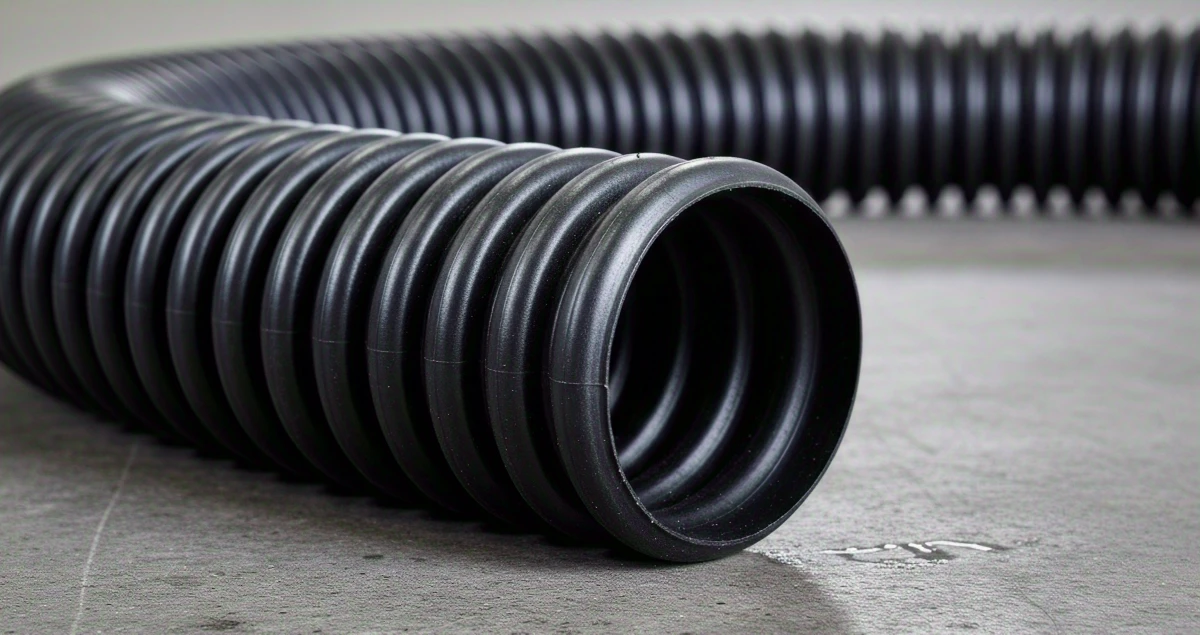
A large part of Brazil’s drainage infrastructure — on highways, airports, railways, subdivisions, and industrial areas — was designed decades ago for a land use and soil sealing standard much lower than today’s. Old networks, more stormwater flowing through the same system, and more intense weather events: this combination is behind most of the flooding, overloads, and failures that appear today in already built structures.
In these cases, rebuilding the network from scratch is rarely feasible — the cost, timeline, and operational interference (a highway cannot close, an airport cannot stop) make a total reconstruction unviable for most projects. This is where drainage network retrofit comes in: the modernization of an existing system, preserving what still works and replacing only what no longer meets current demand — a technical intervention in piping and hydraulic design, not an aesthetic renovation.
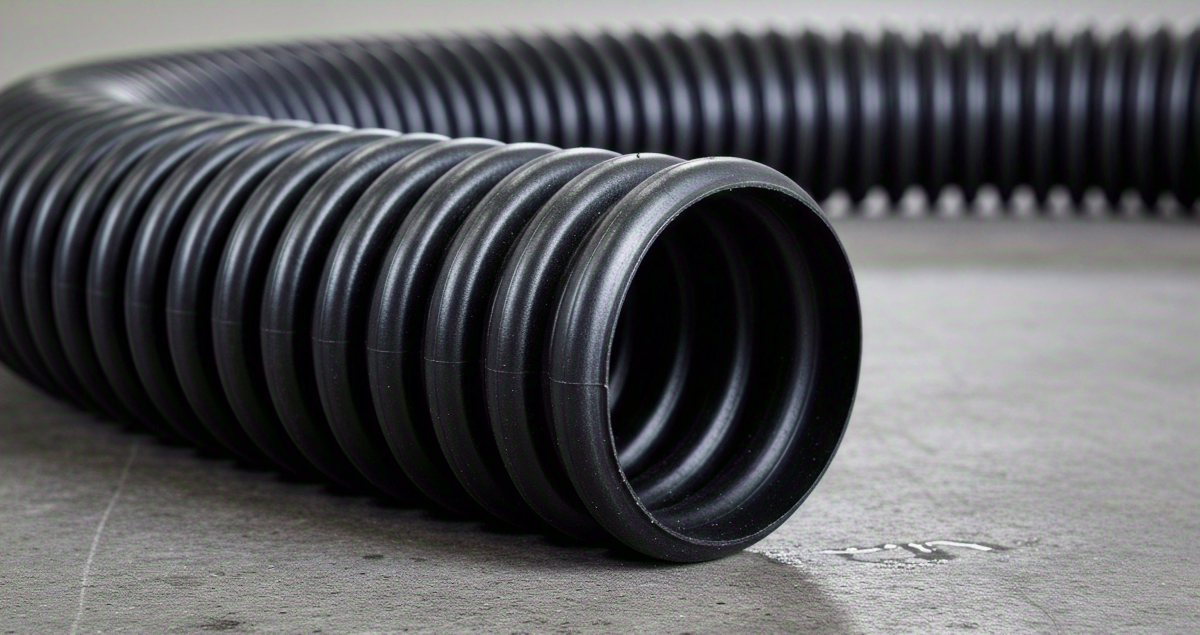
In this article, you will understand when it makes sense to opt for a retrofit instead of new construction, and why HDPE corrugated pipe has become the standard material for this type of intervention.
What is a drainage network retrofit in practice?
Retrofit is the modernization of an existing structure — preserving what is still in good condition and replacing components that no longer meet current demands, without demolishing and rebuilding the entire infrastructure. The term is best known in building construction (structural retrofit, facade and systems retrofit), but it applies equally to drainage: the logic is the same — update, don’t restart.
In drainage, this logic typically appears in:
- Subsurface drainage of highways (shoulder, base, sub-base, embankment);
- Stormwater networks for airports and aprons;
- Drainage of railway platforms and right-of-way;
- Subdivisions and condominiums with old networks insufficient for current occupancy;
- Industrial areas and logistics centers undergoing expansion.
Important: retrofit is not synonymous with “replacing everything with HDPE”. It is a diagnosis that decides, section by section, what to keep, what to expand, and what to replace — and this changes the project scope and budget.
Why old drainage networks stop meeting demand
Most drainage networks installed decades ago were designed for a much smaller occupancy and soil sealing scenario than today. Today, this mismatch appears recurrently in infrastructure works:
- Growth of paved/impermeable area around the original network;
- Increase in the volume of stormwater flowing into the same system;
- Change in rainfall patterns (more concentrated and intense events);
- Physical expansion of the infrastructure itself (new lanes, new aprons, new lots) without resizing the existing drainage.
The result, in already built structures, is usually localized flooding, network overload during heavy rain events, infiltration, failure of old sections, and increasing costs of corrective maintenance — problems that directly affect operations (lane closures, area shutdowns, safety risks), not just the infrastructure itself.
Why HDPE is the standard material for drainage retrofit
A successful retrofit depends on reducing interference with the existing structure — you can’t close a highway or an airport apron for weeks to replace piping. This is where HDPE (High-Density Polyethylene) corrugated pipe differs from traditional concrete pipe:
Faster installation with less operational interference
HDPE is significantly lighter than concrete of the same diameter, which reduces the equipment needed for handling and allows manual installation in areas with restricted access — relevant for linear works (highways, railways) where disruption needs to be minimal.
Superior hydraulic performance
The smooth inner wall of HDPE reduces flow friction (Manning’s coefficient ≈ 0.009–0.011, versus ≈ 0.013 for concrete): in practice, the same diameter conveys more water, or a smaller diameter meets the same flow rate — which is very important when the retrofit needs to fit within the physical space of the old network.
Resistance to soil, load, and corrosion
HDPE does not corrode and resists acidic, saline, or sulfate-containing soils well, in addition to withstanding soil movement and traffic loads — relevant for highways, railways, and industrial areas where old concrete networks often fail due to corrosion or cracking.
Lower maintenance over its lifespan
Less material wear means less corrective intervention — which reduces the operational cost of keeping the modernized network functioning, the main benefit of a well-designed retrofit.
Techduto manufactures HDPE corrugated pipe for drainage — the Techdreno line, single wall perforated, in diameters up to 250mm — and the Techdreno DW line, double wall, for applications requiring greater structural rigidity (SN8), in diameters from 110 to 200mm. This is the technical range used for retrofitting lateral, subsurface, and smaller-scale drains. For large-diameter networks (culverts and high-flow storm sewers), the design follows a different logic — it’s worth talking to our engineering team to define the right solution for each section.
Retrofit is also a sustainability decision
Modernizing an existing network is not just a matter of performance — it is also the option that consumes fewer natural resources when compared to complete infrastructure reconstruction. Add to this the characteristics of the material itself:
- HDPE is recyclable;
- Lower carbon emissions in transport due to reduced weight;
- Long durability, which reduces the frequency of new interventions;
- Less excavation and less debris disposal, by preserving what still works from the old network.
Where HDPE retrofit is commonly applied
- Highways — subsurface drainage of shoulders, base, and sub-base;
- Airports — apron and operational strip networks;
- Railways — platform and right-of-way drainage;
- Subdivisions and condominiums with old stormwater networks insufficient for current occupancy;
- Industrial areas and logistics centers undergoing expansion.
How to plan a retrofit without redoing the entire network
Before deciding what will be replaced, a technical diagnosis must answer:
- What is the real condition of the existing piping (age, material, state of conservation)?
- Is the original design flow rate still sufficient for the current occupancy/impermeabilization?
- What loads will the network receive (traffic, soil movement, weight of structure above)?
- Which sections actually need replacement, and which only need reinforcement or completion?
- What is the expected growth of the area in the coming years — does the retrofit need to account for this margin?
This diagnosis avoids two common mistakes: under-dimensioning (the retrofit is insufficient from the start) or replacing more network than necessary (cost without real gain). Our technical drainage calculator helps estimate flow rate and sizing before finalizing the scope, and Techduto’s engineering team can support the technical validation of the complete project.
HDPE: the solution to modernize drainage networks without stopping operations
Cities and the infrastructure that supports them continue to grow — and with them, the challenges of draining more water through the same network. Investing only in spot repairs pushes the problem forward without solving it; retrofit with HDPE corrugated pipe is the alternative that modernizes the existing network without the cost, timeline, and interference of a complete reconstruction.
If your project is deciding between modernizing the existing network or specifying material for new construction, also see our technical comparison between HDPE and concrete to understand the material differences in each scenario.