

Mud pumping is the most silent and destructive mechanism in the permanent way: water turns the fine soil beneath the ballast into mud, which rises through the stones with each train passage and contaminates the entire structure. When it appears on the surface, the damage is already deep — and the maintenance bill is high.
What is mud pumping, in simple terms?
Mud pumping is the process where fine soil particles (clay, silt) are forced upwards through the ballast stones by the pressure generated by repeated train loads.
Here’s how it works: the subgrade (natural soil below the track structure) becomes saturated. When a train passes, the dynamic load compresses the waterlogged subgrade. The water, having nowhere to go, rises, carrying the soil fines among the ballast stones. Cycle after cycle, fines migrate into the ballast, contaminate the stone, and destroy its drainage capacity. The result is a muddy ballast that doesn’t drain, doesn’t cushion, and doesn’t distribute load — exactly the opposite of what it needs to do.
The concrete slab or the rail above may appear intact for years while the base rots underneath.
Why is mud pumping responsible for almost all track structural problems?
International and Brazilian technical surveys consistently indicate that approximately 92% of permanent way instability and degradation problems are related to drainage failures — and mud pumping is the central mechanism in this relationship.
Without efficient subgrade drainage, fines migrate to the ballast. With contaminated ballast:
- The stone loses its internal drainage capacity.
- The friction coefficient between stones drops — the ballast flows instead of resisting.
- The load from trains is no longer adequately distributed, causing geometric irregularities.
- Maintenance (tamping, regulation) becomes ineffective within weeks because the root cause is not in the ballast, but in the subgrade.
The cycle feeds itself: the more contaminated the ballast, the less it drains; the less it drains, the more saturated the subgrade becomes; the more saturated, the more intense the pumping. It’s a progressive degradation that accelerates.
How to identify mud pumping in the track?
Field signs indicating ongoing or established mud pumping:
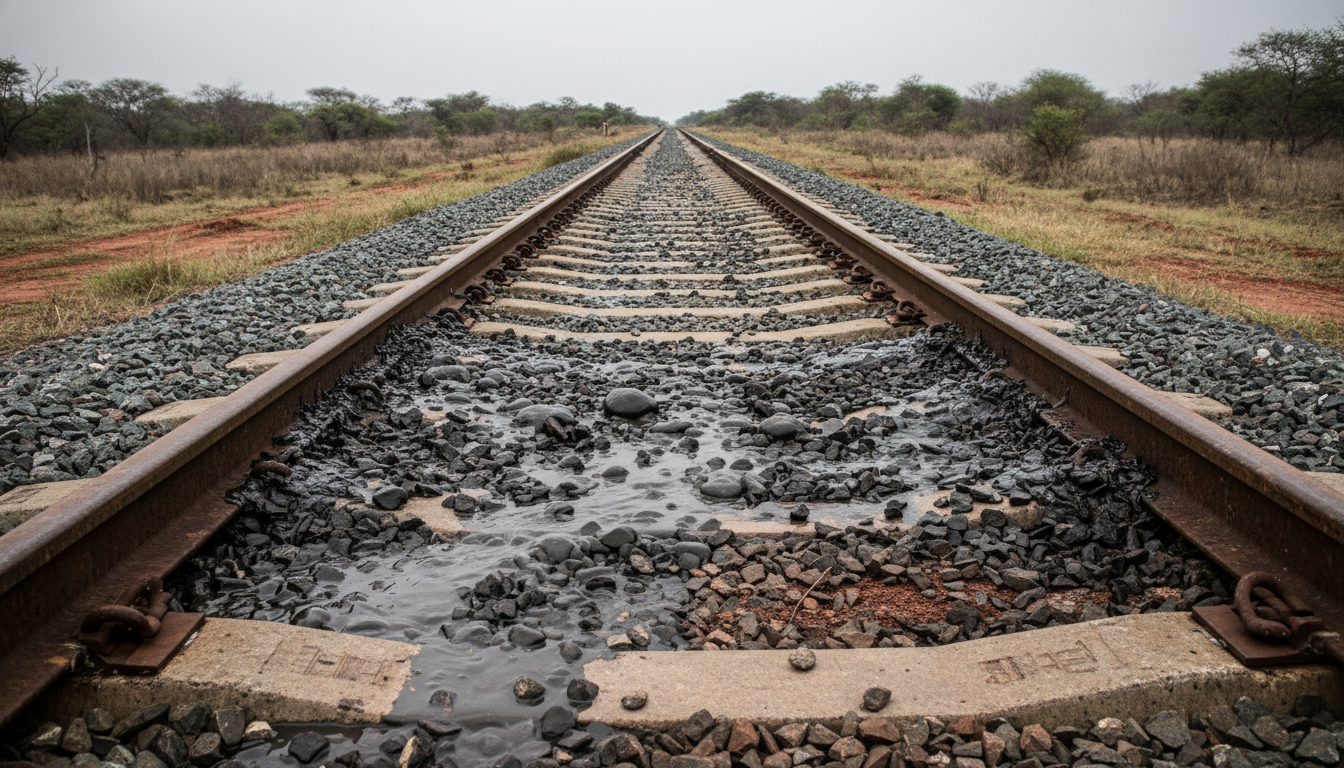
- Dark mud between sleepers or rails after rain or train passage — the most obvious signature.
- Ballast stones with dark or brownish coloration in the lower third — soil fines have reached there.
- Geometric irregularities that quickly return after tamping — a sign that the root cause is below the ballast.
- Localized settlements (switch holes, erratic leveling) that do not stabilize in dry weather.
- Persistent moisture in the ballast even during dry periods — water from the subgrade is feeding the system from the bottom up.
- Subgrade profile: clayey or silty soil with a bluish-gray color at platform depth indicates chronic saturation conditions.
What causes mud pumping? When is the risk high?
Mud pumping requires three simultaneous conditions: fine soil in the subgrade, subgrade saturation, and cyclic dynamic loads. The risk is highest when all three combine:
- Clayey or silty subgrade — soils with a high presence of fine particles are the most susceptible. In Brazil, the Oxisols and Ultisols that dominate the country’s interior (including the Center-West corridor for new railways) have this characteristic.
- Insufficient platform drainage — obstructed ditches, unmaintained cross drains, or simply the absence of deep longitudinal drains.
- Heavy loads and high frequency — heavy freight railways (TB-360) exert much greater dynamic pressure than passenger trains, accelerating pumping.
- Seasonal moisture variations — the wet/dry cycle of Brazil’s tropical climate accelerates subgrade degradation.
Special attention should be paid to cuts in clayey terrain: water percolating from the side slope enters the platform and saturates the subgrade from the side before appearing in any surface ditch.
How is mud pumping treated and eliminated?
The definitive solution for mud pumping acts at the interface between the fine subgrade and the ballast, with two simultaneous objectives: draining accumulated water from the subgrade and preventing the migration of fines into the ballast. Neither objective alone solves the problem.
Drainage geocomposite at the subgrade-ballast interface
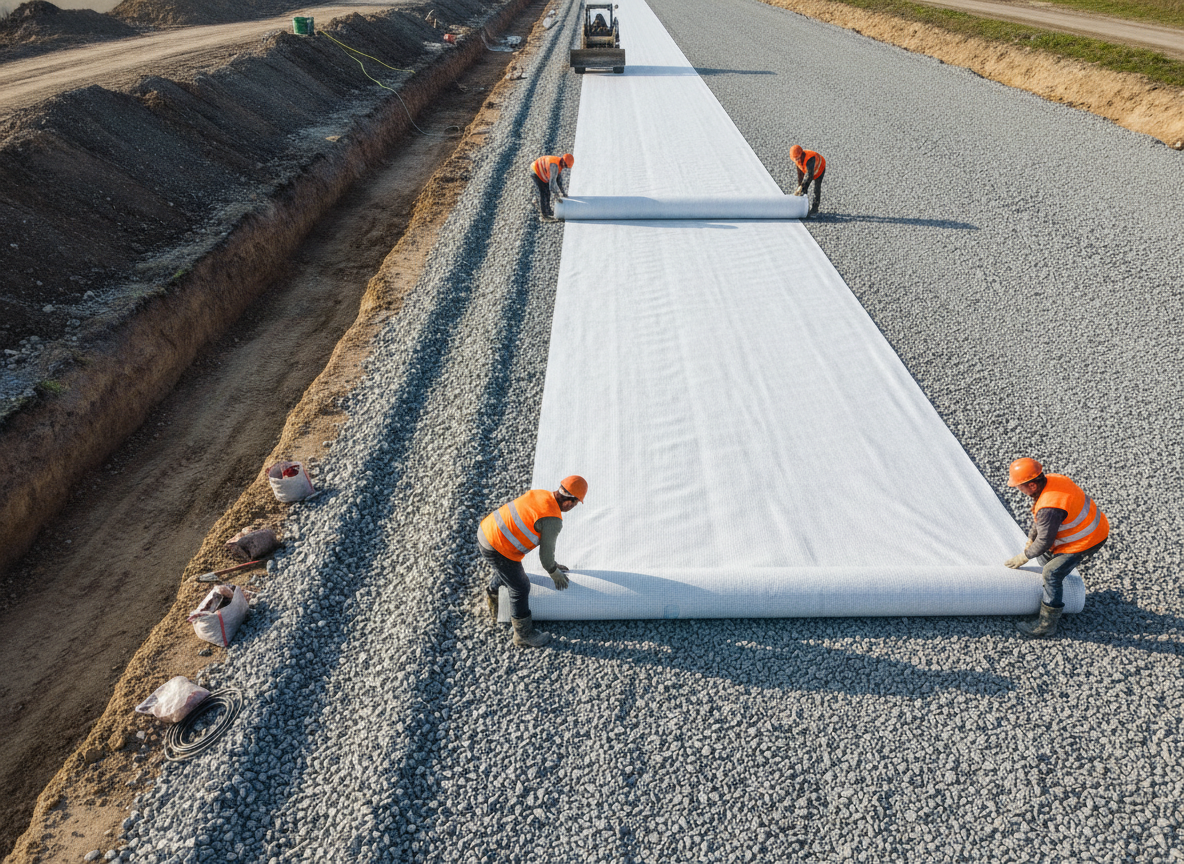
The drainage geocomposite is the structural solution for the critical interface. It combines in a single layer:
- A geotextile fabric that filters fines (prevents clay and silt particles from passing into the ballast).
- A drainage core that collects and conveys water laterally out of the platform.
Installed over the prepared subgrade before ballast placement, the geocomposite eliminates the mud pumping mechanism at its source: subgrade water exits laterally (lateral drainage), and fines are retained below the fabric. The ballast remains clean, and the subgrade does not suffer from accumulated hydrostatic pressure.
Deep longitudinal drain with Techdreno KC
In cuts, embankments with lateral inflow, or sections with a high water table, the geocomposite at the interface must be complemented by a deep longitudinal drain to lower the water table before it reaches the platform.
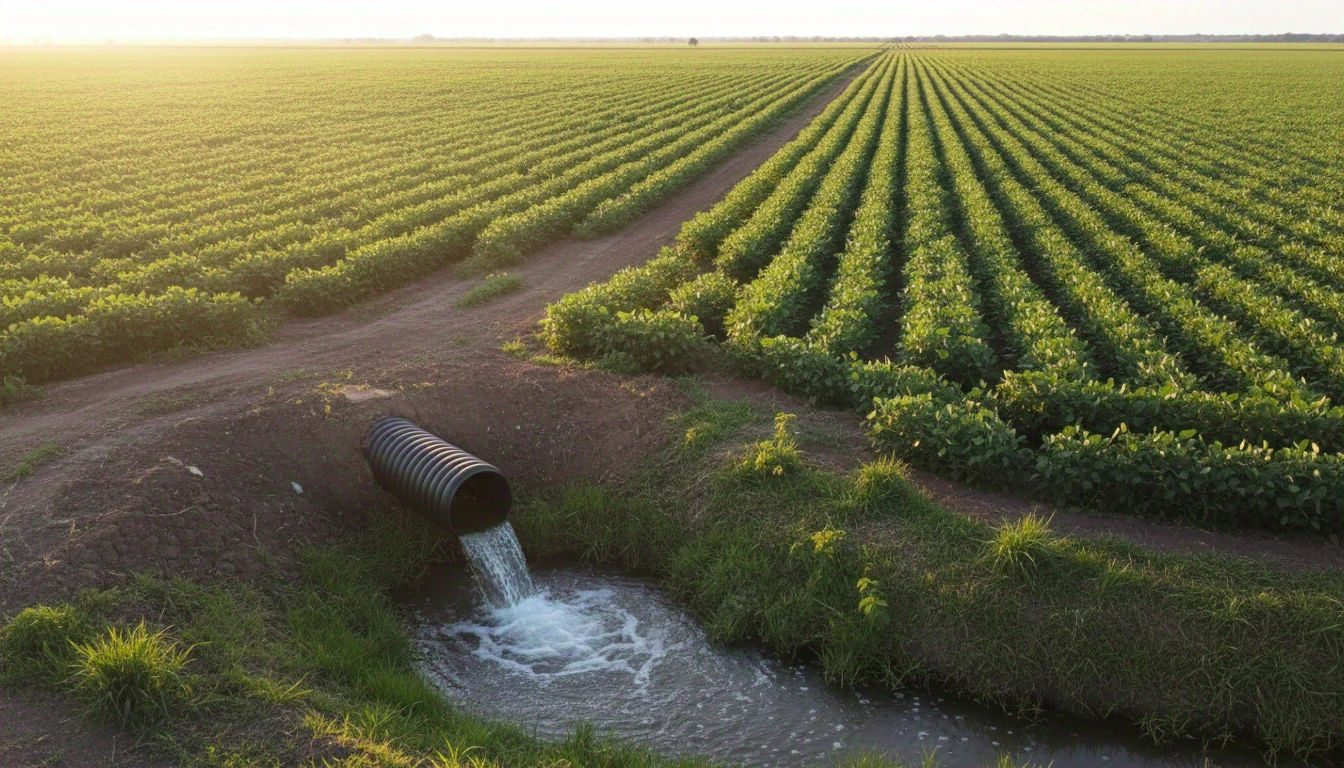
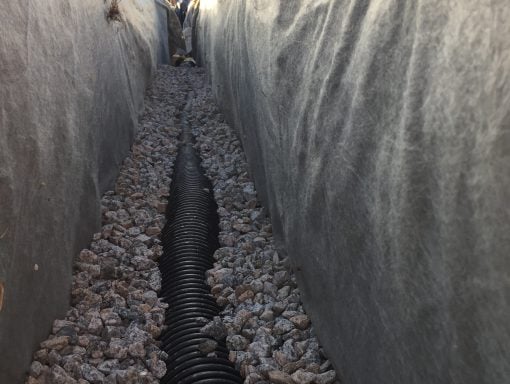
Techdreno KC — a corrugated HDPE pipe with a factory-integrated filter envelope — is the indicated solution for this drain. The filter envelope (geotextile sewn to the pipe during manufacturing) eliminates the need for separate geotextile and sand layers in the trench, reduces labor in the trench, and delivers a more uniform and durable system.
DNIT ISF-210, the technical drainage standard for railways from DNIT, explicitly allows the use of “pipe + manufacturer-standardized drainage fabric” — exactly what Techdreno KC delivers from the factory. It is one of the few products that meets the railway standard without field adaptations.
Surface drainage of the platform
Complementary, but necessary: properly sized side ditches, downspouts on slopes, and cross culverts at correct intervals. Without functional surface drainage, rainwater enters the platform and feeds the subgrade from the top.
Mud pumping in existing track: what to do?
In an operating track with established mud pumping, the intervention depends on the extent of the affected section and the degree of ballast contamination:
- Initial stage (fines in the lower third of the ballast): tamping with partial ballast renewal can buy time, but it doesn’t solve the problem — without treating the subgrade, the cycle returns.
- Advanced stage (fully contaminated ballast): requires complete removal of ballast, installation of geocomposite at the interface or a subdrain, new ballast, and re-compaction. A large-scale intervention.
- Critical sections (risk of collapse): requires traffic interruption and specific geotechnical analysis.
The cost of intervention in degraded track is consistently much higher than the cost of installing proper drainage in the original design. The logic of postponement (“the track will hold for a few more years”) is recurrent and invariably results in maintenance costs far exceeding those of a preventive solution.
What does railway design need to consider to avoid mud pumping?
The points that determine whether a project will develop mud pumping over its service life:
- Adequate geotechnical investigation: classify the subgrade along the entire alignment, identifying clayey/silty sections in advance.
- Drainage geocomposite at the entire subgrade-ballast interface in identified fine soil sections.
- Deep longitudinal drains (Techdreno KC) in cuts and sections with high water tables.
- Surface platform drainage sized for Brazilian rainfall (not European standards).
- Periodic inspection of drainage — clogged ditches are the main entry point for water onto the platform in operating railways.
For projects within the scope of the New PAC (FIOL, FICO, Transnordestina), where a large part of the alignment crosses the Cerrado and tropical clay soils, the geocomposite at the interface is a design decision that pays for itself in the first rainy seasons.
What is the role of the engineering team in diagnosis?
Identifying the extent of mud pumping risk along an alignment — and deciding where to use geocomposite, where to use deep drains, and where surface drainage is sufficient — requires cross-referencing subgrade geotechnical data with the load model and local rainfall patterns. There is no single rule that applies to every section.
The Techduto engineering team can evaluate specific sections based on available sounding data and field information to recommend the appropriate technical solution per track segment. For the terms used here, the Drainage Glossary has complete definitions for mud pumping, drainage geocomposite, and TB-360.
Frequently asked questions
Mud pumping is caused by the combination of three factors: subgrade with fine soil (clay or silt), saturation by accumulated water without adequate drainage, and cyclic dynamic loads from trains. The pressure generated with each train passage forces soil fines upwards through the ballast stones. Without subgrade drainage, the process is progressive and inevitable.
DNIT ISF-210 is the DNIT service instruction specific to permanent way drainage. It defines criteria for ditches, deep drains, and explicitly allows the use of “pipe + manufacturer-standardized drainage fabric” — which corresponds to Techdreno KC — as a deep longitudinal drain solution on railway platforms.
No. The geocomposite is installed at the interface between the subgrade and the ballast — below the crushed stone layer. It filters fines (preventing them from rising into the ballast) and drains water laterally out of the platform. The ballast remains above, fulfilling its functions of load distribution and cushioning. These are complementary, not substitute, functions.
Yes. ISF-210 allows “pipe + manufacturer-standardized drainage fabric” for deep drains on railway platforms. Techdreno KC has the filter envelope integrated directly into the manufacturing process — which meets this requirement without field adaptations, in addition to eliminating the need for separate geotextile and a sand layer in the trench.
No. Mud pumping can develop in new railways if subgrade drainage has not been adequately designed for the local soil conditions. In Brazil, with predominant tropical clay soils in the country’s interior, the risk exists from the design phase, starting with route selection and drain specification.