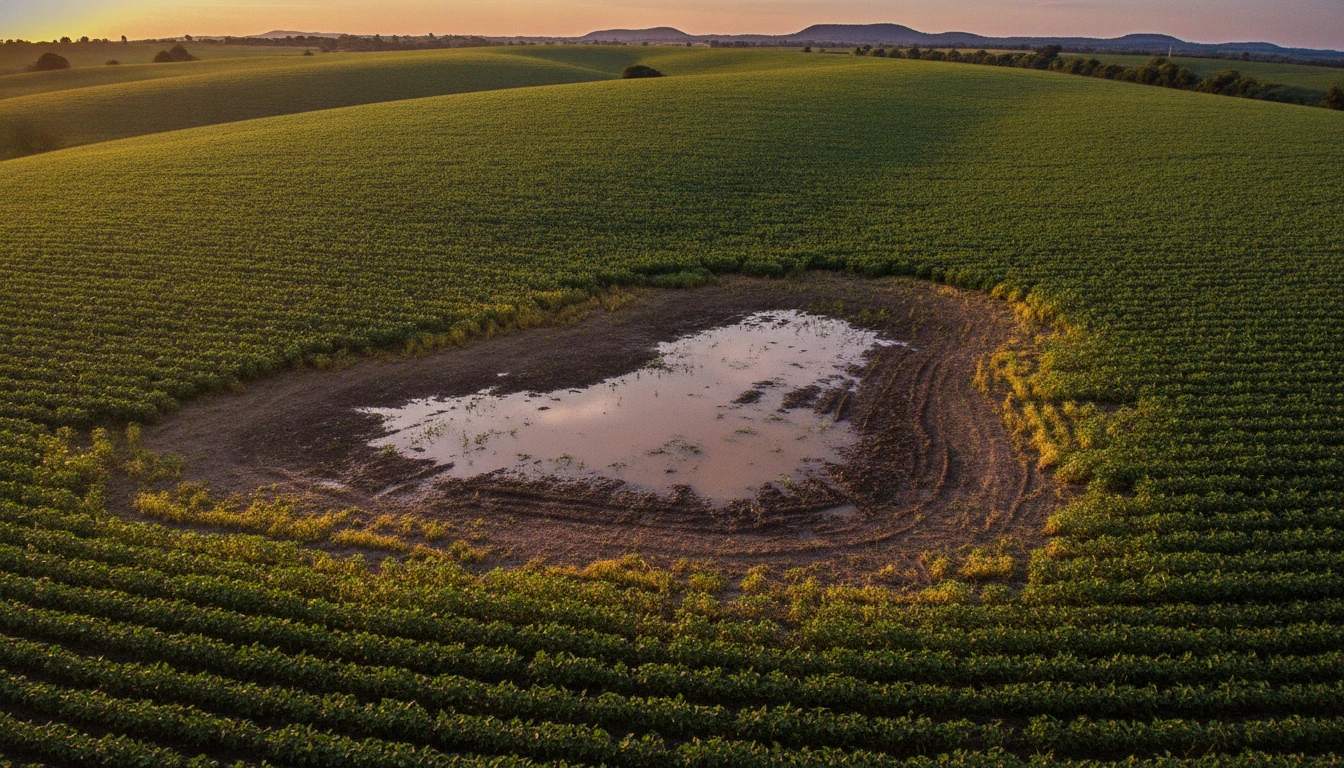

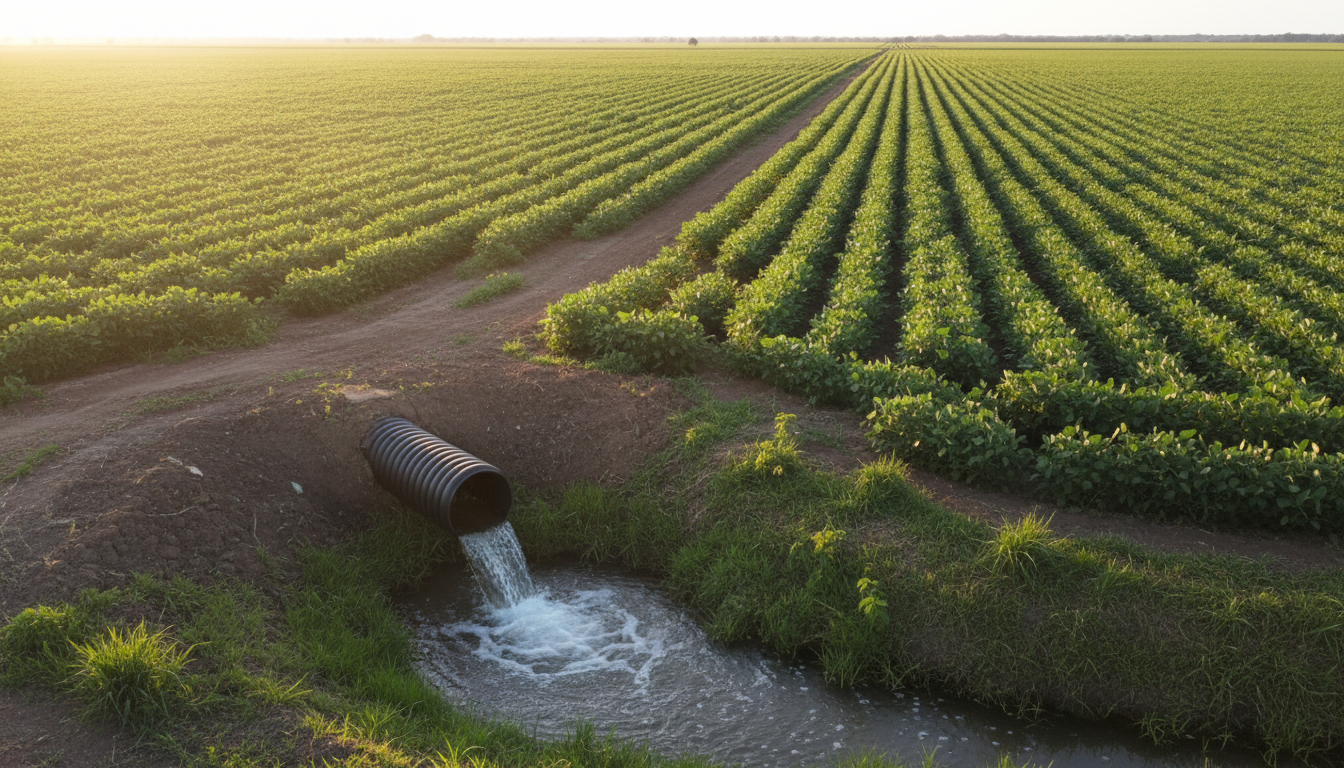
The pipe was right. The depth was right. The slope was right. And in two or three years, the system stopped working. This is one of the most frustrating problems in underground drainage — and it almost always has the same cause: what surrounds the pipe was overlooked. The envelope is not a construction detail; it is the decision that separates a system that lasts for decades from one that fails silently.
What is the Envelope and Why It Exists
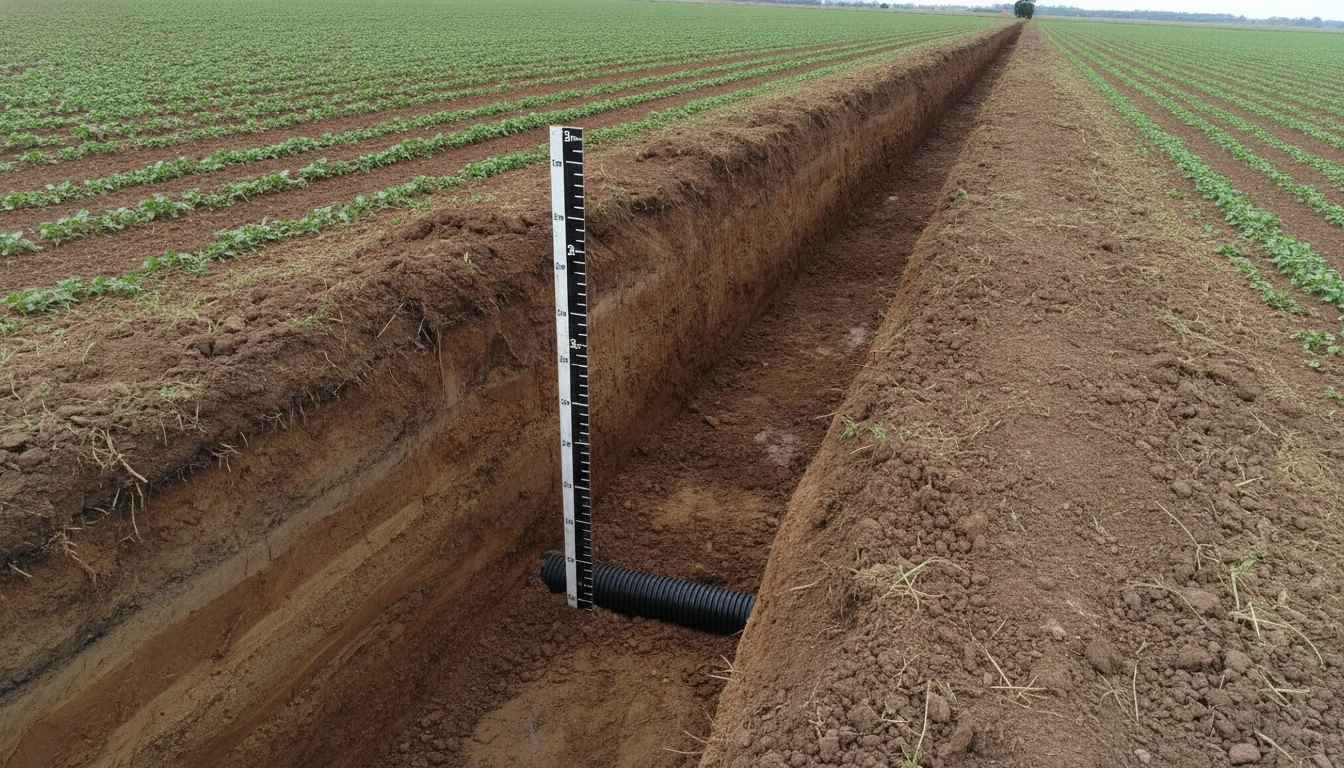
The drainage pipe captures water by gravity — but it can only capture what reaches it. The soil around the pipe needs to allow water to move, and that’s where the envelope comes in: it creates a transition layer between the natural soil and the pipe, keeping the hydraulic connection active and protecting the perforations from clogging.
Without this layer, the pipe is in direct contact with the soil. In some cases, this works. In many others, it’s the beginning of a slow and invisible failure.
The Problem of Fine Soil
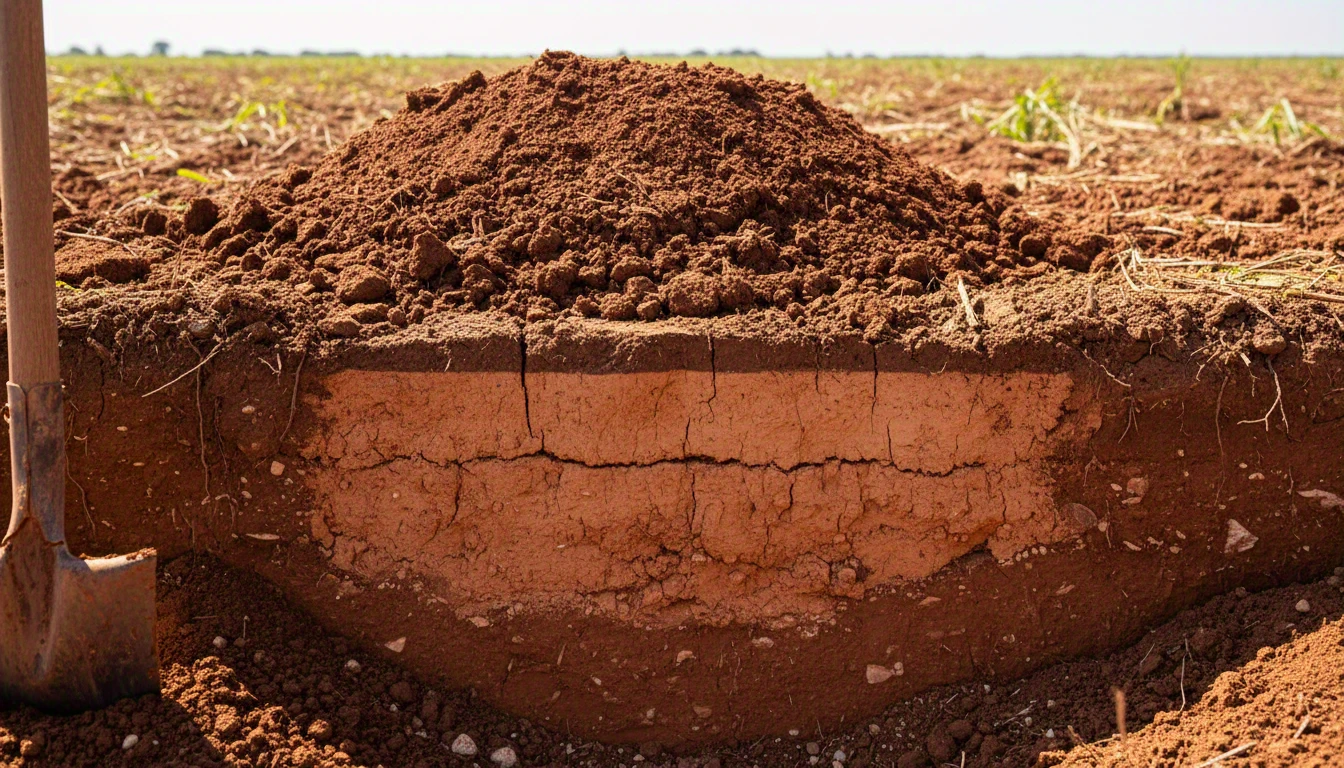
In fine-textured soils — clays, silts, fine sands — the soil particles are small enough to enter through the pipe’s perforations and deposit inside it. Over time, this siltation reduces the pipe’s effective cross-section, and the flow rate drops. The process is gradual — and the farmer rarely associates the performance drop with the material that was (or was not) placed around the pipe during installation.
It is precisely this type of soil that requires special attention in choosing the envelope. And in Brazil, with fine-textured soils widely present in the main agricultural regions, the topic is more relevant than many projects consider.
Gravel: When It Works and When It’s Not Enough
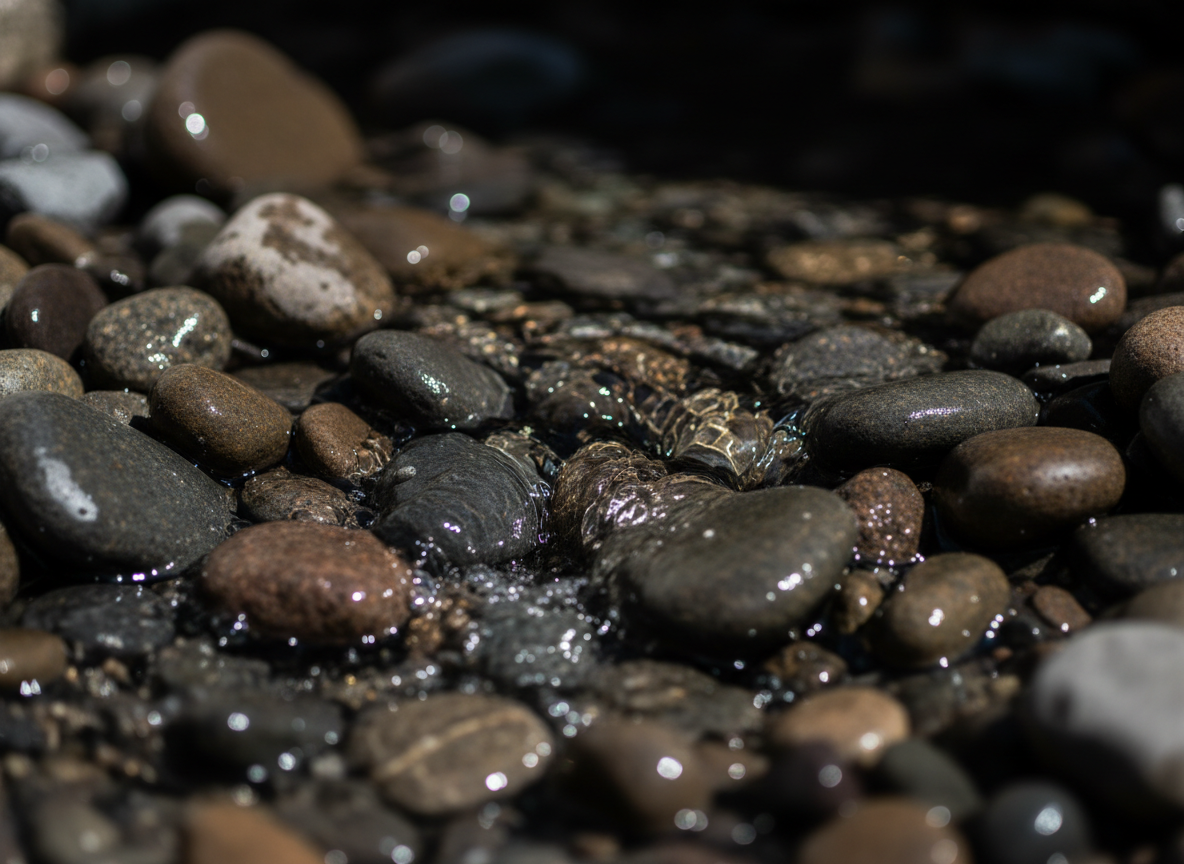
Granular drainage material — gravel — is the most commonly used envelope. When the gradation is correct (stones of adequate size, with very low fines content), it creates a permeable layer around the pipe that drains well and blocks larger soil particles.
The problem arises when the gradation is incorrect: gravel that is too fine becomes a barrier; gravel with excess fines compacts and cements around the pipe. The quality of the material matters as much as its presence. And in projects executed in a hurry or with low cost, this is one of the first points to be neglected.
Geotextile: The Logic and the Risks
Envelope geotextile functions like a fabric filter: it blocks fine soil particles and lets water pass through. In theory, it solves the problem of fine soil. In practice, it depends on conditions that are not always present — and when it fails, it fails irreversibly.
The fabric can clog (progressively block) over time, especially in soils with very fine particles that fit into the fabric’s pores. Once clogged, there is no recovery: jetting does not unblock the geotextile. And in areas with a risk of ochre, geotextile is especially dangerous — iron deposits clog the fabric long before reaching the pipe, and collapse is guaranteed.
The decision of whether or not to use geotextile, and which type, depends on the soil diagnosis — not on a general rule. Applying geotextile “as a precaution” in any type of soil can be exactly what compromises the system.
What the Right Choice Requires
There is no single answer to “gravel or geotextile.” The right decision for each area depends on the soil texture, the presence or risk of ochre, installation conditions, and the available product. A project that does not consider these variables delivers the wrong envelope — and the wrong system lasts a short time, regardless of the pipe’s quality.
This is why sizing cannot be generic. The choice of envelope is part of the complete subsurface agricultural drainage project — not an isolated construction item.
What Techdreno KC Solves
For many situations where the envelope is critical, Techduto has developed Techdreno KC — with an integrated filter in the pipe itself, validated by UFLA. The filter is already in the product: it does not require an extra step of applying geotextile in the field, which eliminates one of the main sources of execution errors on site.
For soils with a high risk of ochre, there is also Techdreno KC AB — manufactured to order with a specific treatment that inhibits ferruginous precipitation. The indication of which product to use in each area is part of the sizing that Techduto’s engineering team performs on a case-by-case basis.
What to Check Before Installing
Before defining the envelope for your area, it’s worth checking: soil texture at installation depth, risk of ochre (soil profile color, history of orange water), and site execution conditions. This information completely changes the recommendation — and it’s what the Techduto engineering team uses to indicate the right solution.
To understand the terms in this article, the Drainage Glossary has definitions for envelope, siltation, and ochre. If you are still evaluating whether your area needs a drainage system, the 4-question diagnosis points the way. And if your system is already experiencing a drop in flow rate with no apparent cause, talk to the team — the diagnosis begins with the project’s history.