
Actual durability varies depending on the amount of radiation at the construction site.
The increase in solar power plant construction, which often requires some of the material to be exposed to the sun, has led to greater concern regarding the durability and UV protection of HDPE (high-density polyethylene) corrugated pipes. These are widely used in various fields, including civil and agricultural drainage and urban infrastructure. However, they are highly vulnerable to UV (ultraviolet) radiation, which can lead to product deterioration and premature failure.
Effects of UV Radiation on Polymers
Polymers are composed of long chains of molecules that can be affected by UV radiation. UV radiation can lead to the breaking of chemical bonds, particularly carbon-carbon bonds, which form the polymer’s structure. Prolonged exposure to UV radiation can cause a reduction in the material’s mechanical properties, such as tensile strength and impact resistance. Additionally, it can cause discoloration, loss of gloss, and cracks, and even breakage of the material.
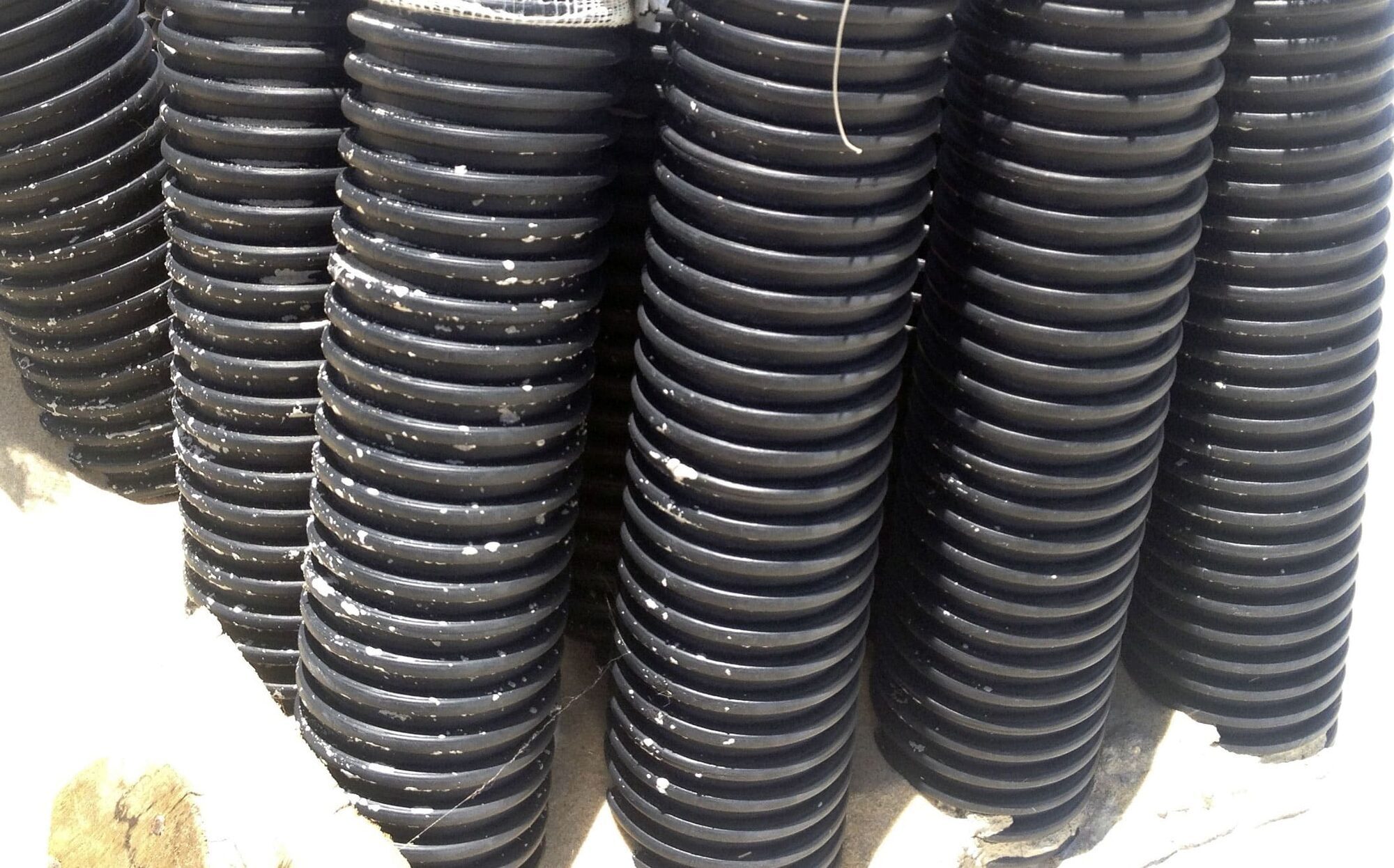
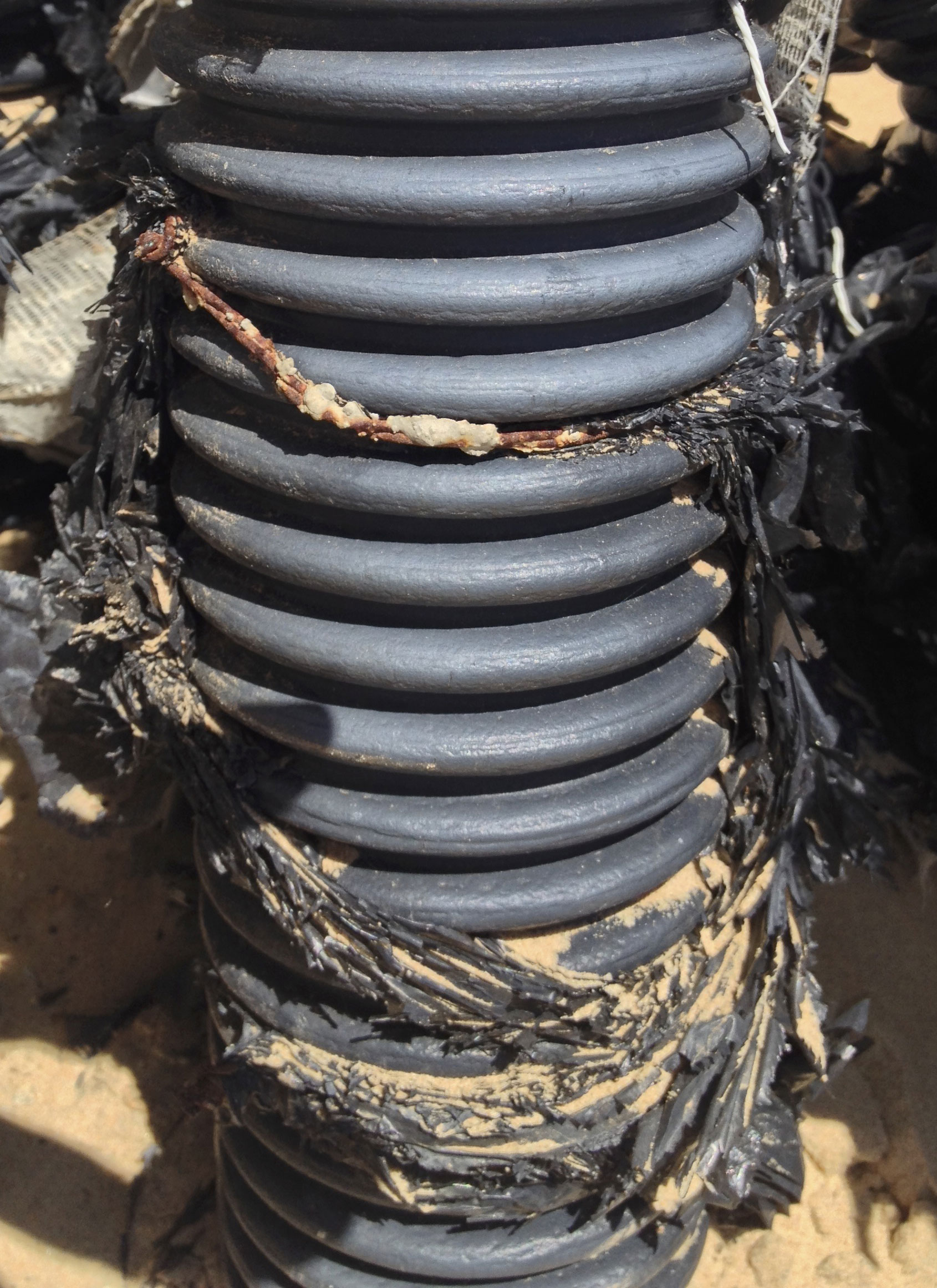
Image 1 shows a “UV-protected” pipe from another manufacturer. When the photo was taken, it had been installed for 8 months, as there was a delay in the arrival and installation of the tower. You can clearly see the whiter, dried-out parts of the pipe. It became brittle and caused problems on the job site later on. Compare this with Image 3, which was taken at the same wind farm with the same installation time; this base was built using Techduto solutions. It shows spots with sand—construction in the dunes of Ceará—note that the products did not dry out; there, they retained their original characteristics despite all that exposure.
How to identify UV degradation
In the field, certain signs indicate that the pipe is suffering from solar radiation:
- Whitening and drying out of the surface;
- Loss of gloss;
- Brittleness—the tube becomes brittle;
- Cracks and microcracks;
- Loss of tensile and impact strength.
Methods of protection against UV radiation
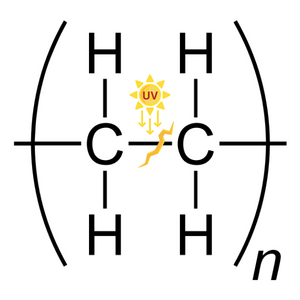
To increase the durability of polymers, especially in products exposed to UV radiation, it is important to use appropriate protection methods. UV-absorbing additives such as carbon black are an example of a method to protect against this type of radiation. These additives absorb UV radiation before it reaches the polymer’s chemical bonds, protecting the material from damage. However, there are different types of UV additives, such as UV absorbers and UV light stabilizers, among others.
In addition, protective coatings can be applied to the surface of the pipes, such as paint or a protective film, which helps absorb UV radiation and reduce its penetration into the material. These solutions can significantly increase the service life of the products.
Types of UV Protection Additives
There are different types of additives that can be used to protect polymers against UV radiation. Some of the main additives used for this purpose are:
- UV absorbers: these are additives that absorb UV radiation and convert it into heat, dissipating it into the environment. They are organic compounds capable of absorbing ultraviolet light. They are incorporated into the polymer during the production process and function to absorb the UV radiation that strikes the material’s surface, converting it into thermal energy and dissipating it into the environment. The most commonly used are carbon black and benzophenone.
- Light stabilizers: These are additives that protect polymers against degradation caused by UV radiation by stabilizing broken chemical bonds. They prevent the polymer’s chemical bonds from breaking and, consequently, the degradation of the material. Light stabilizers can be either antioxidants or UV absorbers. Antioxidants prevent chemical degradation, while UV absorbers protect polymers from ultraviolet rays.
- UV blockers: These are additives that reflect UV radiation, preventing it from reaching the polymer. They reflect or scatter UV radiation, protecting the polymer from its effects.
Increased durability of HDPE corrugated pipe products
In the specific case of HDPE corrugated pipes, it is important to use UV additives to increase the product’s durability. Although the NBR 15715 standard establishes high durability after the products are installed (or applied in confined areas protected from direct radiation), it establishes a minimum amount of anti-UV additives (antioxidant and carbon black), and these characteristics will provide only nominal protection sufficient for direct exposure of up to 1 year based on the specified tests. The additives used must be carefully selected to meet the specific needs of each application, with the aim of achieving the necessary UV protection and extending the product’s service life.
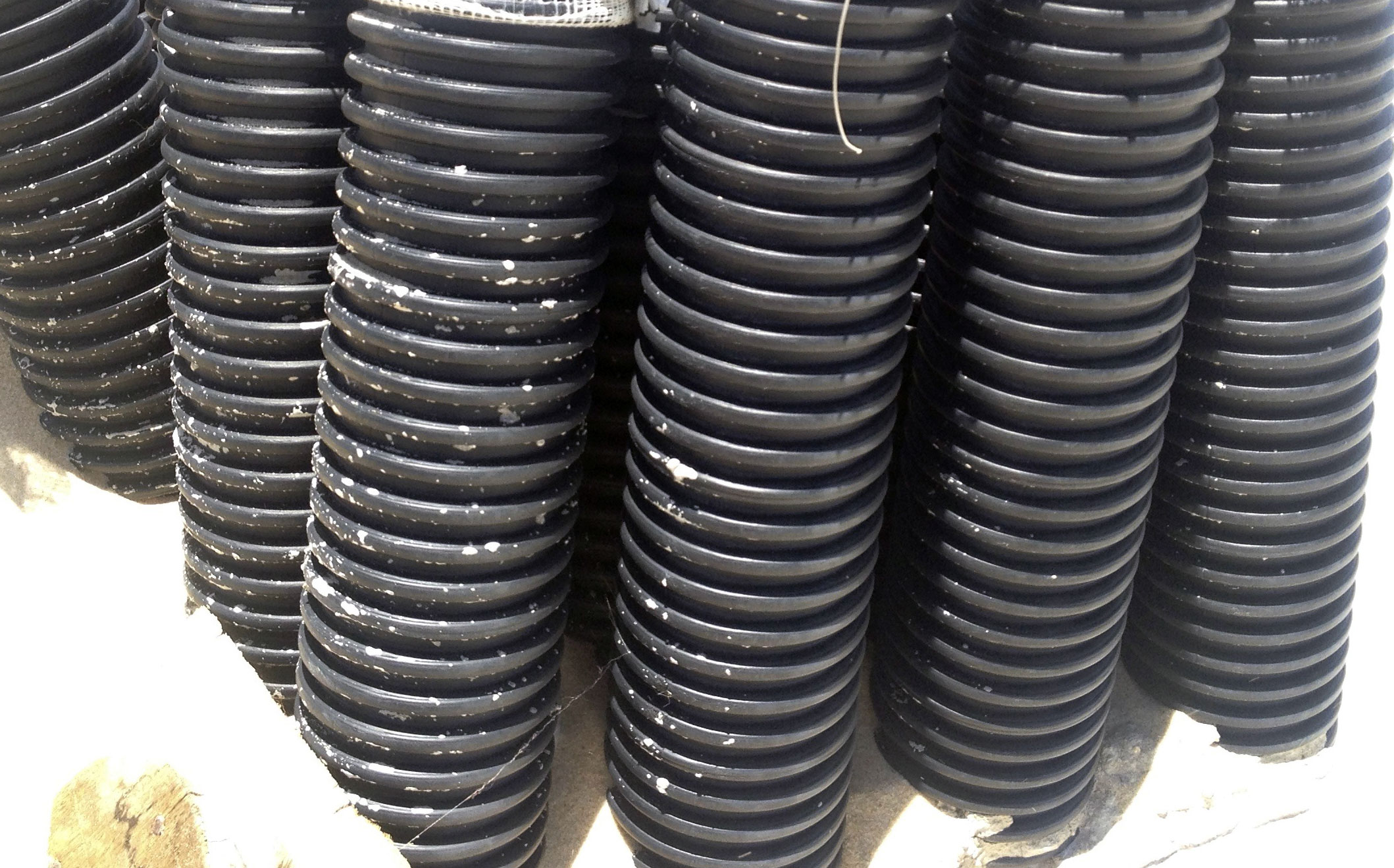
In addition to the additives mentioned, the choice of HDPE source is also an important factor in ensuring the durability of corrugated pipes. Although NBR 15715 permits the use of reprocessed material, this material already contains some degree of oxidation, reducing UV protection; however, virgin material does not have this issue and already contains antioxidants in its composition. Not to mention contaminated raw materials, common in “cheaper” products, which contain all sorts of mixtures in their composition.
Finally, the design of corrugated pipes can also influence the material’s durability. Pipes with thicker walls and a more robust geometry tend to be more resistant to degradation caused by UV radiation and will last longer in outdoor environments. All these measures and precautions are effective, but they also incur significant costs; just in terms of raw materials, the cost increases by 20% to 50% to ensure protection lasting over 10 years. Despite some unfounded claims by manufacturers, the most reliable estimate is that single-wall corrugated pipes with direct exposure to UV radiation, with the proper formulation, should last around 10 years, and others with a double layer (or sufficiently thick walls) may last up to 20 years. This is subject to the variation in radiation levels at the installation site.
Techduto offers the AntiUV+ and AntiUV Super solution lines, which were developed for PV (Photovoltaic) plant projects in the Atacama Desert, one of the areas in the world with the highest incidence of UV radiation. They feature a special formulation that provides the longest-lasting protection on the market under extreme conditions. The first is designed for shaded areas, and the second for areas with direct exposure.
How UV protection is evaluated
A tube’s UV resistance isn’t just claimed—it’s measured in the lab:
- Accelerated aging test: samples are exposed to controlled cycles of UV radiation (hundreds to thousands of hours, with standardized irradiance and temperature) that simulate years of sun exposure;
- OIT (oxidative induction time): measures how long the material resists oxidation—the higher the OIT, the better the polymer’s stability;
- Complementary analyses (FTIR, DSC, and tensile tests) confirm whether the mechanical properties were maintained after exposure.
As a technical reference, a content of approximately 2 to 2.5% of well-dispersed carbon black reduces UV damage by around 90% and can extend the service life by 5 to 6 times compared to unstabilized material.
Summary: durability according to UV protection
| Solution / tube type | Exposure | Expected durability |
|---|---|---|
| Minimum of NBR 15715 standard | Direct | ~1 year (nominal protection) |
| Single-layer with appropriate formulation | direct | ~10 years |
| Double-wall / thick walls | direct | up to 20 years |
| Techduto AntiUV+ | shaded areas | market-leading |
| Techduto AntiUV Super | direct exposure | market-leading (tested in the Atacama) |
Conclusion
Protection against UV radiation is essential to increase the durability and service life of HDPE corrugated pipes used in projects that require exposure to the sun, such as solar power plants. The addition of additives that protect against UV radiation, the use of external protection, or the use of UV-protected materials are viable options to ensure the protection of HDPE corrugated pipes. It is important to note that choosing the best protection option must take into account the conditions of use and the project’s requirements to ensure its effectiveness and durability.