

Drainage problems cause waterlogging and soil erosion, damage building structures, and contribute to the proliferation of disease-carrying pests. Learn how to solve them
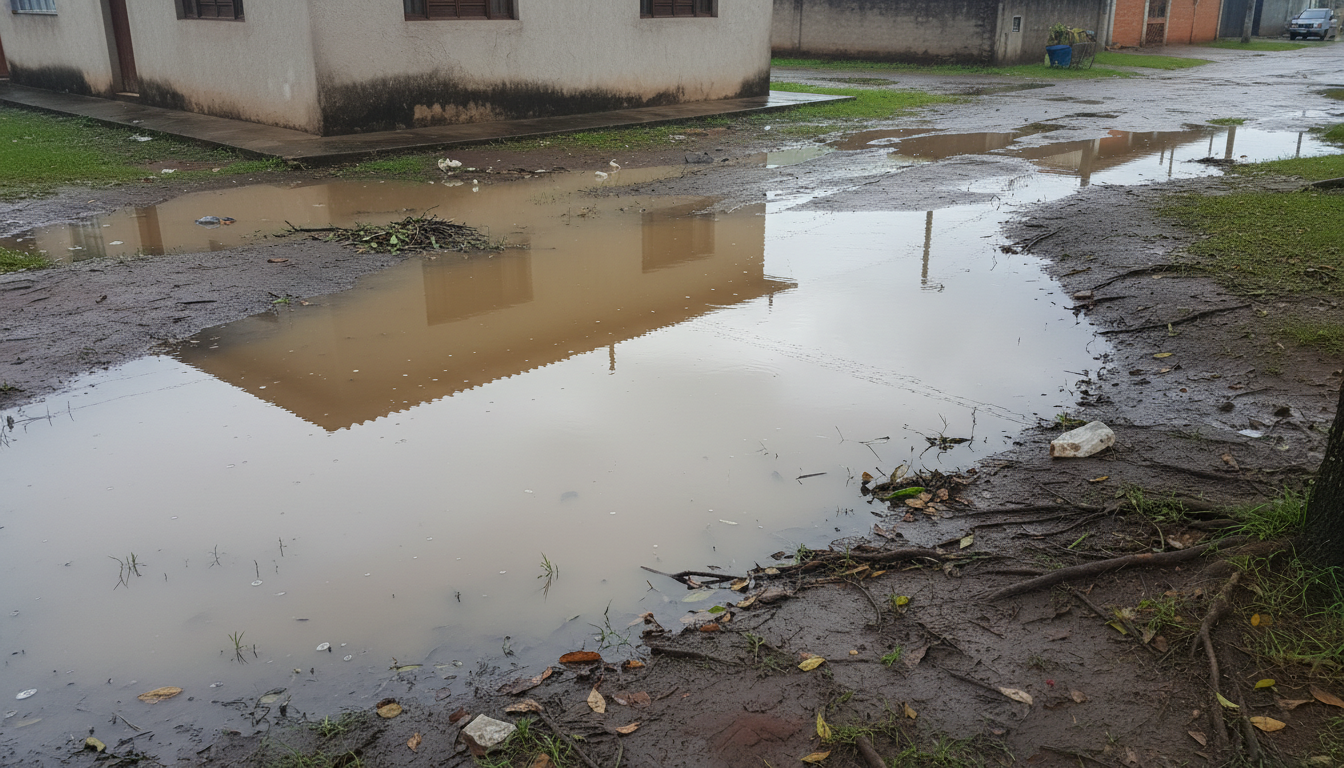
Stormwater drainage is a very important step in any construction project, as it prevents flooding, erosion, landslides, and even diseases caused by the reproduction of disease vectors. In the field, drainage improves soil and plant health, boosting agricultural productivity, reducing losses, and making farmers’ work easier.
But how do I know if my property has drainage problems? In that case, the best course of action is to read the following article all the way through. In it, we list the main signs that your yard has poor drainage and how to efficiently solve the most common urban drainage problems. Check it out!
Main signs of urban drainage problems
Contrary to popular belief, you don’t need to be an expert to figure out if your house or apartment has drainage problems. Fortunately (or unfortunately), some signs help you notice water accumulation on your property, such as:
- Waterlogged soil with puddles forming;
- Erosion;
- Walls with moisture and leaks;
- Mosquito breeding;
- Plants that fail to thrive.
Paying attention to these signs allows you to act quickly to prevent structural damage to your home, damage to your garden, diseases caused by standing water, and other problems.
Quick diagnosis: identify your problem
Use the table below to match the sign you observe with the likely cause and the recommended solution:
| Sign observed | Likely cause | Recommended solution |
|---|---|---|
| Puddles after rain | Inadequate drainage plan or low-lying area | Underground drainage with drainage pipes |
| Water pooling near the building | Missing or silted-up ditches or trenches | Dig/restore sloped ditches with geotextile fabric |
| Moisture and seepage in the foundation | Water pooling around the house | Perimeter drains + drainage away from the building |
| Erosion and ruts in the soil | Sloping terrain or concentrated runoff | Drainage ditch leading to a dry well |
| Drain that has stopped working | Blockage by roots or sediment | Clean and wrap the pipe in geotextile fabric |
| Plants that are not growing | Waterlogged soil / high water table | Subsurface drainage |
Drainage problems: learn about the 7 most common ones and how to solve them
Effective stormwater management involves more than just installing drainage pipes in the ground to divert water elsewhere.
Although this is a very effective way to control excess soil moisture, there are other factors that, when combined, can reduce the impact of rainwater on your home. Failing to address them can even cause various drainage problems, which compromise the aesthetics and structure of your home and put the lives of residents at risk.
1. Open ditches or poorly constructed drainage trenches
Open ditches and drainage trenches are one of the simplest and most economical ways to capture and direct excess surface water away from the building and areas that need protection. When properly constructed, they prevent water accumulation around the foundation and soil erosion.
The drainage problem in this case occurs when these ditches are missing, improperly sized, have insufficient slope to carry water, or become silted up—clogged with soil, leaves, and sediment over time.
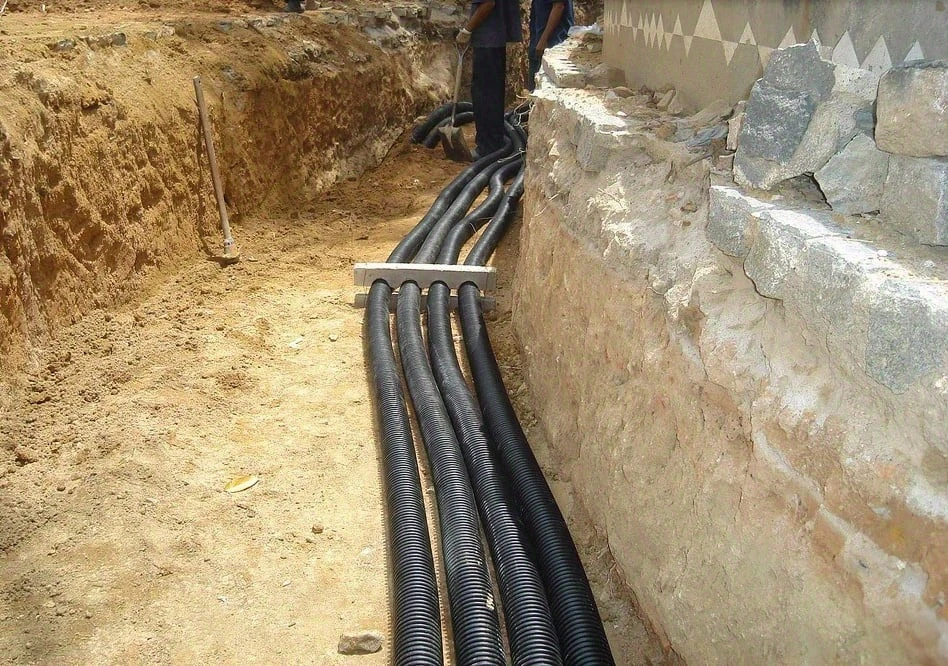
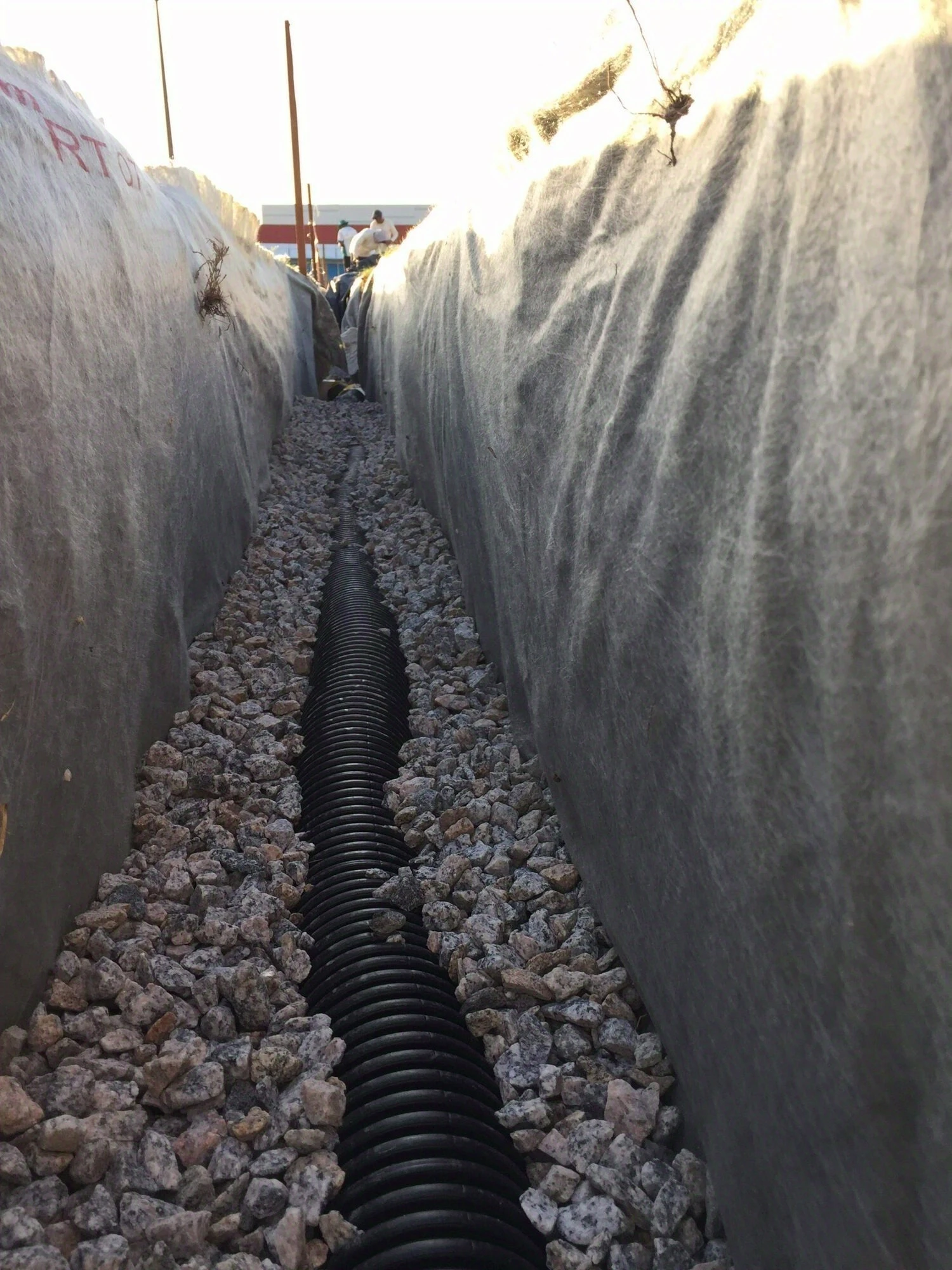
Fortunately, resolving this issue is usually straightforward. Depending on the source of the problem, simply dig or restore the ditches with the correct slope and connect them to drainage pipes that carry the water to the stormwater system. In drainage trenches, the pipe should be wrapped in geotextile fabric and laid on crushed stone, ensuring filtration and efficient flow.
2. Inadequate drainage plan
Before any construction begins, a drainage plan to properly channel stormwater away from the property is necessary. However, some homeowners overlook this need, resulting in water pooling in the yard or basement.
To solve this problem, there’s no way around it: you need to invest in a new drainage system. Depending on the soil characteristics, drainage can be surface or underground, using drainage pipes. But, depending on the situation, simply directing the water in the right direction may be enough to solve the problem.
3. Sloped Land
Another common drainage problem is excess water on sloping terrain. This happens when your property is lower than your neighbor’s, which makes it easier for water to flow into your yard and consequently makes it wetter.
In this case, some solutions prove quite effective for controlling excess soil moisture. One of them is leveling the ground, which requires hiring specialized professionals, construction materials, and a significant financial investment.
On the other hand, you can also achieve good results by building a drainage ditch to direct water to a dry well, for example. The good news is that this is a much more affordable strategy, and when done with high-quality drainage pipes, it can last over 60 years.
4. Poorly Planned Landscaping
Just like sloping terrain, poorly designed gardens are also considered drainage problems. Whether due to unprotected soil or improper slope, a poorly planned garden bed can direct water toward your home’s structure and cause real damage to your residence.
The tip here is to divert the water to another location using French drains, drainage ditches, or ornamental solutions like stones and gravel.
5. Installing drainage pipes near trees or in shallow trenches
This is one of the drainage problems that is often attributed to damage to the drain pipes, but this is not always the case. Sometimes, drainage pipes are installed in shallow ditches or near trees, which makes it easy for plant roots to invade the pipe openings, causing blockages.
Resolving this issue is relatively easy and involves some manual labor. First, clean the pipes by removing all the roots from them. Next, wrap the drain pipes in a geotextile mat, a product that filters out particles that can enter through the openings in the drain pipes and compromise efficient water flow.
6. Surface depressions
In addition to the drainage problems mentioned earlier, surface depressions also cause water to accumulate in flat areas of the ground. Just as with sloped terrain, you can solve the problem by leveling these depressions to help water flow off the property. However, you can also invest in an underground drainage system to direct water to a basin, dry well, or your city’s stormwater system.
7. Soil Type
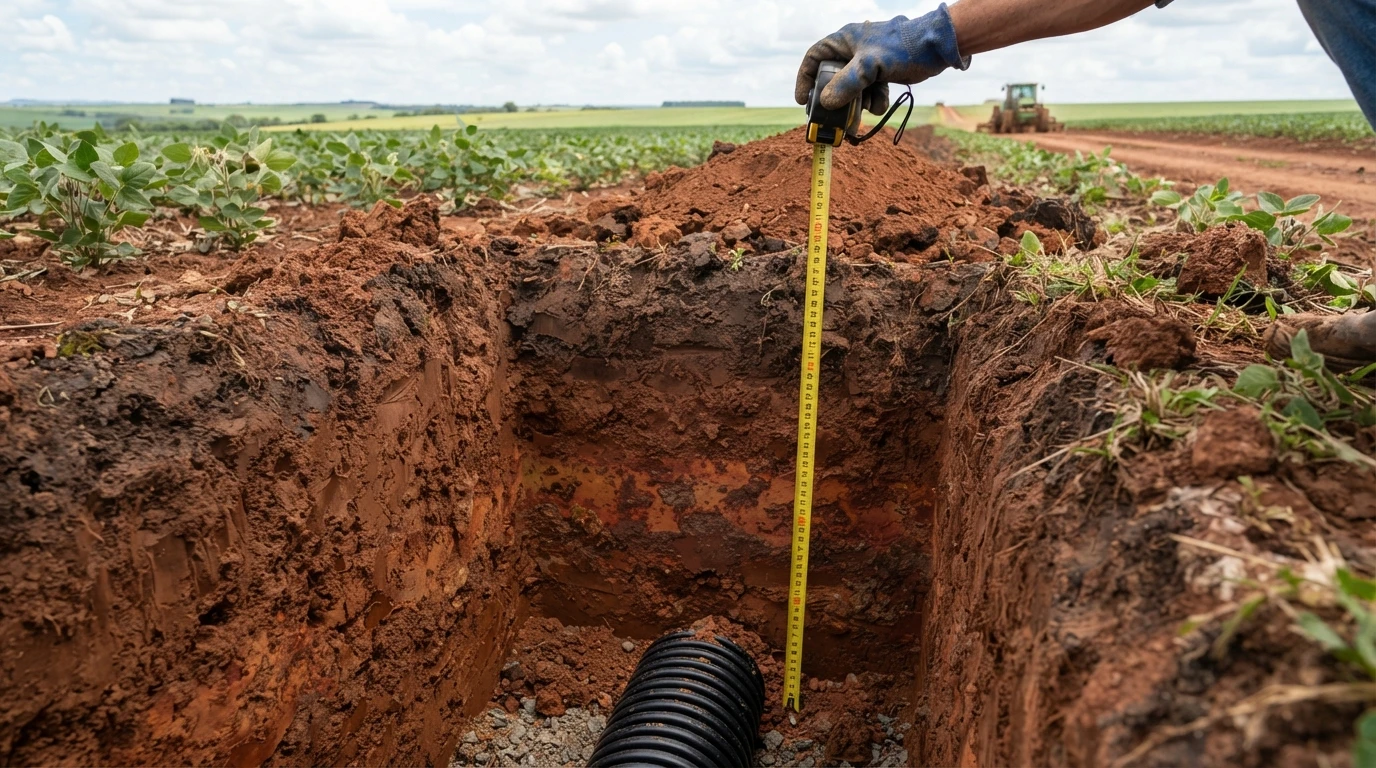
Last but not least, it’s worth considering that the type of soil on your property may be causing your drainage problem. Specifically, there are three types of soil, each with its own permeability characteristics: clay, sand, and silt.
Generally speaking, clay soils, for example, do not drain water well, while sandy soils drain water too quickly. Silty soils, on the other hand, are a middle ground between clay and sand; they are less sensitive to groundwater levels, have good water permeability, and are easy to dig.
| Soil Type | Natural drainage | Recommendation |
|---|---|---|
| Clay | Slow — retains water | Subsurface drainage is essential |
| Sandy | Too fast — loses water | Generally does not require drainage; watch for water retention |
| Silty | Intermediate | Evaluate based on water table and topography |
How can Techduto help solve your drainage problems?
Techduto is a Brazilian company specializing in the manufacture and supply of HDPE (High-Density Polyethylene) corrugated pipes for various construction projects. For urban drainage, the brand offers the Techdreno and Techdreno DW drainage pipe lines, effective solutions for controlling excess water on highways, railways, sports fields, gardens, and various other locations requiring an efficient drainage system.
Regarding Techdreno drainage pipes, it is worth noting that they have excellent absorption capacity, as they feature side openings that absorb a greater amount of liquid from the ground. In addition, they are flexible and very durable, meaning they support the weight of the soil without compromising their quality and can be bent without the need for connections.
The Techdreno DW line of drainage pipes, on the other hand, are semi-flexible, feature a double wall, and are more durable—characteristics that allow for a lower backfill height. Their smooth interior ensures 30% greater liquid absorption capacity, promoting excellent underground drainage.
There are also standardized corrugated drainage pipes, specifically designed to meet specific requirements. Techdreno SD is manufactured in accordance with NBR 15073, while Techdreno NBR fully complies with NBR 15073 and DNIT 093/2016.
Regardless of the corrugated drainage pipe you choose, it is important to know that they are non-toxic and durable. When properly installed, they can last more than 60 years without the need for maintenance or replacement, offering your drainage project greater safety and reliability.
Contact Techduto and learn about our corrugated pipe solutions to solve your construction project’s drainage problems. We also develop custom drainage pipe lines tailored to your project. Visit our website and check it out!