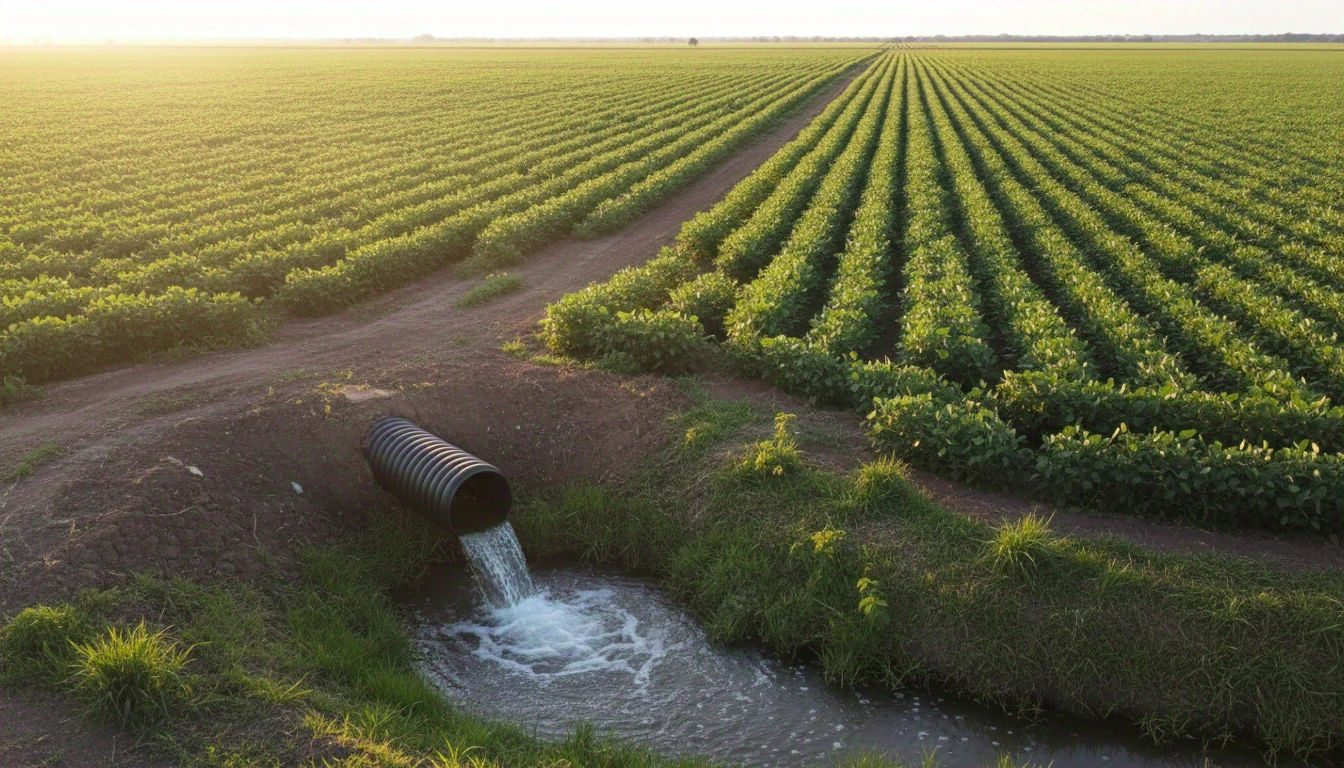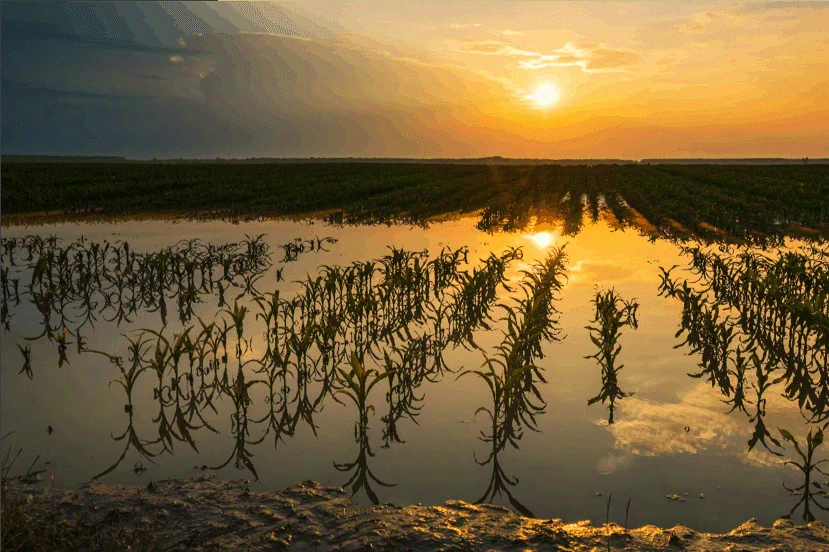


Is there that section of your field that lets you down every year—always in the same spot? The crops grow crooked, the machinery gets stuck, productivity drops, and no one can really explain why. Most of the time, the answer is simple and right under your feet: standing water where it shouldn’t be. Excess water rarely comes as a flood; it acts slowly and takes a heavy toll—in bags of grain that don’t come in, in diesel burned up getting stuck, in fertilizer that washes away. The good news: you can identify the problem yourself, today, without any equipment. See if you recognize any of these seven signs.
In a hurry? Take the 4-question diagnostic and find out the status of your land in less than 1 minute.
1. Puddles that take a long time to dry up after rain
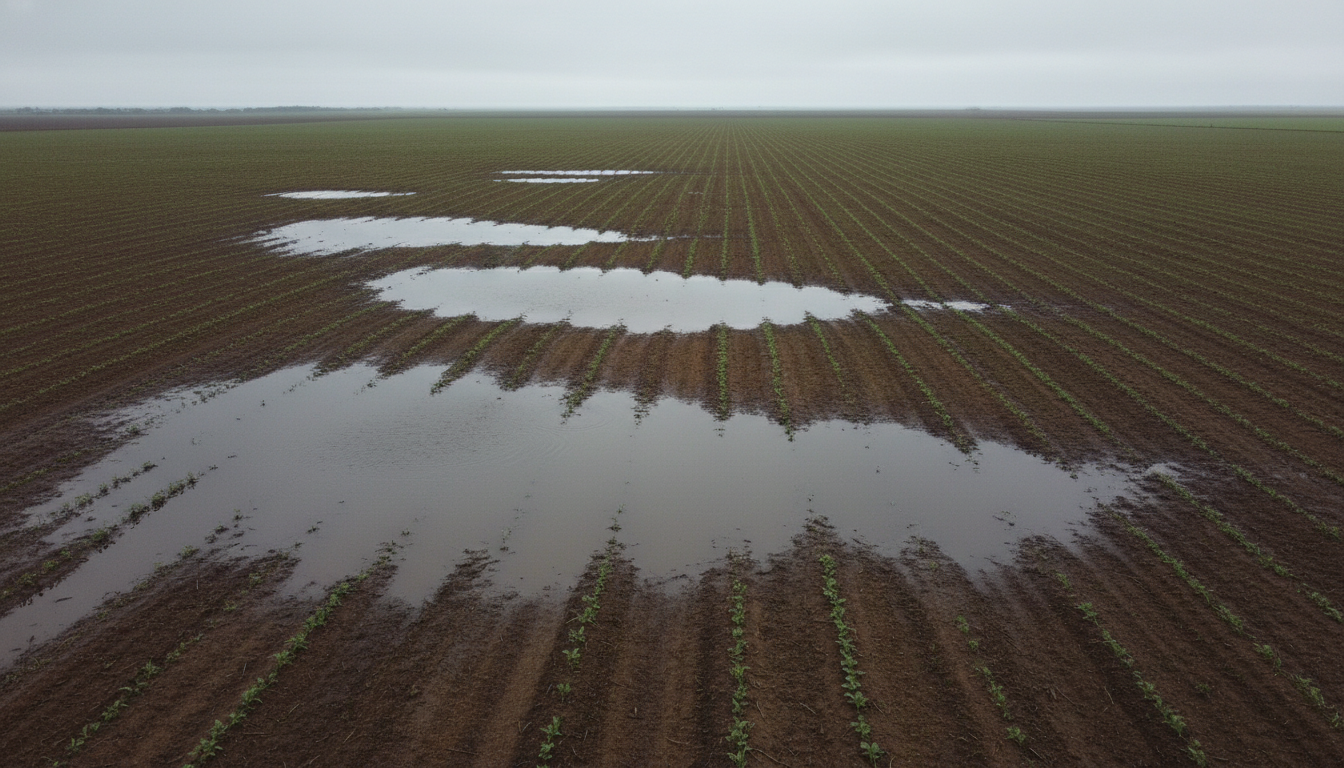
Do the mental test: after a heavy rain, how long does it take for the water to disappear from your area? In soil that drains well, it seeps away in a few hours. If it remains pooled for days—and reappears in exactly the same spots with every rain—it’s not bad luck or “too much rain.” It’s the soil profile that has lost its ability to absorb. Every day of standing water is a day of root suffocation.
Also observe where the water goes: if much of it runs off the surface instead of entering the soil (surface runoff), infiltration is already compromised—and erosion follows close behind, carrying away your most fertile layer.
2. “Wetland vegetation” taking over patches
Nature provides a free map of the problem. When cattails, reeds, bulrushes, and other wetland plants begin to dominate specific patches—while the rest of the field has different vegetation—they are indicating where the water table is high. They act as a biological indicator: where they thrive, water does not drain. Notice if these patches coincide exactly with your problem areas.
3. Yellowed and uneven crops in patches
Plants that turn yellow, remain stunted, or simply “drown” in patches—especially after a rainy period—have suffocated roots. Waterlogging pushes oxygen out of the soil pores, and the roots, deprived of air, stop breathing and absorbing nutrients. Result: you apply fertilizer, but the plant doesn’t respond in that spot.
Want definitive proof? Take the crop yield map and overlay it on the area’s topography. If the low-yield patches match the low-lying areas that pool water, you’ve found the cause—black and white.
4. Gray or bluish soil with orange spots
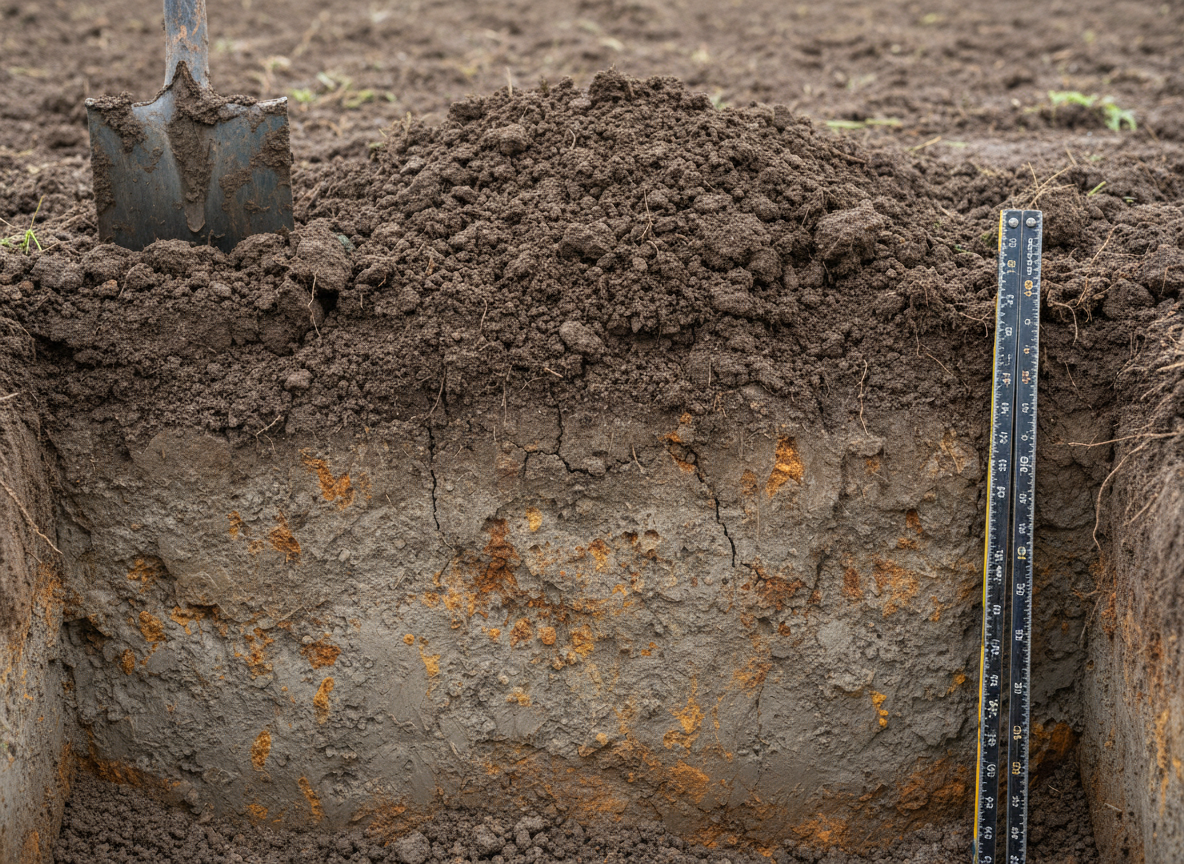
This sign is hidden—and it never lies. Grab a shovel and dig a 60- to 80-cm inspection trench in a suspicious area. Look at the color of the soil profile: healthy soil has a vivid, uniform color (red, yellow, brown). When it appears gray, bluish, or greenish, with that orange speckled mix, it’s the telltale sign of water sitting for too long: the iron in the soil reacting to the lack of oxygen. In Brazil, this occurs in Gleysols and Plinthosols. Five minutes with a shovel will tell you what months of fertilization cannot.
5. Machinery getting stuck and a shrinking work window
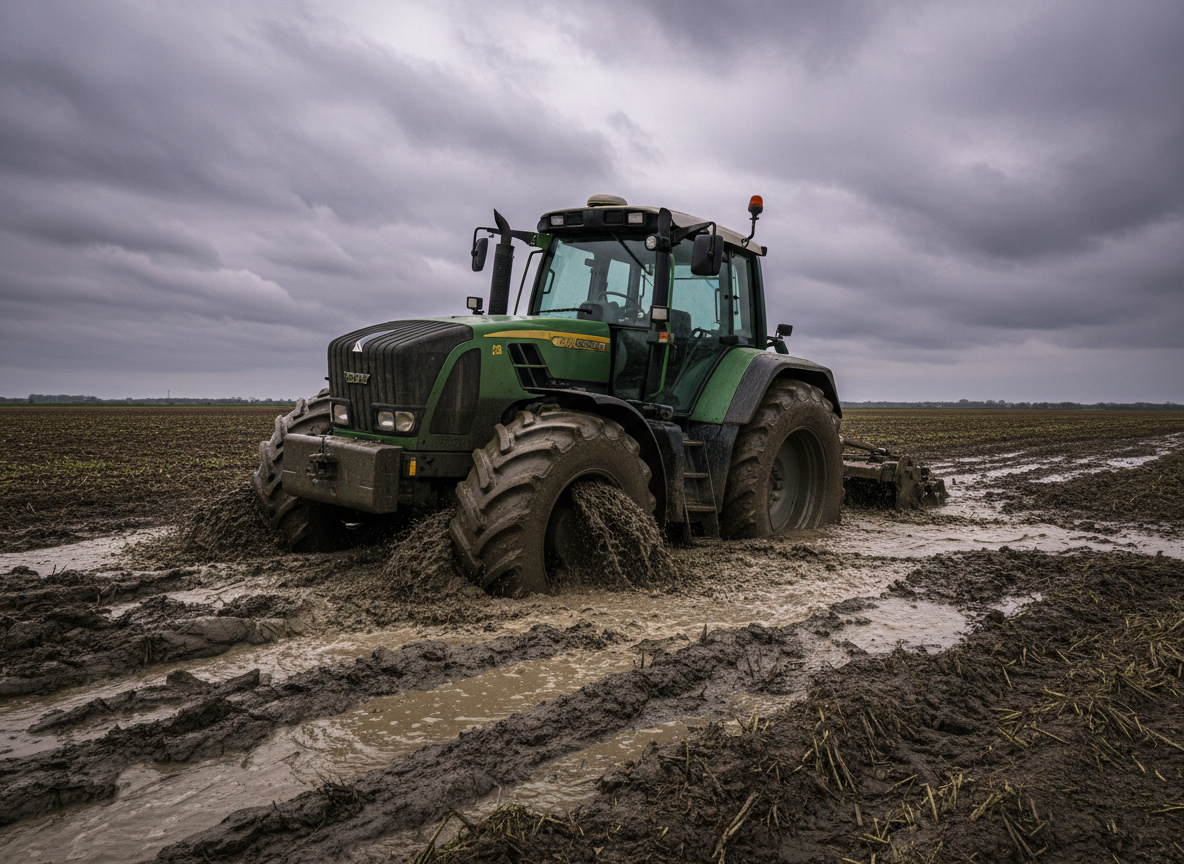
Do you have to wait extra days to bring in the machine—and even then it gets stuck, leaves ruts, and compacts the soil? The soil is losing its passability. And here lies a dangerous cycle: waterlogged soil cannot support weight, so every pass in wet conditions creates a hard layer just below the surface—the “caterpillar track”—which in turn further worsens drainage, leading to waterlogging again, which compacts the soil again. It’s a snowball effect that shortens your planting and harvesting window and leaves the entire operation at the mercy of the weather.
6. Shallow roots and crops that fail to “take hold” in a rainy year
With the water table high for much of the year, the roots don’t go deep: they grow shallow and horizontal, avoiding the saturated zone. The effect is treacherous—the plant becomes more fragile and, ironically, suffers more during the subsequent drought because short roots cannot reach deep for water. If your crop has poor root development and struggles precisely in the rainiest years, excess water in the soil profile is the number one suspect.
7. Erosion, ruts, and soil washing away
Poor drainage and erosion go hand in hand. Water that doesn’t infiltrate runs off—and as it runs, it carries soil, seeds, fertilizer, and pesticides out of the field and into the river. Ruts that keep forming in the same spots, sediment piling up in low-lying areas, and the topsoil disappearing are signs that the soil is getting more water than it can handle. You’re literally watching your investment wash down the hill.
Do you recognize the problem? The solution is simpler than it seems
Identifying the signs is half the battle. The other half is understanding that the solution is usually straightforward—and that the key is not to jump to the wrong solution. First of all, it’s worth remembering a detail that many people get backwards: the drain doesn’t “pull” the water. It simply receives, by gravity, the water that manages to reach it. Therefore, if there is a compacted layer blocking the path, you first perform subsoiling; then, drainage.
And how does drainage work in practice? The principle is easy to visualize:
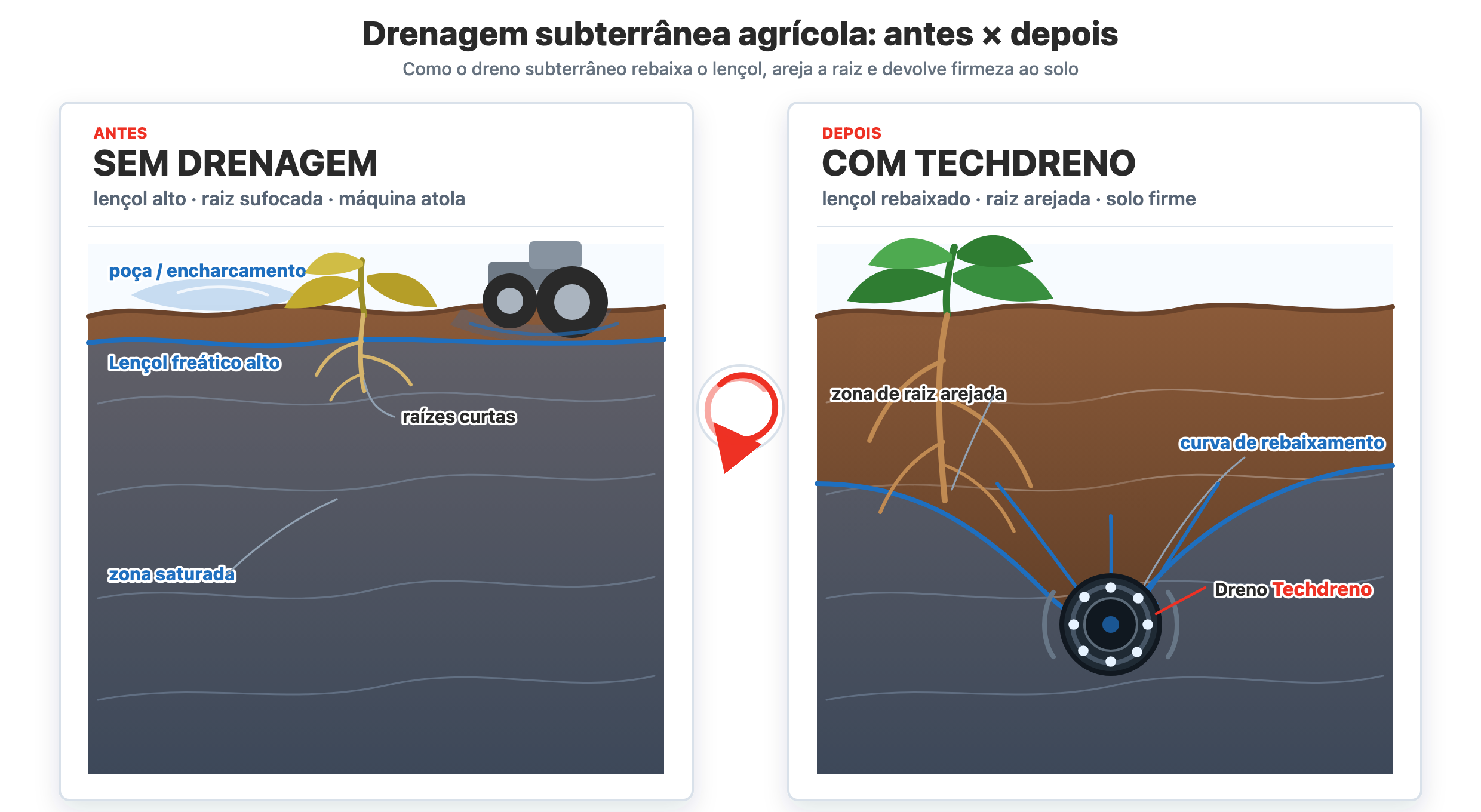
A perforated drainage pipe, installed at the correct depth and slope, lowers the water table and returns air to the roots. It sounds complex, but it’s well-established engineering with a quick return on investment. What makes the difference between a system that lasts decades and one that clogs up in the first year is choosing the right solution for your soil:
- Fine-textured soil (fine sand, silt)? These particles migrate into the pipe and clog it. The solution is a filter sleeve. That is exactly why Techdreno KC comes with an integrated filter—validated by UFLA—eliminating the need to apply geotextile separately and removing the most expensive and risky step of the project.
- Need more flow and durability? The Techdreno DW, with its double-wall design (smooth on the inside, corrugated on the outside), delivers greater drainage capacity.
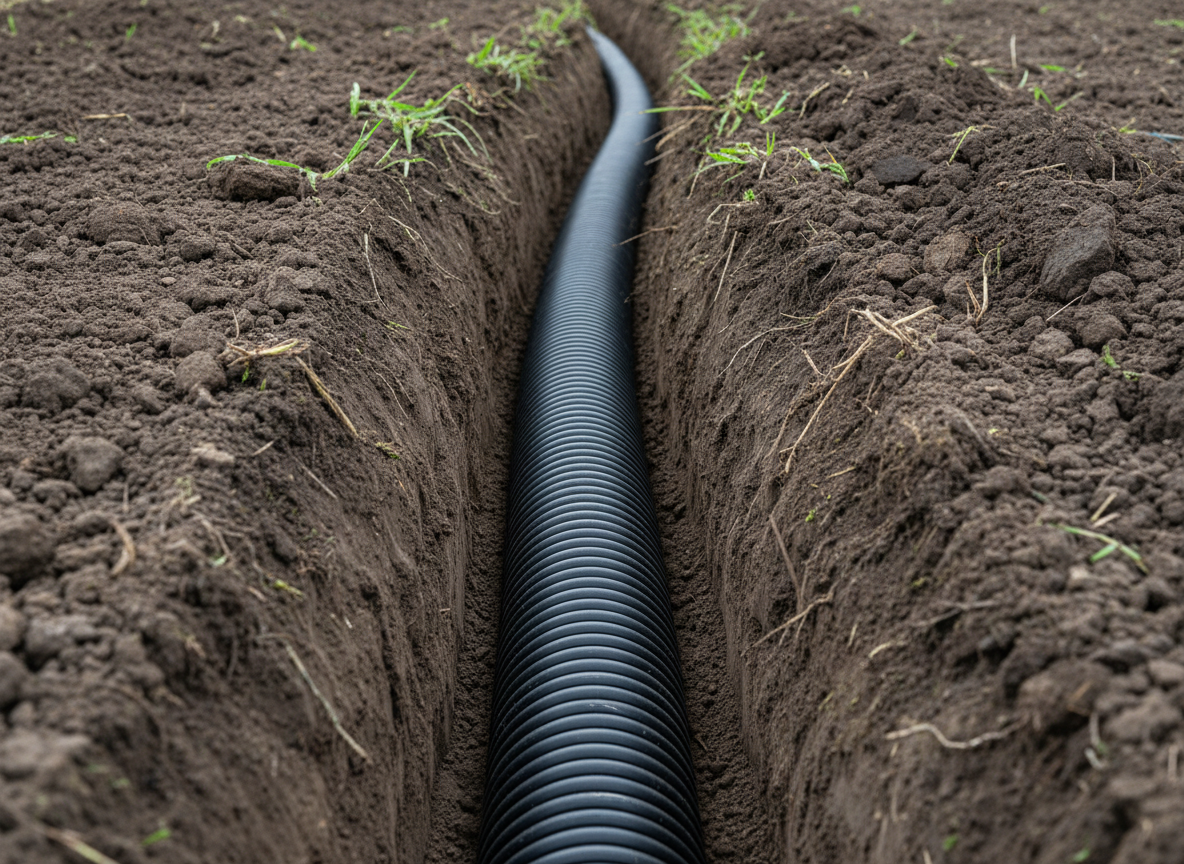
To summarize the process, which is shorter than it seems: (1) dig trenches and assess the soil; (2) map where water pools and where it flows; (3) determine whether the need is for subsurface drainage, surface drainage, soil aeration—or a combination. For technical terms without the jargon, use our Drainage Glossary; and the sizing of your area (depth, spacing, and diameter) is handled by Techduto’s engineering team—talk to us and we’ll help you find the right solution.