
Why have HDPE pipes replaced concrete and steel in drainage, energy, and sanitation projects? The answer lies in a combination that’s hard to beat: up to 1/8 the weight of steel, a service life of 50+ years, corrosion resistance, and flexibility that eliminates the need for joints. See below, point by point, the benefits—and how HDPE compares to PVC and concrete.
Benefits of HDPE Corrugated Pipes
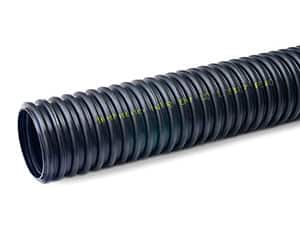
Due to their many advantages, particularly their light weight, corrosion resistance, and ease of installation, High-Density Polyethylene (HDPE) plastic pipes have become an attractive alternative for underground applications in recent years. HDPE corrugated pipes such as Techduto stand out for their material properties, designed for a minimum service life of 50 years when properly installed and buried.
What is HDPE?
HDPE stands for High-Density Polyethylene—a petroleum-derived thermoplastic formed by long chains of tightly compacted polyethylene. It is this high molecular density that gives the material the combination of lightness, mechanical strength, and chemical inertness that has made it the standard for buried piping.
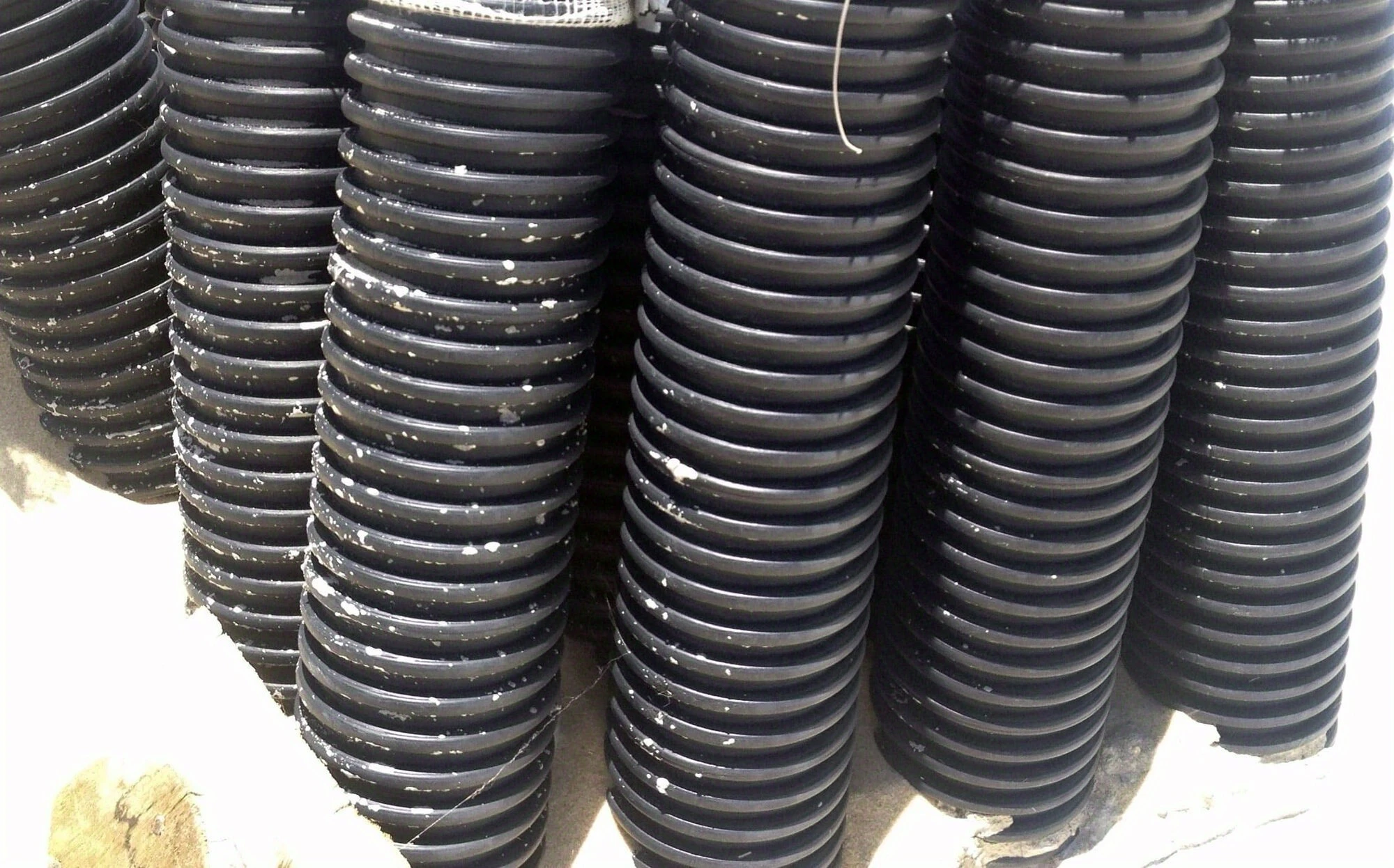
In the corrugated format, the pipe wall features "ridges" (corrugations) that function as structural reinforcement rings. The result is a pipe that withstands soil and traffic loads using much less material—lighter, cheaper, and easier to install than rigid alternatives. In double-wall models, the inner layer is smooth (for maximum flow) and the outer layer is corrugated (for strength).
The main benefits of HDPE corrugated pipes are:
- Numerous applications and uses, making them ideal for:
- Single-wall corrugated pipes (energy and telecommunications);
- Double-wall corrugated pipes (energy, telecommunications, and sanitation);
- Single-wall corrugated drainage pipes (urban, road, and agricultural stormwater drainage);
- Double-wall corrugated drainage pipes (urban, road, and agricultural stormwater drainage);
- Large-diameter corrugated conduits (sanitation)
- Significantly lighter weight
- 1/8 the weight of the steel equivalent;
- Ease of installation—regarding product transport and handling on-site;
- Lower installation cost and time.
- Highly flexible product
- Unaffected by natural ground movement—it has the flexibility and strength to accommodate and better withstand such variations;
- Can be bent to small radii—thus avoiding, in many cases, the need for additional fittings;
- Greater flexibility in both design and installation.
- High corrosion resistance
- Lower life-cycle cost;
- Does not rust, deteriorate, or corrode;
- Requires no maintenance;
- Withstands harsh soil conditions;
- Expected lifespan of over 50 years depending on the type of installation.
- Excellent chemical resistance
- Suitable for use with a wide range of chemicals;
- Resistant to all components of natural gas;
- Resistant to sulfuric acids with concentrations up to 80%;
- Insoluble in organic and inorganic solvents up to 70 °C.
- Non-toxic product
- Approved for use in drinking water applications—provided it is virgin grade and suitable for such use;
- Approved for use in food contact applications;
- Can be used for medical applications.
- Low friction in fluid flow.
- In the case of double-wall pipes, the inner surface is smooth—the smooth interior achieves up to 30% greater water flow capacity. The "roughness" of HDPE achieves a much higher flow rate than the concrete equivalent;
- Lower pumping costs;
- Impact resistance
- Excellent resistance to breakage or damage;
- Ease of transport and installation;
- Other relevant benefits of corrugated pipes:
- Lower density and weight than rigid materials, thereby reducing transportation and installation costs;
- Strong yet flexible, with a reduced risk of breakage;
- Strong and lightweight, providing excellent health and safety benefits;
- HDPE plastic pipe installations reduce leakage compared to rigid materials due to long pipes and high-integrity joint systems;
- Proven second life (100% recyclable);
- Flexible pipe providing greater ability to withstand normal ground movements;
- High resistance to normal damage in construction environments;
- Wall profile designed to provide maximum strength to the system, with lower weight and cost.
HDPE vs. PVC vs. Concrete: Direct Comparison
When specifying the material, a side-by-side comparison makes the advantages of HDPE evident:
| Characteristic | HDPE (Techduto) | PVC | Concrete |
|---|---|---|---|
| Weight | Very light (≈1/8 the weight of steel) | Light | Very heavy |
| Flexibility | High — bends without joints | Rigid | Rigid and brittle |
| Corrosion resistance | Complete — does not corrode | Good | Low — deteriorates |
| Chemical resistance | Excellent (acids up to 80%) | Good | Low (H₂S attack) |
| Service life | 50+ years | ~50 years | 10 to 30 years (in aggressive environments) |
| Installation | Quick and easy | Medium | Slow, requires heavy equipment |
| Recyclable | 100% | Yes | No |
In sewer systems, hydrogen sulfide (H₂S) attack degrades concrete within a few years—while HDPE remains inert for decades.
Applications by sector
The versatility of HDPE translates into specific solutions for each sector. See where each type of pipe is used:
- Agricultural drainage — perforated drainage pipes remove excess water from the soil, control the water table, and increase productivity. Learn why agricultural drainage is important.
- Energy and telecommunications — Techduto DW (double-wall) protects electrical and telecom cables in underground installations, offering high mechanical strength and easy cable passage.
- Sanitation — large-diameter corrugated pipes for sewage and stormwater collection networks, where HDPE’s chemical resistance outperforms concrete.
- Urban and highway stormwater drainage — culverts and drains that carry away excess rainwater, preventing flooding and erosion.
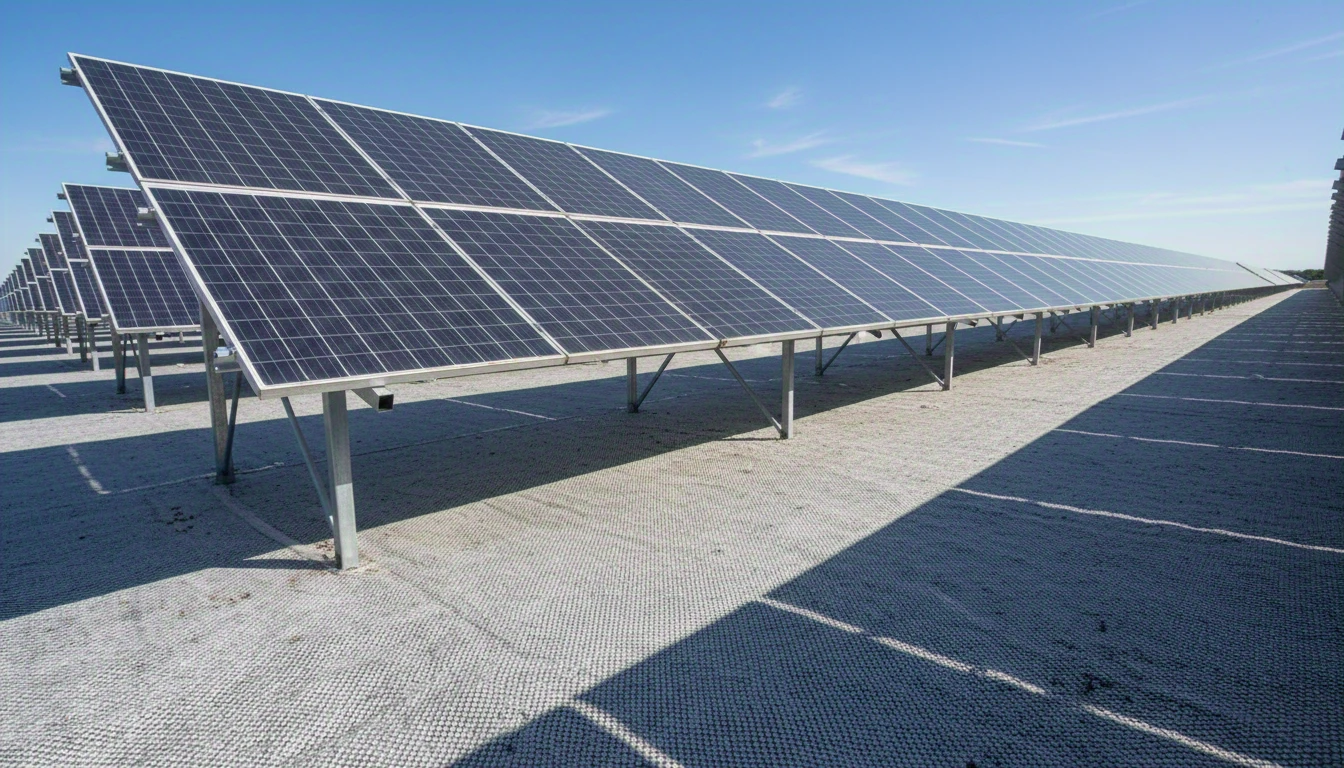
- Renewable energy plants — perimeter drainage for solar plants and cabling for wind farms, in projects requiring decades of durability.
Sustainability: a material aligned with ESG
In addition to its technical performance, HDPE offers environmental benefits that are increasingly valued in public and private construction projects:
- 100% recyclable — at the end of its useful life, the material can be reused, reducing waste.
- Lower carbon footprint in logistics — since it is up to 8x lighter than concrete, it requires fewer trucks and less fuel for transport.
- Less waste on-site — its flexibility allows for cutting to exact size, reducing scraps.
- Long service life — 50+ years without maintenance means fewer interventions, less excavation, and lower resource consumption over time.
References:
- Plastics Pipe Institute –