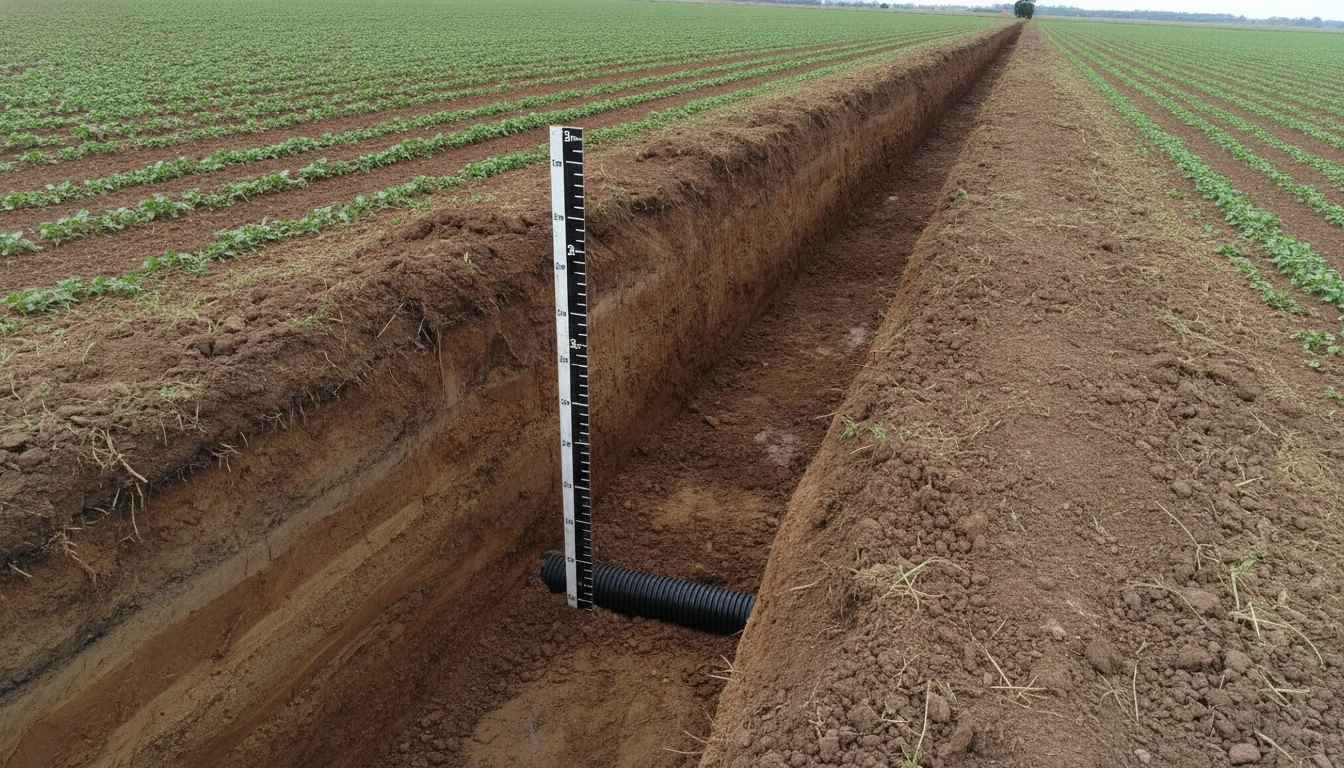


Before getting into the details, here’s the complete installation sequence:
Learn how to install corrugated pipes correctly and make the most of the benefits of HDPE conduits in your electrical, sanitation, or drainage project
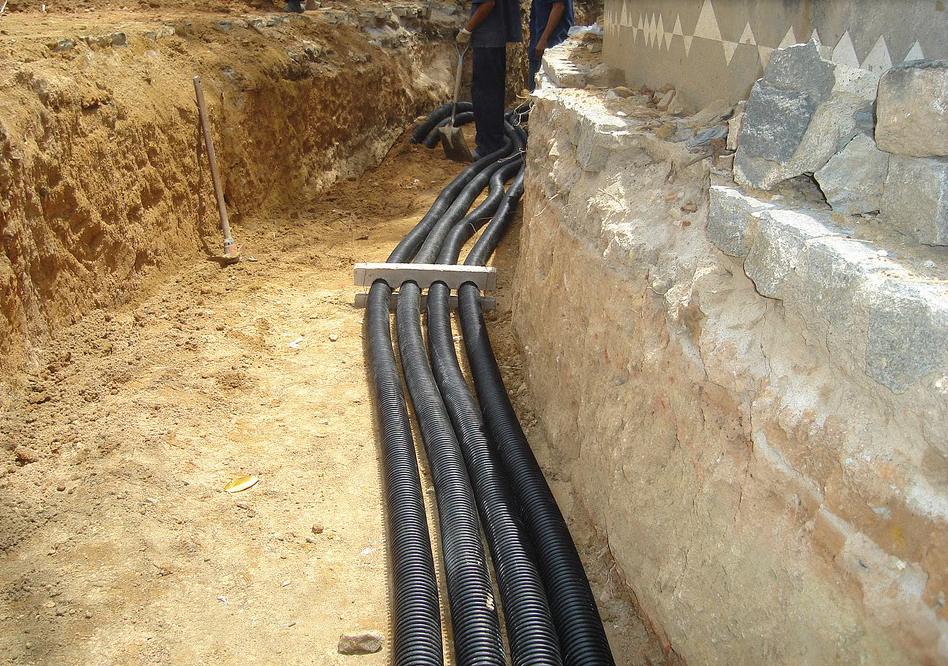
Effective solutions for basic sanitation, electrical, telecommunications, and urban and rural drainage projects, corrugated pipes are manufactured from HDPE (High-Density Polyethylene), a lightweight, non-toxic, flexible material that is resistant to chemicals and physical compression. Thanks to these characteristics, they are excellent cost-effective alternatives when compared to pipes made from other materials such as concrete, PVC, and galvanized iron, for example.
Because of these advantages over other types of piping, with each passing year, the product gains more traction in various construction projects. When properly installed, they have a service life of up to 75 years and offer lower installation costs and reduced installation time. However, despite their popularity, how to install corrugated pipes remains a very common question among engineering professionals and builders.
If you also have questions about how to harness the full potential of corrugated pipes in your project, we recommend reading the following article. In it, you’ll find all the information you need to install corrugated pipes correctly and ensure the efficiency of your electrical, plumbing, or drainage project. Read on!
So, how do you install corrugated pipes?
- Marking and leveling — define the route and check the slope specified in the project;
- Trench excavation — to the appropriate width and depth (details below);
- Preparing the bed — level the bottom of the trench; in wet trenches, use gravel and sand;
- Pipe laying — position the pipes centrally, maintaining a 5 cm gap between pipes and between pipes and the walls;
- Joints and curves — connect the sections using slip-on couplings; in gentle curves, the HDPE fits without connections;
- Geotextile wrap (drainage) — wrap the perforated pipe with geotextile fabric to filter water and prevent clogging;
- Layered backfill — fill and compact progressively (manually next to the pipe, mechanically starting 20 cm above it);
- Signage — install warning tape in accordance with the utility company’s standards.
Trench excavation
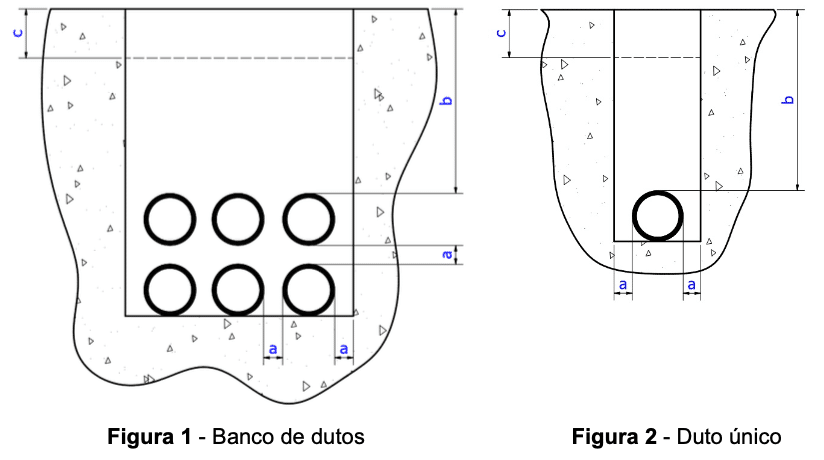
The trench is where the corrugated pipes will run. The width of the trench depends on a number of factors, such as site conditions, the type of pipe bed designed, and the distance between the pipes.
To determine how to install corrugated pipes in parallel, it is best to leave a 5 cm space between the pipes and between the trench walls. Following these guidelines is important, as it aids in soil compaction and the distribution of forces on the product.
As for the depth of the trench, the recommendation varies depending on surface traffic loads. For lighter traffic, the distance to the start of the first pipe should be at least 60 cm. However, for loads exceeding 20 tons and depending on the soil type, this distance may be as much as 1 m.
How to install corrugated pipes in dry trenches
Although it is recommended to use a thin layer of sand up to 10 cm at the base of the pipes, depending on the soil type and trench bed formation, this is not necessary as long as a distance of at least 5 cm between the pipes and the trench wall is maintained. In addition, a depth of at least 60 cm must always be maintained.
In this case, however, mechanical compaction of the trench is required up to a depth of 20 cm from the surface, in addition to manual compaction for the remainder of the trench.
How to install corrugated pipes in wet trenches
In the case of wet trenches, however, the use of sand is not optional; on the contrary, it is essential. In addition to the layer of sand, the trench must also include a layer of gravel to keep the HDPE pipe away from the damp base of the trench.
Therefore, it is important to place a layer of crushed stone at the bottom and up to 10 cm of sand over the crushed stone. This type of preparation not only reduces moisture in the trench but also helps form a level bed for better placement and installation of the pipe runs.
When installing corrugated pipes in damp trenches, compaction should be done manually between the pipes and mechanically between the ground surface and the start of the first row of pipes.
Summary: Trench depth and preparation
| Situation | Minimum depth | Preparation |
|---|---|---|
| Light traffic | 60 cm to the first pipeline | Sand optional; mechanical compaction up to 20 cm and manual for the remainder |
| Loads > 20 tons | May exceed 1 m | Depending on soil type; debris-free > 30 cm |
| Dry trench | ≥ 60 cm | Sand layer up to 10 cm (optional); 5 cm space between pipes and walls |
| Wet trench | ≥ 60 cm | Gravel at the bottom + up to 10 cm of sand over the gravel (essential) |
Slope, joints, and geotextile
Three factors make a difference in the final result of the installation:
- Slope (gradient): in drainage and sanitation projects, maintain a slope of 1% to 2% (or as specified in the hydraulic design) so that water flows by gravity to the outlet;
- Seams between sections: join the pipes with slip-on couplings. Since HDPE is flexible, it forms smooth curves without the need for fittings, reducing the number of seams;
- Geotextile wrapping: in underground drainage, wrapping the perforated pipe with geotextile fabric creates a filter that prevents fine particles from entering and the system from clogging.
Tips for the perfect installation of corrugated pipes
- In the case of limestone soil, an intermediate layer of sand is required between the pipe and the soil itself, as there may be rock particles in the soil that could damage the pipe;
- To install corrugated pipes in areas with lower surface loads, there should be no debris such as boulders, stones, or hardened clods of earth to a depth of 30 cm from the surface. To avoid this problem, it is recommended to use sand to ensure proper compaction. In locations with higher loads, it is recommended to extend the debris-free depth to more than 30 cm;
- The use of warning tape must comply with the regulations of the local electric utility.
Techduto Corrugated Pipes
Techduto is a Brazilian company specializing in the manufacture and distribution of HDPE corrugated pipes for various construction projects. Over 30 years in the market, our brand has built a diverse product portfolio capable of meeting a wide range of construction needs.
Our branches, strategically located in the Northeast and Southeast regions of Brazil, enable us to quickly meet our customers’ demands and offer more competitive prices. As a point of distinction, we offer personalized service and are always seeking to create innovative, high-quality products for various needs.
Currently, Techduto ensures the efficiency of civil construction projects through the following product lines:
Techduto
The corrugated pipes in the Techduto line are recommended for underground installations of electrical or telecommunications cables, as they protect the cables from any damage that could interfere with the system’s operation. Made of HDPE, they are impact- and crush-resistant, non-toxic, and flexible, allowing them to bend without requiring joints.
Techduto DW
The HDPE conduits in the Techduto DW line, on the other hand, are recommended for electrical, telecommunications, and sanitation projects. They feature a corrugated exterior and a smooth inner wall (double-wall construction), making them more durable and facilitating the passage of cables or fluids.
As such, they are ideal for projects requiring greater protection for electrical cables or data transfer lines. For those wishing to learn how to install corrugated pipes, it is important to note that this product’s 1,000N strength ensures a lower backfill height during installation.
Geotextile Mats
In addition to corrugated pipes, which are manufactured in-house, Techduto is also a supplier of Bidim geotextile mats. These are indispensable when installing corrugated pipes, as they act as filters, preventing particles from entering the drainage pipes and compromising the system.
In this article, you’ve seen a practical guide on how to install corrugated pipes prepared by Techduto, but it’s important to note that these are general recommendations. Before installation, the contractor must also observe the technical standards in effect for the specific situation, such as soil type, rainfall, loads, and other site conditions.
Still have questions about how to install Techduto corrugated pipes? Contact us and speak with our team; we’ll be happy to help you.