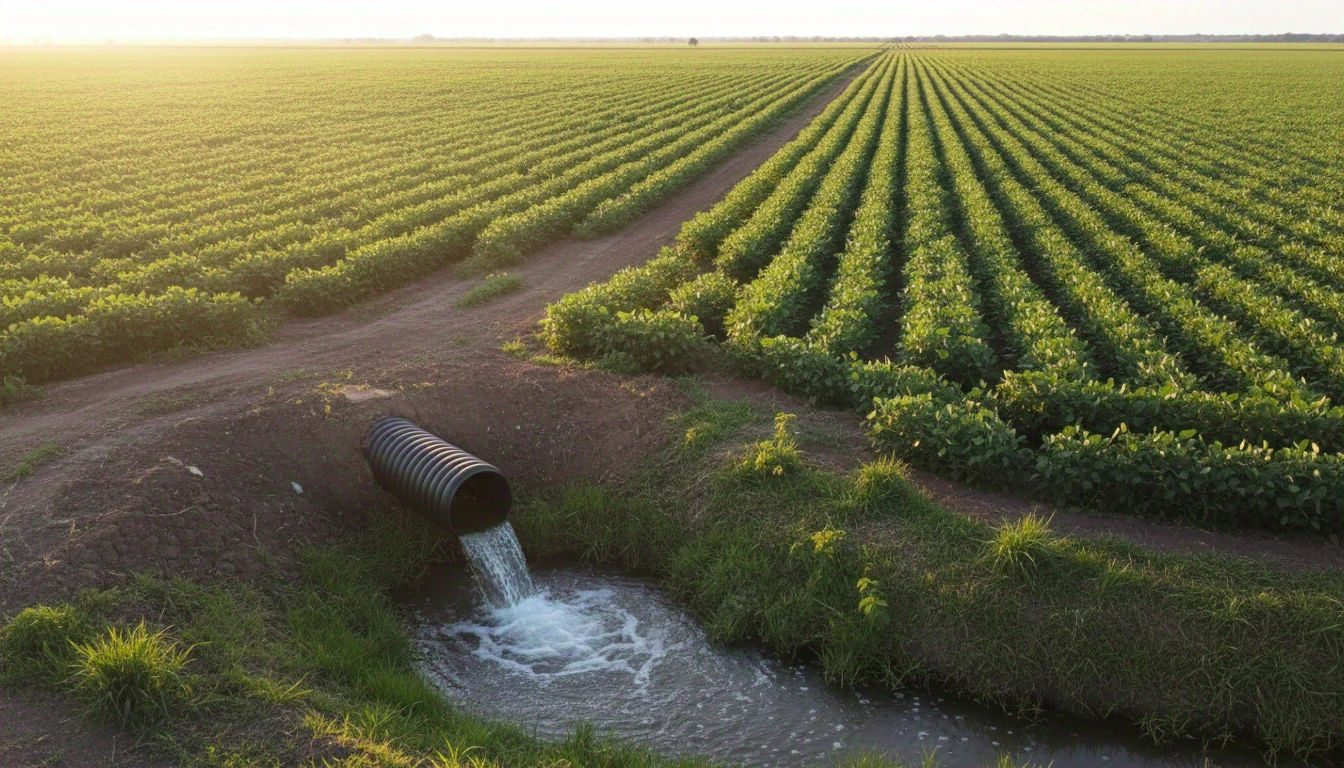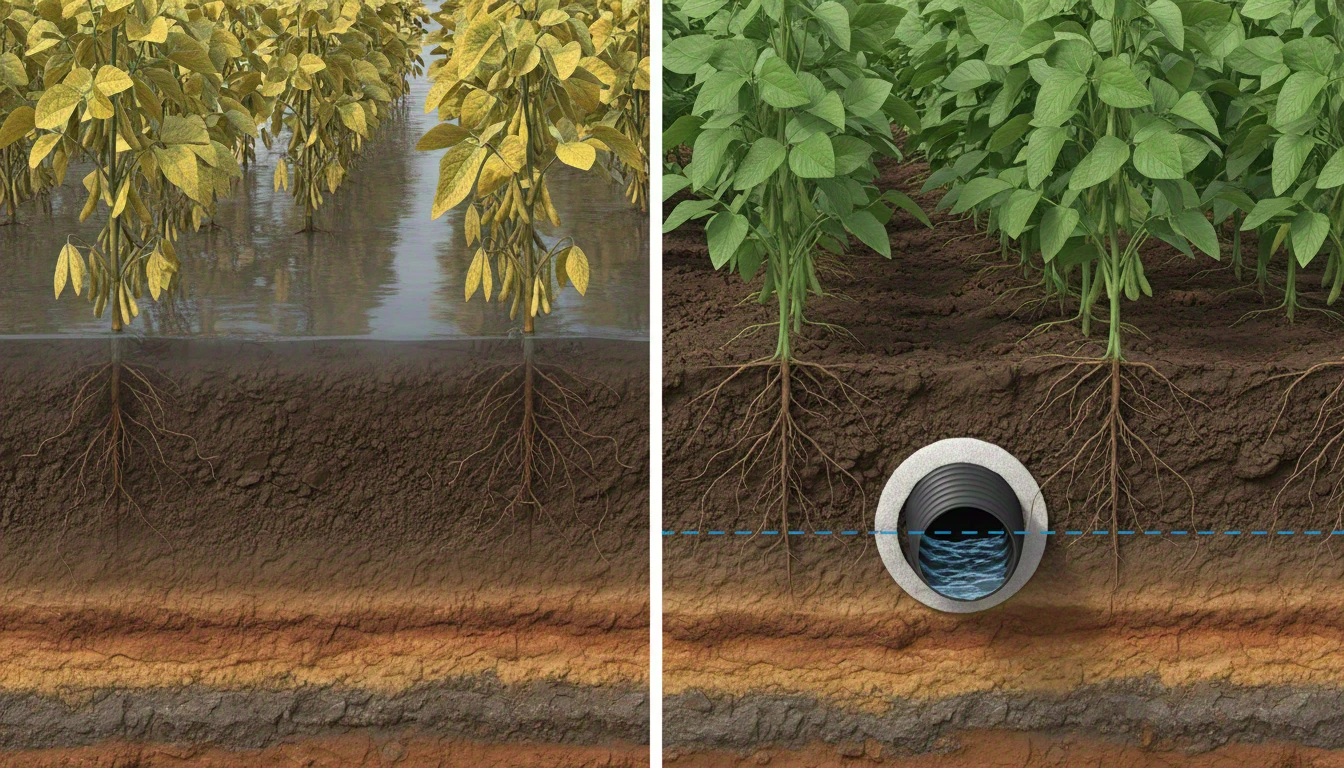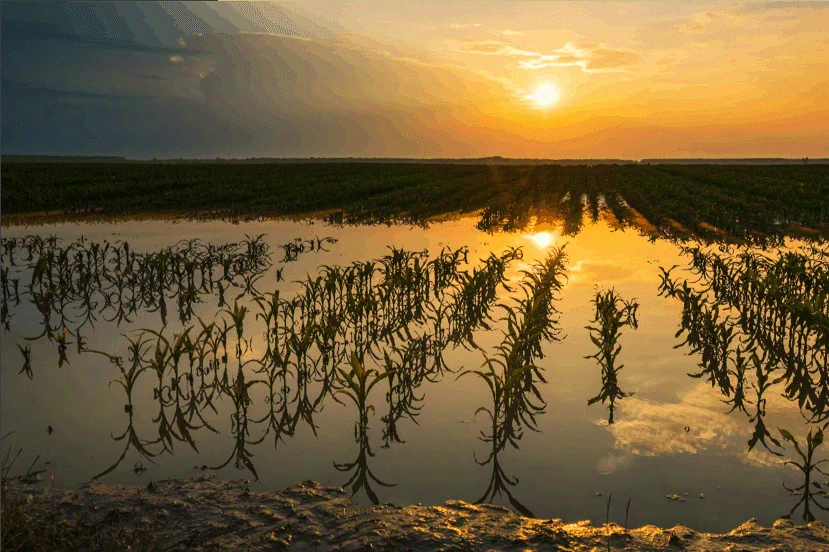


"Let's dig deeper to solve it once and for all" is one of the most expensive decisions made when designing an agricultural drainage system. The intuition seems obvious: the deeper the drain, the more water it captures, the faster the problem disappears. However, in a large part of Brazilian soils, this logic doesn't hold up — and digging deeper than necessary costs more in excavation, pipe, and labor without delivering any real gain in efficiency.
Why “deeper” is not synonymous with “more efficient”
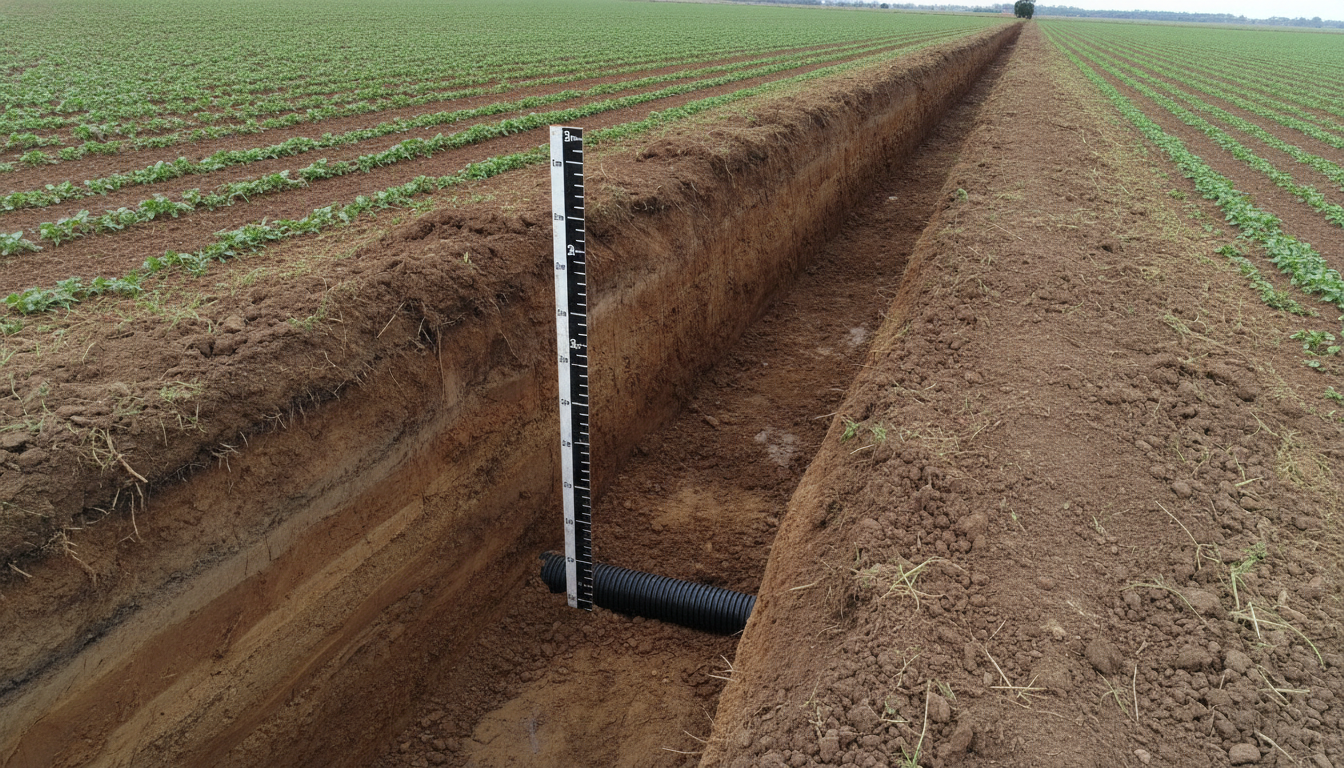
A subsurface drain works by capturing water that moves laterally through the soil profile until it reaches the pipe. This movement depends on the soil’s hydraulic conductivity — the ease with which water passes through pores. In soils with low hydraulic conductivity (clayey, denser soils), water moves slowly regardless of the drain’s depth. Digging an extra 30 cm doesn’t make water arrive faster — it only increases the volume of soil removed and the cost per linear meter.
Brazilian research evaluating the economic sizing of drain depth and spacing (ESALQ/USP, in a study on sugarcane, simulating depths from 0.20 to 2.00 m) shows exactly this: there is a depth range that minimizes the total system cost — below it, the system drains poorly; above it, the marginal return disappears, and the cost only increases. It’s not “the deeper, the better” — it’s a curve with an optimal point.
What really determines the spacing between drains
If depth alone doesn’t solve the problem, what makes the system work is the combination of depth + spacing, calculated from two physical soil properties: saturated hydraulic conductivity and drainable porosity. It is this pair of numbers — not a fixed rule of meters — that defines how many drains per hectare the project needs. The underlying logic (Hooghoudt’s equation, adopted in drainage studies in Brazil from EMBRAPA to universities like UFLA and ESALQ) relates water flow to the square of the distance between drains: doubling the spacing without adjusting the depth reduces drainage capacity much more sharply than doubling it.
In practice, this means that two adjacent fields — one clayey, the other sandy — may require completely different drain grids even if they are on the same farm, under the same rainfall.
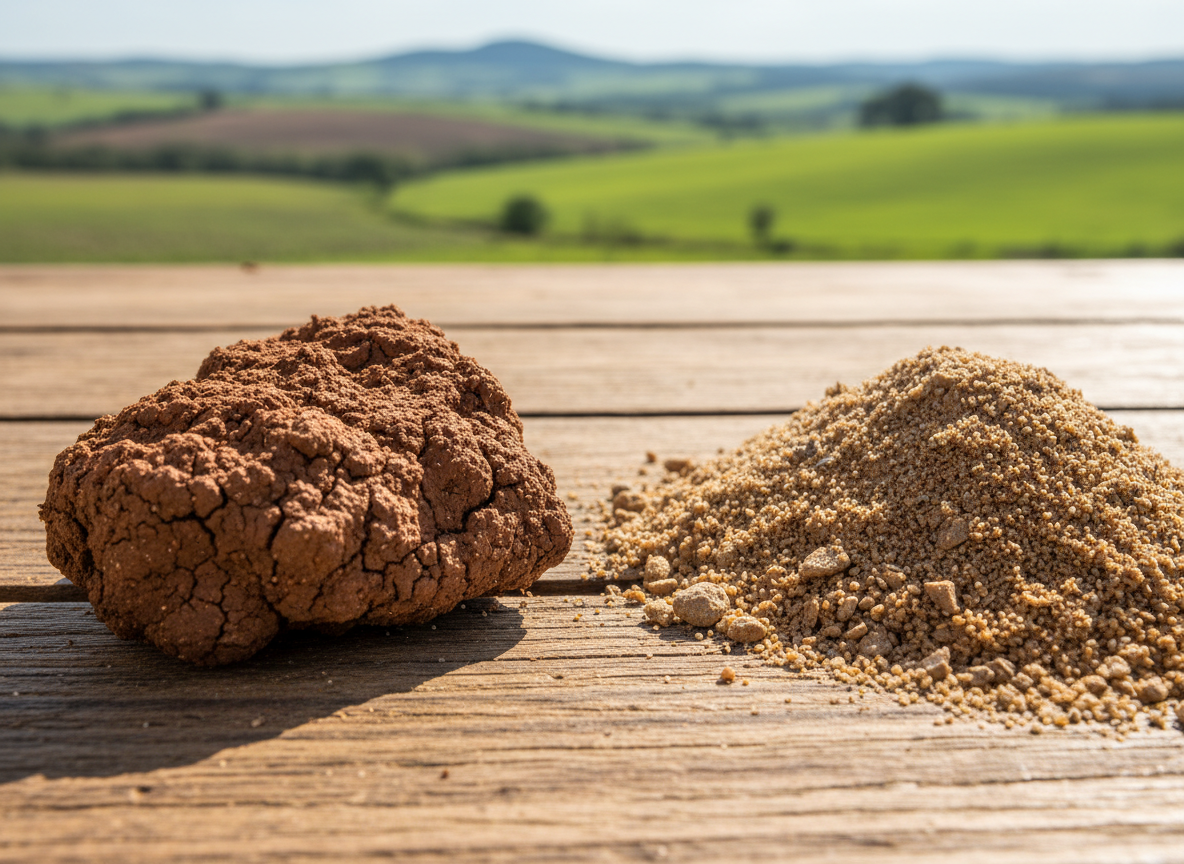
Clay vs. sand: why each soil requires a different grid
In clayey soils, water moves slowly and laterally over short distances — therefore, the system needs drains closer together to capture the necessary volume before the excess compromises the roots. In sandy soils, hydraulic conductivity is much higher: water travels longer distances in less time, which allows for wider drain spacing without losing efficiency.
It is a mistake to apply the same design grid to areas with different textures just because they are on the same property — or worse, to copy the spacing used on a neighboring farm without assessing the properties of one’s own soil. The most common result of this error is the opposite of what is expected: an undersized system in fine soil (too few drains, too far apart) or wasted investment in coarse soil (excess pipe where it was not needed).
Why this isn’t a simple calculation
There is a temptation to simplify depth and spacing into a generic table — “for this type of soil, use X meters.” The problem is that actual hydraulic conductivity varies considerably even within the same textural classification and depends on factors that only a field survey can reveal: compaction history, presence of impeding layers, variations in texture with depth, groundwater table level during the critical time of year. Two areas classified as “clayey” may require very different spacings.
This is why the sizing of depth and spacing — the actual calculation, with the parameters of the specific soil of the area — is the job of the Techduto engineering team, not a calculation that can be replicated from one plot to another. What this article explains is the logic behind the decision; the right number for your area requires a technical survey.
What to do next
If you are planning a drainage system and want to understand why the technical proposal did not follow the same depth or spacing as another area you know, the answer usually lies in the soil’s hydraulic conductivity — not in a design error. The Techduto engineering team conducts this survey and sizes the system for the actual conditions of your area, using products like Techdreno for fine-textured soils (with an integrated filter that prevents silting in tighter spacings) and Techdreno DW where higher flow rates and mechanical resistance are required.
To understand the signs that your area needs drainage before reaching the sizing stage, see 7 signs that your crop needs drainage. Technical terms such as hydraulic conductivity and drainable porosity are detailed in the Drainage Glossary.