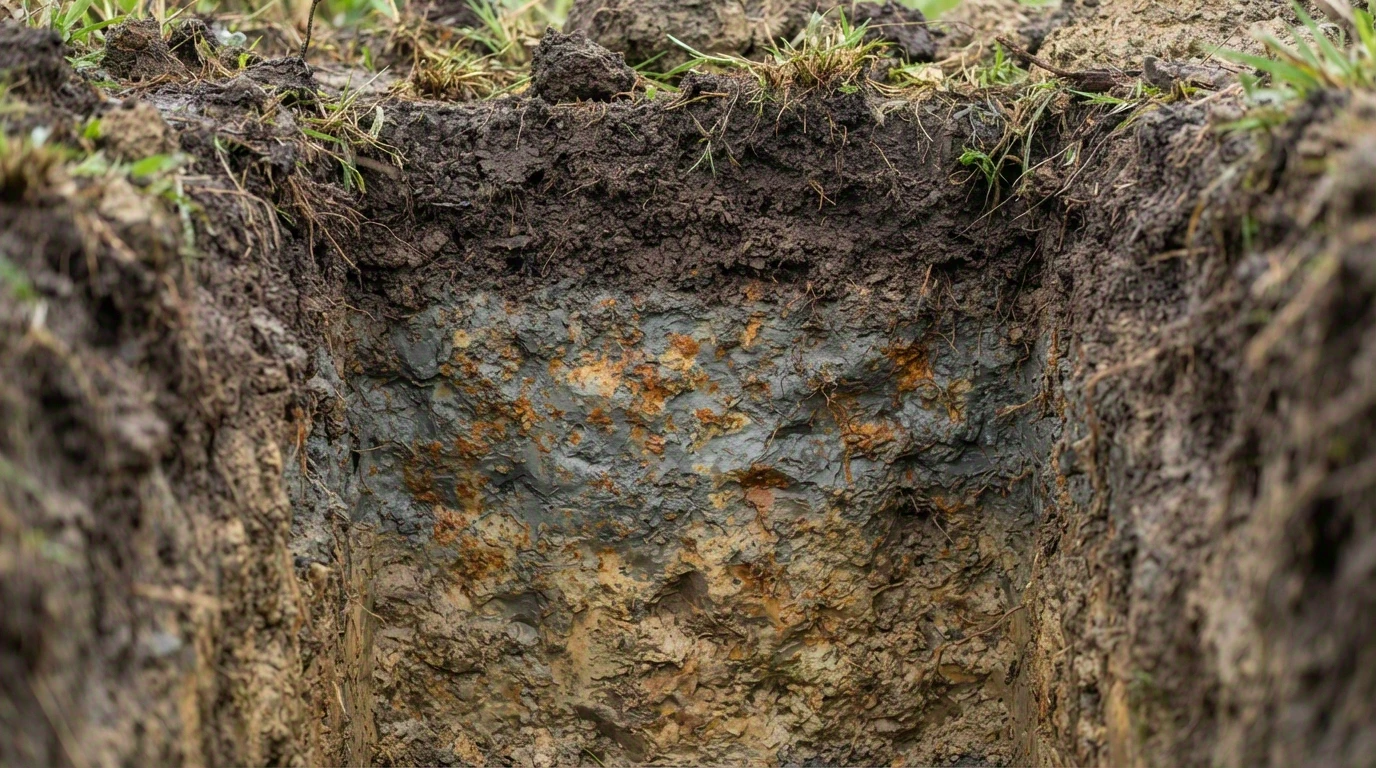

Excess moisture promotes the development of crop diseases and affects the yield of various crops. Learn how to prevent it.
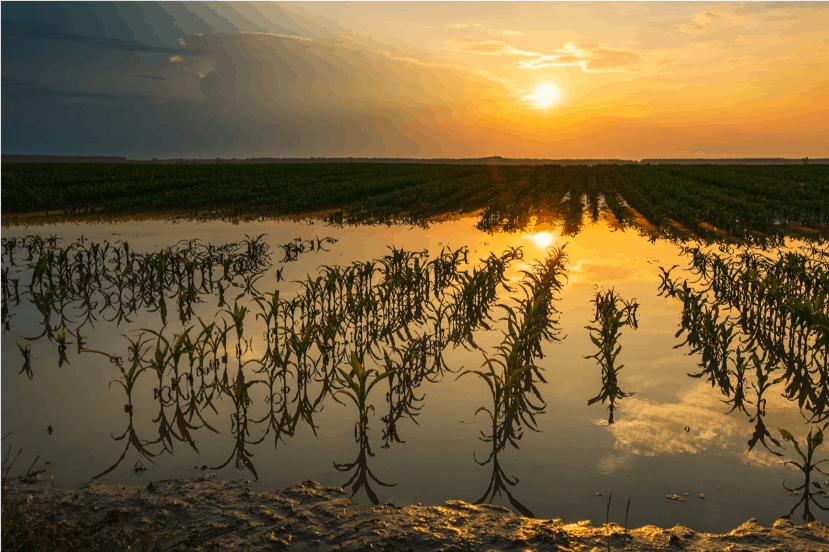
There is no doubt that effective control of soil moisture is very important for agricultural production, as excess moisture can be very harmful. It can be caused by artificial factors (irrigation processes) or natural factors (excessive rainfall), the latter being the most common. According to the Government of the State of Paraná, due to excess moisture in the state, the 2021 grain harvest was projected to be 3% lower than the previous year’s.
Of course, rain isn’t always bad for farmers. In the right amount, it’s essential for any type of crop. However, in excess, it makes harvesting difficult, promotes the emergence of various crop diseases, and, in more severe cases, causes roots and fruits to rot.
Fortunately, all of this can be minimized and even prevented through soil drainage. When done correctly, it improves soil quality and enables agricultural production. In this article, we’ll delve a little deeper into the subject so you can understand why agricultural drainage is so important.
Excess moisture and the soil
From childhood, we learn how important water is for the soil and for plants. After all, it is responsible for delivering nutrients and minerals to the soil, which are absorbed by plants during their nutritional processes.
However, when there is heavy rainfall in agricultural regions, problems begin to arise. Just to give you an idea, the lack of sunlight slows down photosynthesis in plants, which compromises their metabolism and results in weaker grains that are more susceptible to pests.
Also due to the lack of sunlight, there is no way to dry the grains. In Tocantins, for example, the solution found by many farmers has been to take the soybeans to the state of Maranhão to dry. In Mato Grosso, approximately 16% to 22% of the region’s soybean production was found to be damaged at the height of the problem.
In addition to impairing plant metabolism and affecting grain quality, excess water also hinders the movement of machinery and slows down productivity. It also promotes soil salinity, which affects the development of plant roots.
How can excess moisture be prevented? Soil drainage is the solution
The best way to avoid such losses is prevention. Is it possible to guarantee that rainfall won’t increase? No, but it is possible to control soil moisture through proper drainage to respond appropriately.
Simply put, drainage is the process by which water is removed from an area. In the soil, this improves aeration, structure, and resilience, as well as maintaining a more suitable temperature.
Aeration
When we talk about aeration, we refer to the levels of oxygen present in the soil, which are drastically reduced by excess water. Without oxygen, roots do not develop and there is a nitrogen deficiency. As a result, plants become weak and yellow.
Structure and resistance
As for structure, excess moisture makes the soil less resistant to the traffic of machinery and equipment, resulting in compaction. This, in turn, reduces soil permeability and impacts root growth.
Temperature
It should not be forgotten that wetter soils are harder to warm up. However, some crops require rapid warming for quality production. Fortunately, underground soil drainage positively affects this heat conductivity.
Benefits of Soil Drainage
As you can see, agricultural drainage improves soil temperature, resistance, and oxygen levels. However, these are not the only benefits of drainage. In addition to these, there are others that equally deserve your attention:
Prevents nutrient leaching
Excessive rainfall causes a phenomenon known as soil leaching, characterized by the movement of important nutrients such as potassium, nitrogen, and sulfur. The high volume of water carries these nutrients away from the roots and affects plant growth.
With underground drainage, however, this practically never happens, as it promotes the percolation of excess water; in this process, the nutrients remain in the soil, which acts as a filter for the water. The goal is precisely to remove excess water from within the soil, keeping it healthier and more suitable for cultivation.
Reduces crop diseases
As noted above, excessive rainfall and waterlogged soil weaken plants. Consequently, there is a greater risk that fungi and other pests will damage the crop, such as:
- Rust;
- Giberella (fusarium);
- Brusone;
- Phytophthora infestans;
- Erwinia carotovora.
Contrary to this logic, proper drainage reduces the risk of these diseases. They are caused by bacteria or fungi that find excess moisture to be a favorable environment for their development.
Controls salinity
Good drainage can also better control the water table. This retains fertilizers and other chemicals applied to crops over the years, resulting in high salt concentrations.
At high levels, minerals such as chloride, sodium, and boron can impair plant root development and even cause widespread toxicity. Therefore, drainage will ensure proper salinity levels: neither too much nor too little. This also improves soil “health.”
Increases agricultural productivity
It is also worth noting that soil drainage can positively impact agricultural logistics. With waterlogged soil, neither farmers nor machinery can reach the fields. Therefore, investing in agricultural drainage is also an investment in efficiency.
And not only that: increased productivity stems from the fact that, with moisture control, roots can grow deeper into the soil. This, in turn, results in a larger and more productive plant.
How do you drain the soil?
It is well known that farmers use various drainage solutions to address excess moisture. The most common methods involve using underground drainage pipes, digging channels, ditches, or tunnels to allow water to flow away.
However, certain precautions must be taken. First, a topographic survey is conducted on-site to determine the most efficient system and materials. Currently, High-Density Polyethylene (HDPE) plastic pipes are the most recommended, particularly because they have a long service life.
This type of pipe must be installed underground and is lighter than the market average: 1/8 the weight of its steel equivalent. Additionally, it is easy to install, making it more accessible to farmers with limited financial resources. It is also flexible and can be bent into small curves.
An important feature of HDPE corrugated drainage pipes is that they help prevent erosion. This means that farmers will spend little on maintenance even in areas with harsher climatic conditions. Their chemical resistance is also noteworthy.
Overall, it is important to pay attention to all these points when designing a drainage system. Farmers should also check whether the raw material used in the manufacture of the drains is toxic or not, as this can contaminate the soil.
Investing in a drainage system with safe and durable pipes pays off in the medium term, as, when properly installed, they last over 50 years.
Types of drainage to control excess moisture in the soil
In addition to the right material, it is important to know that there are several types of drainage. Among the most commonly used in agriculture are surface and subsurface drainage.
- Surface drainage: This is the most well-known type and is ideal for level terrain. In this method, open ditches (also called drainage trenches) are created to drain excess water from the surface. However, it is not as effective as subsurface drainage;
- Subsurface drainage: in this case, excess moisture is removed from within the soil through drainage pipes with controlled depth and slope. When properly implemented, this is a precise, almost “surgical,” and uniform process for moisture control. Thus, it ensures greater control of the water table level and, at the same time, the availability of water for the roots at the correct depth.
How can Techduto help control excess moisture?
As you can see, there are many details involved in soil drainage. Methods and specifications will vary from project to project, but investing in quality is essential. It is through this attention to detail that a durable drainage system can be created.
Techduto offers the most comprehensive drainage line on the market, with pipes and accessories specifically designed for this purpose:
- Techdreno pipes are the classic solution for underground agricultural drainage, offering an affordable and precise way to control excess moisture;
- For high flow rates and large areas, Techdreno DW delivers high drainage capacity;
- The Bidim geotextile acts as a filtering “sleeve” around the pipe, preventing fine particles from clogging the drains.
We are a Brazilian company that has been investing in technology, quality, and innovation for over 30 years to offer the best products and meet diverse needs.
Did you like this article? Then keep following the Techduto blog to learn about other innovative solutions for soil drainage, power generation, landfills, and various other applications.