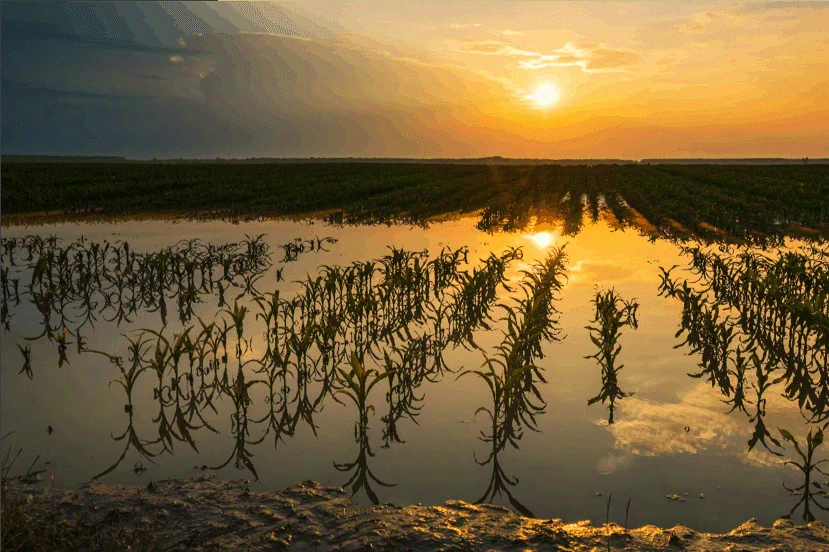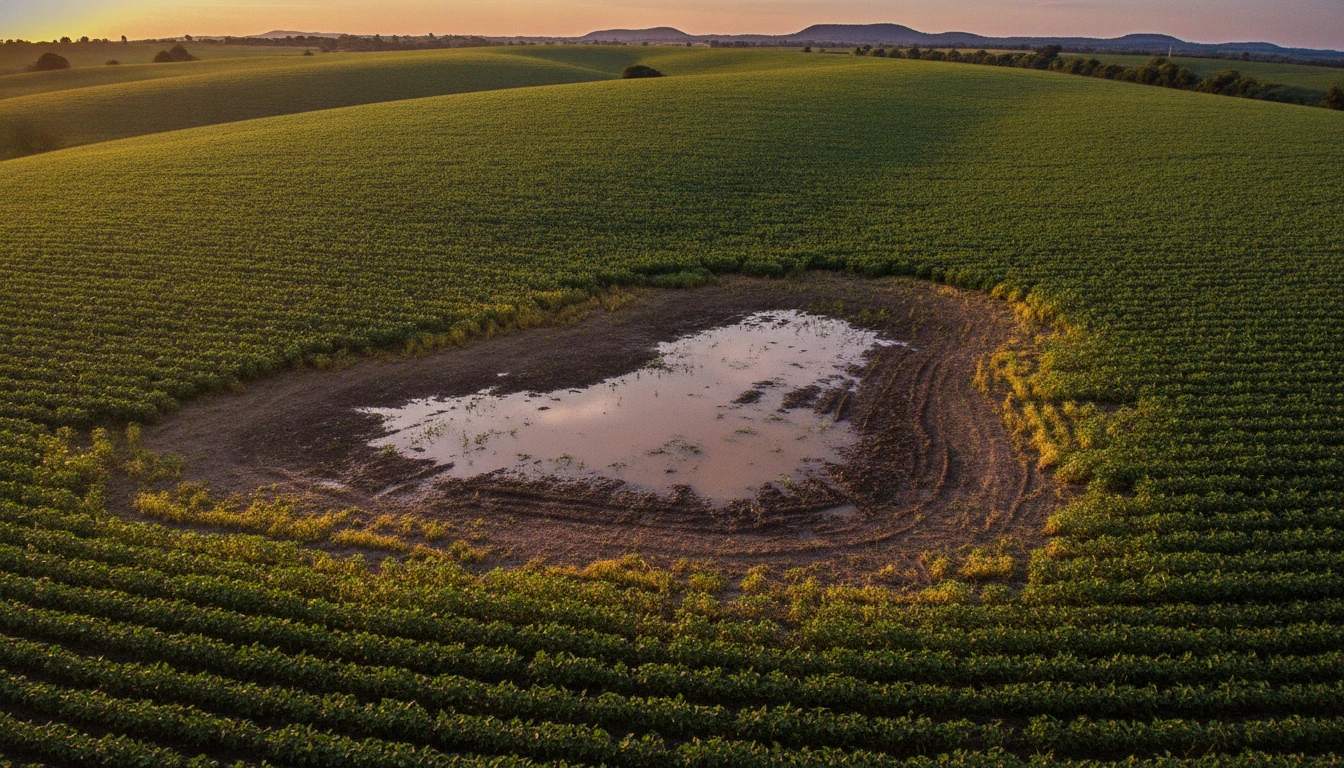


Brazil has enormous untapped potential for productivity gains through agricultural drainage.
There was a time when agriculture depended entirely on nature to function. The soil and the
climate were primarily responsible for food production. However, when the soil became too compacted, or when there was excessive rainfall, production suffered a major setback. Farmers needed a solution to keep their crops healthy and productive.
That is when artificial drainage emerged. This technique involved removing excess water from a specific area, making it suitable for agricultural production. Artificial drainage was quickly adopted in the United States, where about 47% of agricultural land is artificially drained. In Brazil, however, agricultural drainage is still rarely used, with only 1% of arable land being drained. Nevertheless, it is increasingly important for Brazilian farmers to adopt this technique to ensure the health and productivity of their crops.
| Country | Artificially drained agricultural area |
|---|---|
| 🇺🇸 United States | ~47% |
| 🇧🇷 Brazil | only ~1% |
Agricultural drainage: why do it?
Excess moisture can seriously harm the crop, even when there is no water on the surface. When the soil is waterlogged, it causes a lack of oxygen in the plant roots, leading to their partial death. Furthermore, in regions with high evaporation rates and soil that drains poorly, without artificial drainage, the soil can become saline, which impairs the absorption of water and nutrients, preventing proper plant development.
Agricultural drainage is an effective solution to these problems, as it prevents soil waterlogging and increases oxygen availability to plant roots. Furthermore, agricultural drainage has the potential to reclaim unproductive areas, making them fertile and healthy during the rainiest seasons. This is possible because agricultural drainage maintains the soil’s water balance at the ideal level.
Agricultural drainage: what are the types and how is it done?
Surface drainage with open ditches
This technique involves digging ditches or channels to allow water accumulated on the soil surface due to rainfall to flow away. However, this form of drainage has some drawbacks. For example, water below the soil surface is practically not drained, which can lead to moisture accumulation precisely in the area of the plant roots. This can hinder plant development and lead to increased pesticide use by the farmer.
In addition, open drains are exposed to chemicals, which can contaminate the water. Soil erosion and reduced control over the water table are also possible, which can result in significant loss of arable land. Therefore, it is important to carefully choose the type of drainage to be used to ensure the preservation of soil fertility and a good harvest.
Subsurface drainage
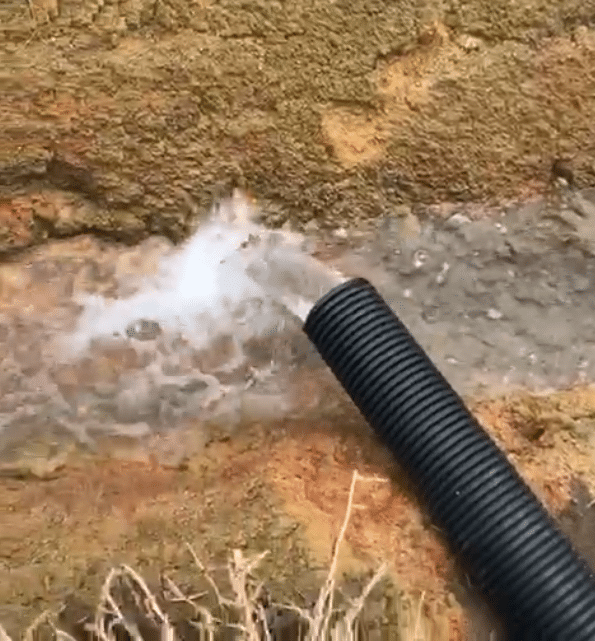
Underground drainage, on the other hand, is a more efficient solution for healthy and profitable agricultural production. It is generally achieved through the installation of corrugated pipes and geotextile fabric, allowing for control of groundwater at a depth that does not hinder plant growth.
However, many still believe that this type of drainage “dries out” the soil. Nothing could be further from the truth. In fact, the pipes are only activated when there is excess water, meaning it is essential even in arid regions. Furthermore, underground agricultural drainage offers several benefits. It removes excess salts, improving soil fertility; increases crop productivity by encouraging deeper plant roots and controlling the water table; and reduces soil erosion by filtering water and directing it to rivers and lakes free of chemical contaminants.
| Criteria | Surface drainage (open ditch) | Subsurface drainage (pipes) |
|---|---|---|
| Removes water from the subsoil | Virtually none | Yes — controls the water table |
| Moisture in the root zone | May accumulate | Maintained at the ideal level |
| Risk of contamination/erosion | Higher (exposed) | Lower (buried and filtered) |
| Loss of arable land | Yes | No |
| Use of pesticides | Tends to increase | Tends to decrease |
Why use HDPE corrugated pipes for agricultural drainage?
When it comes to underground agricultural drainage, it is important to use high-quality materials to ensure the best results. That is where the use of HDPE (High-Density Polyethylene) corrugated pipes comes in.
The popularity of these pipes is growing, especially in the United States and Europe, where average consumption stands at 400,000 tons per year, with a 10% annual growth rate. These pipes are designed for unmatched durability, ensuring a minimum service life of 50 years, provided they are properly installed and buried. Furthermore, with the right solutions, maintenance is minimal, and there is no need for replacement.
Another advantage is that HDPE corrugated pipes are lightweight, making them easy to transport and install, resulting in lower costs and reduced time. They are also flexible, meaning they are not affected by natural soil movement. Furthermore, they are highly resistant to corrosion, aggressive soil conditions, and impacts, and can be bent to tight radii without requiring maintenance. And last but not least, they are non-toxic and sustainable, adding to their list of advantages.
Agricultural drainage with HDPE corrugated pipes is with Techduto!
Our Techdreno
and Techdreno DW
lines were developed to offer excellent absorption capacity, withstand high crushing loads, and facilitate water flow.
We can help you increase your crop’s productivity! Contact us to learn more about our agricultural drainage solutions.