
CONSEMA Resolution No. 36/2026 treats both Plinthosol subtypes as equally eligible for drainage — but in practice, Haplic and Argiluvic behave like different soils underground. One has a clay layer that holds water like a bowl; the other lacks this layer and concentrates iron close to the surface. This physical difference doesn't change *if* you can drain — it changes *how* the project needs to be designed.
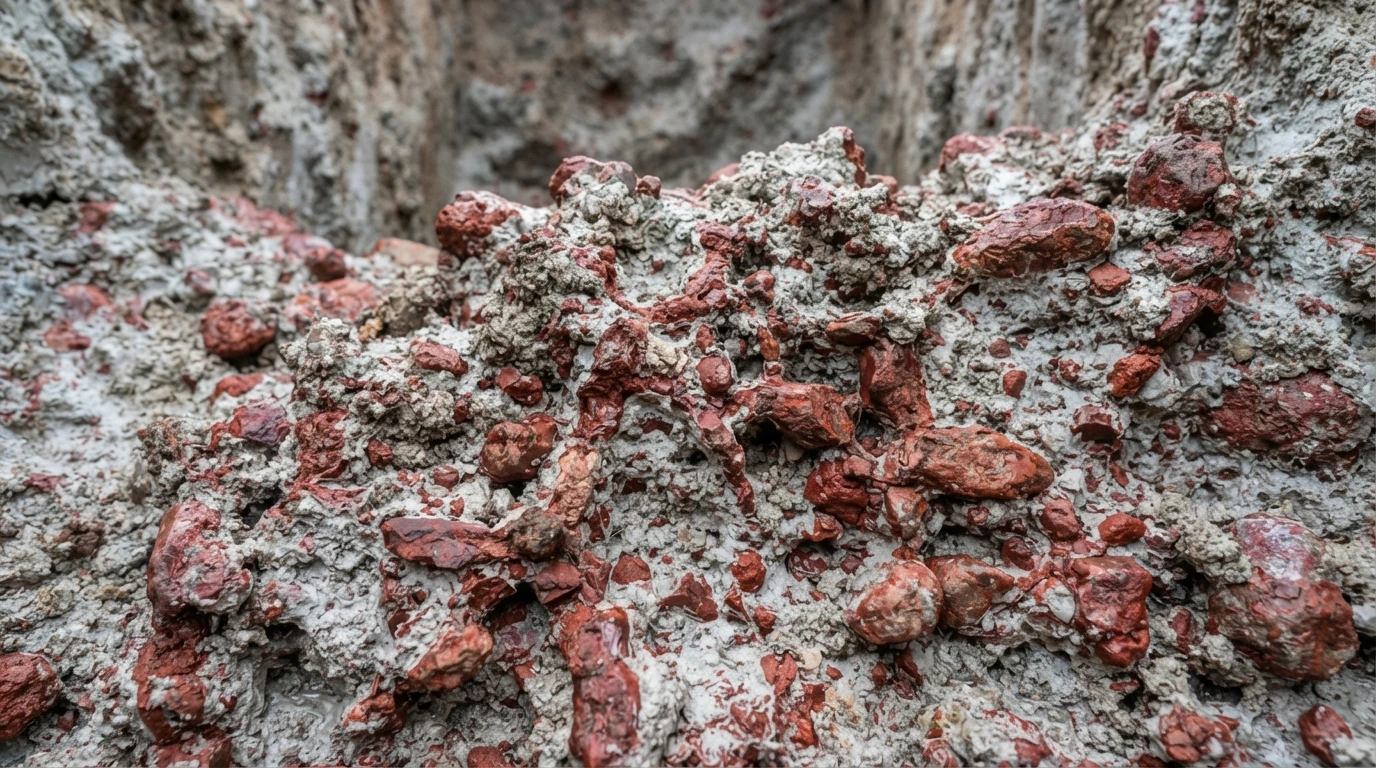
The Two Soils the Law Calls “Plinthosol”
If you’ve read our article on the technical eligibility criteria, you already know that Resolution 36 only permits agricultural drainage in Plinthosol — a mineral soil with segregated iron concentration (plinthite) that acts as a cementing agent. What this general framework doesn’t detail is that the law recognizes two subtypes with very different physical structures, and the difference between them isn’t just a matter of report nomenclature.
The distinction lies literally in the presence or absence of a specific layer: clay accumulation below the surface horizon. One subtype has this layer, the other doesn’t. It is this layer — present or absent — that changes the hydraulic behavior of the entire soil.
Argiluvic Plinthosol: The Clay “Bowl” That Retains Water Below
Argiluvic Plinthosol has, below the A horizon (the surface layer), a horizon or layer of clay accumulation. Physically, this layer functions as a low-permeability barrier — water infiltrating through the surface horizon descends until it encounters this more clayey and compacted layer, and from there, vertical movement abruptly slows down. It’s the same principle as a bowl: water accumulates on top of the layer, not underneath it.
This behavior explains why the standard describes drainage in this subtype as “variable — may have temporary water excess to prolonged excess during the year.” The depth and thickness of this clay layer determine whether waterlogging is transient (heavy rain, drains in days) or chronic (the layer is thick and continuous enough to keep water stagnant for weeks). For a drainage project, this means that the effective depth of the drain in relation to this clay layer is as important as the depth in relation to the plinthic horizon itself — a topic we detail in the article on maximum depth and layout.
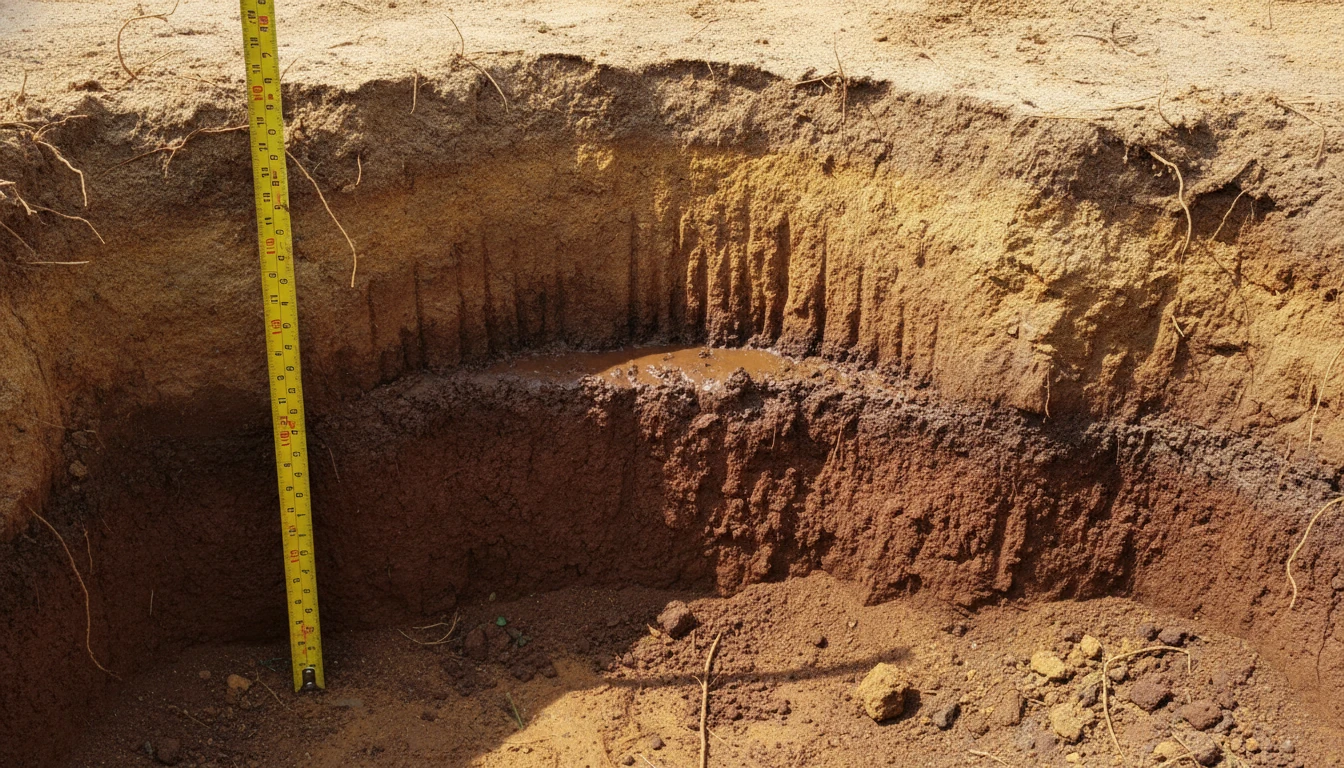
Haplic Plinthosol: Iron Concentrated Near the Surface
Haplic Plinthosol lacks this clay accumulation layer. In compensation, it concentrates a large volume of plinthite within the first 40 centimeters of depth — much shallower than Argiluvic typically presents. It typically occurs on flat or gently undulating terrain, in depressed areas where surface runoff is naturally slow: it’s not the clay retaining water there, but the topography itself associated with the surface iron concentration.
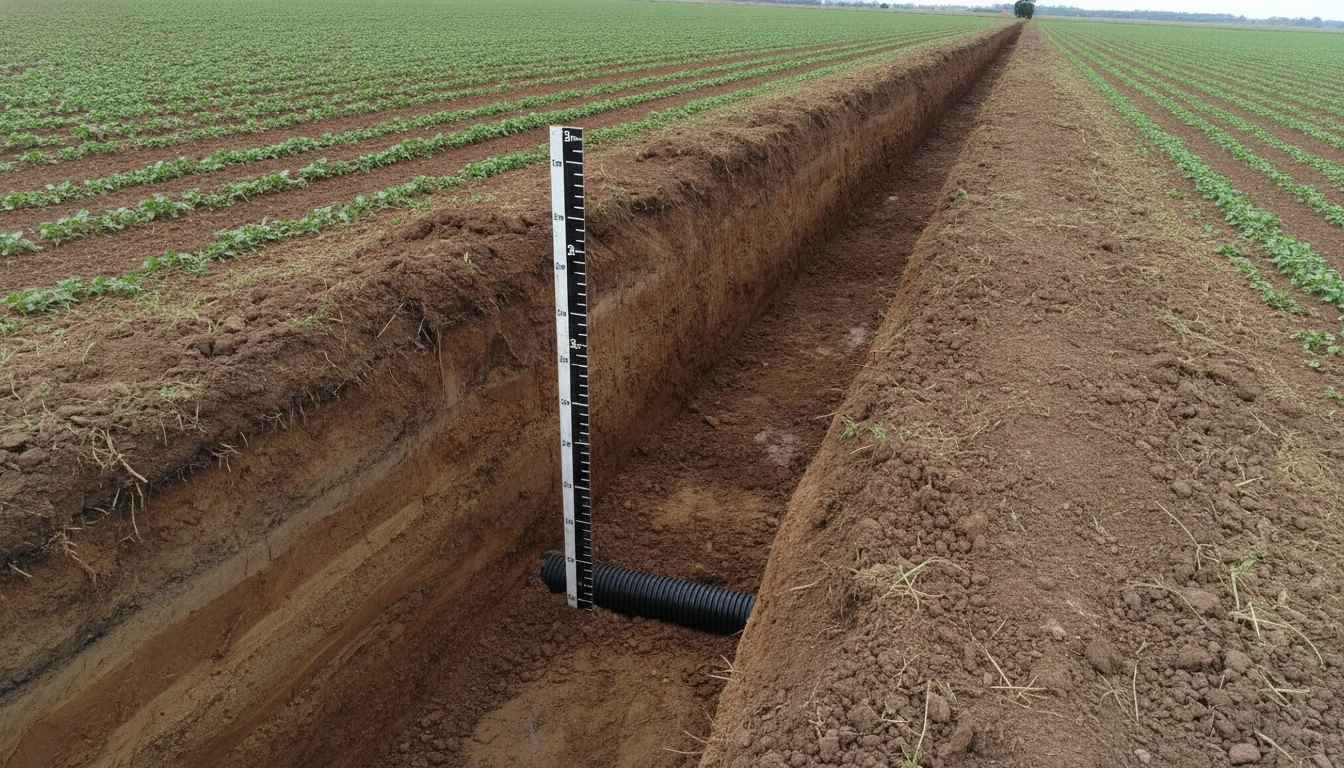
In project practice, this is a double-edged sword. On one hand, without the retentive clay layer, water tends to move more freely through the profile — which might suggest simpler drainage. On the other hand, the concentration of plinthite within the first 40 cm drastically reduces the available depth margin for installing the drain without exposing the plinthic horizon, which Resolution 36 prohibits. In Haplic soil, the depth “ceiling” is usually shallower than the 1.50 m that the law allows as a general limit — because the plinthite appears sooner.
Why the Distinction Isn’t Just Bureaucracy
From a legal standpoint, both subtypes are equally eligible, provided they meet the minimum clay content and agricultural aptitude requirements. But from an engineering perspective, treating them as the same soil is the kind of simplification that leads to undersized projects or poorly positioned drains. A project designed for Argiluvic — considering the deeper clay barrier — installed in a soil that is actually Haplic runs the risk of positioning the drain above the actual plinthite concentration without realizing it. The reverse is also true: treating an Argiluvic as if it were Haplic can underestimate how long water remains retained above the clay layer.
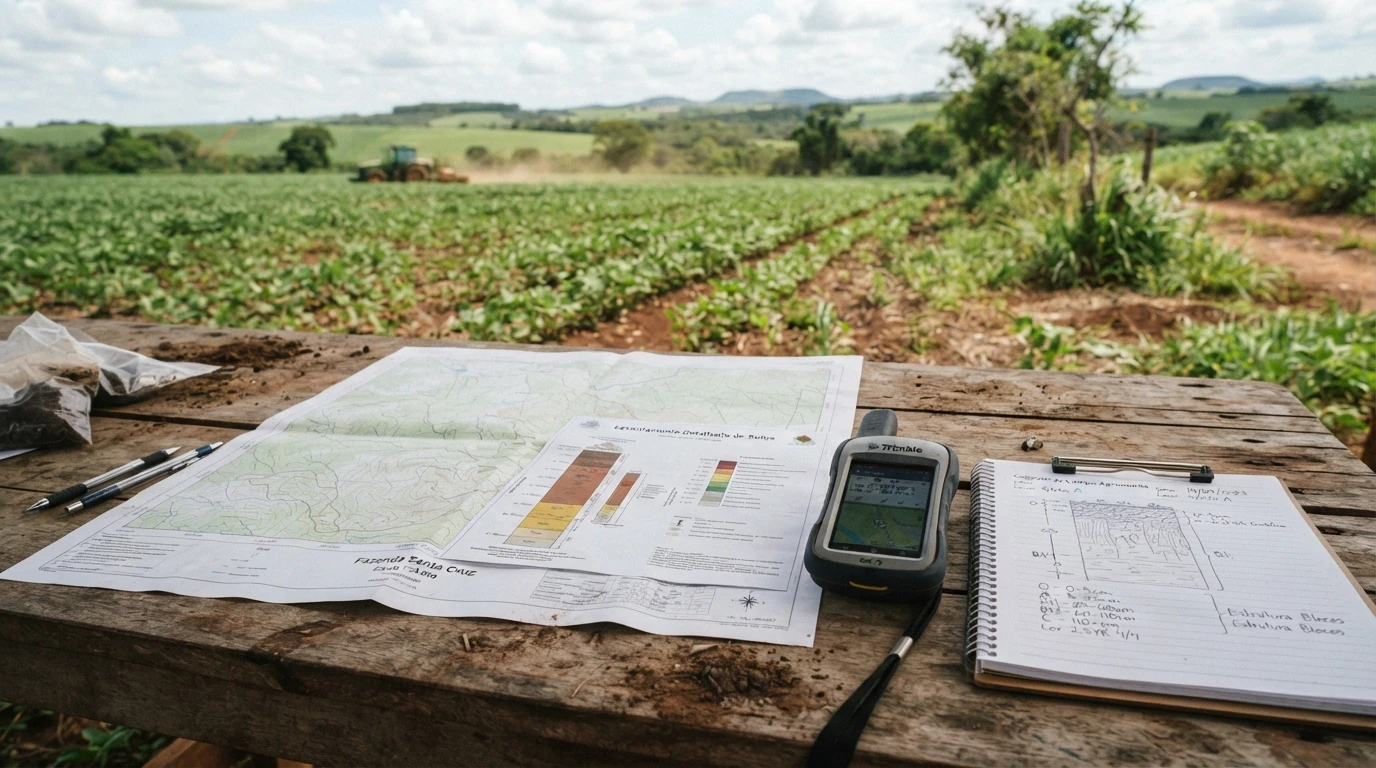
This is why the standard requires pedological characterization to specifically identify which of the two subtypes is present — it’s not enough to generically state “it’s Plinthosol.” This identification goes into the technical report signed by a qualified professional, with field soil study and laboratory analysis.
The Same Chemistry That Causes Ochre
It’s worth reinforcing the link to a topic that Techduto already covers in depth: the plinthite that defines the two Plinthosol subtypes is iron segregation — the same chemical origin of the ochre that clogs drains in Brazilian ferruginous soils. A soil eligible for drainage according to Resolution 36 is, by definition, a soil at risk of ochre — the law that authorizes drainage and the technical risk that can render it useless stem from exactly the same element in the soil.
The First Step
Knowing whether your area is Argiluvic or Haplic Plinthosol isn’t an academic distinction — it’s a piece of data that changes project depth, clogging risk, and drain protection strategy. This identification only comes from field pedological study with laboratory analysis, not from isolated visual observation.
If your farm in MT is in this characterization phase, the drainage diagnosis helps organize what to investigate in the field before the technical report, and Techduto’s engineering team can support the project as soon as the soil subtype is defined — indicating when the Techdreno KC — whose micro-fissures drain and filter simultaneously, eliminating the need for geotextile wrapping — is the right specification to reduce clogging risk in either subtype.