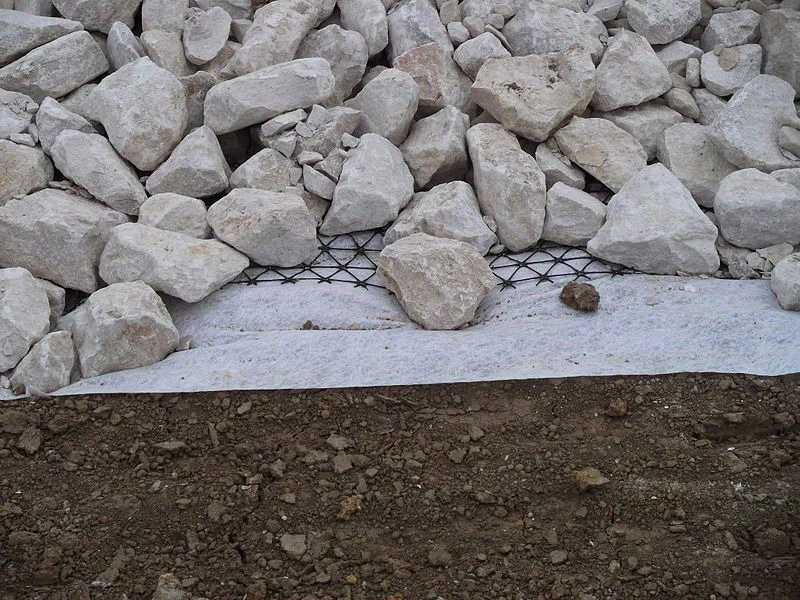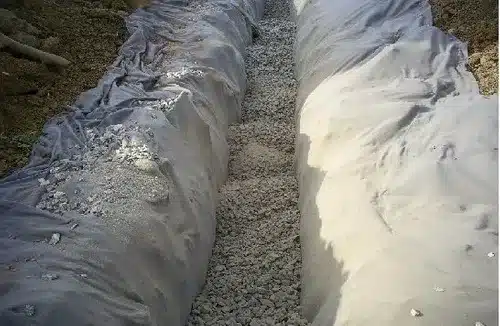

This permeable product separates, drains, protects, filters, reinforces, and stabilizes the soil, acting as a powerful ally for drainage systems. Discover the original Bidim geotextile mat

Whether for drainage, reinforcement, or separating layers, the Bidim geotextile mat is essential for civil construction. Some examples of its use include roads, ports, and landfills, particularly due to its ability to filter, separate, reinforce, protect, and drain—all characteristics of the material.
Made from polyester (PET) or polypropylene (PP), the Bidim geotextile mat is a permeable synthetic material that can be either woven or nonwoven. However, to be truly durable and functional like Bidim, the geotextile must not contain any cotton blend, as this significantly reduces the product’s durability.
What is Bidim geotextile fabric?
As mentioned earlier, geotextile mats are permeable synthetic materials. They are essential in virtually all infrastructure projects, as they act as filter elements in drainage systems. They allow water to reach the drain but prevent the passage of particles that could clog the pipe openings. Thanks to this action, HDPE pipes have a longer service life.
The two materials used in Bidim geotextile mats also provide greater durability in their application. Polyester, for example, is ideal for installation in areas subject to frequent stress. Polypropylene, on the other hand, is more resistant to aggressive substances, such as those found in mining.
Woven and non-woven
The main difference between geotextile mats lies in whether they are woven or nonwoven. In the former, the yarns are interwoven, while in the latter, the fibers are randomly arranged.
Advantages of Bidim geotextile fabric
After all, why use geotextile? In addition to being easy to install for its intended purposes, geotextile fabric is durable. It allows for work during rainy seasons and helps save on safety costs and potential damage to the construction site, ensuring the project is completed on schedule.
However, to ensure full efficiency, it is necessary to always choose the correct geotextile and apply it properly. The material must lie on a flat surface, and there should be no branches or other debris around it. Ideally, the site should be cleared before application to prevent damage to the geotextile.
Additionally, it is important to note that it is low-cost, especially when compared to other options on the market. This provides a cost-effective advantage for the construction project.
Usage
The use of geotextile fabric will depend on the specifications of each case according to the project’s needs. The good news is that, among geosynthetics, it is the most widely used. This is also due to the versatility of its characteristics, such as:
- Creep behavior;
- Tensile modulus;
- High resistance to environmental degradation and abrasion;
- Compression absorption;
- Deformation rate.
Thanks to these characteristics, its most common uses can be summarized as follows:
- Road and highway construction, especially for soil reinforcement;
- Sports fields and agricultural drainage, aiding in the filtration of debris;
- Canals and slopes for protecting riverbanks;
- Concrete curing, especially in the case of Bidim CC10;
- Soil separation;
- Concrete curing;
- Erosion control systems, known as slit fences;
- Filters in containment dikes;
- Geogrids and continuous dikes.
How to choose the ideal geotextile mat?
To select the ideal geotextile, the correct approach is to choose one that meets each specific project requirement, as not all projects are the same. The material should be selected based on the required strength. To give you an idea, there are about 15 different types of geotextiles with strengths ranging from 7 kN/m to 48 kN/m.
Of course, only a specialist can determine the best model for the project. To do so, they must consider the soil type and the intended purpose of the geotextile on the job site. If it is for reinforcement, one model may be suitable, but if it is for drainage, another will be needed. There are methods that must be followed for this selection to avoid future problems.
Assessing permeability, flow capacity, and the load volume at the site where it will be installed, among other factors, is essential. For this reason, each requirement has a different solution.
Bidim Geotextile Mat: Why Use It?
Among geotextile mats, the Bidim brand is one of the most renowned in the market, as well as being the one chosen by Techduto for its drainage pipes. The Bidim mat acts as a filter between soil particles and the pipe, ensuring the installation’s durability.
In addition, the brand’s geotextile comes with a certification report, stamped according to its intended use and model. This prevents any fraud or label swapping that could lead to the mistaken use of inferior products. But that’s not all. Bidim also manufactures various types of geotextiles, all with different characteristics. This allows them to meet the needs of different projects.
Bidim CC10
The Bidim CC10 geotextile is used for concrete curing and can be reused up to four times. Additionally, it is easy to apply, odorless, and does not stain the slab. Another important feature is that it does not develop mold, as it is 100% synthetic.
Bidim RT
The Bidim RT geotextile mat is also a highlight in the company’s portfolio. It is manufactured with continuous filaments and is 100% polyester. This nonwoven fabric has low creep and greater resistance to UV radiation, for example. Although the product is widely used as a filter element for drainage pipes, it can also be used for soil reinforcement, floor protection, and other applications.
Extradren Wavin
The Extraden Wavin geotextile mat, on the other hand, is recommended for drainage systems, as it features an HDPE membrane bonded to a layer of Bidim polypropylene geotextile. Its main function is to protect the waterproofing of walls, roofs, retaining walls, green roofs, tunnels, and other locations by collecting, conducting, and evacuating fluids.
Bidim has been a market leader for at least 40 years and is ISO 9001 certified, which is why it is committed to offering the highest quality. The brand is also part of the Geotextile Sector Quality Program (PSQ) of ABINT—the Brazilian Association of the Nonwovens Industry—and is certified by the PBQPH—the Brazilian Habitat Quality and Productivity Program linked to the Ministry of Cities.
The company also stands out for its environmental responsibility, which is reflected in each of its products, including geotextile blankets. In addition to various environmental programs, it is also committed to producing nonwovens that cause less harm to nature.
Among the brand’s products, you’ll find options such as:
- Bidim Ecomatrix and Bidim Econet;
- Bidim Geostructure Line;
- Bidim PP Line;
- Bidim RT-P Line;
- Bidim TC Line;
- Bidim VP Line;
- Neoweb;
- Bidim Drennáge Line;
- Bidim GT Line.
Techduto and Bidim: a successful partnership
Techduto is one of the companies that trusts Bidim the most, using the brand exclusively in conjunction with its Techdreno and Techdreno DW drainage pipes. This level of trust is justified mainly because Bidim does not use cotton in its products, which ensures greater strength and durability for the geotextiles.
Techduto is a Brazilian company that manufactures and supplies HDPE corrugated pipes for various projects throughout the country and in Latin America. In partnership with Bidim, Techduto ensures higher quality, strength, and durability in basic sanitation projects, as well as for highways, railroads, airports, sports fields, and agricultural plantations. Additionally, the partnership is also active in photovoltaic and wind power plants. Visit the website to learn more!