
HDPE pipes are durable, flexible, easy to install, and can be used in a variety of construction projects. Learn more in the following article
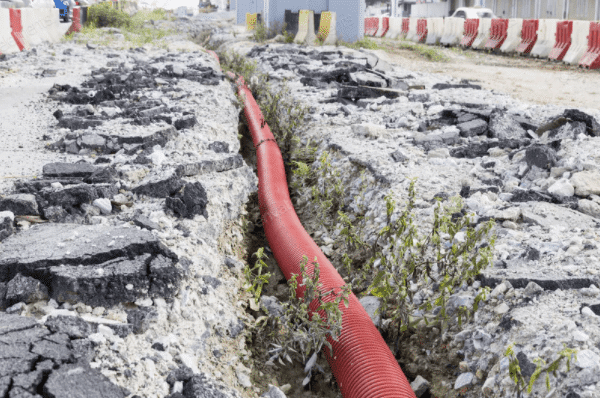
The construction industry is increasingly investing in the use of HDPE (High-Density Polyethylene) pipes. Thanks to the material’s high strength, this product is frequently used in drainage, electrical systems, and especially in the telecommunications sector.
Despite the good performance of HDPE pipes, not all are created equal. Furthermore, not all brands will guarantee compliance with national standards. Choosing the right material increases the durability of the project and the quality of the construction.
Opting for recognized domestic brands is an approach that the construction industry is already embracing. Therefore, it is essential to learn more about HDPE pipes, their types, and which is the best choice.
Characteristics of HDPE pipes
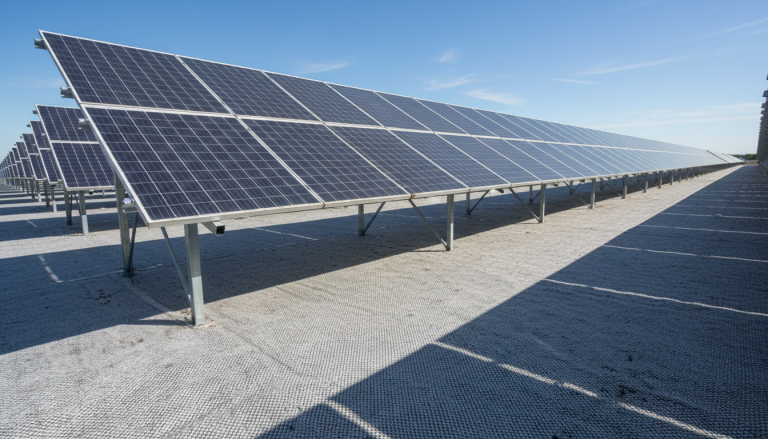
HDPE pipes have several characteristics that appeal to the construction market. These easily explain why they are ideal for electrical power projects (including photovoltaic and solar power plants), sanitation, drainage, and telecommunications.
Ductility and Strength
HDPE pipes are very flexible. In other words, they can be bent to a significant degree without being damaged, a characteristic that is highly valued in construction.
However, keep in mind that all this flexibility does not negate the fact that it is a material with a long service life. Just to give you an idea, these materials can last up to 75 years. This, in turn, translates to greater savings, since the pipes will not need to be replaced in the short term.
The strength of HDPE is measured in two ways: nominal pressure (for smooth pipes) and compression (for corrugated pipes)—that is, how much load the pipe can withstand without breaking.
This performance is linked to the SDR (standard dimension ratio, the ratio between diameter and wall thickness): the lower the SDR, the thicker the wall and the greater the strength.
In practice, even without a large diameter, smooth HDPE pipes withstand high nominal pressures—and corrugated pipes support high compressive loads.
Resistant to temperature variations
The versatility of HDPE pipes also stands out when it comes to temperature. They can be used at both extremely low temperatures, such as -20°C, and very high temperatures, such as 105°C.
These temperature ranges are crucial for construction and are not always found in other materials. Therefore, the pipes can be used underground or in structures directly exposed to sun, rain, and wind.
Easy to install
Ease of installation brings speed, which is one of the most sought-after requirements in today’s construction industry to optimize projects. HDPE pipes also meet this demand, especially since they do not require specialized labor to install.
Long-term savings
Due to their high durability, which surpasses that of concrete, HDPE pipes stand out for their cost-saving benefits. When viewed over the long term, this advantage becomes even more significant.
During installation, for example, the pipes already justify the investment, as they cost much less than similar materials. Additionally, there are lower costs for transportation and labor.
Sustainable
Sustainability is also a key feature of HDPE. The material is recyclable, non-toxic, and does not contaminate the soil. Furthermore, it has high chemical resistance, thereby preventing leaks that could reach and contaminate the water table.
When companies invest in HDPE pipes, they add even more value to their construction projects. Currently, compliance with environmental standards is a mandatory requirement throughout the country.
Hydraulic Efficiency
Because they have a low roughness coefficient, HDPE pipes stand out for their hydraulic efficiency. To give you an idea, the Manning coefficient for HDPE ranges from 0.009 to 0.012. In contrast, concrete’s Manning coefficient ranges from 0.013 to 0.017.
Again, this characteristic also helps reduce costs during installation. Furthermore, there is less need for excavation and backfilling compared to the use of other types of larger, heavier pipes.
Types of HDPE pipes for different projects

As we mentioned earlier, HDPE pipes may look the same, but they are not. Therefore, understanding the technical characteristics and unique features of the pipes available on the market helps in making the best decision for each project.
Telecommunications
A very common type of pipe in the telecommunications sector is the Techduto DW. It features two layers (an outer corrugated layer and an inner smooth layer) and complies with NBR 15715.
This feature facilitates cable installation and provides better protection for fiber-optic cables. However, it can also be used to encase the smooth pipes that separate the fiber bundles.
And as if all these advantages weren’t enough, Techduto HDPE pipes for telecommunications also have a tensile strength of 1,000 N. Therefore, they ensure a lower backfill height during installation without compromising construction safety.
HDPE pipes for drainage
The corrugated pipes in the Techdreno line, on the other hand, were developed specifically for underground drainage. They have high absorption capacity and range from 50 mm to 250 mm. Additionally, they are flexible and therefore do not require the use of fittings when making curves.
An important feature of the product is its side opening, designed specifically to absorb more water from the soil. Thus, Techdreno reduces the risk of flooding and offers better control of moisture and soil erosion.
Furthermore, the Techdreno line of pipes also helps control soil salinity. As a result, they improve agricultural productivity by up to 40%.
Another line of HDPE drainage pipes is Techdreno DW. It features a smooth interior that increases drainage capacity by 30% and is completely non-toxic.
This type of pipe is widely used on highways, at airports, and in photovoltaic plants, as it is twice as resistant to crushing. Additionally, it has a larger cross-sectional area compared to similar products, allowing the pipe to absorb significantly more liquid.
HDPE pipes for underground electrical installations
Compliant with ABNT NBR 15715 standards in the NBR version and EN 61386-24 in the SD version, HDPE corrugated pipes offer high resistance to compression and impact. For example, the line offers up to 25% greater abrasion resistance and flexibility compared to other conduits available on the market.
But that’s not all. It also has a greater capacity to accommodate shallower burial depths, which speeds up construction and provides greater cost savings.
Photovoltaic power plants
To meet the growing demand for photovoltaic power plants in Latin America, Techduto has launched its new line of UV-resistant conduits. Available in diameters ranging from 20mm to 250mm, they are reinforced, flexible, durable, and contain an anti-UV additive that protects the products from ultraviolet rays, further increasing their durability.
They have been widely used in the infrastructure of electrical projects by various energy utilities. After all, they safely protect the electrical cables that connect solar panels to the underground medium-voltage grid.
Smooth HDPE pipes for mining, sanitation, and other applications
Like corrugated pipes, smooth HDPE pipes have several advantages over iron, copper, and PVC pipes:
- excellent flexibility;
- resistance to different temperatures;
- resistance to mechanical and chemical abrasion;
- low density — they transport gaseous or liquid materials above water without requiring floats.
Thanks to these characteristics, smooth HDPE pipes are widely used in applications involving fluid transport, such as maritime, mining, water collection, and sewer systems. And because they facilitate cable routing, they can also be used in telecommunications projects (fiber optic routing) and low-voltage electrical installations.
Summary: Which HDPE pipe to use in each project
| Application | Techduto Line | Technical Highlight |
|---|---|---|
| Telecommunications | Techduto DW | Double wall, smooth interior, NBR 15715, 1,000 N resistance |
| Agricultural/underground drainage | Techdreno | Perforated, DN 50–250 mm, high absorption, flexible |
| High-capacity drainage (highways, power plants) | Techdreno DW | Double-wall, +30% flow capacity, 2× crush-resistant |
| Underground electrical installations | Corrugated HDPE pipe (NBR / SD) | NBR 15715 / EN 61386-24, +25% abrasion resistance and flexibility |
| Photovoltaic power plants | UV conduit line | DN 20–250 mm, UV inhibitor, protects medium-voltage cables |
| Mining, sanitation, fluids | Smooth HDPE pipes | Low density, chemical and abrasion resistance |
Techduto has the right type of HDPE pipe for your project!
As we’ve seen throughout this article, there’s an ideal HDPE pipe for every project. And making the right choice positively impacts the project’s budget, as well as its durability and strength. To do this, however, you need to understand the technical characteristics of each product line. In this case, the best approach is to rely on Techduto.
Active in the plastic pipe sector for over 30 years, Techduto continues to invest in technology and innovation so that its customers have access to the best corrugated pipes on the market.
Renowned for their high quality, Techduto’s materials are used in the Sobral and Sertão photovoltaic plants in Piauí. The expansion of the Fortaleza Metro was another major project that relied on the quality of Techduto’s products. In total, over 140 km of conduits were used in the project.
Of course, in addition to these projects, Techduto has also participated in other important projects for the country. Beyond the quality of the materials delivered, there is also the logistical advantage: the company has factories in São Paulo and Pernambuco, meeting different demands in the shortest possible time.
Visit the Techduto website and check out all the solutions available for your electrical power, sanitation, drainage, telecommunications, and many other projects.