

Subsurface drainage lowers the water table and removes excess water from the soil. It ensures agricultural productivity, the durability of roads and railways, and the restoration of waterlogged areas. Learn how it works, its advantages, and what to consider in a project.
How underground drainage was done in the past
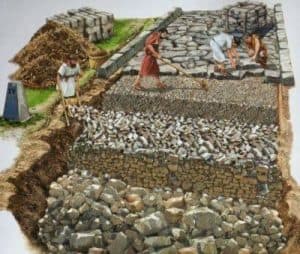
Subsurface drainage is not new. There are reports that it began in ancient Rome, using gravel as a medium to collect and carry water out of the drained area.
Later, the technique evolved: clay pipes in France and, around 1810, the first systems in England. The major breakthrough, however, came in the last four decades—along with the growth in food production driven by population growth.
The goal, however, has always been the same: to lower the water table by removing water from one region and conveying it to another. This is usually done by gravity, but suction pumps can also be used. In agriculture, controlling moisture in the root zone improves productivity—and, in semi-arid regions, prevents waterlogging and soil salinization in irrigated areas.
How drainage is currently done
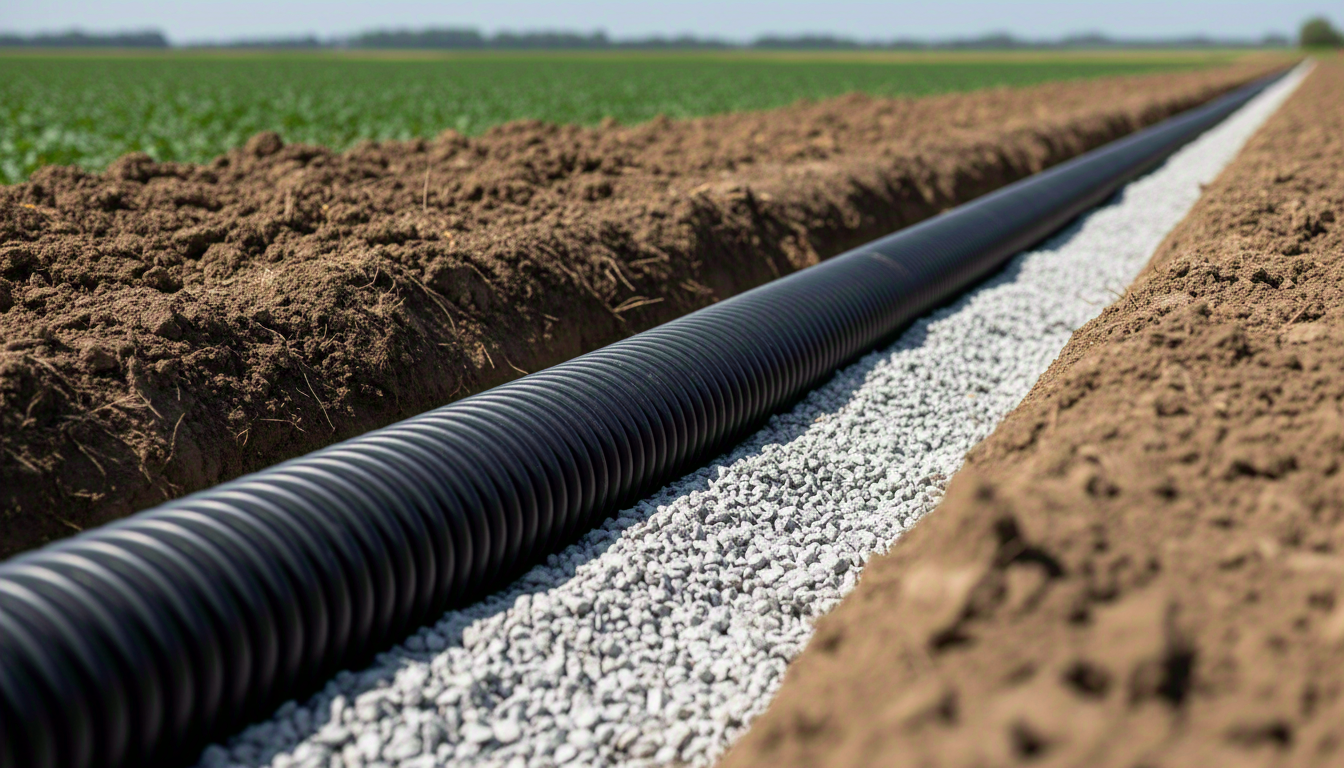
Today, the standard is to use perforated HDPE corrugated pipes (Techdreno), which collect and drain excess water from the subsoil.
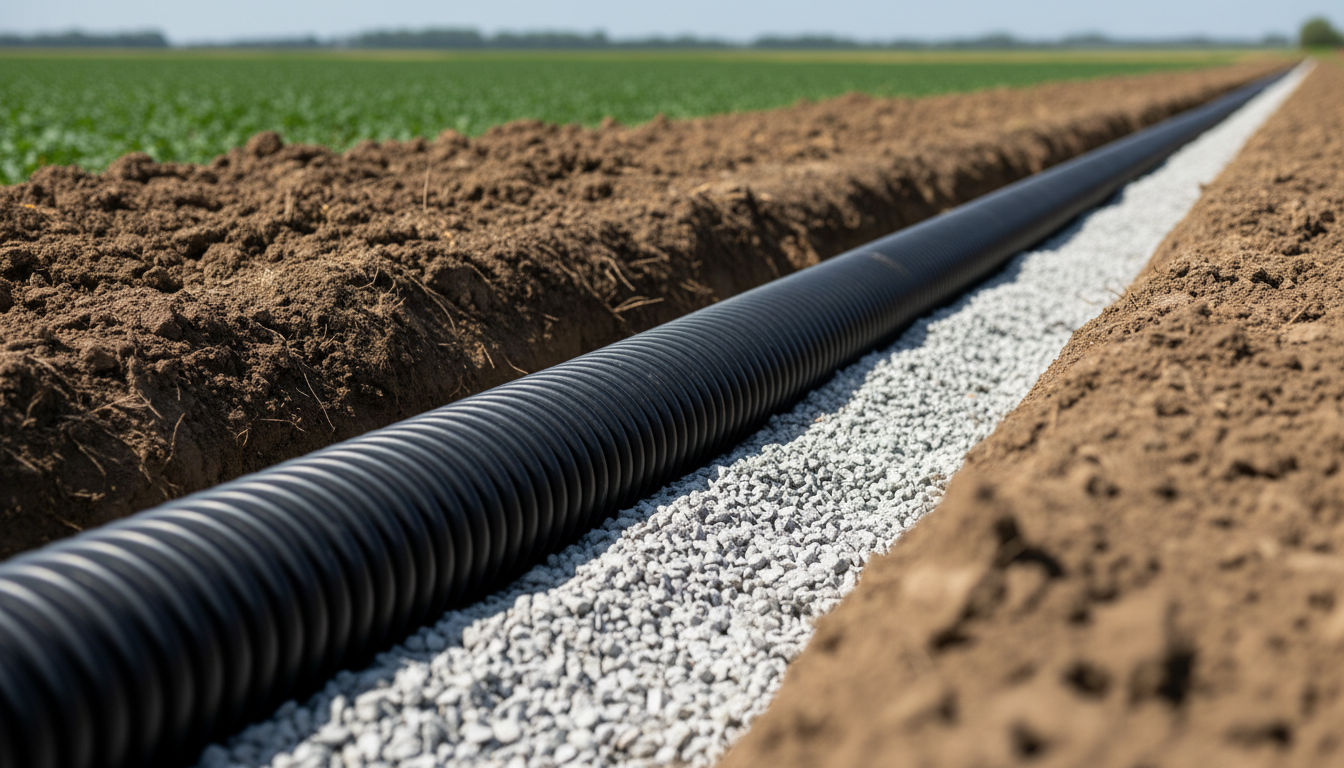
Drainage can be done in two ways, with different objectives:
- Surface — removes excess water from the soil surface or the constructed floor;
- Subsurface — removes excess water from the soil to a specific depth.
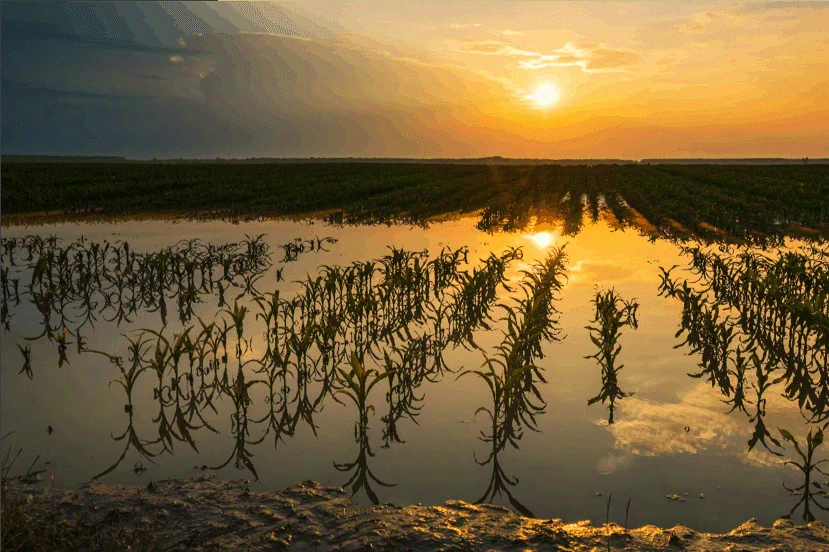
The benefits are direct. In regions with heavy rainfall, drainage prevents waterlogging and avoids productivity losses. It also makes it possible to use previously waterlogged land for food production.
Subsurface drainage also serves as an additional “safety net” for farmers: when done properly, it removes only excess water and maintains optimal soil moisture. It is also an ally of irrigation—which, if applied incorrectly or caught off guard by a climate change, can end up waterlogging the soil.
Why adoption remains low in Brazil
In Brazil, subsurface drainage is used less than it could be—despite being of extreme importance. In the Northeast, for example, it prevents the salinization of irrigated soils.
The main reason for low adoption is a lack of knowledge about proper installation. We’ve seen many poorly executed projects, carried out by farm “handymen” or by technicians who adapt what they know about water conveyance systems to underground drainage. The result is what we call “burying plastic”: it doesn’t work, and the investment is wasted.
That’s why Techduto has invested in knowledge and new products to make drainage more effective—and in partnerships with those who truly master the subject, to deliver cost-effective and efficient drainage.
Advantages of underground drainage
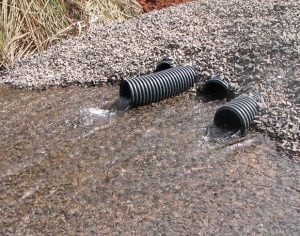
Open ditches do have lower installation costs. But they generate much higher maintenance expenses, create lost areas, and hinder the passage of agricultural machinery. That’s why underground drainage with corrugated pipes is usually the best option.
An example of the consequences of poor drainage: in the lower-middle São Francisco River basin, many areas irrigated since the 1950s were eventually abandoned due to salinization—a result of uncontrolled irrigation.
In addition to agricultural use, underground drainage is essential along the sides of highways and railroads, especially in cut or low-lying sections where the water table rises. It is also used in recreational, residential, and commercial areas, industrial parks, gardens, and airports.
Types of Drains
Drains remove excess water from the area and can be of two types: open (ditches) or underground (buried pipes).
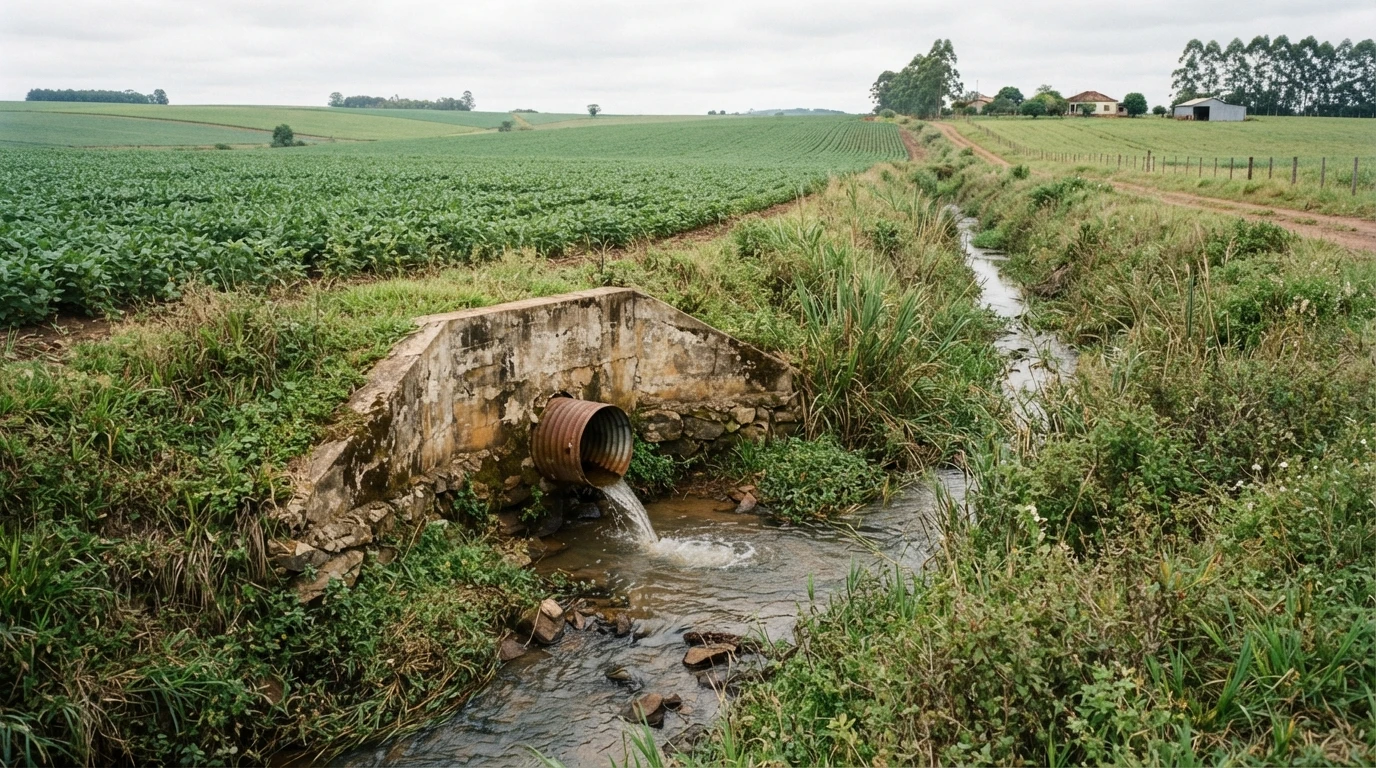
Open drains (ditches)
These are the most common in humid regions and collect both surface and groundwater. Their advantage is high flow velocity. But the disadvantages are significant: loss of land area, difficulty for machinery, cost of spreading the removed material, and expensive maintenance—the ditches need to be cleared of weeds on the slopes.
Underground drains (pipes)
These consist of buried corrugated pipes that collect and convey groundwater by gravity. The advantages over open ditches are clear:
- Space savings—they do not result in the loss of space associated with open ditches;
- Ease of access for machinery — since they are buried, they do not restrict traffic to narrow lanes;
- Fewer mosquito breeding grounds — no standing water on the surface;
- Lower maintenance costs — they do not require cleaning once or twice a year like open ditches.
| Criteria | Open drains (ditches) | Underground drains (pipes) |
|---|---|---|
| Installation cost | Lower | Higher |
| Maintenance cost | High (cleaning 1–2 times/year) | Low |
| Loss of usable area | Yes | No |
| Machine access | Restricted | Unrestricted |
| Mosquito breeding grounds | Higher risk | Lower risk |
How to design a drainage system
A poorly designed project can result in drainage that doesn’t work—and a total loss of investment. That’s why a good design should follow five steps:
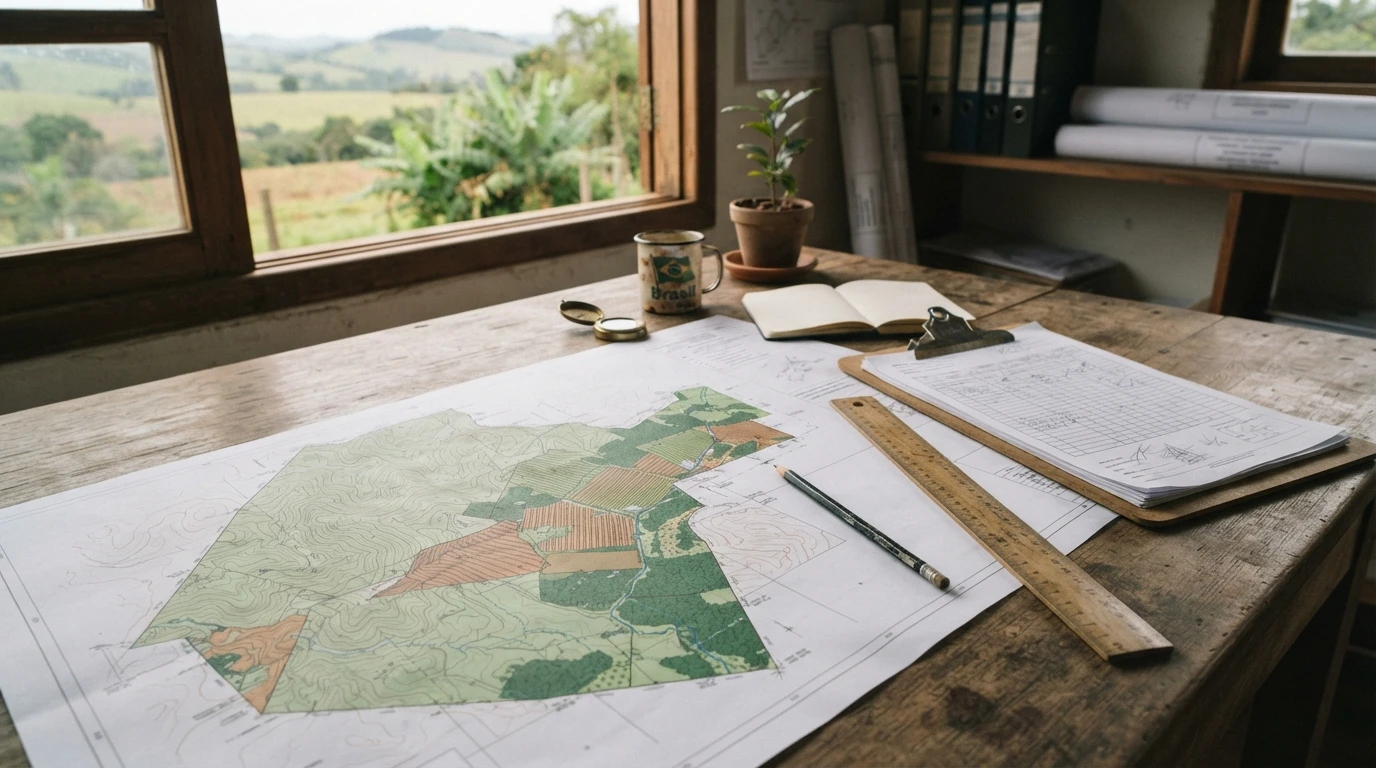
- Survey and delineation of the area — understand the area to be drained and identify the source of excess water.
- Topographic survey — map out the project guidelines: where the water flows (high points) and where the pipes will be buried (low points).
- Groundwater table study — specific to each region, this requires a network of observation wells covering the entire area.
- Soil study — measure hydraulic conductivity and macroporosity, data that directly inform the calculation of drain spacing. Climate and rainfall patterns must also be evaluated.
- Project design — using the data above and available formulas, the optimal pipe spacing and most efficient layout are determined.
Need help sizing the drainage for your area? Contact Techduto’s technical team.
Sources
- EMBRAPA — Drainage for bean cultivation
- LUTHIN, James N. Drainage engineering. New York: Robert E. Engineering, 1973, 250p.
- EGGELSMANN, Rudolf. Subsurface drainage instructions. Hamburg/Berlin: Parey, 1984. 293p.