
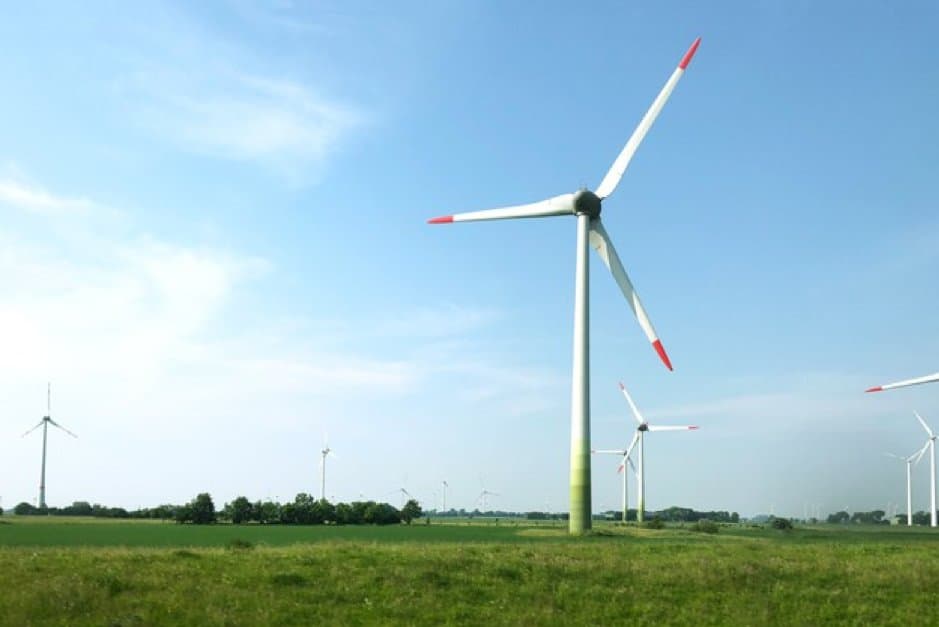
Brazilian wind conditions are conducive to the installation of wind turbines in the country. According to ABEEólica, Brazil already has thousands of wind turbines in operation.
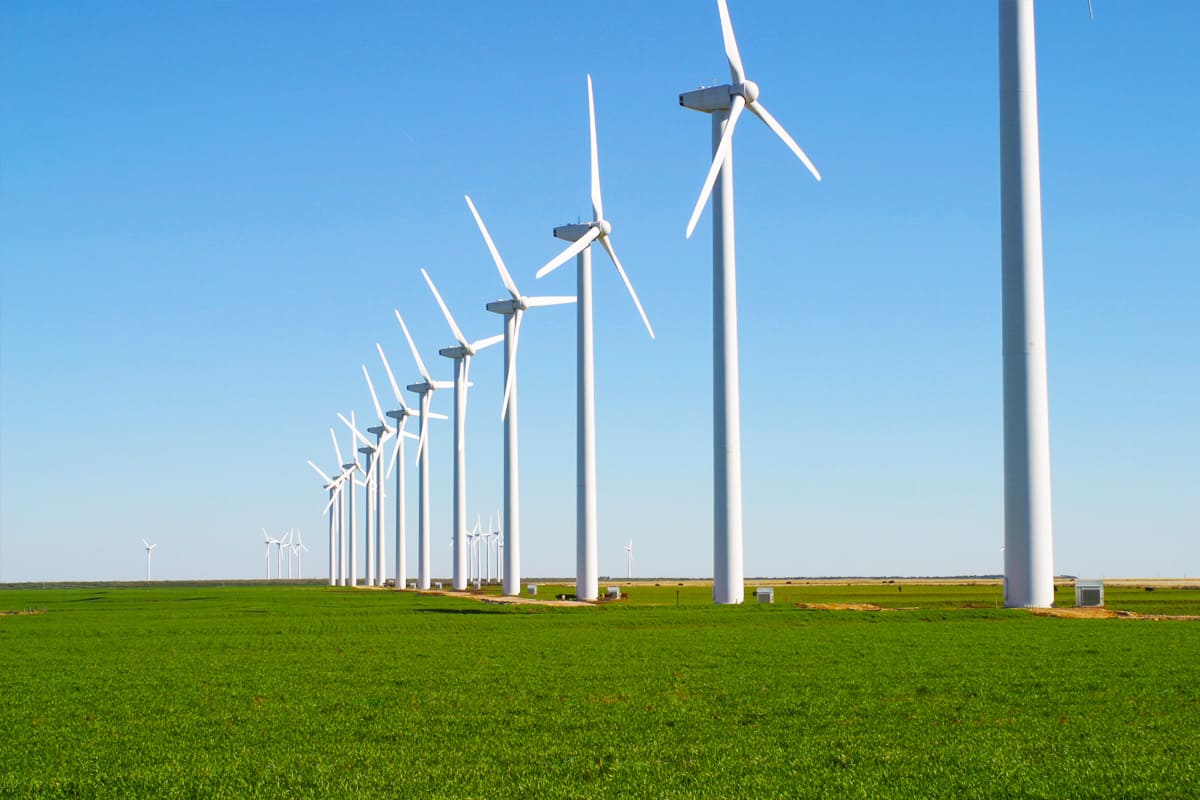
Wind energy already accounts for about 14% of the national electricity mix (BEN 2025, base year 2024) and continues to expand. The data is encouraging—and there are positive projections, especially with wind turbines that allow for higher rated resistance thanks to Techduto DW corrugated pipe lines.
Major projects in the country are already among the largest on the continent. In Rio Grande do Norte, the first project with giant turbines in Latin America was announced, and the public is the winner: greater energy capacity and security.
As a clean energy source, this type of electricity generation is widely accepted. In this article, you can learn more about the future of wind energy in Brazil and the new directions with giant turbines!
Wind Energy in Brazil
Wind energy stands out for its sustainability and is generated from the force of the wind. Its operation is quite simple: the wind turbines located at the top of the towers capture the kinetic energy of the wind and transfer it to an electric generator, where it is converted into electricity.
Today, the landscape of many regions in Brazil has been transformed by the construction of wind farms of various sizes. This movement toward clean energy through wind power emerged in the 1970s with the global oil crisis, but it took years to truly take off.
It was not until 1995 that the country’s first project was built in Fortaleza. However, it was still a pilot project and highly experimental, consisting of only three small wind turbines, each 35 meters tall. Compared to the structures in place today, that wind farm would hardly stand out.
Starting in the 2000s, there was a surge in investments and interest in clean energy in general. Due to Brazil’s natural advantage for generating electricity through wind power, new wind farms were installed. Currently, about 50% of the energy consumed in the Northeast region comes from wind power.
Giant wind turbines
Giant turbines are taking wind energy to a whole new level in Brazil. This makes it possible to produce more energy per tower—in other words, the taller they are, the more competitive their value and the lower the cost per kilowatt for the end consumer.
Giant wind turbines in Brazil have, on average, a diameter of 170 meters and a generation capacity of between 4 and 5.8 megawatts. The towers reach a staggering height: over 200 meters to the tip of the blade. Previously, the maximum height was 130 meters, with a capacity of 2 or 3 megawatts.
This shift toward giant turbines stemmed from increased demand for wind energy and improvements in the production of their structures. Although giant turbines are less accepted in other markets due to local conditions, in Brazil they appear to be a truly positive bet for the new landscape.
Techduto DW
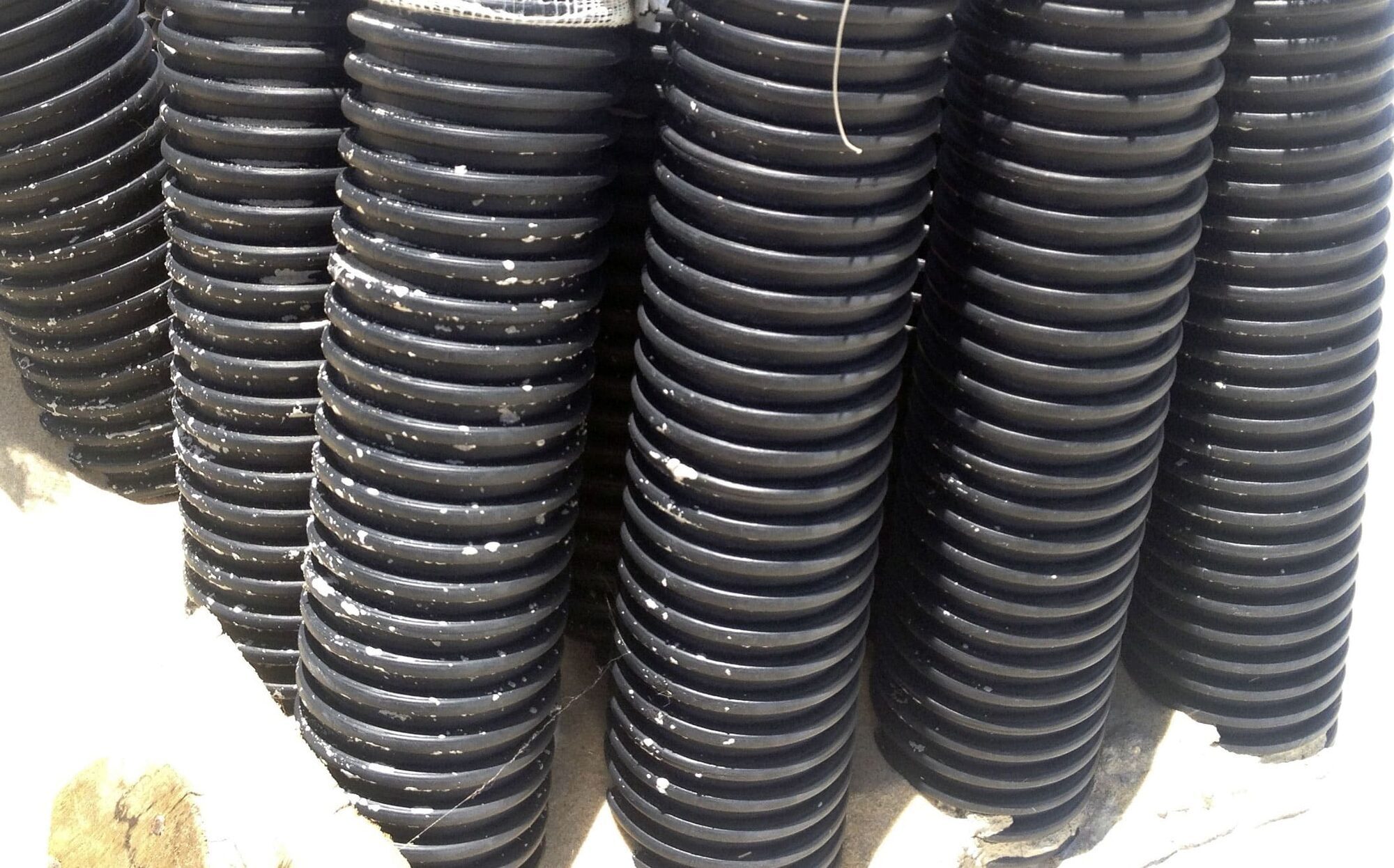
And what is Techduto’s role when it comes to wind energy? To supply highly resistant HDPE corrugated pipes to meet the needs of various projects. The Techduto DW line, for example, features a double wall, making it ideal for underground installations. After all, it offers extremely high mechanical strength, protecting electrical conductors.
In addition, Techduto DW pipes comply with NBR 15715 and withstand up to 40% more stress than the standard requires. It is a high-performance product, developed specifically for wind energy projects. This is because, until now, existing solutions often failed to fully meet the load requirements for tower bases and access crossings. Thanks to this innovation, wind turbines can increase their power generation capacity with complete safety.
And as if all these advantages weren’t enough, these double-wall conduits have a smooth interior, which greatly facilitates cable passage. Furthermore, they are manufactured from HDPE (High-Density Polyethylene), a non-toxic thermoplastic material that is highly resistant to high temperatures and compression. Furthermore, they do not contain COEX-type polyethylene (with mixtures of polymers, nylon, and others) in their composition, as this is a material that can negatively compromise the quality of the finished product.
For underground installations, Techduto DW is more resistant to very heavy loads—a characteristic of wind turbines, for example. With its smooth interior, it is possible to achieve a flow capacity 30% higher than that of corrugated products of the same gauge, if it is also used for conveying liquids.
Techduto NBR (corrugated HDPE pipe) is also widely used in bases and crossings, installed in trenches within the concrete. And for drainage of access roads and the area surrounding foundations—essential in wind farms subject to heavy rainfall—Techdreno drainage pipes are used.
Techduto’s reputation is already well-established in the country’s major wind farms: we have thousands of meters installed in the most important projects. The corrugated conduits are placed inside trenches, within the base structures, or to carry the generated energy to the substations. They significantly enhance protection and ensure greater strength, extending the project’s lifespan and reducing maintenance costs.
Latin America’s largest project with giant wind turbines
Vestas is one of the leading manufacturers of wind turbines. In 2020, the company completed the project that introduced giant turbines to Latin America: there are 65 turbines with steel towers and blades 73.7 meters long.
The project is bold and demonstrates the positive capabilities of the material used throughout the structure. The giant turbines allow for much greater power generation. In the case of the Vestas wind farm, more than 1.4 GWh is generated annually, which can serve a population of 2.4 million people.
Siemens Gamesa has also invested in wind energy on Brazilian soil, with equipment capable of generating far more power than its previous portfolio. On the global stage, Brazil is one of the most attractive countries for wind energy and the development of giant turbines. Furthermore, technologies and raw materials such as Techduto DW, used in major projects, enhance this attractiveness.
Techduto is already recognized for the quality of its products, but also for being one of the leading suppliers of corrugated ducts to the wind sector. These products help wind farms expand their capacity and, most importantly, increase the height of the turbines.
This combination of factors bodes well for the country’s future. GE Wind Onshore is another company that has been implementing projects with giant wind turbines in the country, adapting to local conditions.
Wind energy: sustainability and safety first!
As you’ve seen in this article, there is an increasing need to generate clean energy that causes the least possible environmental impact, as is the case with wind power. Fortunately, Brazil’s geographical and climatic conditions favor the installation of new wind farms with giant wind turbines, capable of increasing the country’s energy capacity.
To achieve this, however, the safety of these wind farm facilities must be ensured. Thanks to the technology used in Techduto’s ducts, it is possible to combine quality and sustainability in a single project. Thus, Brazil is building an increasingly reliable clean energy infrastructure.
Was this article helpful to you? Then follow the Techduto blog to stay well-informed about wind farms, solar power plants, landfills, and other engineering projects across Brazil. You can also follow us on social media: we’re on Facebook, Instagram, and LinkedIn. See you there!