

Clay soil is the worst-case scenario for a photovoltaic farm without planned drainage: clay retains water, waterlogs access roads, erodes panel rows, and necessitates repair work that interrupts generation. A solution exists — and it's simpler than it seems when the project considers the right soil.
How to drain a solar farm on clay soil?
On clay soil, drainage for a photovoltaic farm requires two integrated components: underground drains to lower the water table and capture accumulated soil water, and surface drainage to channel rainwater runoff away from the plant without causing erosion in the rows.
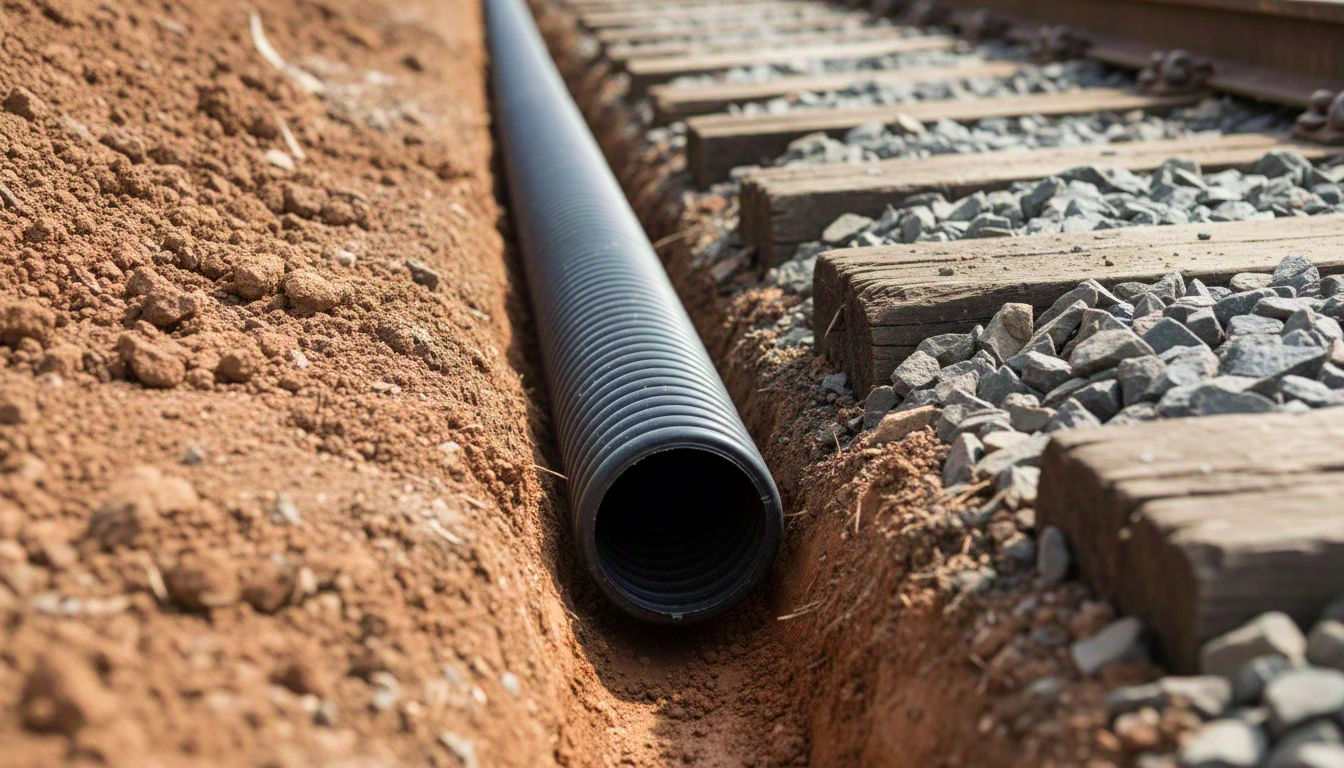
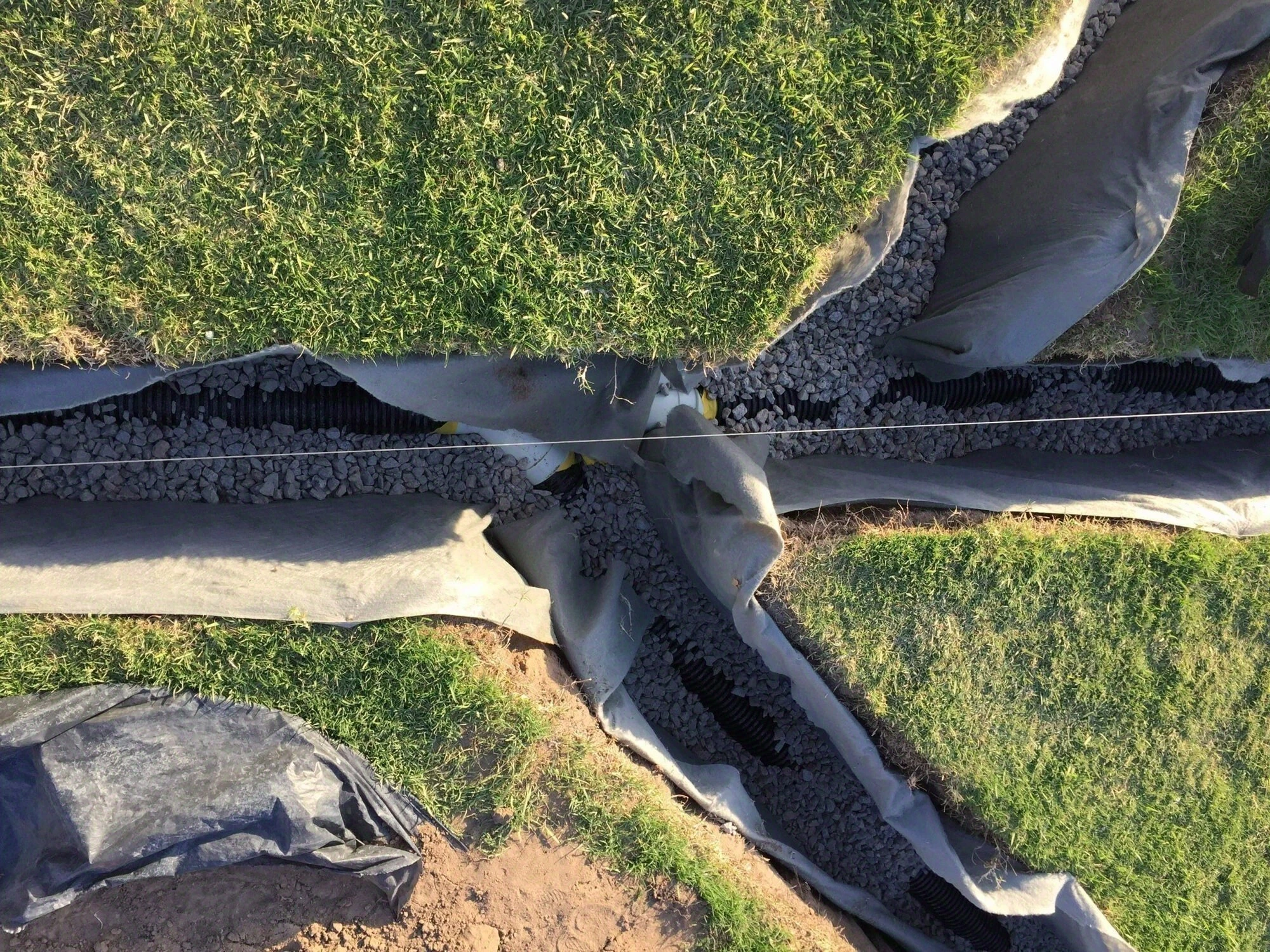
For the underground part, Techdreno KC — a corrugated HDPE pipe with a factory-integrated geotextile filter envelope — is the specific solution for fine soil: it eliminates the need for the sand layer and separate geotextile that would be required with the simple Techdreno DW. In clay soil, the integrated geotextile prevents clay from clogging the pipe over time, keeping the drainage functional for the farm’s second, third, and fourth harvest cycles.
For the surface part, the project needs ditches between rows, level terraces, and outlets with energy dissipators — especially on sloped terrain.
What is the main drainage problem in solar farms on clay soil?
Clay soil exhibits two opposing behaviors that create different problems:
- When dry: rigid and with good load-bearing capacity for heavy installation machinery traffic.
- When moist or saturated: plastic, with very low load-bearing capacity — trucks and equipment sink, access roads become impassable, and the risk of damage to panel support structures increases.
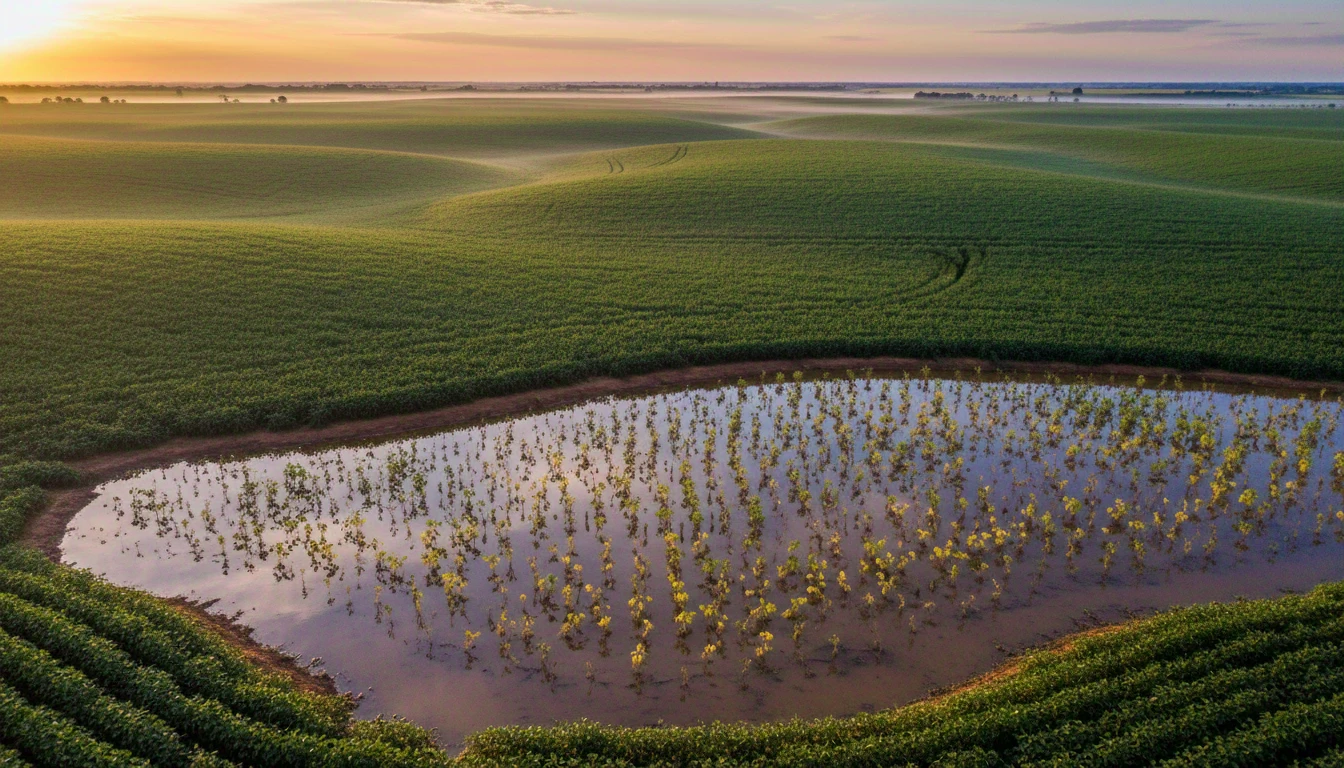
This is the central issue: clay retains water much longer than sandy or silty soils. In a solar farm, where panels are mounted on structures supported by the ground, the difference between “dry soil” and “saturated soil” can be the difference between a functional maintenance access road and an emergency repair job with months of partial generation interruption.
In addition to load-bearing capacity, accumulated water between panel rows causes sheet and gully erosion, washes away fine soil material, and can undermine the foundations of the structures over the years. This type of damage is cumulative and silent — and its repair cost is much higher than the cost of preventive drainage.
Is there a specific standard for photovoltaic farm drainage in Brazil?
No. To date, no ABNT standard or ANEEL regulation specifically addresses the drainage of photovoltaic plants in Brazil. The drainage design for an SPV is currently done by adapting general standards — primarily ABNT NBR 15073 (agricultural drainage), DNIT IPR-724 (road drainage, for access roads), and dam and embankment geotechnics standards.
This presents both an opportunity and a risk: as there is no specific standard, the designer has the freedom to choose the most suitable solution for the soil and plant configuration. However, there is also a risk of under-design — especially when drainage is viewed as a cost to be cut, rather than a critical operational component.
In practice, the largest solar energy EPCs in Brazil (responsible for plants of 50 MW+) already have internal drainage procedures that recognize clay soil as a risk condition, requiring specific geotechnical design. In smaller projects (1–10 MW), drainage is still often treated as a supplementary item.
What does Techdreno KC do that a simple pipe doesn’t in clay soil?
Longitudinal drainage in clay soil faces a specific problem: fine clay particles migrate into the pipe through the perforations, gradually clogging the system — the pipe still exists, but it stops draining.
In sandy or granular soils, a simple perforated pipe (Techdreno DW) works with gravel around it as a filter. In clay soil, gravel is not enough — the clay passes through the granular filter over time. A geotextile filter specifically sized to retain the particles of that soil is required.
Techdreno KC integrates this geotextile directly into the pipe manufacturing process — sewn to the corrugated structure, with no possibility of separation. In the field, this means:
- No manual geotextile wrapping in the trench — reducing labor and eliminating the risk of incorrect installation.
- No sand layer as a granular filter — reducing material cost and installation time.
- Filter sized by the manufacturer for the specific pipe type — ensuring uniformity along the entire drain length.
In a solar farm with 50–200 km of installed drains (large-scale plants), the difference in installation cost and system reliability over a 25-year lifespan is significant.
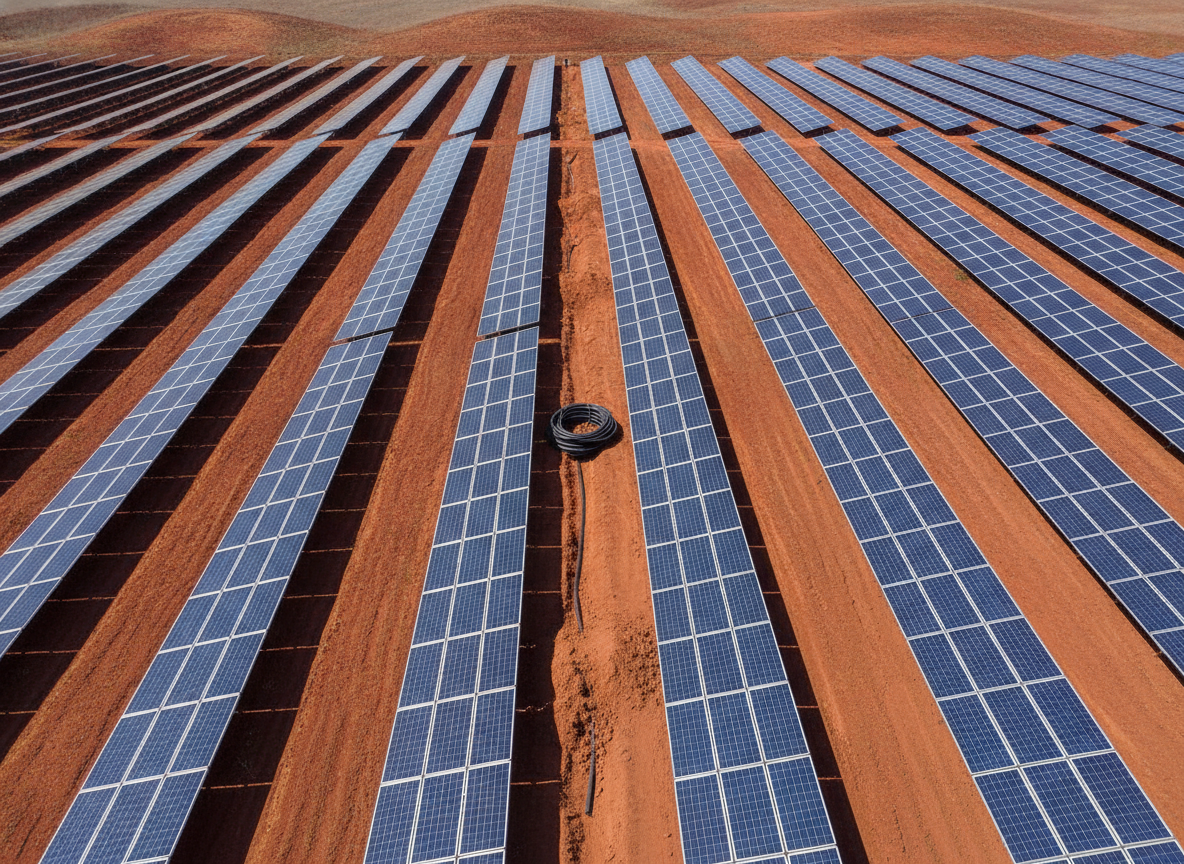
How to plan drainage for a solar farm on clay soil?
Critical points for drainage design for SPVs on clay soil:
- Preliminary geotechnical investigation: identify the type of clay, groundwater table depth, terrain slope, and history of waterlogging. The type of clay matters — a clayey Oxisol from the Cerrado behaves differently from an Ultisol from the coast.
- Underground drains (Techdreno KC): installed at depths of 0.6 to 1.2 m, spaced according to soil permeability (in low-permeability soils like heavy clays, closer spacing — typically 15 to 30 m). Spacing is calculated using Hooghoudt’s equation (subsurface flow in homogeneous soils).
- Surface drainage between rows: the slope of the surface between panel rows must be sufficient to drain rain without causing erosion. On sloped clay soil, protection against sheet erosion is necessary — hydroseeding, geocells filled with soil, or vegetation cover.
- Access roads: the maintenance roads within the farm need independent drainage — edge drains or ditches. In very plastic clay soil, consider a gravel base or geocells for the access roads.
- Outlets: all collected water must have an adequate outlet with an energy dissipator before reaching a natural drainage channel.
How much drainage does a typical solar farm need?
There is no single number, but as a rough order of magnitude for projects on clay soil:
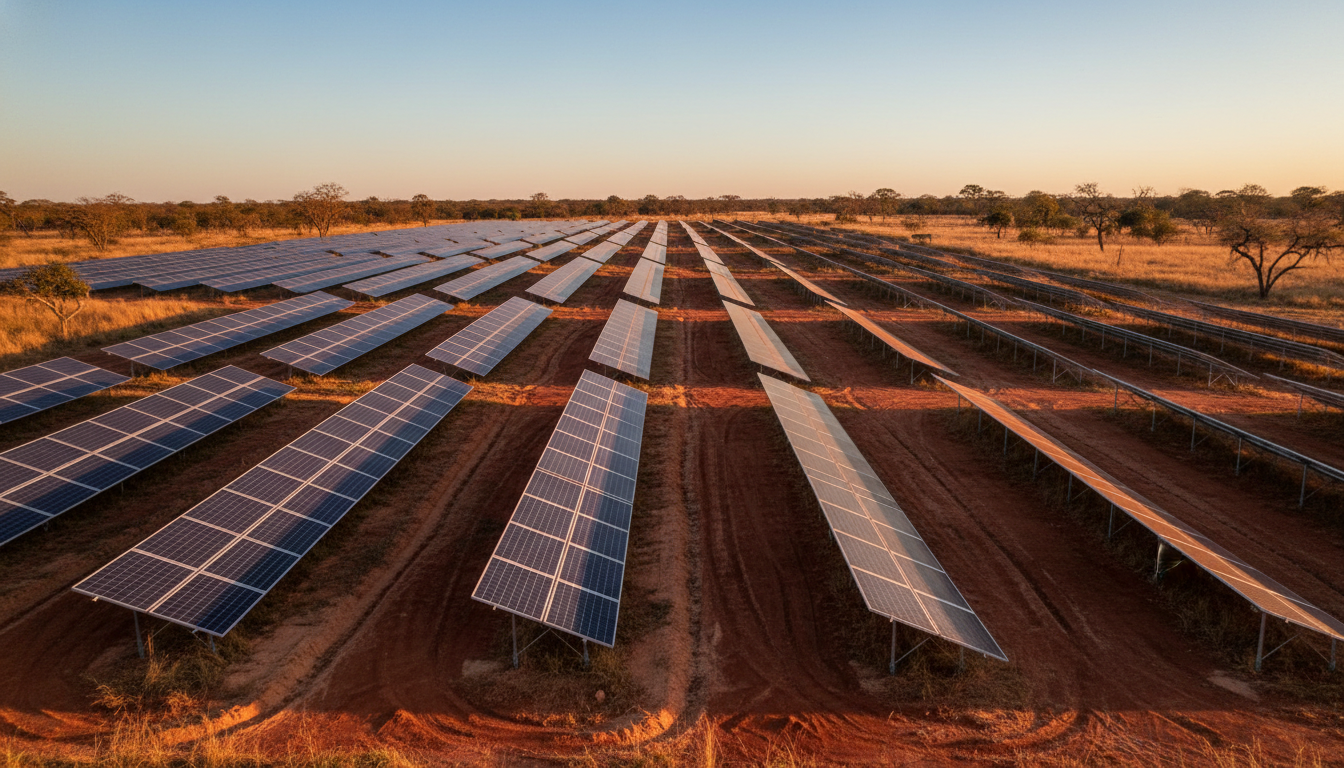
- A 10 MWp SPV on flat ground typically occupies 15–20 ha. With 20 m drain spacing, the volume of drain pipe is in the range of 7,500–10,000 m — plus the main collector and outlets.
- A 100 MWp SPV occupies 150–200 ha. Drain volume in the range of 75,000–100,000 m.
These volumes directly impact the EPC’s budget — and the cost of the wrong drain (which clogs in 3 years and needs replacement) is always much higher than the incremental cost of specifying Techdreno KC from the outset.
Is there a risk of panel foundation settlement on clay soil?
In saturated clay soil, the main risk is not leakage itself, but differential settlement — the foundation sinks more in some places than others as the plastic clay deforms under load. In metal panel support structures, differential settlement causes row misalignment, production loss due to shading, and mechanical damage to connections.
Adequate drainage, by keeping the soil below saturation for most of the year, reduces soil moisture variation and, consequently, the variations in strength and deformability that cause differential settlement.
Where to start?
The starting point is to understand the soil of the farm area before specifying any product. The type of clay, groundwater level, slope, and local rainfall patterns determine the spacing and depth of drains, the type of product (KC for fine soil, DW for more permeable soil), and the sizing of outlets.
The Techduto engineering team can assist with this diagnosis and the technical specification of drains based on available geotechnical data. For the technical terms on this page, the Drainage Technical Glossary provides definitions for deep longitudinal drain, CBR, and drainage blanket.
Frequently asked questions
Yes, in clay soil, the drain needs filter protection to prevent clogging. Techdreno KC solves this with the filter envelope integrated directly into the pipe manufacturing — no need for separate geotextile wrapped in the field or a sand layer in the trench. It is the recommended solution for drains in fine-grained soils in any type of project, including photovoltaic farms.
No. To date, no ABNT standard or ANEEL regulation specifically addresses the drainage of photovoltaic plants. The design is done by adapting general standards — mainly ABNT NBR 15073 (agricultural drainage), DNIT IPR-724 (road drainage, for access roads), and geotechnics standards. This reinforces the importance of a specific geotechnical design for the farm’s soil.
It depends on the permeability and depth of the clay soil, calculated using Hooghoudt’s equation or lateral flow methods. In heavy clays (low permeability), the typical spacing is between 15 and 30 m. In soils with intercalated more permeable layers, it can increase. There is no standard spacing — it is always the result of calculations with local soil data.
Yes. The design of rainwater and erosion drainage is a component of the EIA/RIMA (Environmental Impact Assessment/Environmental Impact Report) and the Environmental Control Plan (PCA) for solar farms. The absence of erosion control and adequate drainage can be a license condition. Furthermore, state agencies have been requiring the presentation of the drainage project as a condition for the installation license in areas with fragile soil.
Yes, when specified correctly. Black HDPE pipe with carbon black (2–3%) has UV stabilization incorporated during manufacturing, resisting direct sun exposure in exposed sections — such as drain outlets and exposed collectors. Carbon black blocks degradation from UV radiation, ensuring the pipe’s integrity throughout the farm’s lifespan (typically 25 years).