
Drainage seems like an expense. But the bill that truly weighs is the other one — the one you already pay, every year, without recording it anywhere. And in Brazil, it starts where it hurts the most: in management. It's the open ditches that take up the field and stall the machinery, it's the bogged-down tractor, the delayed harvest, the grain left standing. Extra productivity comes as a bonus. The cost of not draining is silent, recurring, and almost always higher than the investment to solve it once and for all. Let's put numbers to it.
The Loss That Doesn’t Appear on the Spreadsheet
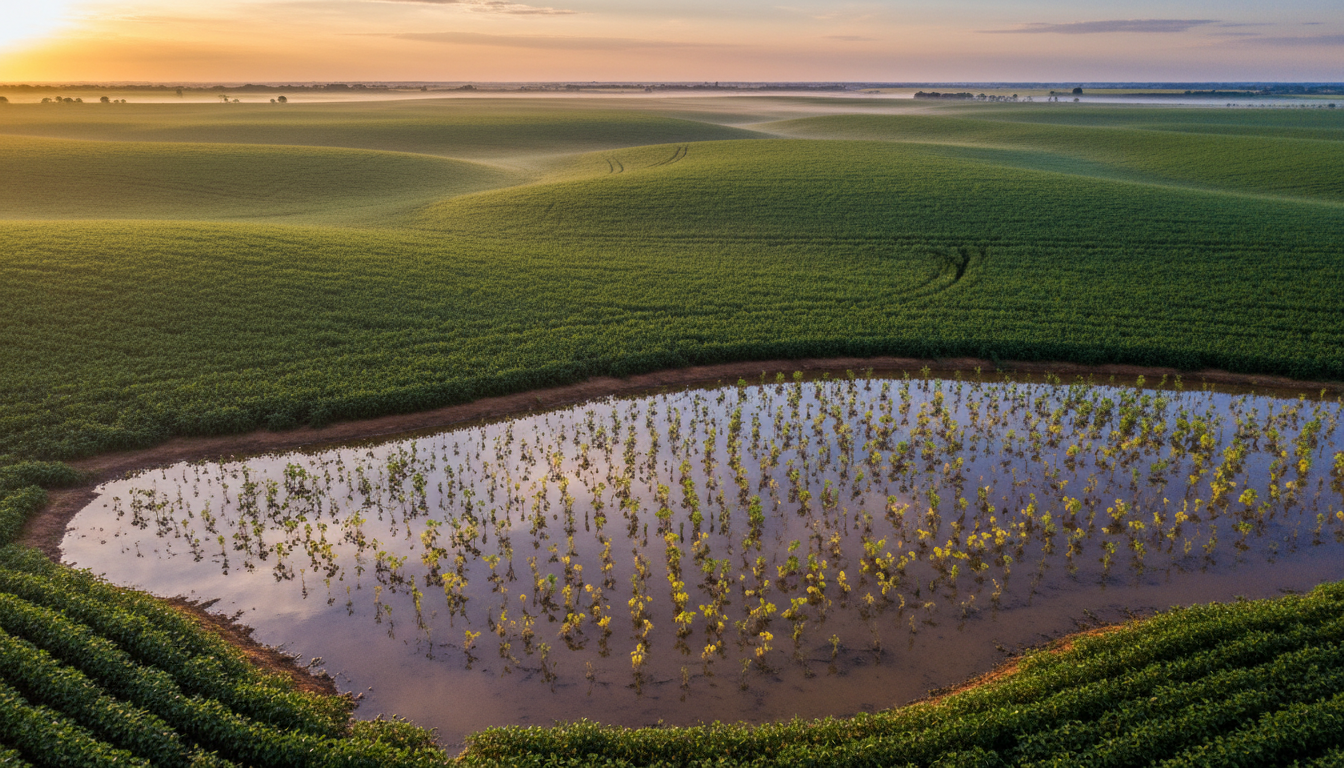
When frost or drought burns the crop, everyone sees it and laments. Excess water, however, acts differently: it’s not an event, it’s *constant friction*. It hinders daily operations, costs dearly in machine downtime, and reduces productivity *only in that specific spot*. Since the rest of the field performs well, the average “saves” the result — and the loss in that area disappears within the overall accounting. It exists, it happens every year, but no one records it on a spreadsheet line.
That’s why so many people live with a problem area for years without ever calculating its total cost. Add it up — block by block — and the decision becomes obvious.
1. Open Ditches Are Eating Your Field
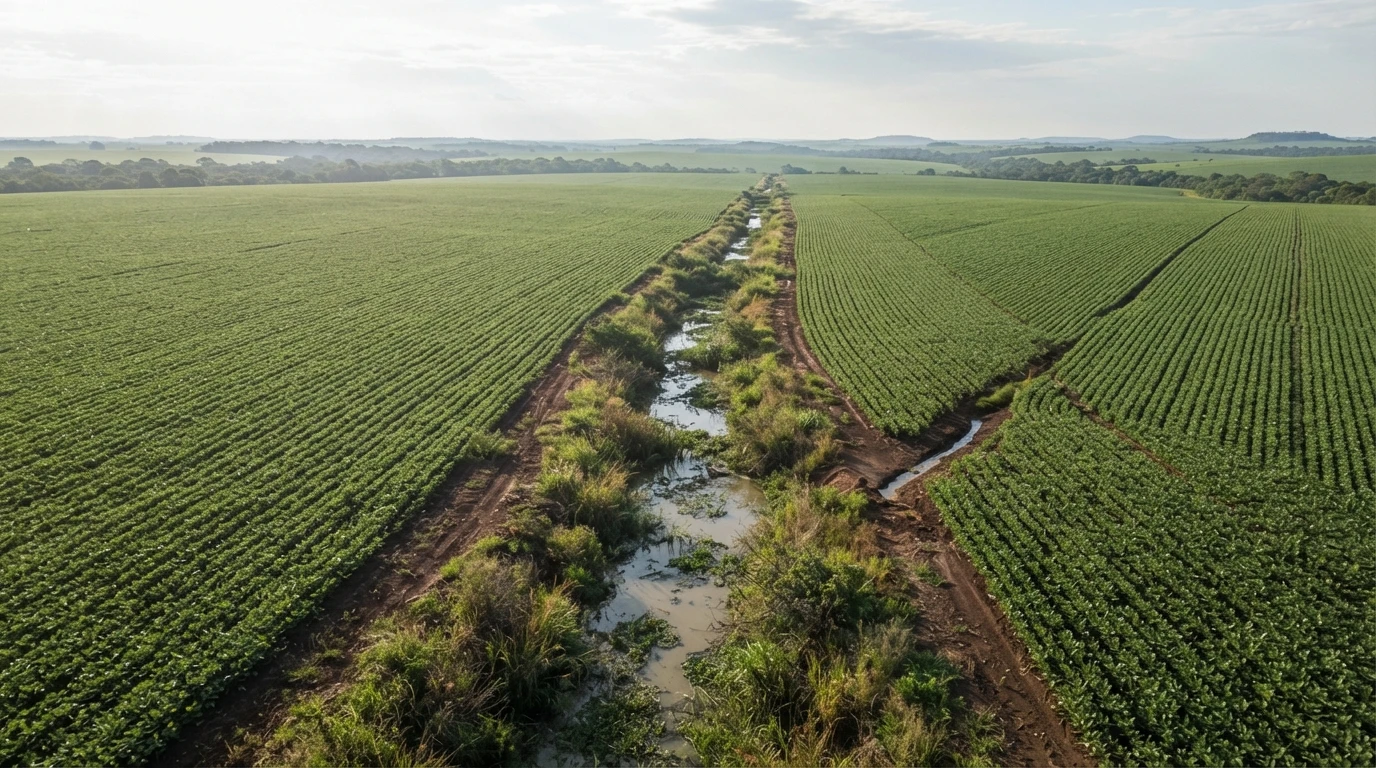
This is the number one pain point in Brazil, and almost no one puts it on paper. Open surface drainage does remove water, but it comes at a heavy price: every ditch and channel occupies land that could be producing. In many areas, this amounts to entire hectares permanently removed from production.
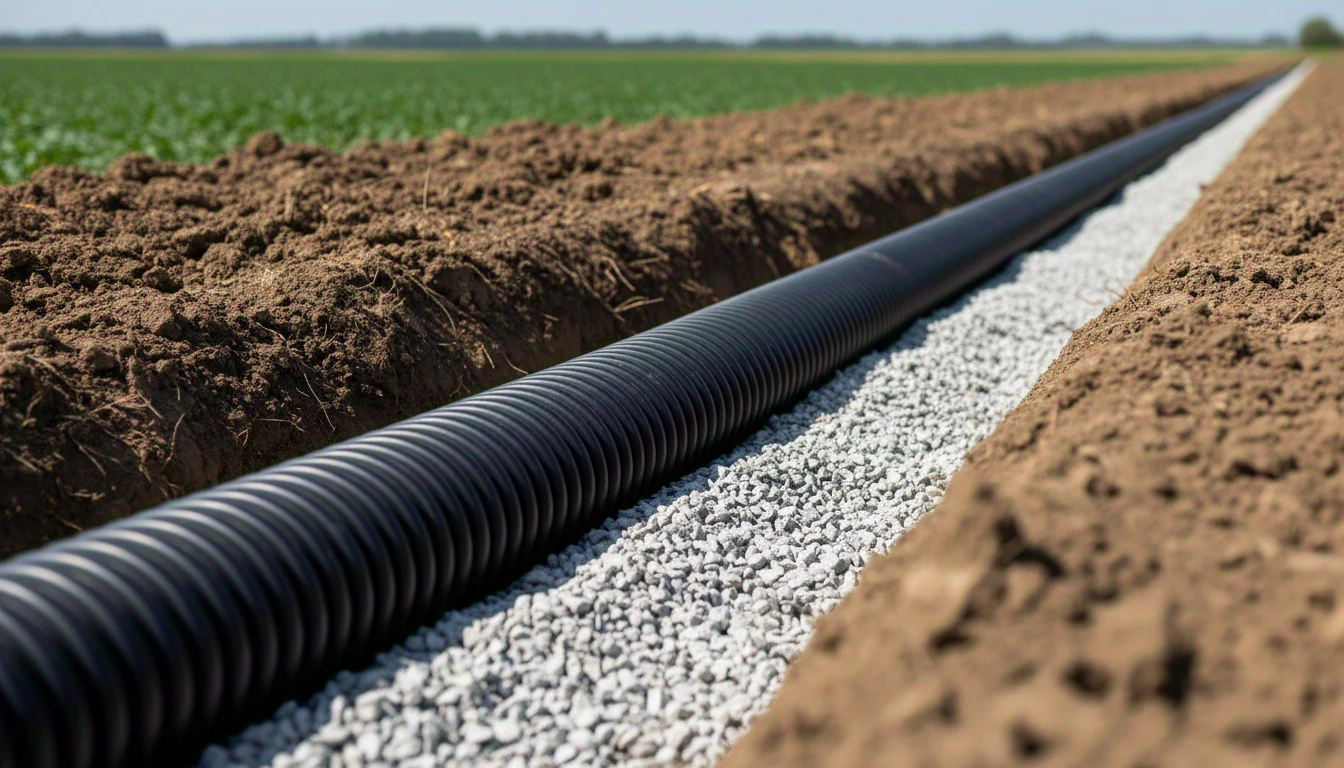
And it doesn’t stop at lost area. Open ditches disrupt machinery traffic (you maneuver around them, lose time, drive over the same spot twice), become accident points for equipment and people, and still require annual maintenance due to silting and erosion. Subsurface drainage solves the water problem *from below*, with buried pipes, and returns the entire surface: a continuous field, machinery moving straight through, and area back in production. This is the most tangible gain of all — and the first one the farmer sees.
2. The Cost of Operating in Wet Conditions
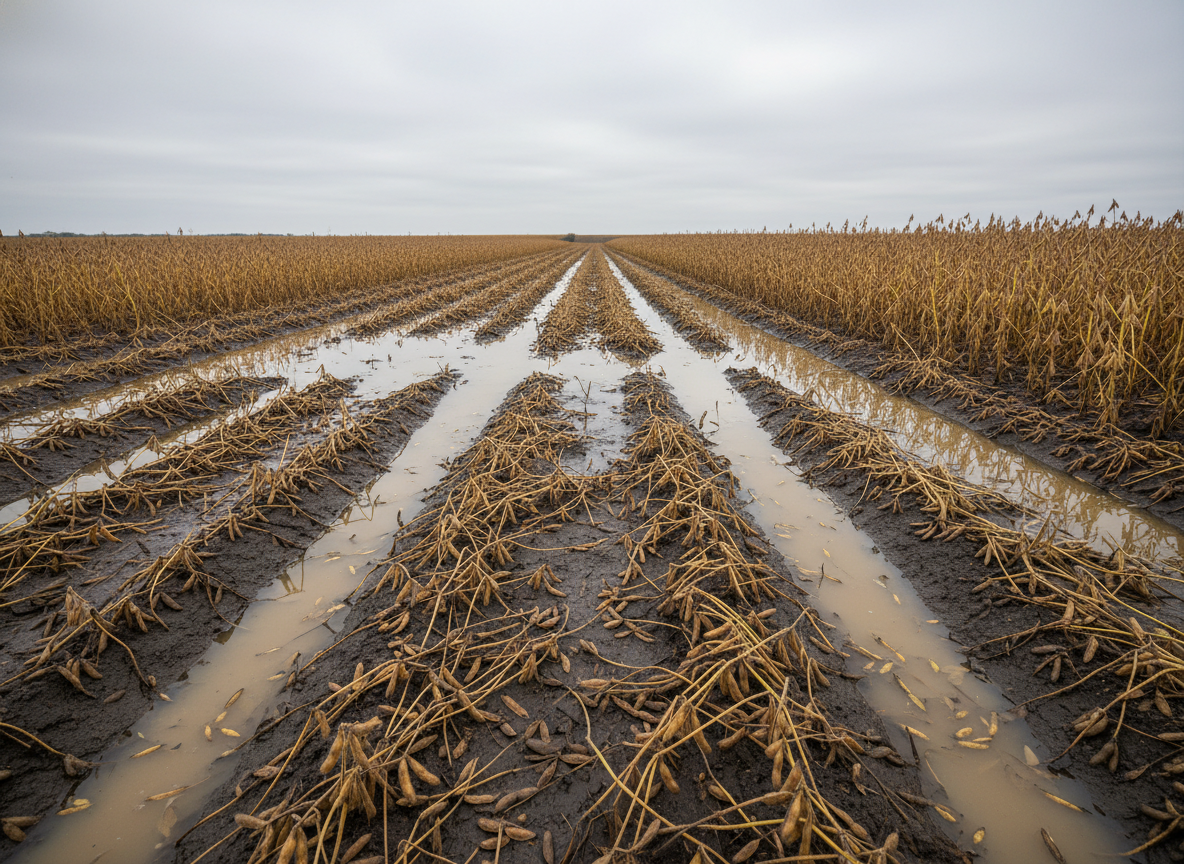
You wait extra days to enter the field, and still get stuck. Each time you get stuck, it means downtime, wasted diesel, another tractor needed for rescue — and often, a rented tracked vehicle just to finish planting or harvesting within the window. Add up how many times this happens in a season and multiply by the cost each time: it’s money directly out of your pocket, no questions asked.
There’s also the hidden effect: each pass on waterlogged soil creates a compacted layer (the plow pan) that worsens drainage the following year — and shortens the window again. It’s a snowball effect that leaves the entire operation hostage to the weather.
3. The Crop Left Behind
There’s grain you don’t even get to harvest. The waterlogged patch where the combine can’t enter, the crop that lodges and rots in the field, inaccessible. It’s a direct, visible loss that returns every rainy year.
4. Productivity Stolen by Subsurface Water
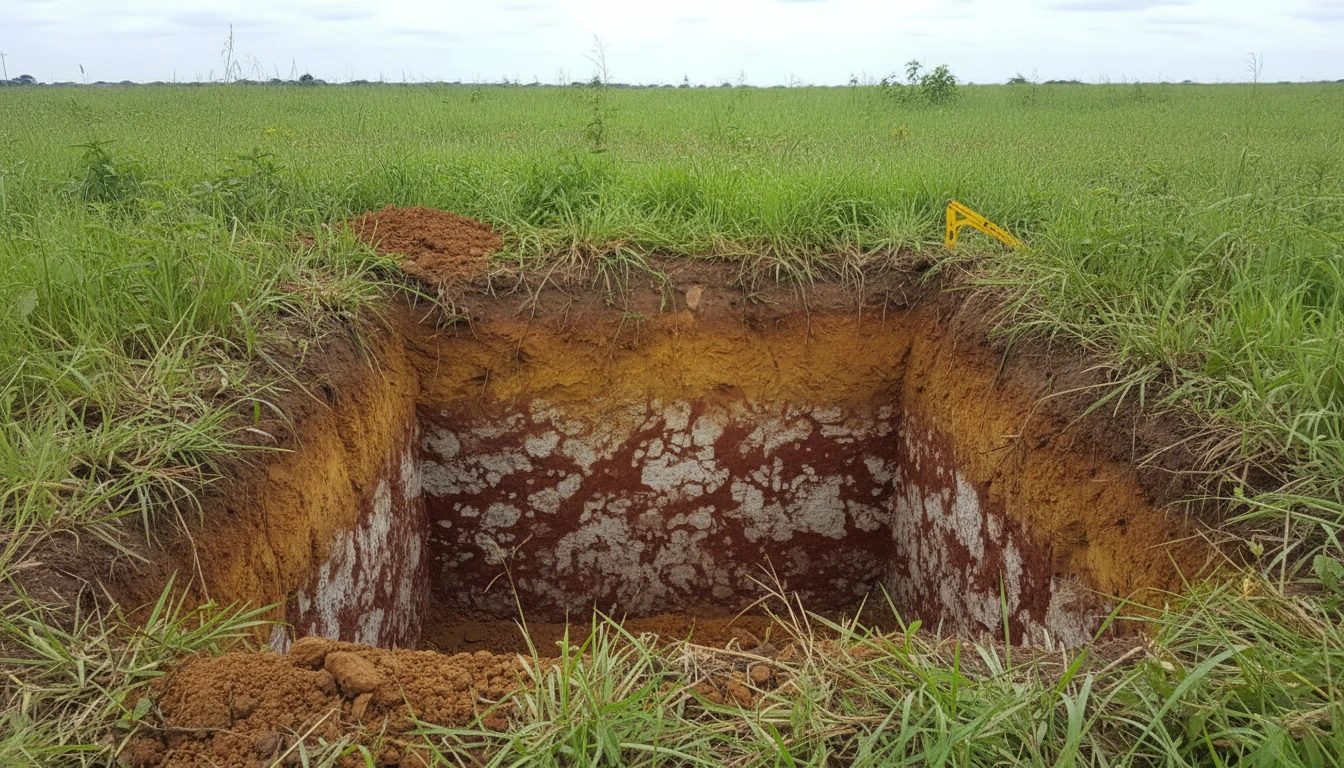
This is the most silent — and most underestimated — loss. Even where water does *not* surface, where everything looks normal from above, saturated soil deprives roots of air. Without aeration, roots cannot breathe, absorb nutrients, and grow shallow, fleeing the waterlogged zone. The plant “doesn’t kick in,” you apply fertilizer and it doesn’t respond — and almost no one connects this to water.
Subsurface drainage lowers the water table, returns air to the soil profile, and also helps regulate soil temperature, favoring germination and development. This is precisely what Embrapa points out as the technique’s function: controlling the water table to maintain the aeration the roots need. This is the so-called extra gain — it comes as a bonus when you solve the first three issues.
Calculate Your Field’s Cost (Takes 1 Minute)
Instead of guessing, use real numbers. We’ve created a calculator that starts with what you provide — area blocked by ditches, bogged-down incidents per year, area left unharvested, hectares with lower yields — and shows, summing up two harvests, how much lack of drainage costs per year and how long it takes for the investment to pay for itself. It also reveals where your money is leaking the most. Nothing is made up: the calculation is yours.
Find out how much standing water already costs your farm — block by block — and the payback period for drainage.
And Climate Still Tightens the Belt
Those who produce in Brazil play with a wild card every year: El Niño and La Niña. During El Niño, the South receives excess rain — management stalls, bogged-down incidents and harvest losses skyrocket — while the Center-West and Mato Grosso face drought. In La Niña, it reverses: heavy rain in the Center-West and drought in Rio Grande do Sul. Wherever you are, sooner or later one of the extremes will reach you — and Embrapa itself points to excess rain as a factor that hinders cultural practices and increases harvest losses.
Drainage is what removes your crop from this lottery in years with too much water. And since Brazil harvests two crops in the same year, each blocked or underutilized hectare costs *twice* — the calculation above already accounts for this. In a decade of increasingly unstable climate, draining has ceased to be optional: it is risk management.
Drainage is an Investment, Not a Cost
Here’s the turning point: the loss is every year; drainage is a one-time event — and a well-built system lasts for decades. Think of it as insurance that, instead of just protecting, also returns area, machine time, and productivity. After the investment pays for itself (and it usually does in a few harvests), all the recovered gains become recurring profit. Not draining is what’s expensive — you finance the loss indefinitely.
And today’s margins leave no room for loss. In the 2025/26 harvest, the soybean margin in Mato Grosso fell by about 44%, and in Brazil, the operating margin was around 2% — about R$ 244 per hectare (CONAB). With the break-even point so close to productivity, a drop of ~13% already wipes out the soybean farmer’s profit. On such a tight budget, every bag of grain the water takes away comes directly out of your pocket.
And there’s a detail that changes the return: draining the right area, the right way. There’s no point in burying pipes where the problem is compacted soil — in that case, the solution is to subsoil first. If you’re still unsure about your specific situation, our drainage diagnosis points the way in 4 questions.
How Techduto Makes the Return Happen
A drainage system only delivers the return calculated above if it lasts and doesn’t clog. In Brazil, with fine-textured soils rich in iron, the choice of drain is what separates a system that works for decades from one that fails in the first year:
- Techdreno KC — comes with an integrated filter envelope (validated by UFLA), which prevents fine particles from clogging the pipe and eliminates the need for separate geotextile application. Fewer construction steps, more durability — exactly what protects your payback.
- Techdreno DW — double-wall (smooth inside, corrugated outside) for those who need higher flow rate and resistance.
The sizing for your area — depth, spacing, and diameter — is handled by the Techduto engineering team, on a case-by-case basis. Bring the numbers from the calculator, and we’ll finalize the calculation with you: real investment, expected gains, and the right solution for your soil.