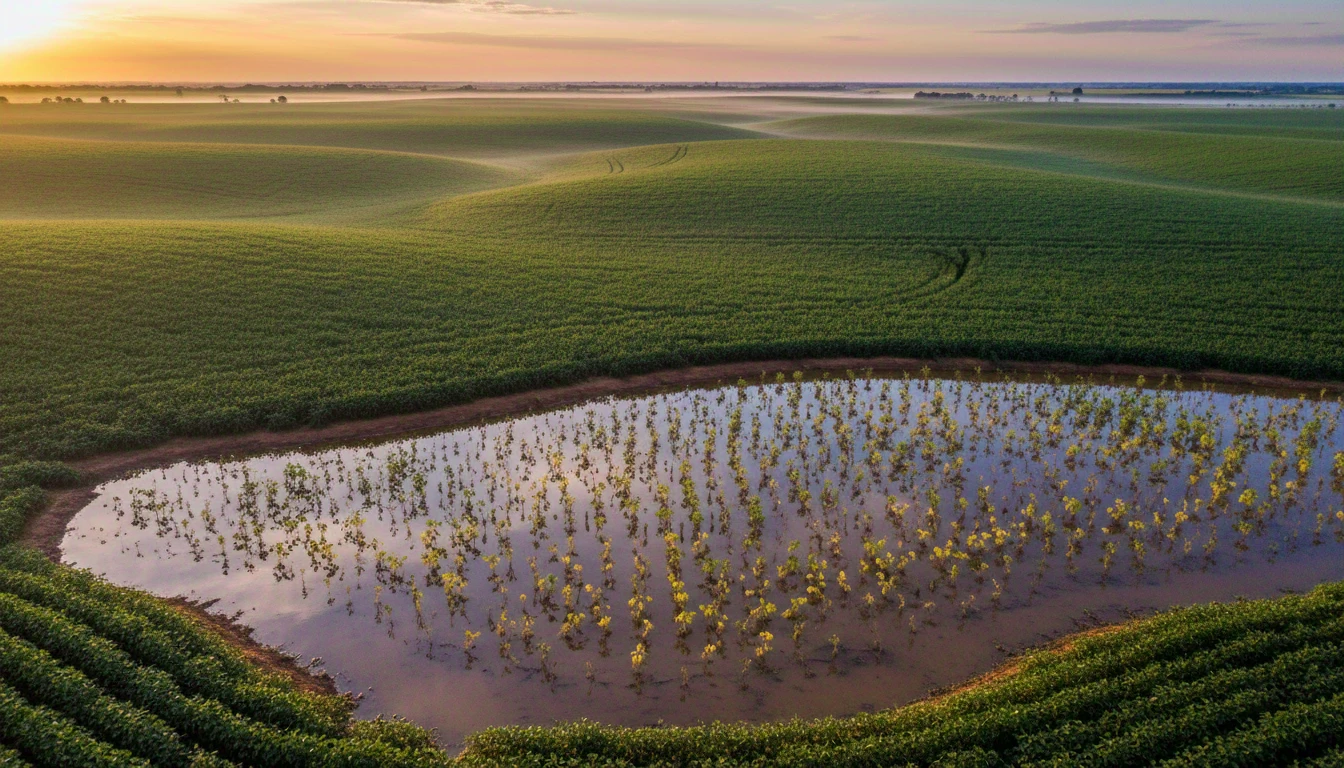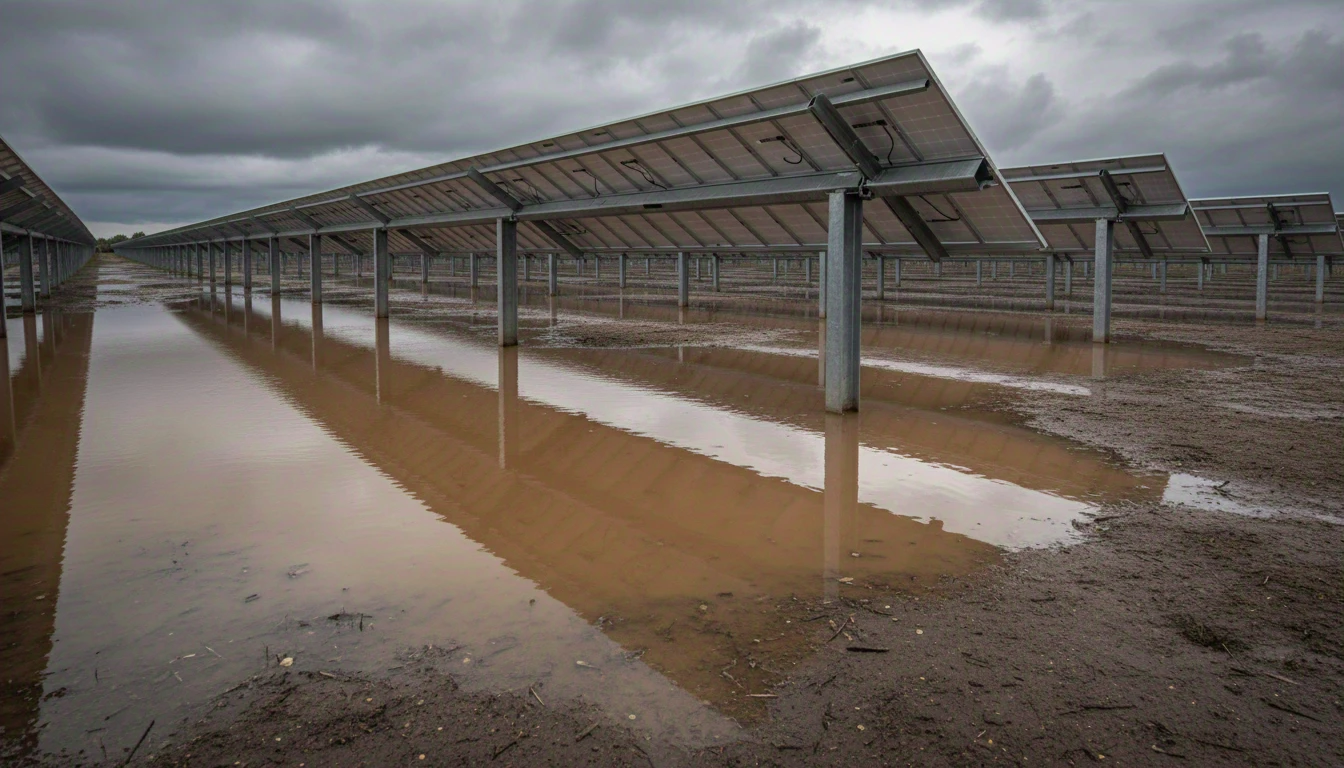


Wind energy is one of the cornerstones of the sustainable energy transition. The imposing turbines that harness the power of the wind are landmarks of progress—but in regions with high rainfall, rain can become a silent problem, eroding the soil, weakening structures, and compromising the entire operation.
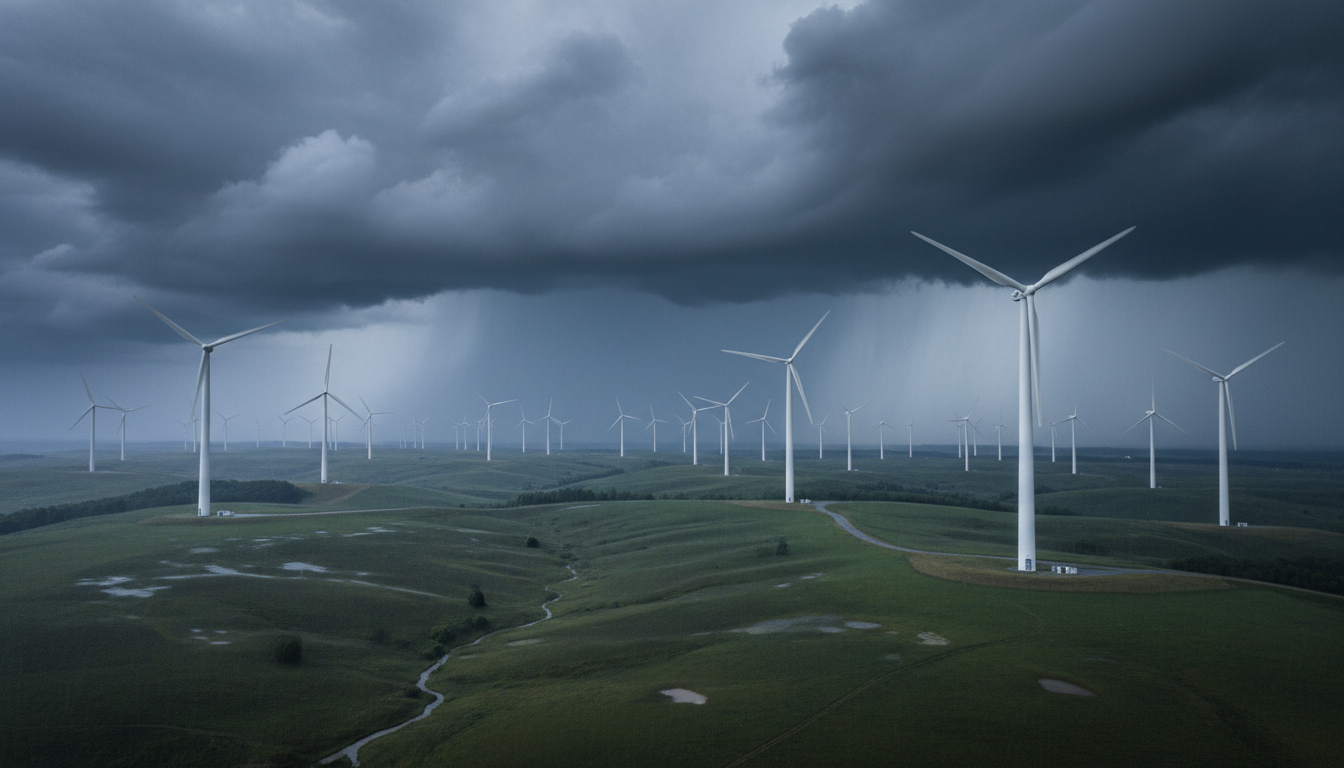
In this article, we’ll explore how heavy rainfall affects wind farms and how drainage—often seen as a minor detail—is, in fact, a strategic solution for ensuring the safety and efficiency of these projects.
Why is rain a challenge?
Wind turbines are sturdy structures, but the foundation that supports them must contend with something often invisible to the naked eye: the impact of water on the soil. In regions with high rainfall, the challenges mount. The most common impacts:
- Soil erosion: rainwater can carry soil particles away from the foundations, creating voids and reducing structural stability;
- Base instability: unstable soil means that the foundations lack adequate support, increasing the risk of displacement or failure;
- Maintenance difficulties: excess water makes it difficult to access turbines for inspections and repairs, prolonging problems and increasing operating costs.
These problems often do not appear immediately. They accumulate, like a crack that slowly widens, until the structure is compromised.
The science behind drainage
Drainage is one of the least visible but most important factors in wind energy projects. It not only manages water—it protects the entire ecosystem where the turbines are located. What makes a good drainage system?
- Efficiently redirects water: prevents it from accumulating around the foundations;
- Protects the soil from erosion: maintains the structural integrity of the terrain;
- Preserves the local ecosystem: ensures that water movement does not cause damage to the environment.
In this context, drainage acts as an invisible armor for the turbines, protecting not only the investment but also the energy efficiency these structures provide.
A real-world example
Imagine a wind farm located in a coastal region with constant rainfall. Without a proper drainage system, the foundations began to suffer the effects of erosion. Small failures turned into major repairs. Until something changed: a drainage system was implemented, designed based on soil behavior and rainfall volume. The result?
- Significant reduction in structural instability;
- Drastically lower maintenance costs;
- A more efficient and safer operation, even during the rainy seasons.
This transformation was not just technical—it was strategic. Every raindrop found its way away from the turbines, ensuring they continued to do what they do best: turning wind into energy.
How Techduto protects wind farms
Much of this “invisible armor” is made with Techduto’s HDPE corrugated pipes, found in the country’s major wind farms. In wind farms, the solutions work together:
- Foundation and access road drainage: Techdreno pipes and, for high flow rates, Techdreno DW divert rainwater away from the bases of the towers;
- Erosion control: Bidim geotextile and the drainage geocomposite stabilize the soil around the foundations;
- Cable protection: Techduto DW (double-wall) and Techduto NBR protect the cables connecting the towers to the substations.
The role of drainage in sustainability
More than just protecting equipment, drainage is also a tool for sustainability. It preserves the soil, reduces environmental impacts, and ensures that natural resources around power plants are used responsibly.
When we talk about renewable energy, we are talking about a commitment to the future. And that commitment begins with actions that ensure the longevity and safety of every project.
Water is a force, not a threat
Rain, which so often fuels the winds, need not be seen as an obstacle. By paying close attention to the invisible details—such as drainage—it is possible to transform what was once a problem into an opportunity for progress.
Wind energy, just like nature itself, is an interconnected system. When we respect these connections, protecting the soil, foundations, and equipment, we ensure not only efficiency but also harmony between technology and the environment—projects that not only generate energy but also preserve the world for future generations.