
Infrastructure is not just concrete, pipes, and buried cables. Infrastructure is what supports the growth of cities, ensures quality of life, enables urban development, and creates the conditions necessary for sustainable development.
If you are an engineer, designer, public manager, developer, or technical manager for housing developments, solar power plants, railways, or agro-industrial projects, you know that the problem rarely lies in the conceptual design. It lies in the execution: in the drainage that fails after the first heavy rain, in the cabling that suffers interference, in the rework that blows the budget, in the inspection that questions specifications.
In this scenario, choosing the right HDPE solutions for drainage, electrical protection, and geosynthetics is no longer a minor detail but a strategic decision.
What infrastructure really means today
Infrastructure involves a set of systems that ensure mobility, basic sanitation, drinking water supply, energy, public lighting, and connectivity. It directly impacts the well-being of the population and the environment. In practice, we are talking about:
- Urban infrastructure for residential and industrial areas;
- Electrical infrastructure for condominiums, solar parks, and public grids;
- Drainage systems for highways, railways, and subdivisions;
- Solutions for basic sanitation and wastewater treatment;
- Protection of underground networks.
A common mistake is to treat each system in isolation. Modern projects require an integrated approach. A housing development, for example, depends on efficient drainage, a safe electrical grid, underground cabling, and erosion control. If any one of these elements fails, the impact is systemic.
Infrastructure and drainage: the critical point of construction projects
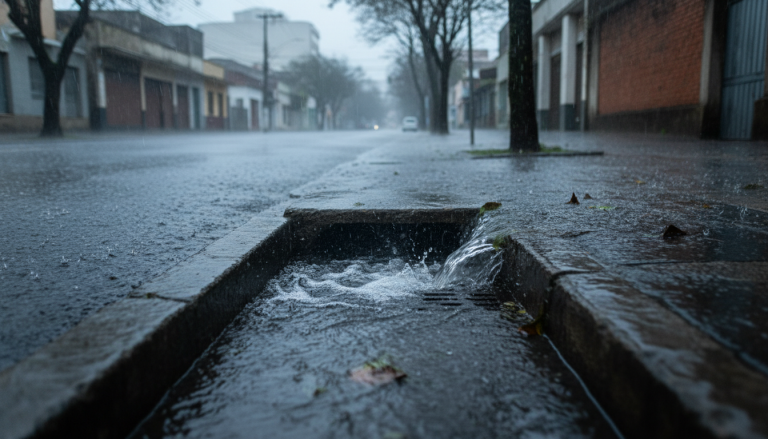
Among all systems, drainage is one of the most problematic when poorly designed. Saturated soil compromises pavement, foundations, and structural stability.
The solution lies in smart drainage. Well-executed projects use perforated HDPE corrugated pipes—such as Techdreno and, for high flow rates, Techdreno DW—combined with geotextile fabric to filter particles and prevent system clogging. The correct choice of material prevents differential settlement, erosion, and loss of soil bearing capacity.
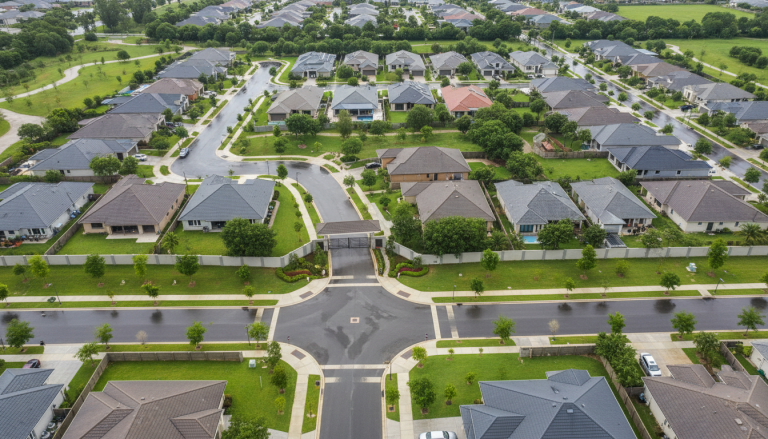
Imagine a condominium in an expanding urban area. Without adequate drainage, the volume of stormwater can cause seepage, damage to the pavement, and recurring maintenance costs. When the system is designed with appropriate drainage pipes and geotextile, the result is long-term stability.
How to choose the right type of HDPE pipe
Not every HDPE pipe is suitable for every application. Mechanical strength, diameter, wall type, and end use must align with the final design. For example:
- Railway projects require high resistance to dynamic loads;
- Solar power plants require protection against UV radiation;
- Agricultural areas require efficient soil drainage.
The wrong choice leads to rework, delays, and increased cost per linear meter installed.
Electrical infrastructure and cable protection
Electrical infrastructure is another strategic pillar. Failures in underground networks cause outages, pose a risk of accidents, and result in financial losses. In modern condominiums, underground cabling has become standard practice because it reduces visual clutter and enhances safety, while also increasing property value.
Protecting electrical cables with HDPE corrugated pipes, such as Techduto DW (double-wall) and Techduto NBR, ensures:
- Impact resistance;
- Moisture protection;
- Ease of maintenance;
- Extended service life.
Another important point is the optimization of construction time. For those under schedule pressure, this operational efficiency makes a direct difference in the project’s profit margin.
Environmental impacts and sustainable development
Today, infrastructure cannot be discussed without considering the environment and sustainable development. Proper drainage reduces river siltation. The use of geotextiles contributes to slope stabilization and erosion control. Underground cabling systems reduce visual pollution and the risk of accidents.
In projects exposed to intense sunlight, such as solar power plants, material resistance is a decisive factor. The article on the impacts of UV radiation on HDPE corrugated pipes explains how the right choice prevents premature degradation. Sustainability is not just talk: it is life-cycle analysis, it is reducing future maintenance, it is predicting the behavior of the soil and the network over the years.
Basic sanitation and wastewater treatment
Basic sanitation is one of Brazil’s greatest challenges. Infrastructure projects focused on biological sewage treatment require reliable solutions resistant to chemical agents. Without efficient sanitation, there is no quality of life, real estate appreciation, or consistent urban development. Furthermore, poorly executed systems lead to groundwater contamination, directly impacting the supply of drinking water.
Geotextile geomembrane: when to use and how to specify
Geotextile fabric is a technical component that is often underestimated. However, it is essential for separating soil layers, filtering particles, and reinforcing structures. If you’ve ever faced clogging issues in drainage systems, you know that the absence of proper geotextile can compromise the entire system.
The content on what geotextile fabric is and Bidim geotextile fabric explains practical applications in highways, landfills, agricultural drainage, and urban infrastructure. There is also a guide on how to choose Bidim geotextile, which helps with correct specification based on weight, function, and soil type. Common applications include:
- Subgrade stabilization;
- Slope drainage;
- Retaining systems;
- Railway projects.
The right choice reduces maintenance and extends the project’s lifespan. In structures that combine drainage and reinforcement, the drainage geocomposite combines both functions into a single solution.
Proper installation: where many projects fail
It is not enough to specify correctly. It must be installed correctly. Common mistakes include:
- Lack of adequate slope;
- Uneven compaction;
- Absence of a filter blanket;
- Under-sizing of the diameter.
These failures result in backflow, pipe collapse, and the need for corrective excavation. For managers responsible for schedules and budgets, this means direct financial risk.
Infrastructure in complex environments
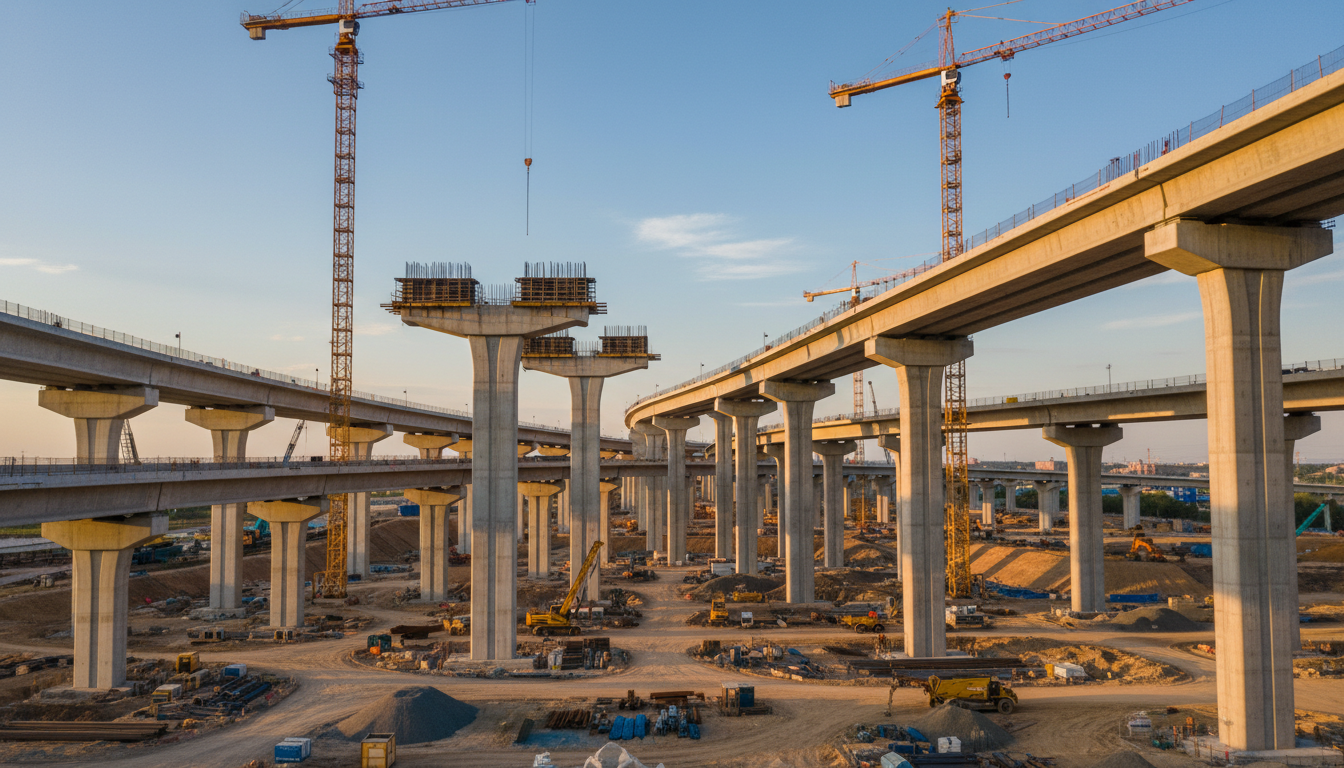
Airports, railways, and large logistics hubs demand robust solutions. This is the type of infrastructure that citizens don’t see, but feel: when streetlights work, when there is no flooding, when the power supply is stable. It is at this point that engineering meets social impact.
Urban growth and technical planning
Urban growth requires technical planning based on reliable data and materials. Urban expansion without adequate infrastructure leads to:
- Recurring floods;
- Collapse of electrical grids;
- Road erosion;
- Environmental degradation.
On the other hand, projects that utilize robust solutions build a solid foundation for the future. Efficient infrastructure reduces public costs, attracts investment, and improves social indicators.
How to make safer infrastructure decisions
If you are specifying materials or reviewing a project, ask yourself some objective questions:
- Does the chosen material withstand the anticipated loads?
- Is there adequate protection against moisture and UV radiation?
- Does the drainage system have a compatible filter mat?
- Does the installation follow best technical practices?
- Is the initial cost aligned with the life-cycle cost?
Infrastructure cannot be treated as a commodity. Every meter installed impacts decades of operation.
Infrastructure as a long-term strategy
Sustainable and long-lasting projects result from the combination of technical specifications, quality materials, and proper execution. HDPE drainage systems, pipes for electrical infrastructure, and geotextile mats form a technical foundation that meets the demands of urban infrastructure, basic sanitation, public lighting, and industrial expansion.
The impact goes beyond the construction project: it affects the environment, quality of life, and sustainable development. In a landscape of urban growth and pressure for efficiency, investing in robust solutions is not a cost—it is a strategy. Well-planned infrastructure protects assets, reduces risks, and supports urban development in a smart way.
Count on those who understand infrastructure in practice
Whether you’re planning a project, reviewing a project description, or facing recurring issues with drainage, cabling, or soil instability, it’s worth acting with technical expertise. Techduto delivers complete solutions in HDPE pipes for drainage, electrical infrastructure, and geotextile mats, with technical support to help you specify correctly, reduce risks, and increase the project’s durability.
Discover the full range of Techduto products and transform your infrastructure into a safe, efficient, and future-ready asset.