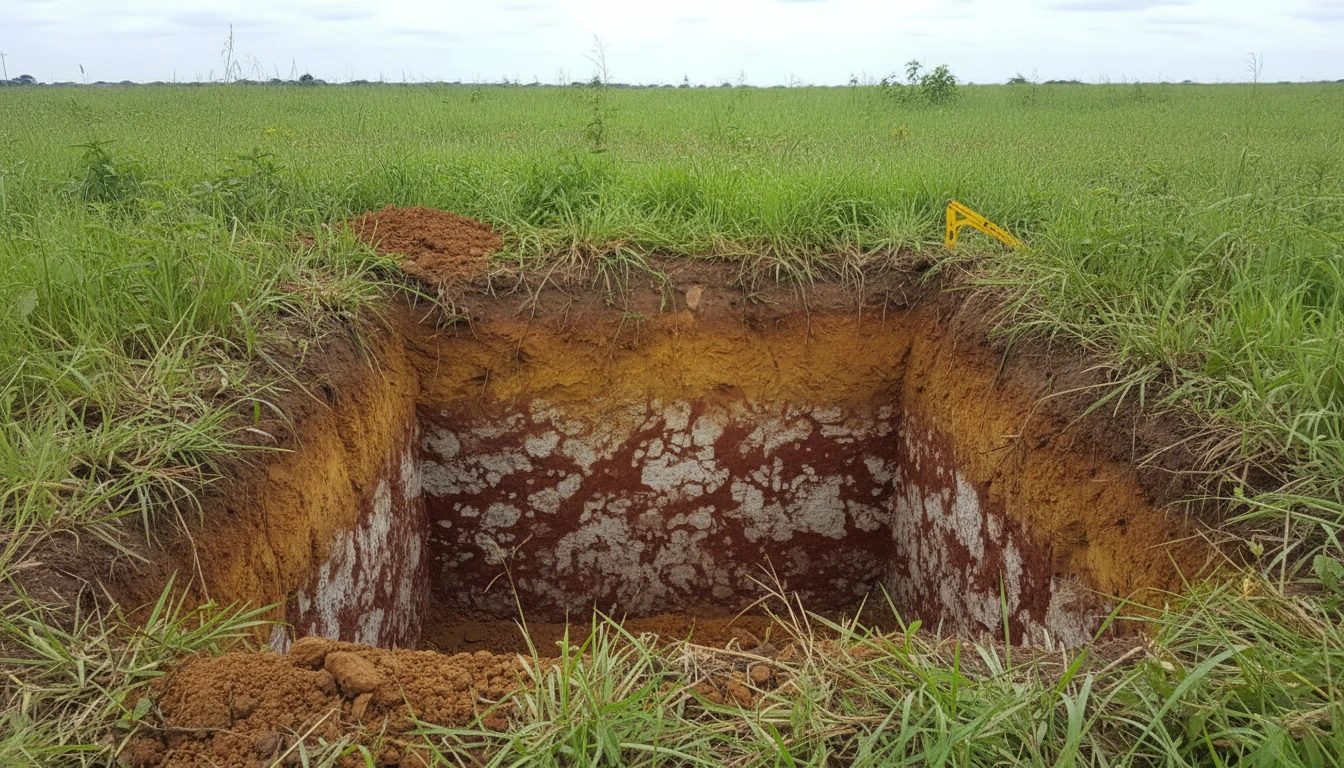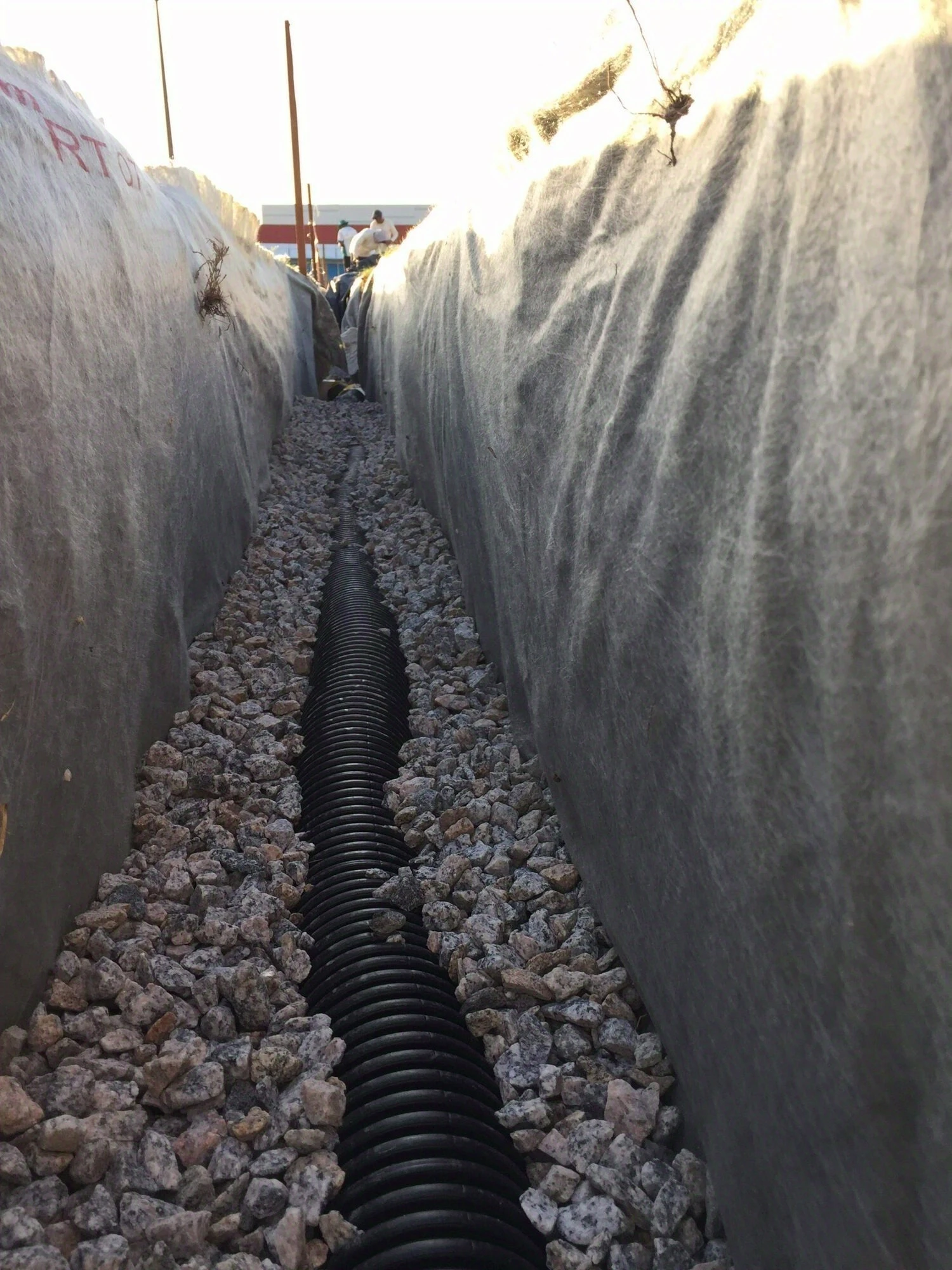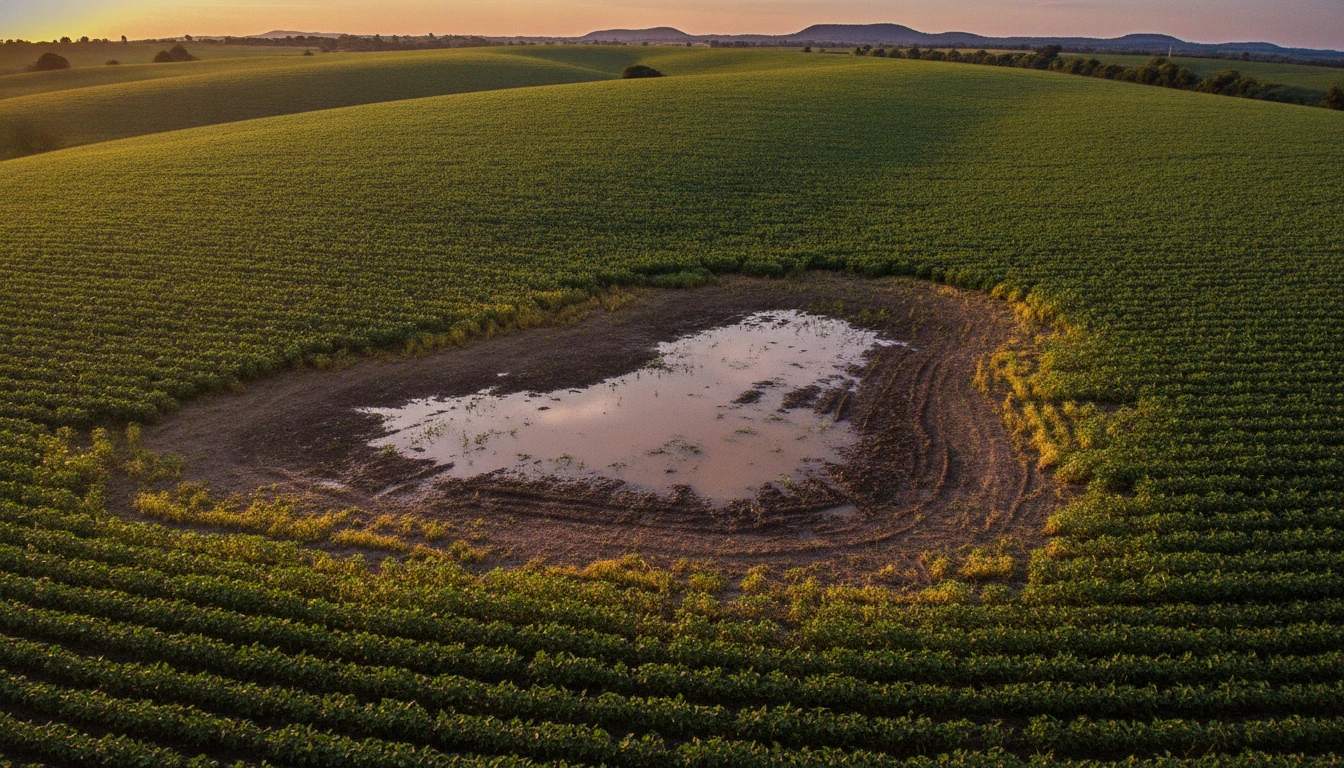


The system worked well in the first few years. Suddenly, water drains slower from the ditches, or the area becomes waterlogged again after heavy rain. The first instinct is to suspect the pipe — but in the vast majority of cases, the problem isn't buried in the middle of the system. It's right in front of your eyes: at the outlet.
The #1 cause of failure isn’t the pipe — it’s the outlet
The outlet (outfall) is the point where the entire system discharges the collected water. It’s also the most overlooked point: it’s at the edge of the field, far from where machinery passes, and when it works well, no one looks at it for years. The problem is that it’s the bottleneck — if the outlet clogs, no matter how well the rest of the network is designed, the water has nowhere to go, and pressure pushes waterlogging back into the system.
Tall vegetation covering the drain outlet, erosion of the outlet ditch, sediment accumulated right in front of the pipe: these are visible signs, cheap to check, and they prevent most collapses before they become structural problems.
Siltation: when water flows too slowly
Siltation is the accumulation of sediment (sand, silt) inside the pipe or in the outlet ditch, and it has a direct physical cause: excessively low flow velocity. According to technical literature on agricultural drainage (UFLA/ESALQ), velocities below 0.3 m/s already allow for the deposition of solid particles — it’s the threshold where water loses its ability to carry sediment forward, and it accumulates at the bottom of the pipe.
Sandy and silty soils suffer the most: they have particles fine enough to enter the system through the perforations but heavy enough to settle as soon as the velocity drops — for example, in sections with insufficient slope, or near the outlet, where the hydraulic gradient naturally decreases. A well-sized design already takes this minimum velocity into account from the layout; but even a well-designed system accumulates sediment over the years and requires periodic inspection.
Roots: water attracts, gaps invite
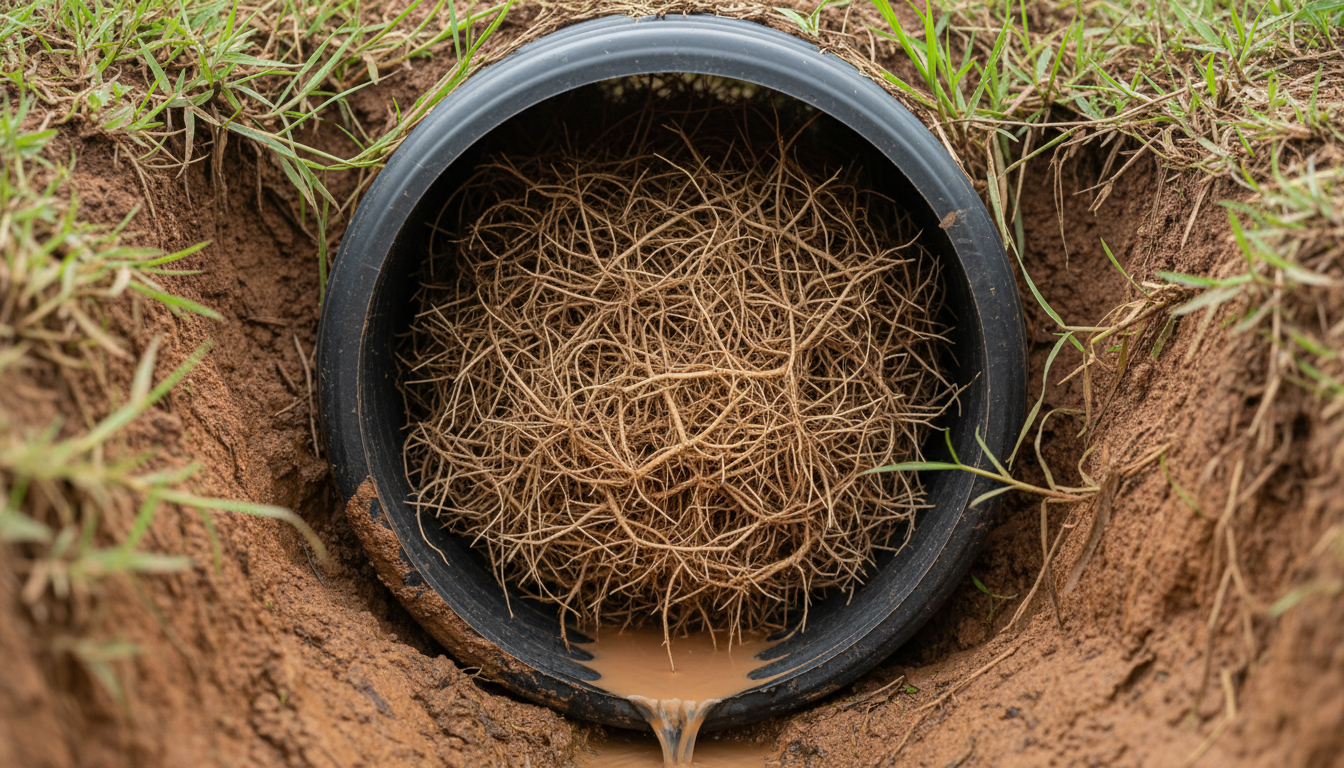
Plant roots don’t invade pipes by chance — they seek moisture and nutrients, and a drain full of collected water is exactly that environment. At connections, joints, or small cracks, the root finds the gap it needs to enter. Once inside, it grows, branches out, and reduces the pipe’s free cross-section — and since it proliferates laterally (it doesn’t advance in a straight line), a small root today can become a significant obstruction in a few seasons.
The risk is higher near trees, hedges, and perennial crops with deep root systems, close to the drain’s layout. The risk cannot be completely eliminated in already planted areas — but the entry point can be reduced, which is what a poorly made joint or a lower-quality pipe creates.
Techdreno KC reduces maintenance needs
Part of the maintenance exists because the system’s own design creates accumulation points — poorly installed surrounding geotextile that tears, gaps in connections, poorly graded drainage material that silts up along with the pipe. The Techdreno KC tackles this at the root of the problem: the self-cleaning micro-cracks drain and filter simultaneously, without needing a geotextile membrane around them — one less point that can tear, clog, or create gaps over time. Reducing the necessary maintenance starts with choosing the right product, not just with a cleaning routine after the problem has already appeared.
Jetting: when and how to clean
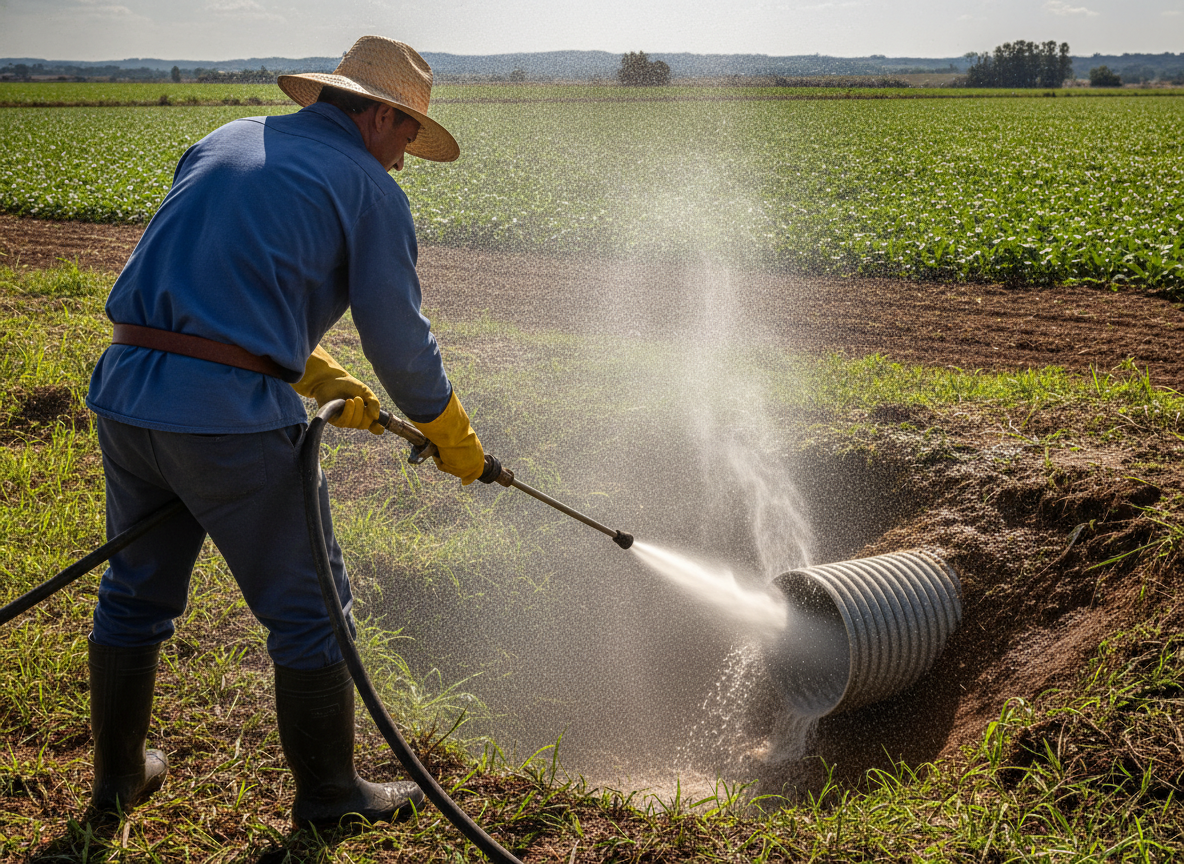
When siltation or roots have already reduced flow, jetting — internal cleaning with a high-pressure water jet — removes accumulated material without needing to excavate or replace the pipe. It’s the same principle used in sewer pipe hydro-jetting in Brazil: the jet fragments sediment and fine roots, and the return water itself carries the material out through the outlet.
Pressure calibration matters: insufficient pressure won’t remove the deposit, excessive pressure can damage the pipe’s inner wall — especially in older or lower-quality pipes. Techduto has its own machinery for this service, with pressure calibrated for the type of pipe and the type of obstruction found.
When to inspect
There is no universal schedule — it depends on the soil, the area’s history, and proximity to vegetation — but two windows of the year concentrate most problems: before the rainy season (to ensure the system can handle the upcoming peak flow) and right after heavy rains or flooding events (when the volume of sediment carried into the system is greater). Inspecting the outlet at these two times — without needing any equipment, just a look — prevents most collapses before they become a problem that only jetting can solve.
The first step
If your area already has an installed system and you’ve noticed a drop in flow, recurring waterlogging, or simply have never inspected the outlet, it’s worth starting there. To assess the condition of your system and the need for maintenance, talk to the Techduto engineering team.
For the technical terms in this article, the Drainage Glossary has complete definitions for siltation, outlet, and jetting. And if you’re still unsure whether your area needs complete agricultural subsurface drainage, the 4-question diagnosis points the way.