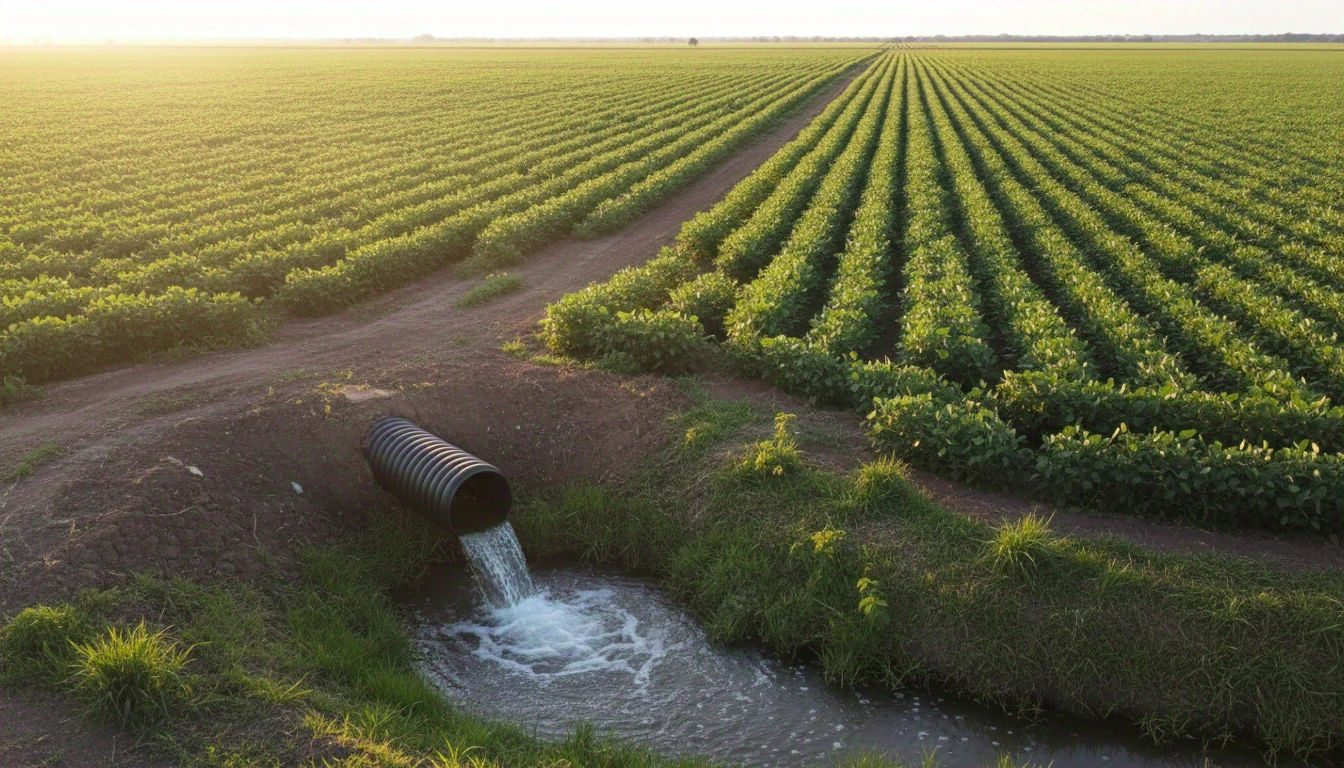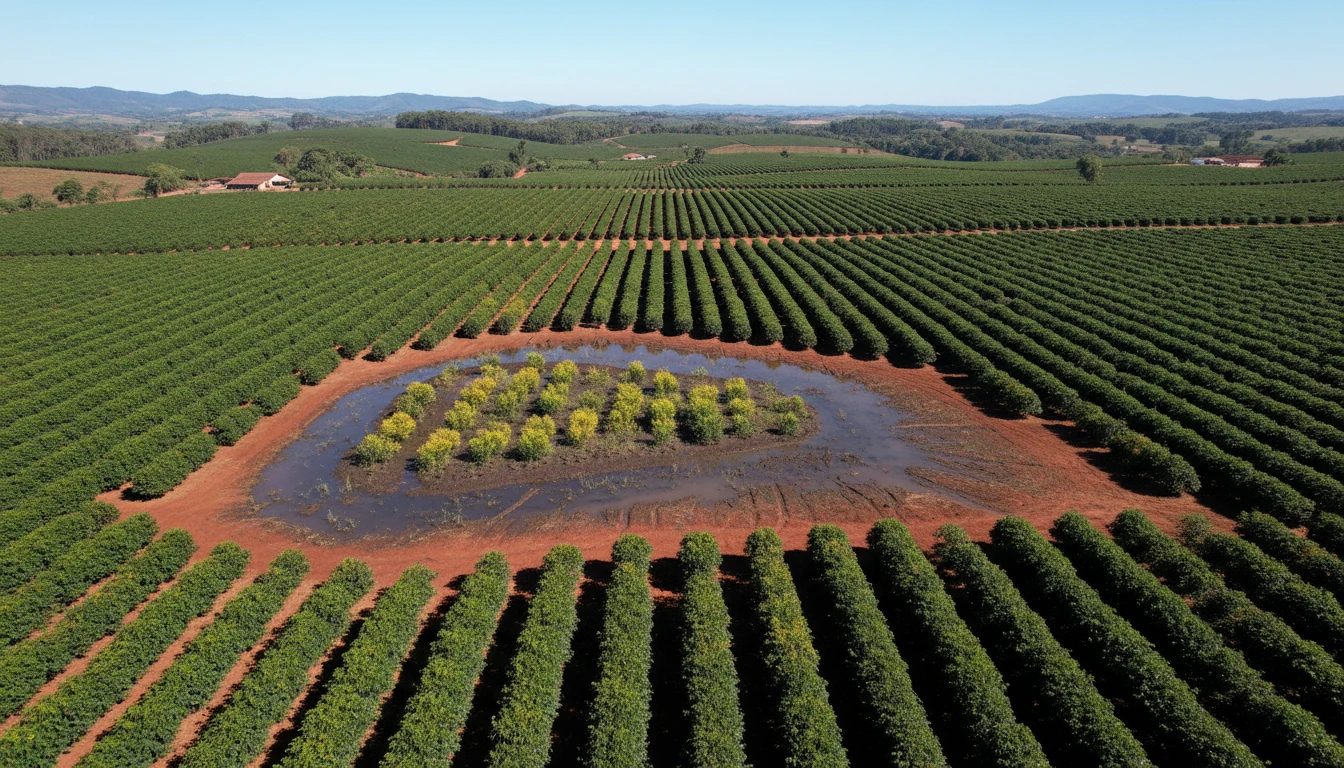

You installed the drainage, it worked well for the first few years — and suddenly the water stopped flowing out. No roots in the pipe, no visible sediment, no apparent clogging. Just an orange crust taking over the inside of the drain. This is ochre — and in Brazil, with the most ferruginous soils on the planet, it is a silent threat that most projects ignore until it's too late.
What is Ochre
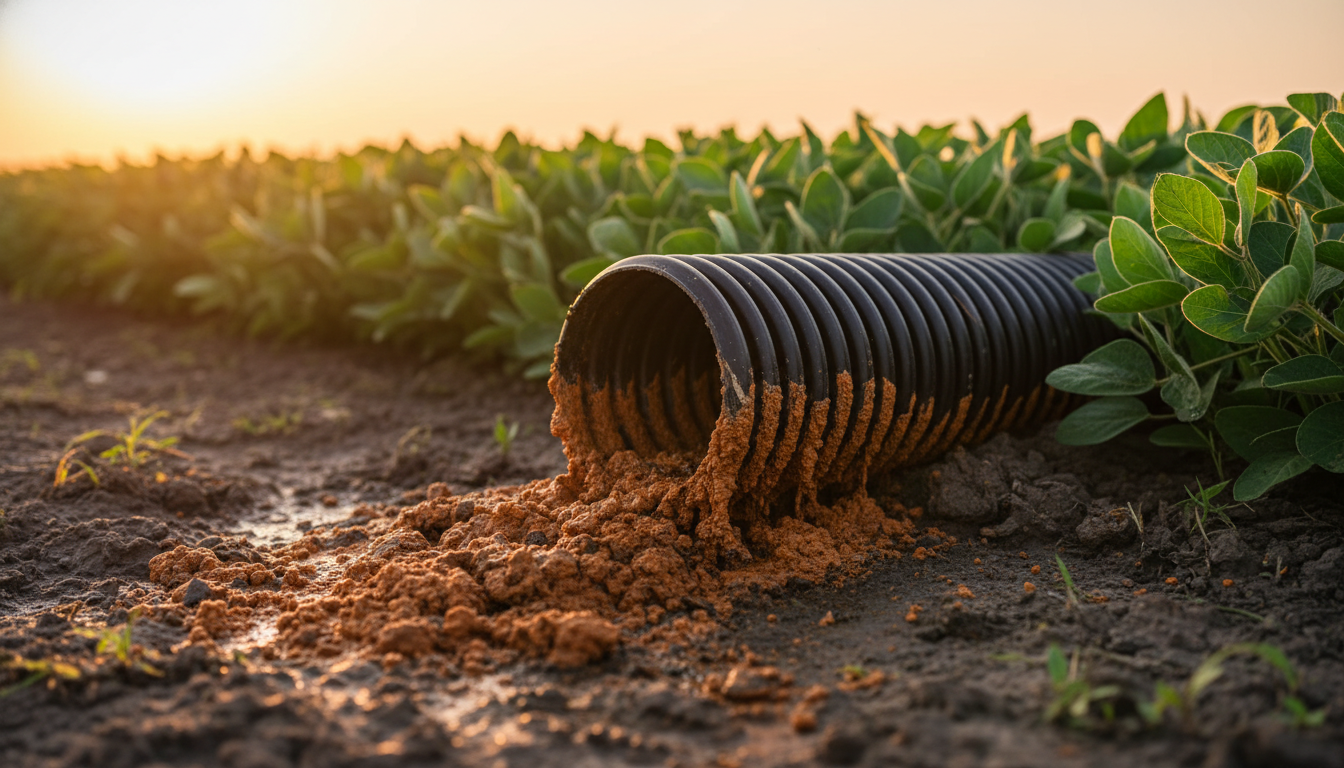
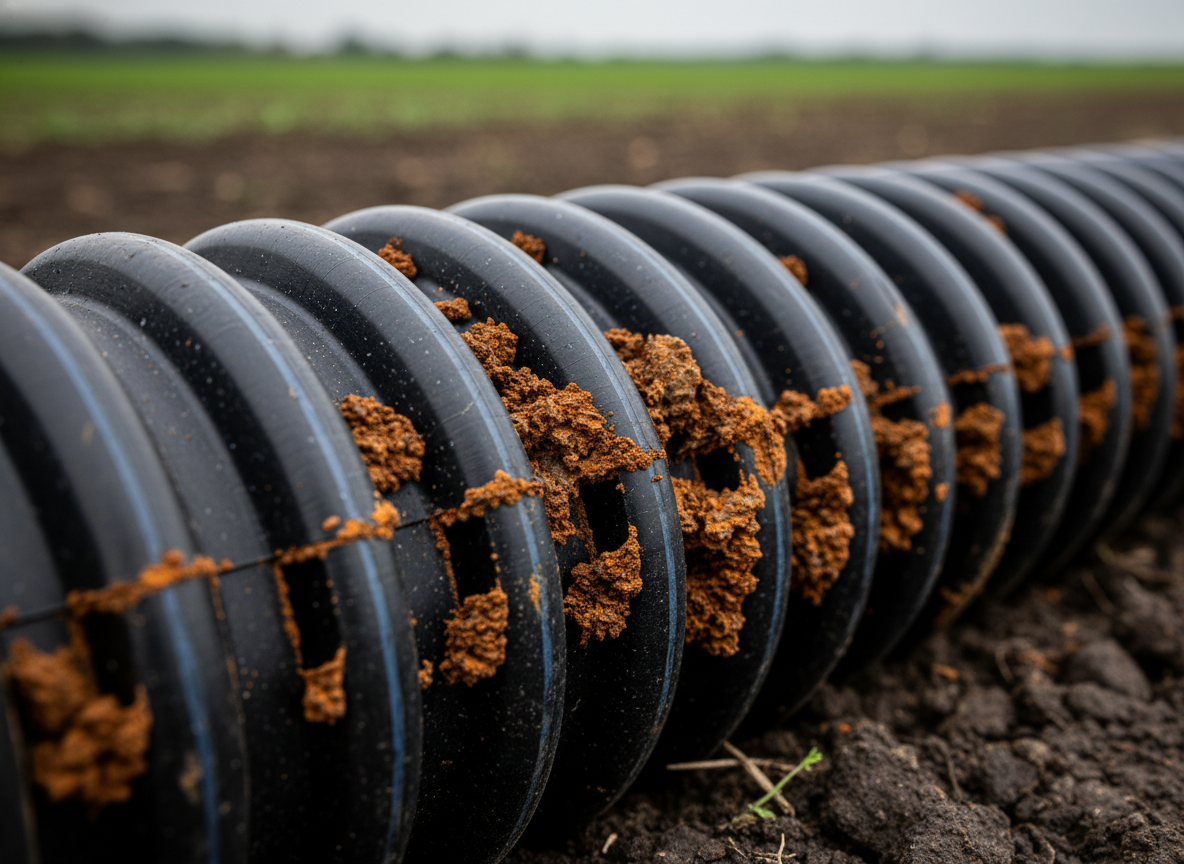
Ochre is an iron oxide deposit — the orange crust or mud that forms inside and at the outlet of drains. It comes from the soil itself.
In saturated, oxygen-deprived soil (the condition of gleying), the iron present in the soil dissolves and circulates with the water. When this water reaches the drain perforations and encounters air, the iron instantly precipitates as oxide — the orange crust. In some situations, iron-oxidizing bacteria further accelerate the process, forming a biological sludge that adheres to the pipe walls. This is biogenic ochre — more aggressive, harder to remove.
Why Brazil is at Higher Risk Than Temperate Countries
The problem has been documented for decades in other countries. But Brazil has a structural disadvantage: tropical soils accumulate iron in much higher proportions than temperate soils.
Oxisols — which cover almost 40% of the national territory, according to Embrapa — are highly weathered soils, rich in iron oxides. This is what gives the soil of the Cerrado and the interior of Paraná its red or yellow color. Plinthosols amplify the risk: plinthite and petroplinthite are iron concentrations that harden with moisture fluctuations — the wet/dry cycle that farmland soil experiences every year.
And there’s the heat: Brazilian temperatures in the agricultural range (22–28°C) accelerate the metabolism of the bacteria involved in the process. In Brazil, the combination of ferruginous soil with a hot climate and recurrent waterlogging is frequent — exactly the trio that most favors ochre.
How Ochre Clogs the System
The clogging doesn’t happen all at once, which makes it dangerous: the loss is gradual and silent. Dissolved iron reaches the pipe, precipitates in the perforations, and the crust grows until it seals off water entry. What started as a thin film becomes a hard deposit that cements the drainage material around the pipe. The system still exists — but it has stopped draining. The farmer discovers this when the area becomes waterlogged again, sometimes years after installation.
The worst-case scenario occurs when there is a geotextile wrap: the ochre clogs the fabric before even entering the pipe, and the clogging of the geotextile is irreversible. No jetting can clear it — the fabric becomes impermeable, and the system collapses permanently.
Field Signs
Unlike siltation by sand or silt, ochre usually reveals itself late. Signs that require attention:
- Orange or brown water at the outlet after rain — iron in solution exiting with the water.
- Orange crust at the drain mouth — iron has precipitated right at the outlet, where air meets water.
- Gradual decrease in flow rate in the years following installation, with no other apparent cause.
- Orange stains on the soil around the drain outlet.
- Soil profile: if a trench inspection shows gray or bluish soil with orange mottling at the drain depth, the iron reduction condition already exists — the risk of ochre is high.
What Increases the Risk
Not all ferruginous soils will develop ochre with the same intensity. The risk increases when a combination of iron-rich soil, prolonged and recurrent waterlogging, and a design that does not account for this condition occurs. The wrong combination of layout, material, and outlet transforms a moderate risk into guaranteed collapse.
What the Design Needs to Consider — and What Techduto Offers
Ochre is much easier to prevent than to remove. A system well-designed for a risk area takes into account the network layout, outlet choices, and pipe material in an integrated manner — not as a list of separate items. These decisions stem from the diagnosis of the soil and the water conditions of each area; there is no generic solution.
In ferruginous soils with moderate risk, Techdreno KC with integrated UFLA filter already offers effective protection: the filter blocks fine particles and keeps the perforations clear, reducing the contact surface where iron precipitates. For areas with a high risk of ochre, Techduto manufactures the Techdreno KC AB on demand — with a treatment applied directly to the product to inhibit ferruginous precipitation inside the pipe. It is the solution for those installing in high-risk soil and needing a system that maintains performance over time. The indication of which product to use in each area is part of the design that the Techduto engineering team carries out — there is no generic solution for ferruginous soil.
Geotextile and Ochre: Why the Combination is Dangerous
As mentioned above, using a geotextile wrap in soil with high iron reduction practically guarantees the early collapse of the system. Ochre clogs the fabric irreversibly, and the wrap stops working before the pipe. The choice of the right type of protection for the pipe — and when to use or not use any wrapping — is one of the most critical points of the design, and it changes the fate of the entire system. This is the topic of the next article in this series.
When Ochre Has Already Appeared: Jetting Service
If the signs appear before the deposit hardens, jetting — internal cleaning with a high-pressure jet — can remove a good portion of the crust and restore flow. The pressure needs to be calibrated: excess pressure damages the pipe, insufficient pressure does not remove the deposit.
Techduto has its own machinery for drain jetting. If your area shows signs of ochre, talk to the team to assess the system’s condition and the feasibility of the service.
The First Step
Before any decision — a new system or diagnosing an existing one — it is worthwhile to understand the ochre risk of your area: soil type, profile color at installation depth, and history of orange water in previous drainages. This is the information that the Techduto engineering team uses to recommend the right product and design.
For the technical terms in this article, the Drainage Glossary has the complete definitions of ochre, gleying, and plinthite. And if you are still evaluating whether your area needs agricultural subsurface drainage, the 4-question diagnosis points the way.