

The rise in online shopping is creating construction challenges for the logistics warehouse market. Learn more.
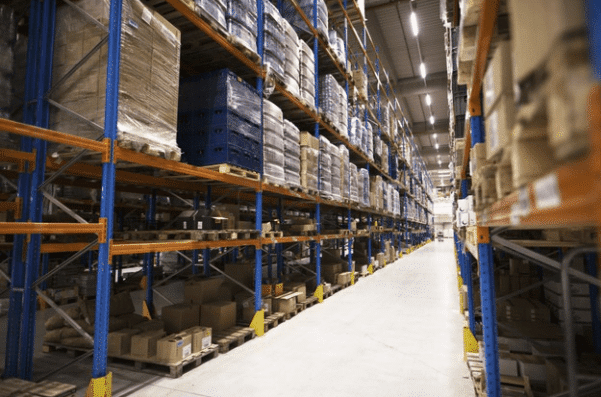
The surge in e-commerce demand drives many sectors together, including the logistics warehouse market. It’s not hard to see why: the more online shopping there is, the more inventory and distribution points are needed. After all, in a country as large as Brazil, fast delivery is a competitive advantage.
However, one challenge faced by the market—also due to the COVID-19 pandemic and high demand—was the difficulty in obtaining construction materials. This led to delays that caused millions in losses for companies across all sectors.
Some alternatives using domestic materials are boosting the market and providing a lifeline, especially for e-commerce businesses. Seeking quick, efficient, and cost-effective solutions is the best approach. All of this is possible without compromising on quality, as you’ll see below.
E-commerce growth and the boom in the logistics warehouse market
E-commerce is indeed one of the "culprits" behind the increased demand for logistics warehouses. To give you an idea, Brazilian e-commerce revenue grew by nearly 50% in 2020.
And why did this happen? In fact, it was due to a combination of factors, especially new consumer trends. In previous years, the increase in online shopping was already on an upward trajectory. However, the pandemic accelerated this process.
With the need to stay home to protect themselves from the coronavirus, people ended up turning to online shopping. As a result, major e-commerce companies had to invest in logistics warehouses to meet a new and ever-growing demand.
Why is this investment so important? Although they shop online, consumers demand fast delivery. Delivery time is even one of the factors influencing purchasing decisions. That’s why whoever has the best logistics always comes out ahead.
New Investments
E-commerce giants are already paying close attention to this entire scenario, such as Mercado Livre. In 2020, the site was the 4th most visited in the country, reaching a value of $60 billion.
And all of this didn’t happen without investments in the logistics warehouse market: the company opened five new logistics centers across the country and purchased its own aircraft. In other words, it further increased its delivery capacity.
With this type of priority investment in its strategy, Mercado Livre has become more competitive. By focusing on reducing delivery times, the company is attracting more and more consumers.
Amazon, which is growing rapidly in Brazil, shares this strategic vision. To compete at a high level with Mercado Livre, the U.S. giant has launched eight new warehouses in Brazil. Four of them have opened since the start of the pandemic.
This trend is also driving other major companies in the sector. This creates a situation where all are simultaneously pursuing the same goal: new logistics warehouses.
This same market also attracts Magalu’s e-commerce business, one of the fastest-growing in Brazil. The company serves as a benchmark for others with expansion and digital transformation plans, as it has successfully transitioned from physical to online service with excellence.
During the pandemic, Magalu’s demand surged to record levels, so it also had to adapt to the challenges posed by the insufficient number of logistics warehouses. With the construction of new warehouses, the company’s service capacity has increased considerably.
But after all, what is a logistics warehouse?
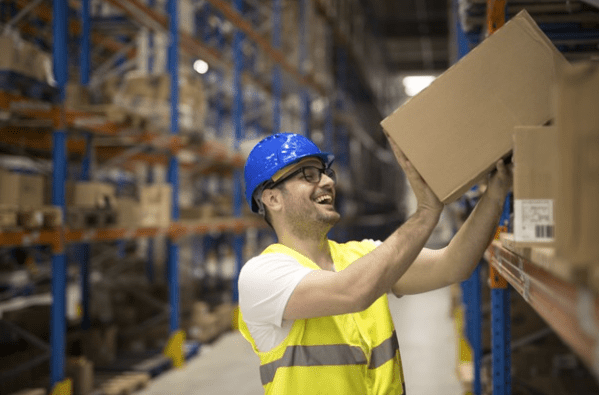
In general, logistics warehouses can meet various operational demands related to goods. This includes receiving, sorting, storage, and distribution—all distinct stages of the process.
Most logistics warehouses in Brazil are concentrated in the state of São Paulo. Since 2016, the sector has been growing annually and showing increased demand. The COVID-19 pandemic has only intensified this demand.
Many companies invest in their own warehouses to reduce operational costs, including for the end consumer. The structures built in Brazil vary widely, but generally prioritize cost-effective materials—including yard drainage systems and protection for buried electrical networks.
Why invest in logistics warehouses?
It is no coincidence that the logistics warehouse market is booming. In fact, these structures offer numerous benefits to companies of all sizes, especially those operating in multiple locations or selling online.
Business expansion
The strategy of companies like Mercado Livre and Amazon is to invest in more logistics warehouses to expand their reach. With greater distribution capacity, a company that invests in this area can expand into other regions. This also increases its competitiveness relative to competitors.
Distinctive Structure
A logistics warehouse is not just any structure. On the contrary, it is designed to meet the company’s needs in a much more practical and cost-effective way. And the more technology and high-quality materials involved in its construction, the better it operates.
Greater security
One of the major problems faced by companies is the security of the products they sell. When warehousing and logistics are outsourced, this risk increases, potentially causing losses due to a lack of control over the goods. In other words, having your own warehouse and team can mean better monitoring, security, and fewer losses and damages.
Challenges in the logistics warehouse market: how can Techduto help?
Despite this positive momentum in e-commerce and the logistics warehouse market, rapid change has brought new challenges. Among them, the sector faces bottlenecks resulting from a shortage of construction materials in both domestic and international markets.
In addition to rising prices, which are hurting the construction sector as a whole, there are also delays in deliveries. Even when materials are secured, delivery times can be as long as 60 or 90 days.
Supply of structural materials for the logistics warehouse market
One solution for the logistics warehouse market is to rely on domestic materials. In addition to better cost-effectiveness, there are material suppliers that enable the construction of high-quality structures, such as rebar, metal structures, and conduits.
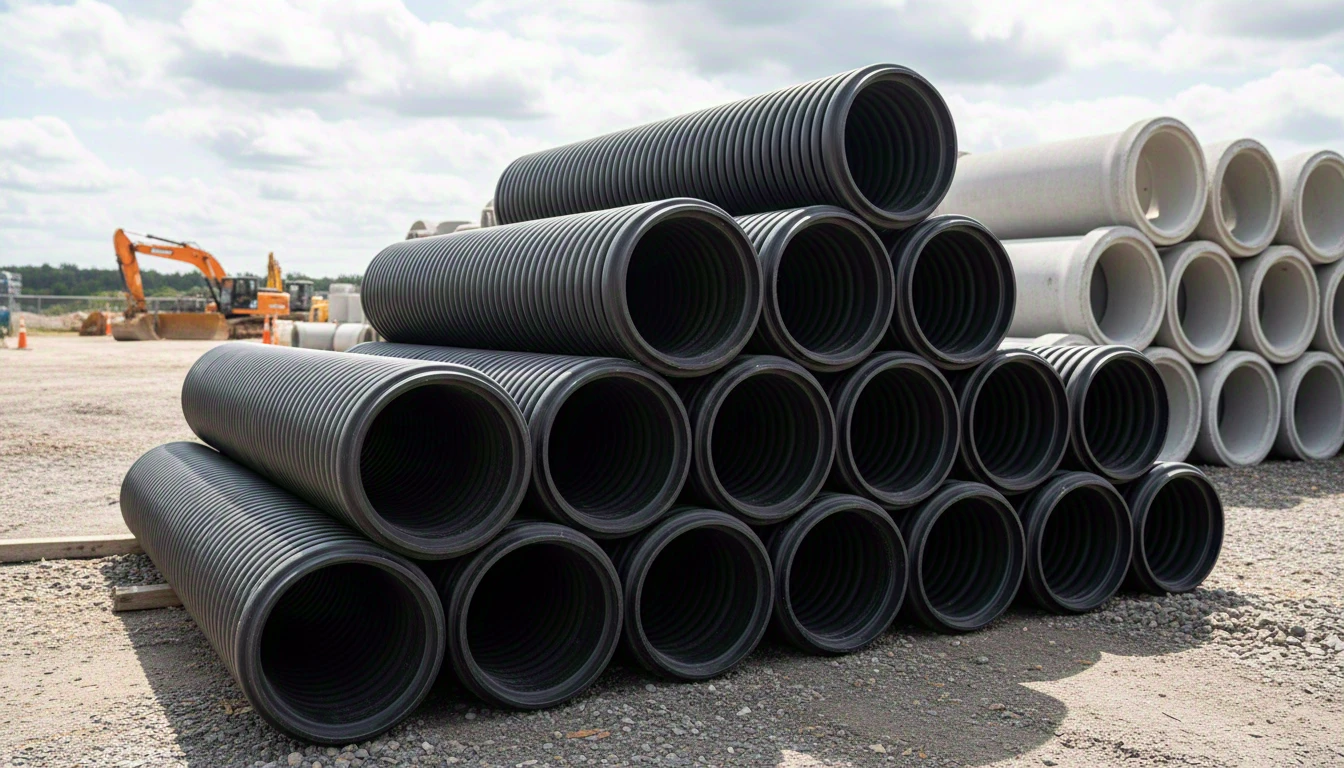
Techduto products are found in various logistics warehouse complexes belonging to the country’s largest chains. Currently, Techduto is one of the leading suppliers of HDPE corrugated pipes in Brazil and the region. The company offers a range of solutions for a complete warehouse:
- Ducts for electrical cables: Techduto DW (double-wall) and corrugated HDPE conduit protect the electrical and medium-voltage cables that power the warehouse;
- Site and yard drainage: Techdreno pipes and, for high flow rates, Techdreno DW prevent water accumulation that compromises the structure;
- Soil reinforcement and separation: Bidim geotextile and Techduto drainage geocomposite stabilize the subgrade of floors and maneuvering yards;
- Sealing and watertightness: DutoSeal Tape ensures the sealing of pipe joints.
Techduto’s standardized corrugated pipes offer high resistance to crushing and impact, great flexibility, and a service life of up to 75 years. For this reason, they are in high demand for the construction of logistics warehouses in the country.
Additionally, it is worth noting that Techduto corrugated pipes are made of High-Density Polyethylene (HDPE). This is a recyclable, non-toxic thermoplastic material and, therefore, “environmentally friendly.” As a result, Techduto pipe lines can be used in various civil construction projects, including sustainable ones.
Techduto is a company that invests in innovation for corrugated pipes. With technology and materials to serve the logistics warehouse and construction markets, the company continues to grow and expand its factories to serve the entire country.
Therefore, you don’t have to put your project on hold due to a lack of materials. Explore the entire Techduto product line and check out our solutions for electrical projects, sanitation, landfills, and various other applications!