

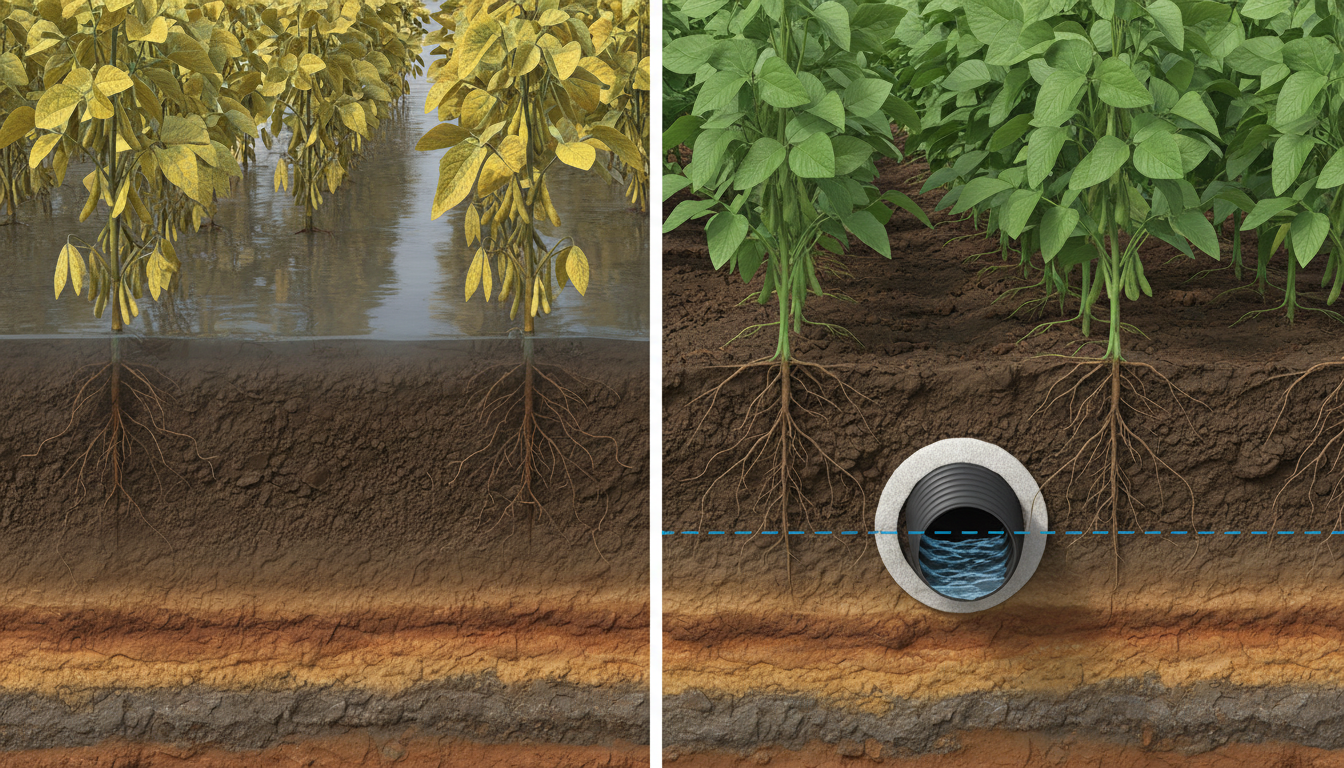
A soybean field that remains waterlogged for 48 hours loses up to 40% of its yield. In Brazil, an estimated 30 million hectares require drainage that has not yet been installed—productive land wasted every year. In this article, we explain why agricultural drainage is the intervention with the highest return per hectare that a farm can receive.
EXCESS SOIL MOISTURE
Typically, concerns about agricultural drainage only arise when a farmer faces a major problem of waterlogged soil due to heavy rainfall. However, agricultural drainage is far more effective and efficient than simply being used in extreme conditions. In fact, there are many areas of the country that need drainage but do not receive it because water does not appear on the surface.
Every farmer is interested in achieving the highest possible yield and quality from their crops. This means they want strong plants with healthy, abundant fruit to increase their financial return.
However, one of the biggest obstacles to this goal is excess water in the soil on land without agricultural drainage. This can stem from heavy rainfall, irregular irrigation, a high water table, or proximity to large bodies of water, such as rivers, lakes, and the ocean.
Problems
Excess moisture in the soil, whether visible on the surface or not, causes a series of problems, such as:
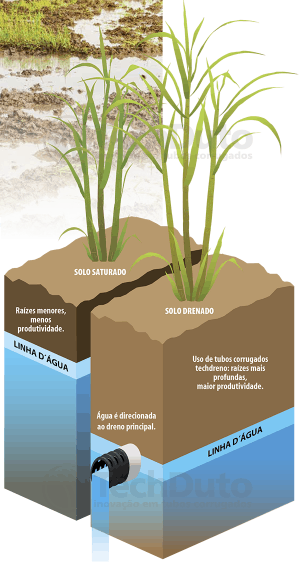
- A very high water table, which prevents roots from growing deeper and consequently limits plant productivity;
- Excess boron, which comes from fertilizing and irrigating plants but can be harmful to some crops;
- Machinery getting stuck, which can result in high costs for the farmer;
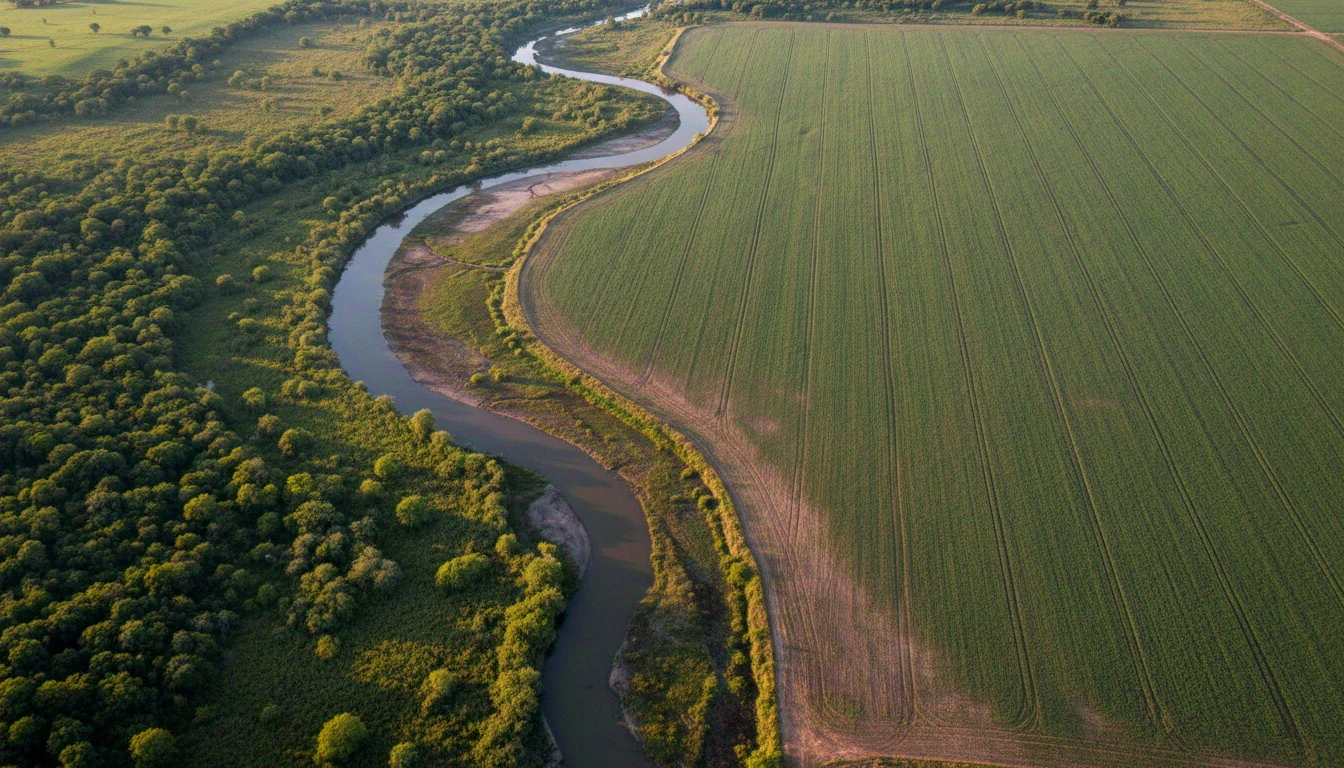
- Soil erosion, which, in addition to physical damage to the soil, can carry chemical elements into rivers and lakes;
- Increase in certain plant diseases; excess moisture promotes the onset of various diseases, mainly caused by fungi.
Furthermore, in regions with high levels of sunlight, if the farmer waits for this excess water to be eliminated naturally, the soil may be damaged by increased salinity. Through water evaporation, high levels of salts are deposited in the soil, which hinders plant development and their ability to absorb moisture. In contrast, on land with effective agricultural drainage, excess water is quickly eliminated, preventing this type of problem.
BRAZIL COMPARED TO THE WORLD
Countries that lead in high-efficiency agricultural production invest heavily in drainage. Brazil has one of the largest agricultural areas on the planet—but lags far behind when it comes to drained land:
| Country | Total agricultural area | Area with artificial drainage | % drained |
|---|---|---|---|
| 🇳🇱 Netherlands | 1.9 million ha | ~1.8 million ha | 95% |
| 🇺🇸 United States | 375 million ha | 50+ million ha | ~15% |
| 🇧🇷 Brazil | 280 million ha | ~5 million ha | ~2% |
Sources: FAO, USDA, MAPA — approximate data.
In states such as Mato Grosso, Paraná, and Rio Grande do Sul, where clay soils and concentrated rainfall are the norm, the return on investment in drainage is usually seen as early as the first harvest.
HOW TO SOLVE THE PROBLEM
To solve the problem of excess soil moisture, or waterlogged soil, you first need to identify the area with this problem. But how can you tell if your area has problems related to excess moisture (or poor agricultural drainage)? One way is to analyze the soil at different points and check and compare the depth of the wettest area (water table) on your land. Depending on the crop being grown, you can also check by looking at the difference in plant height, since plants growing in more waterlogged soil tend to grow less and often fail to thrive. In many cases we’ve observed, many growers end up treating only the disease in the plants, but not the underlying cause related to excess moisture.
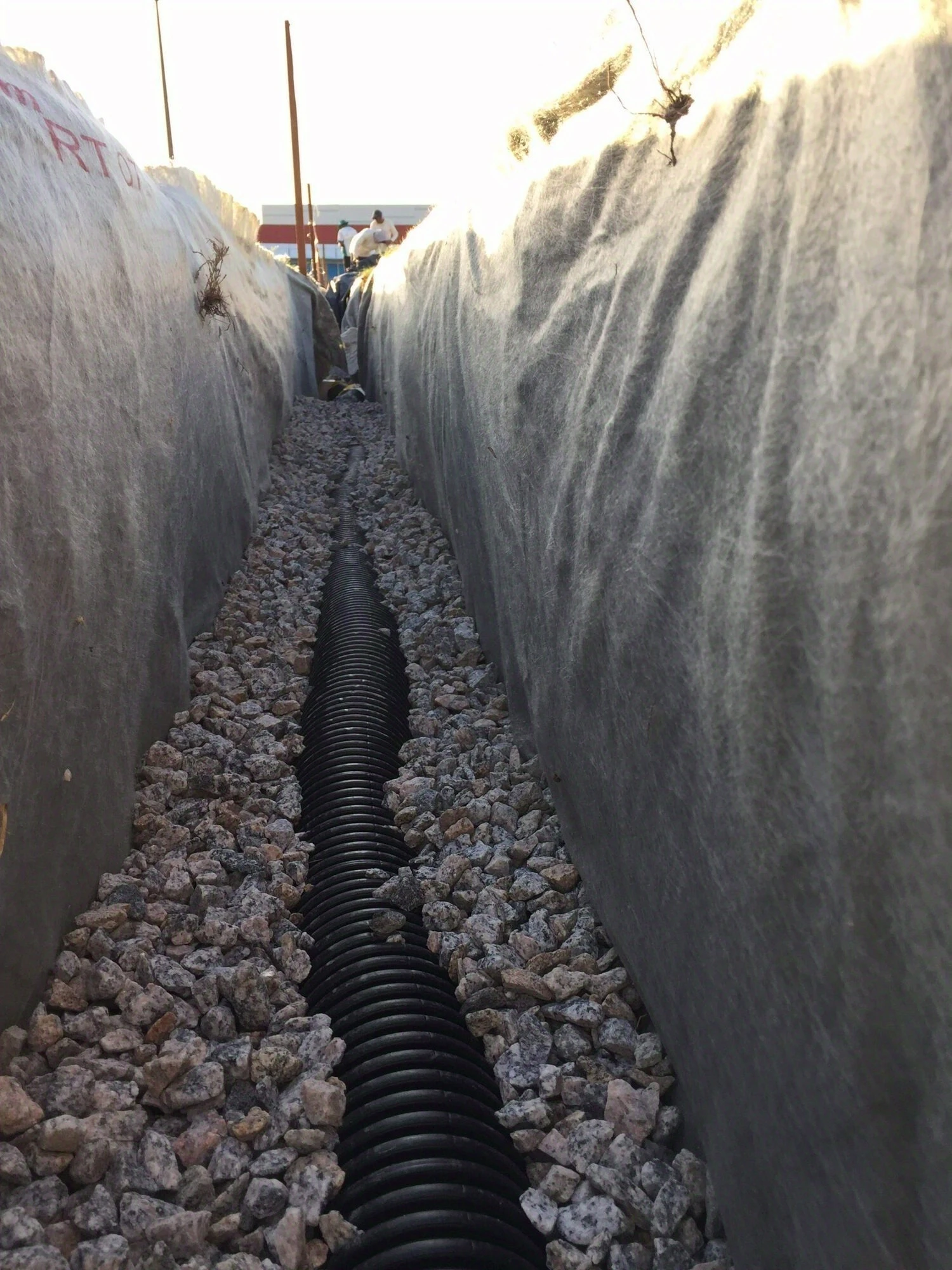
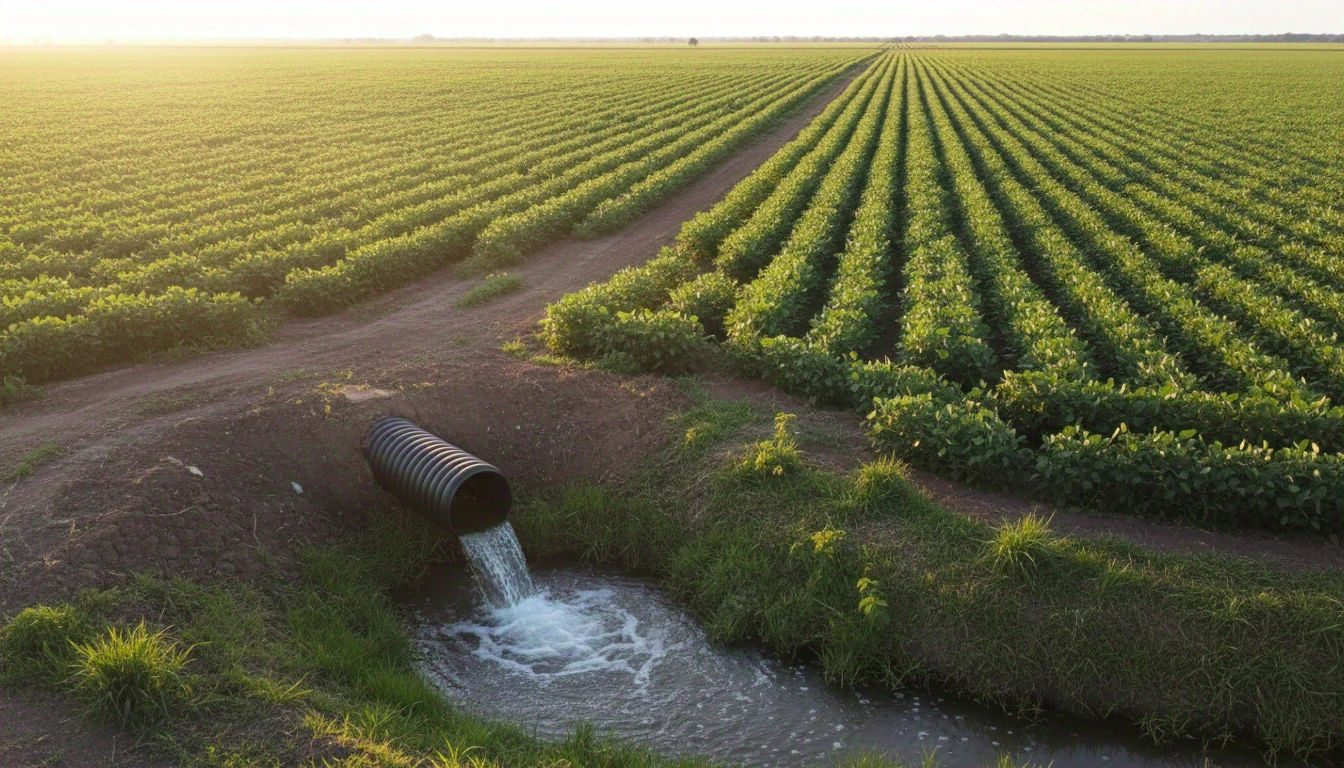
Effective agricultural drainage is what corrects the problem of excess moisture. It does not “dry out” the soil as some people think, since the pipes only function when there is excess water. Since we manufacture drainage pipes (Techdreno SD, NBR, and DW), it goes without saying that we recommend our products for more effective moisture control in underground drainage systems. However, we also recommend the use of drainage trenches (open ditches) only in the final section of the lowest area where the drainage pipes are located. By doing so, during heavy, concentrated rainfall, this surface drain helps facilitate faster drainage to absorb excess water until the ground absorbs it and the underground drains begin to function.
Installation
It is very important to pay close attention to the installation of Techdreno (HDPE pipes for agricultural drainage), as installation errors are the main cause of drainage systems failing to function properly. The slope must be correct and uniform; the pipes must not have any bumps during installation, otherwise that point will become a spot for water accumulation, and the spacing must also be correct since groundwater absorption occurs in an arc (see reference 2 – Millar), and the spacing will depend on the depth at which the drainage pipe is installed.
ADVANTAGES OF AGRICULTURAL DRAINAGE
Therefore, the use of proper subsurface agricultural drainage is essential in any crop, whether in arid or humid regions. Agricultural drainage must be designed taking into account soil conditions, climate, and crop type, with the main advantages being:
- Elimination of excess salts, increasing soil capacity;
- Control of the water table level, which allows for deeper root growth and higher crop productivity;
- Prevention of soil erosion by filtering water and carrying it, pure and free of chemicals, to rivers and lakes;
- High durability—Drainage pipes can remain in the ground for many years without needing to be replaced.
- Increased Productivity – As roots grow deeper, plants end up producing more. The increase varies by crop and region, but we have seen cases where soybean yields increased by 40%. There are reports of much larger increases in corn.
Thus, with products from the Techdreno and Techdreno DW lines properly installed, there is a reduction in soil maintenance costs, increased crop productivity, and more environmentally friendly farming practices, among other benefits.
Some References:
- Agricultural Land Drainage – (WEB)
- Agricultural Land Drainage – Augstin A. Millar (BOOK)