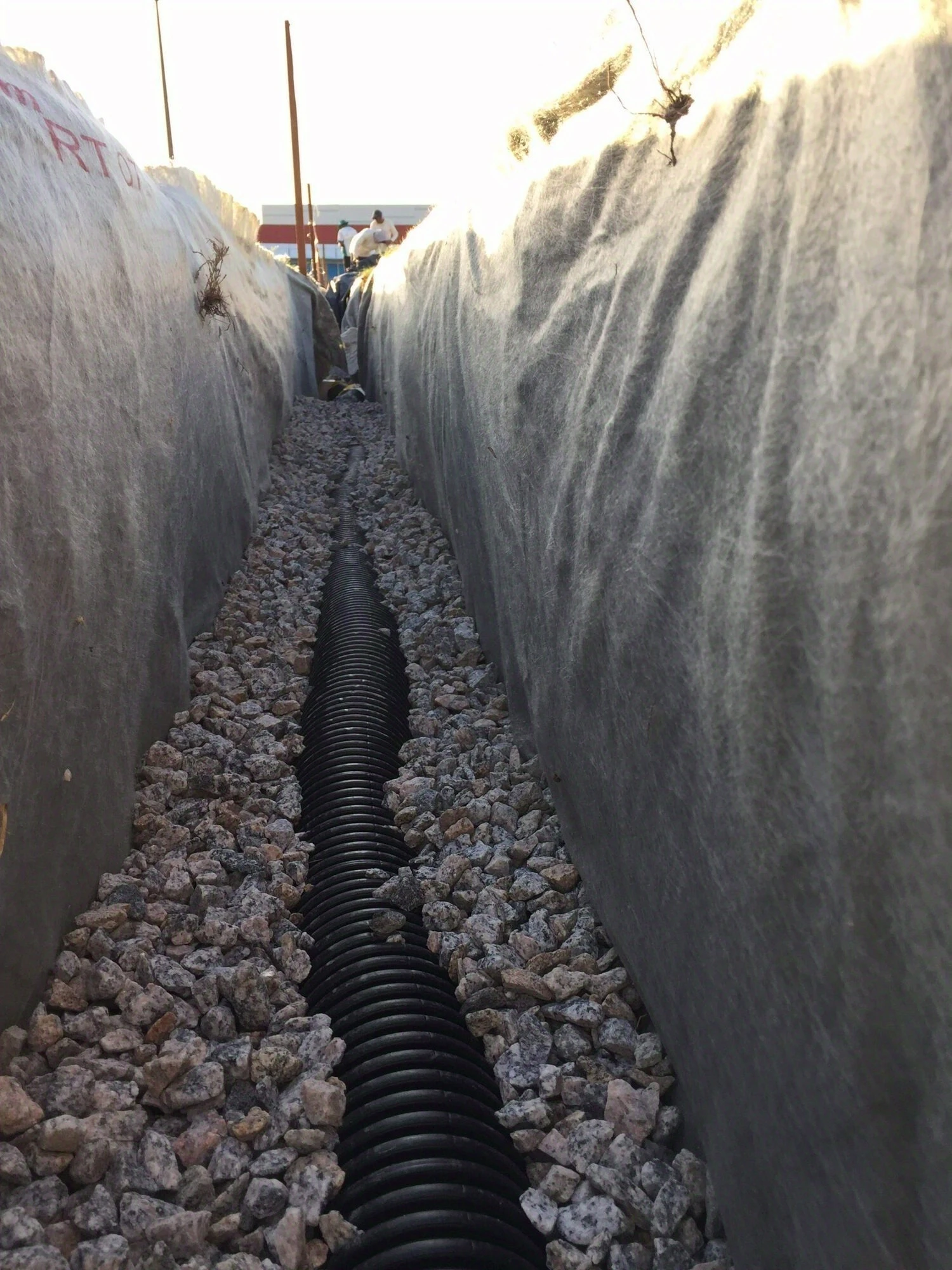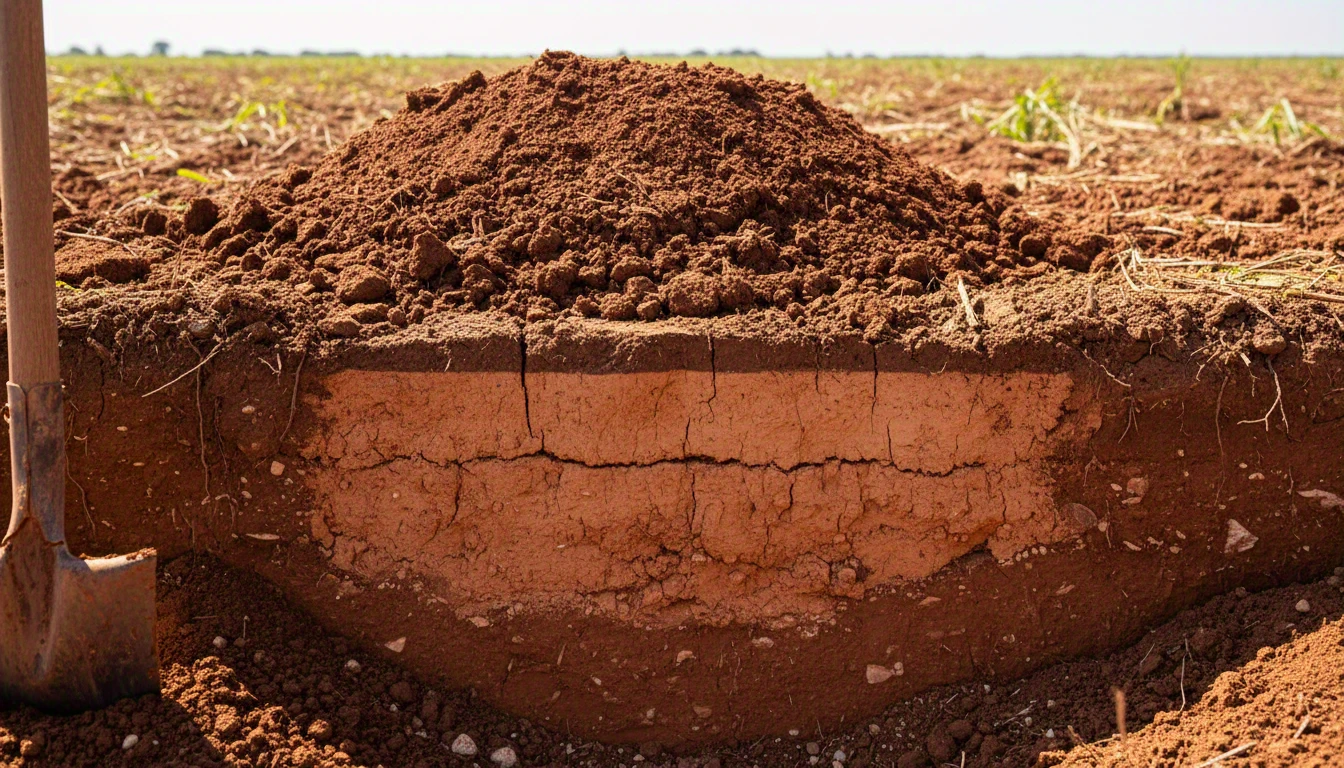

Since June 30th, Mato Grosso has a new law for those who drain crops in wetlands or hydromorphic soils: CONSEMA Resolution nº 36/2026. If you already have a drainage system installed in such an area without a license, know this: you have an 18-month grace period to regularize without a fine — enough time to do it calmly and correctly. If you are planning to install one, the technical criteria have changed: not all soils can receive drainage, and the maximum depth now has a legal limit. This article translates what the regulation says, in practice, for those who decide on drainage — not for those who just read laws.
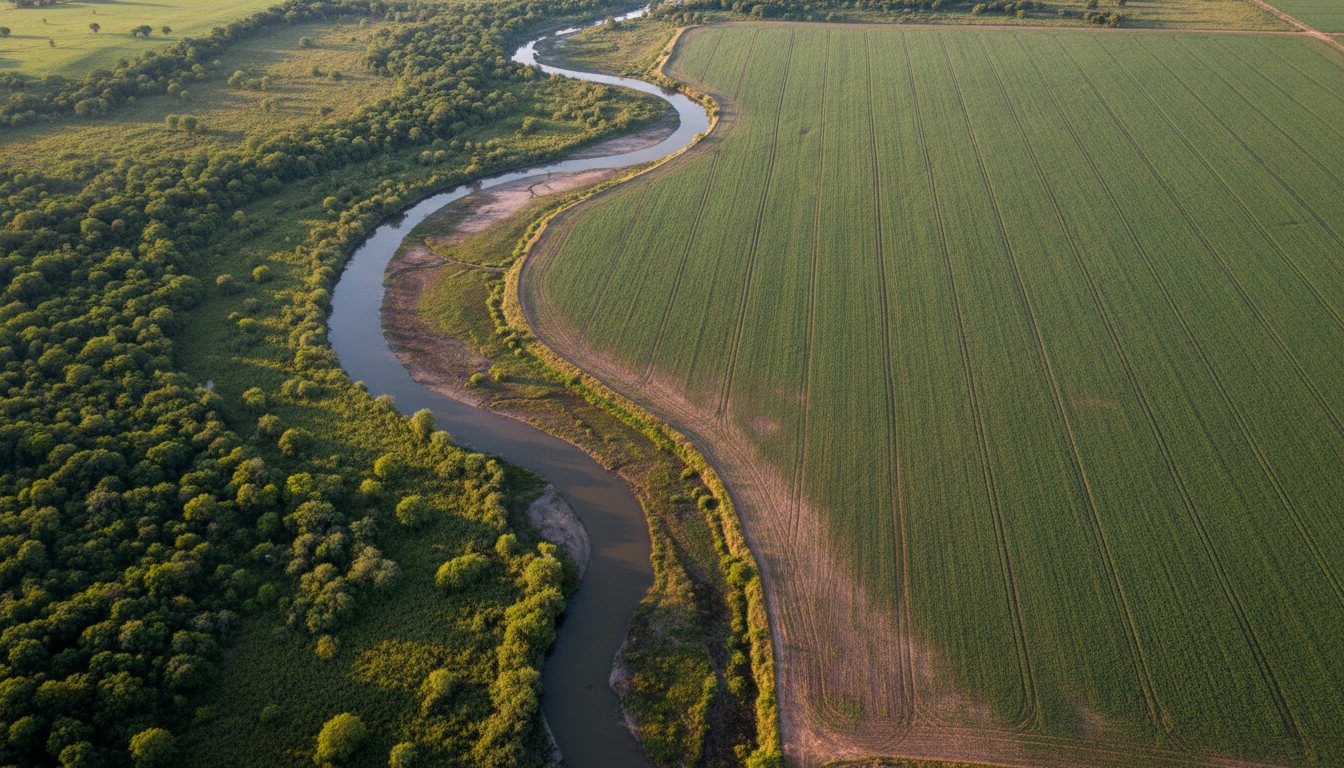
What CONSEMA Resolution nº 36 Actually Changes
The resolution replaces the old CONSEMA Resolution nº 45/2022 and reorganizes the environmental licensing of agricultural drainage in wetlands and hydromorphic soils in the State of Mato Grosso (outside the Upper Paraguay Floodplain, which follows its own rules). It does three things that did not exist with this level of detail before:
- Technically defines who can drain. It’s no longer “any waterlogged soil” — the regulation lists the eligible soil types and the clay and agricultural aptitude criteria that determine if drainage is technically permitted.
- Limits drainage depth. For the first time, there is an explicit legal ceiling for how deep an agricultural drain can go.
- Opens a regularization window with a defined deadline. Those who already have an installed system without a license have a deadline to request regularization without a fine.
None of these three points existed with such clarity in the previous regulation. This is why it’s worth rereading, even for those who were already familiar with the 2022 resolution.
Who Needs to Act Now
The rule applies to any rural property in MT that has — or intends to have — a drainage system in a wetland or hydromorphic soil: floodplains, low-lying areas with a shallow water table, land that is periodically covered by water, and soils that fall into the poorly, very poorly, or imperfectly drained classes in the Brazilian Soil Classification System. If the area is classified as Restricted Use Area, the restrictions are even greater. In practice, it refers to crops that historically become waterlogged, have a grayish or mottled soil color, or are near watercourses with floodplains.
There are two groups with different urgency levels:
Those who already have drains installed without a license — the most common case in MT, where much of the agricultural drainage in wetlands was done before clear rules existed — need to request regularization within the deadline. Those planning to install need to go through the new licensing process from the beginning, already within the technical criteria of Resolution 36.
The 18-Month Deadline: What to Do If You Already Have Drains Without a License
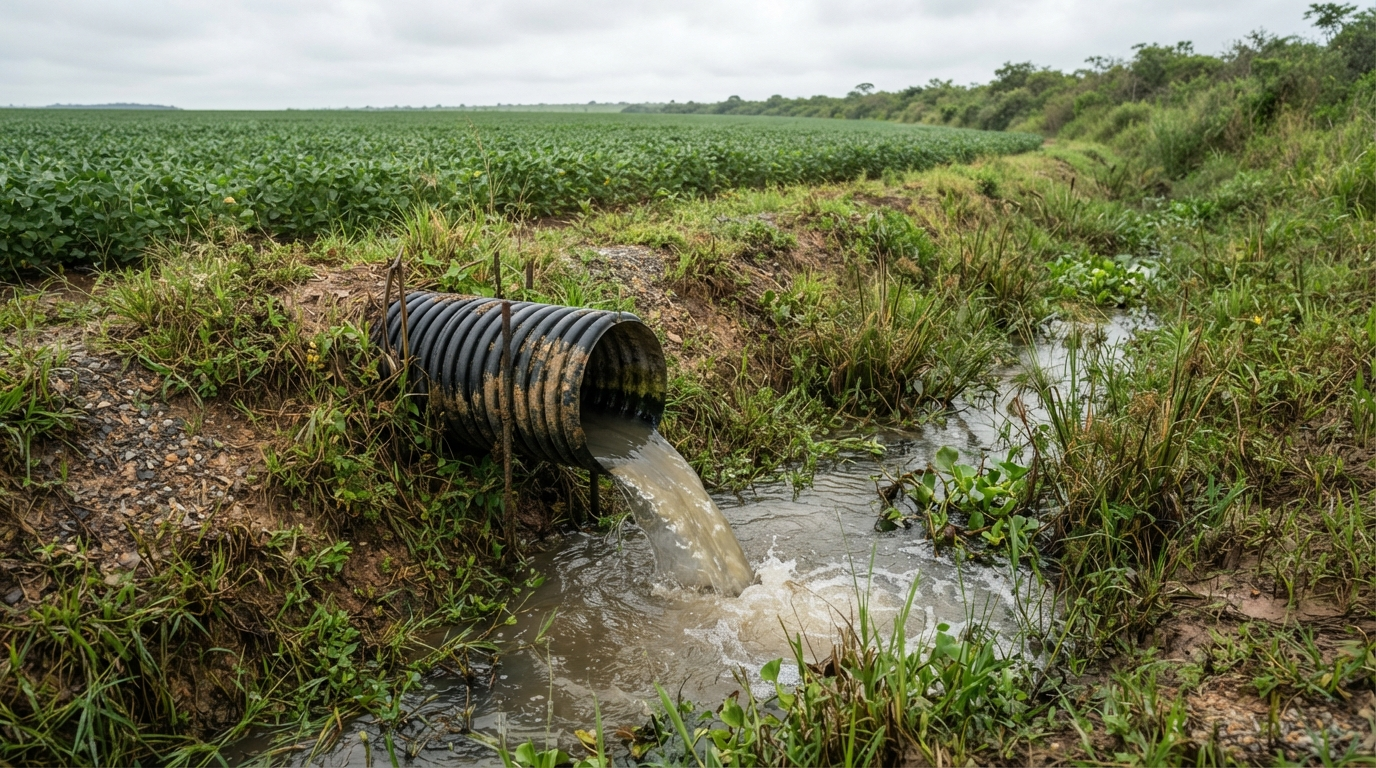
The regulation provides 18 months from 06/30/2026 — that is, until approximately the end of 2027 — for those who already have agricultural drainage installed in wetlands to request regularization from SEMA-MT. By requesting within the deadline, the activity will not be subject to a fine for having been implemented without a prior license, even if the system has been in place for years.
This does not mean automatic regularization. The process requires technical characterization of the area (pedological and hydrological), and the procedure changes depending on the soil type: for hydromorphic soil, an environmental diagnosis is required; for non-hydromorphic soil, an environmental control report. In both cases, the process is conducted in a single phase — without the preliminary and installation license stages that a new construction would require.
Those who already had a regularization request pending under the previous resolution (45/2022) and whose analysis was not concluded must also take action within the new deadline, adapting the request to the rules of Resolution 36 — without losing the fees already paid.
What If I Don’t Regularize on Time?
The regulation provides for two consequences for those who do not request regularization within the deadline, or whose request does not meet the technical criteria: administrative sanctions (the type of fine varies according to the infraction notice) and, in a more serious scenario, the requirement for capping — the physical closure of drains that do not comply with the rules. It’s worth emphasizing: even within the deadline, regularization is only granted if the area meets the technical soil and agricultural aptitude criteria described in the regulation — a timely request does not guarantee automatic approval if the soil is not eligible.
There is also protection for producers who already operate within the law: consolidated drainage systems according to the Forest Code’s temporal mark (July 23, 2008) can continue in operation and maintenance, without needing to redo the licensing from scratch — as long as they are not expanded.
Who Is Installing New Drains: What Changes in the Project
For those planning a new system in wetlands or hydromorphic soil, Resolution 36 introduces three technical parameters that directly impact project engineering:
- Soil eligibility. Drainage is only technically permitted in soils with plinthite concentration (so-called Plinthosols haplic or argillic), with a clay content greater than 15% and agricultural aptitude classified as “good” for the intended crop.
- Maximum depth. The drain cannot exceed 1.50 m in depth — and in soil with a plinthite layer, the actual limit may be lower, as the regulation prohibits exposing this horizon.
- Project scale. Projects exceeding 260 hectares of drained area — summing neighboring projects that share the same system to avoid fragmentation — require an Environmental Impact Study and Report (EIA/RIMA), the most complete and time-consuming procedure for environmental licensing. Below this limit, the process is usually simpler — see which license your project needs.
These three points directly feed into the technical drainage project — the document that defines the system’s layout, depth, diameter, and material, and which is part of the licensing process with SEMA. It is this technical project that the Techduto engineering team can support, based on the soil diagnosis of your area — Techduto does not replace the environmental licensing process itself, but the drainage project that must accompany it.
A Disputed Regulation — What This Means in Practice
It’s important to be transparent about one point: regulations similar to this one have already been legally challenged in Mato Grosso by entities that see environmental risk in the regularization of drains in wetlands. This does not change what is valid today — Resolution 36 has been in effect since its publication — but it is a reason to treat licensing with technical rigor, complete documentation, and the support of a qualified professional, rather than as a mere formality. A technically well-instructed process has a greater chance of withstanding any future challenges than a hastily submitted request.
The First Step
Before any decision — requesting regularization of an existing system or designing a new one — the starting point is the same: technically characterize the soil and the water condition of the area. This characterization determines whether drainage is technically feasible, which licensing procedure applies, and what depth and layout the project can have.
If your crop in MT shows signs of waterlogged soil or has had drains installed for years without a formal process, a drainage diagnosis is the starting point to understand the situation, and the Techduto engineering team can support the technical project required for licensing — the goal is for you to reach an informed decision, within your timeframe, not to feel pressured by a deadline. In the next articles in this series, we will break down the soil criteria, the depth limit, and each licensing modality separately — to make each decision of Resolution 36 clear on its own.